
AI Automation for Construction Contractors: What Works in 2026
AI automation for construction contractors targets four specific workflows: inbound call handling, lead follow-up sequences, estimate routing, and scheduling confirmation. A properly configured system can recover meaningful admin time for a mid-size GC operation.
Construction contractors lose time to phone tag, missed leads, and manual follow-up. Here's which AI automation workflows usually matter first and how to.
Epiphany Dynamics is an AI automation agency: we help businesses find and fix operational bottlenecks with AI receptionists, lead follow-up, and workflow automation.
Free 30-minute audit. We name at least 3 things you can automate, ranked by impact.
Book a free AI audit
Patrick Gibbs
AI automation for construction contractors targets four specific workflows: inbound call handling, lead follow-up sequences, estimate routing, and scheduling confirmation. A properly configured system can recover meaningful admin time for a mid-size GC operation. In construction, a single unanswered inbound call can represent a high-value project opportunity.
Construction is one of the last industries where a business owner still pulls out their phone at 7 PM to return calls from the afternoon. That is not dedication. That is a systems problem.
Construction has long struggled with administrative overhead: calls that go unanswered, estimates that never get followed up, and subcontractor coordination happening through scattered text threads. None of that work directly builds anything, and much of it can be systematized.
Where Contractors Actually Lose Time
Construction businesses consistently lose admin time in the same spots: inbound calls that go to voicemail during job site hours, estimate follow-up that gets dropped when a project heats up, and scheduling coordination that lives in someone's head instead of a system. These patterns repeat daily across every type of GC operation, which is what makes them automatable.
Run a quick audit on last month. Count how many inbound calls got answered live versus went to voicemail. Then count how many of those voicemails got returned promptly. For most contractors, those numbers are rough, and it is not because anyone is careless. It is because whoever was supposed to make those callbacks was on a job site.
That timing gap costs real money. In construction, where a homeowner or property manager may call multiple contractors at the same time, being first back often determines who gets the conversation. Not always the lowest bid, not always the most experience. The fastest serious callback.
Estimate follow-up is the other obvious hole. A contractor sends an estimate and the project gets busy. The follow-up that should go out on day 3 and day 7 just does not happen. The lead goes cold. The job goes to whoever bothered to follow up. This is not a discipline problem either. It is a capacity problem, and the fix is not hiring someone to make follow-up calls all day.
The Workflows That Pay Off First
The highest-ROI automation workflows for construction contractors are missed call capture with immediate text response, estimate follow-up sequences triggered automatically at days 3 and 7, and scheduling confirmation with 48-hour and same-day reminders. These cover most dropped revenue opportunities at a typical GC operation without requiring major changes to existing job management software.
Inbound call handling is where to start. An AI voice agent or a missed call text-back system ensures every call that goes unanswered gets an immediate response. The automated response collects basic job details, confirms the inquiry, and routes based on job type and location. The contractor gets a structured summary notification instead of a voicemail stack to sort through at the end of the day. That alone changes the lead experience entirely.
Estimate follow-up automation handles the second wave. Once an estimate goes out, a sequence starts automatically: a brief check-in at day 3, a follow-up at day 7, and a final note at day 14 that flags pricing as expiring. No calendar reminders, no sticky notes. If the lead responds at any point, the sequence stops and the contractor gets notified to take it live. The AI automation for home services guide covers the technical setup for these sequences in depth, including which CRM integrations handle contractor workflows well and which ones create more problems than they solve.
Scheduling confirmation and reminders close the back end. When a job is booked, the system confirms the appointment, sends a reminder 48 hours out, and a same-day reminder with any relevant prep notes. Systematic reminder sequences reduce the avoidable no-shows that come from forgotten appointment windows or unclear prep instructions.
What the ROI Actually Looks Like
The ROI case for construction automation depends on how many leads currently disappear, how quickly your team responds, how often estimates go stale, and the average value of the work those leads represent. A contractor should model the opportunity with first-party call, estimate, and close-rate data before buying any tool.
Here is the practical scenario to audit. A residential remodeling GC receives inbound inquiries throughout the week. Some get answered live. Some go to voicemail. Some get called back promptly, while others get called back late or not at all.
With automated missed call recovery, every dropped lead gets an immediate response and a structured intake path. The business automation ROI guide has a calculator-style framework for running this against your specific volume and close rate before committing to any tooling.
| Workflow | Manual Burden | Cost Pattern | ROI Signal |
|---|---|---|---|
| Inbound call handling | High when owners are in the field | Voice or missed-call platform plus routing setup | Recovered revenue from calls that no longer disappear |
| Estimate follow-up | High when quotes are tracked manually | CRM sequence setup and message tuning | Higher close rate from persistent follow-up |
| Scheduling reminders | Moderate but repetitive | Calendar integration and reminder workflow | a large reduction in no-shows |
| CRM data entry | High when leads live in texts and notebooks | Form, CRM, and workflow connector setup | Cleaner pipeline, faster follow-up |
How to Build This Without Making a Mess
Run one workflow long enough to understand whether it is working before adding the next layer. Contractors who try to connect every system at once cannot diagnose what broke and usually revert. Start with phone intake, then move to CRM and lead staging, then follow-up sequences, then scheduling automation. The order is not arbitrary.
The sequencing matters more than the tool selection. If you automate follow-up before you have clean CRM data, sequences fire with wrong names or stale contact info and you look less organized than the contractor who called manually. If you automate scheduling before phone intake is solid, jobs get booked with no context on what the customer actually needs. Both outcomes are worse than doing nothing.
Phase 1: phone intake. Missed call text-back connected to a basic CRM. Every unanswered call triggers an automatic response and logs to a contact record. That alone forces you to start capturing lead data in a structured way instead of in someone's brain or a notes app.
Phase 2: estimate follow-up. Estimate follow-up sequences inside the CRM. Day 3, day 7, day 14. Short messages specific to the job type the lead requested. The CRM automation guide covers lead stage structure in detail, which matters here because sequences need to know whether a lead has been quoted versus just contacted, otherwise they fire at the wrong time.
Phase 3: scheduling confirmation and reminders. By this point you have actual response data, so you can write messages informed by what your leads actually care about instead of generic templates that feel impersonal.
One thing worth noting: most construction management platforms cover active project scheduling reasonably well. Procore, Buildertrend, and CoConstruct all handle this inside a running project. The gap is almost always on the front end, before a project officially exists in the system. That is where the revenue leakage is, and that is where automation pays off fastest.
Also on the blog: AI Automation for Construction Companies: What Actually Works in 2026.
What to Evaluate Before Buying Anything
Before committing to any AI automation tool for construction, get clear answers to four questions: Does it integrate with your current job management software? Can it handle inbound voice calls, not just texts? Does it log every interaction automatically without manual input? And can the vendor show you verified response time data from a live deployment, not a demo environment?
The tools worth evaluating fall into a few categories. AI voice agents (Retell AI, VAPI, Air AI) handle the phone layer. CRM platforms with built-in automation sequences (Go High Level, Jobber, HubSpot) handle lead staging and follow-up. Workflow connectors (Make, Zapier, n8n) route data between them. For most contractor operations, the right stack depends on call volume, CRM maturity, integration needs, and who will maintain the workflow after launch.
When evaluating, ask to see actual call logs and response-time evidence from a real deployment. Any vendor claiming fast response times should back that with data. If they cannot show verified metrics from a live account, keep looking. The AI tools for HVAC contractors guide uses the same evaluation criteria for a very similar contractor audience and covers most of the same vendors, since the automation stack for HVAC and general contracting overlaps heavily at the phone and CRM layer.
Also read through the missed call recovery guide before configuring the phone intake layer. The scripting of that first automated response determines whether leads engage or hang up immediately. A robotic opener that announces itself as an AI before collecting any information kills the lead just as surely as not calling back at all. The framing and the first two questions are what keep people on the line.
The contractors winning with this right now are not running the most sophisticated systems. They are running consistent ones: every call gets a response, every estimate gets a follow-up, every booked job gets a confirmation. That consistency is nearly impossible to maintain manually when you are also managing crews, subs, and suppliers. With the right setup, it runs in the background while you are on site. If you want help scoping what that looks like for your specific operation, Epiphany Dynamics builds these workflows for contractors.
Frequently Asked Questions
Q: How much revenue does a single missed inbound call cost a construction contractor?
A single unanswered inbound call can represent a high-value project opportunity. A mid-size GC operation missing recurring calls every month is leaving a substantial amount of potential project value unaddressed every year, even if only a fraction of those calls would have converted.
Q: Which admin workflows deliver the fastest ROI when contractors implement AI automation?
Inbound call capture and immediate lead routing show measurable returns quickly because they directly prevent revenue loss from unanswered calls. Estimate follow-up automation follows close behind by reducing office follow-up work while leveraging the stronger buyer experience that comes from fast response instead of delayed callbacks.
Q: Can AI handle construction estimates without human review, or does an estimator need to approve everything?
The hybrid model works best: AI screens inquiries, categorizes project types, and routes estimates to the right person, but a licensed estimator or owner reviews final pricing. This can reduce admin-induced delay while maintaining accuracy and compliance standards.
Q: Why is construction adoption of AI automation so far behind other industries?
Construction adoption is slower because administrative work (scattered voicemails, spreadsheet scheduling, text-thread coordination) still happens manually on many jobsites. GC operations that automate these workflows early can create a direct competitive advantage.
Patrick Gibbs
AI Automation Expert
Patrick Gibbs helps professional practices implement AI automation that captures more leads, books more appointments, and scales without adding overhead. He's the founder of Epiphany Dynamics and creator of the AI Front Desk system.
Related Solutions
Build this into a real workflow
Related Posts
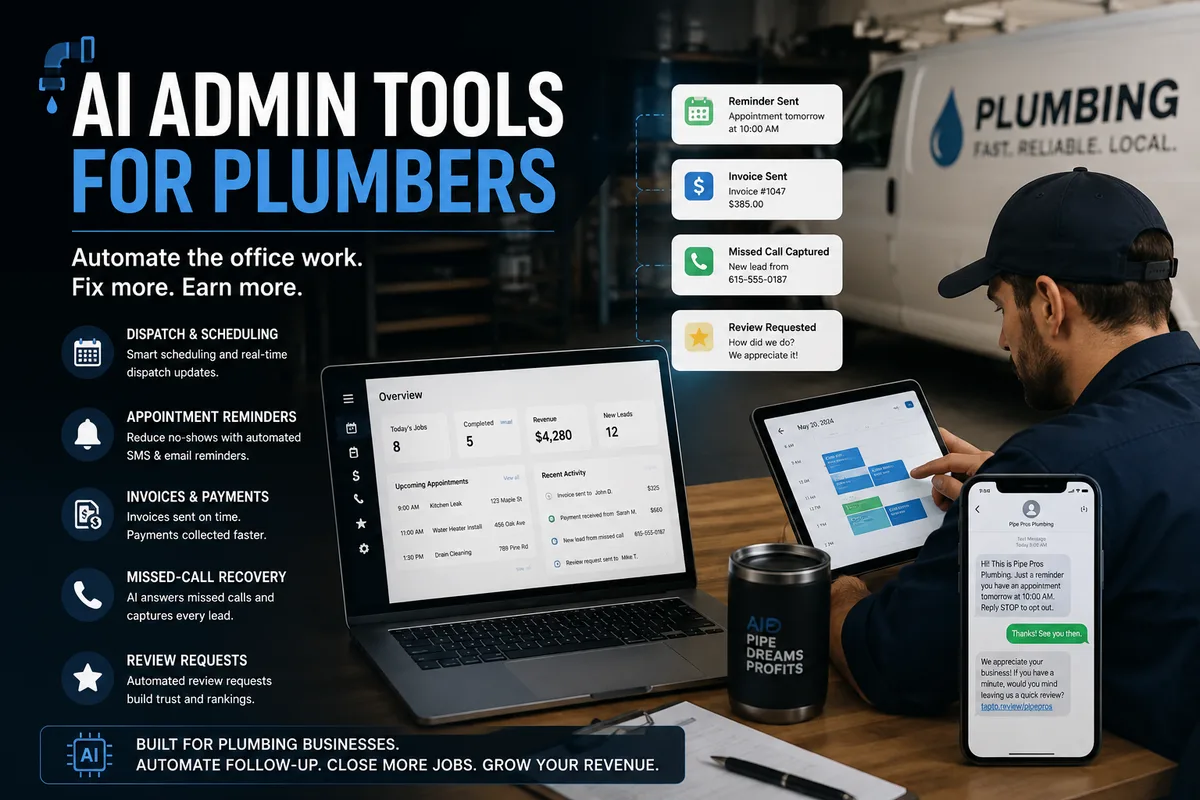
AI Admin Tools for Plumbers: What They Are and How to Choose
AI admin tools automate dispatch, reminders, invoicing follow-up, missed calls, and review requests for plumbers. What they do and how to choose.
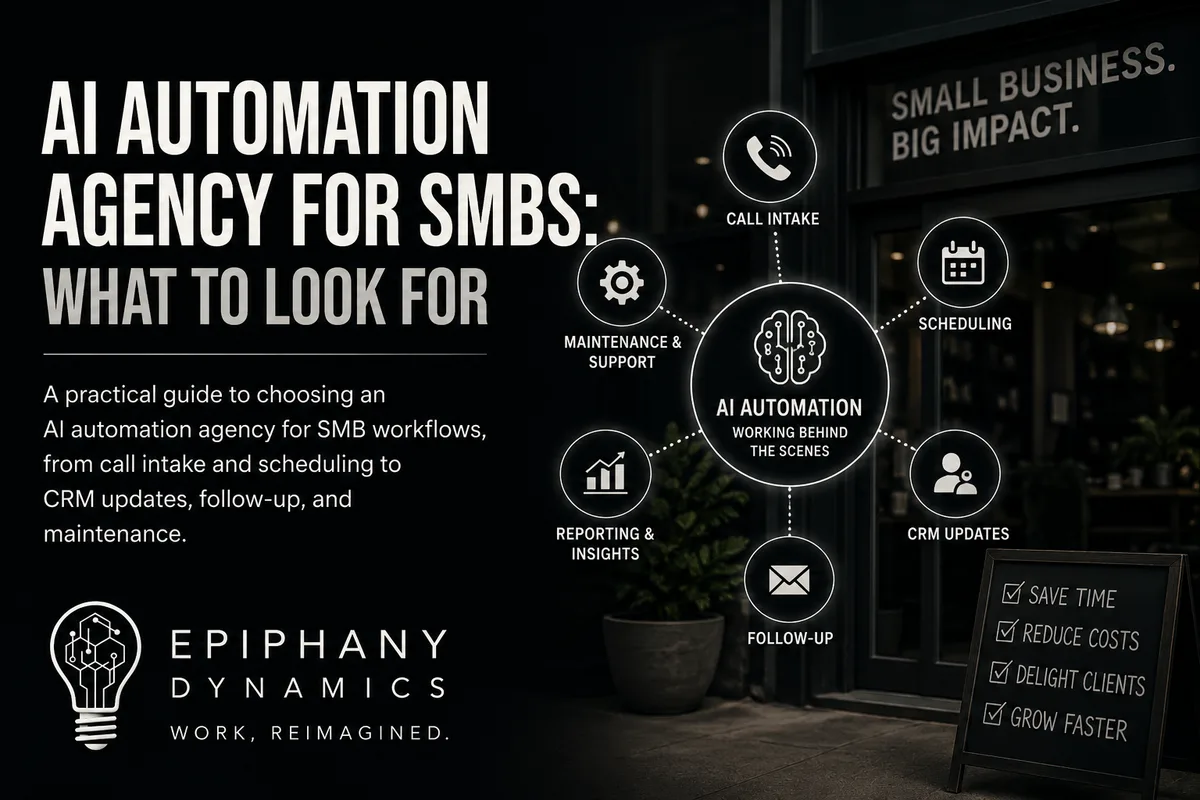
AI Automation Agency for SMBs: What to Look For
A practical guide to choosing an AI automation agency for SMB workflows, from call intake and scheduling to CRM updates, follow-up, and maintenance.
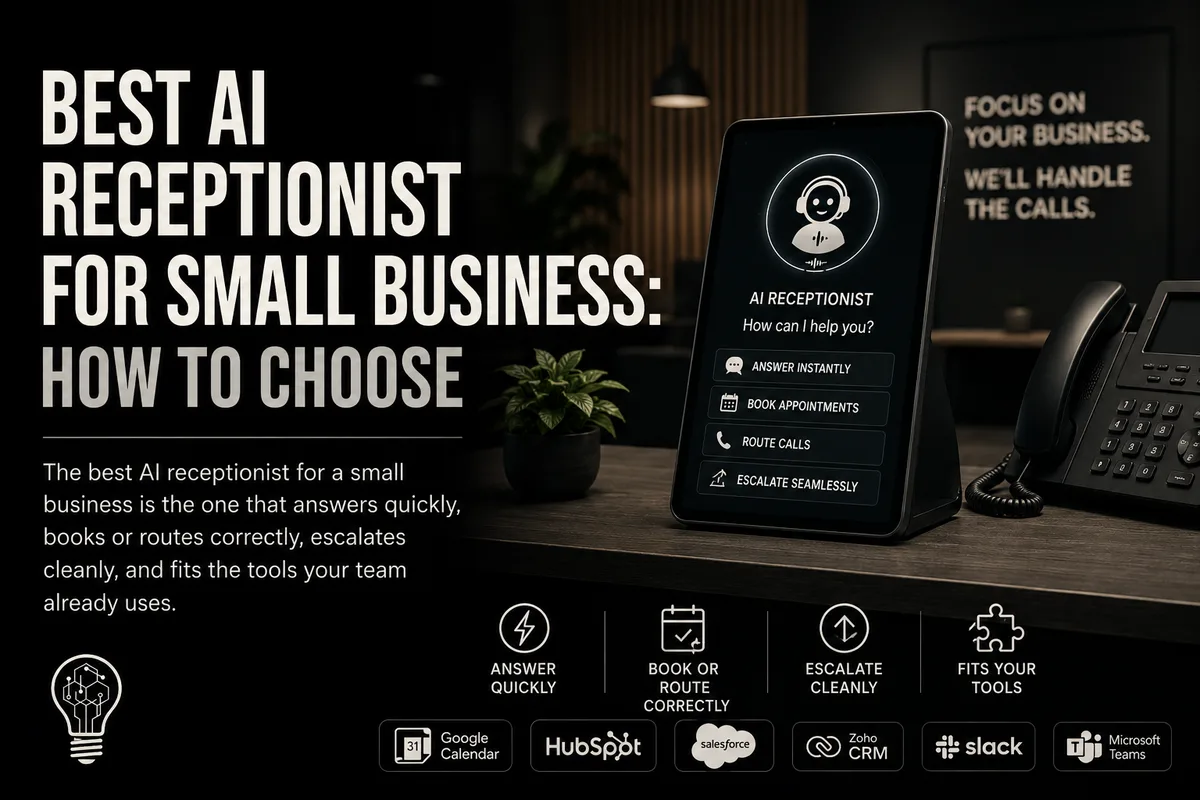
Best AI Receptionist for Small Business: How to Choose
The best AI receptionist for a small business is the one that answers quickly, books or routes correctly, escalates cleanly, and fits the tools your team.