
AI Lead Qualification for Contractors: What Works in 2026
AI lead qualification for contractors uses automated systems to screen inbound inquiries by project scope, budget, timeline, and location before any human time is spent. Done right, it cuts wasted estimate appointments, speeds up first response, and improves sales focus by making sure conversations happen with real prospects.
Contractors burn a large share of estimate appointments on leads that were never going to close. AI qualification cuts that waste while helping every lead get.
Epiphany Dynamics is an AI automation agency: we help businesses find and fix operational bottlenecks with AI receptionists, lead follow-up, and workflow automation.
Free 30-minute audit. We name at least 3 things you can automate, ranked by impact.
Book a free AI audit
Patrick Gibbs
AI lead qualification for contractors uses automated systems to screen inbound inquiries by project scope, budget, timeline, and location before any human time is spent. Done right, it cuts wasted estimate appointments, speeds up first response, and improves sales focus by making sure conversations happen with real prospects.
The Real Cost of Unqualified Leads for Contractors
Unqualified leads drain contractor time through callback attempts, initial conversations, and wasted site visits. AI qualification intercepts leads before a human gets involved, turning that lost time into work on jobs that actually close.
Here's the leak most contractors don't track: a roofing or HVAC company can burn a surprising number of estimate slots on leads that were never going to close. Not because the lead wasn't interested, but because the project was outside the service area, the budget was below the minimum job size, or the timeline was "sometime next year." None of that came up in the initial call because nobody asked.
The math gets ugly fast. If a meaningful share of your estimate appointments are wasted, the loss is the estimator time, drive time, and quote prep you spent on appointments with no realistic path to a signed contract. The speed problem compounds it. Lead-response research consistently shows that faster contact produces better qualification outcomes, but most contractor businesses don't have someone watching the phone after hours. The lead goes cold, calls someone else, and that job is gone.
What AI Lead Qualification Actually Does
AI lead qualification is an automated intake layer that collects project details from every inbound lead via phone, chat, or web form before any human time is spent. It captures scope, budget range, location, and timeline, then routes, flags, or disqualifies leads based on rules you define, giving contractors a clean prioritized pipeline instead of a pile of raw inquiries.
When a lead comes in through any channel, a voice AI answers immediately and runs them through an intake sequence. It either books an appointment with the right person or captures the information for a structured callback. On the web side, a chat widget or smart intake form handles the same data collection asynchronously. A lead in your service area with a real budget gets routed to your scheduling system. A lead well outside your territory gets a polite decline. A lead with no firm timeline gets added to a nurture sequence rather than eating an estimator's afternoon.
This is different from a basic contact form. The AI adapts based on what the person says. If someone mentions their roof is leaking, the system can follow up on the age of the roof, whether there's an active insurance claim, and the approximate square footage before any human sees the record. For contractors figuring out where this fits in a broader tech setup, the overview of best AI tools for general contractors in 2026 breaks down the full stack worth evaluating before you commit to a vendor.
The Qualifying Questions That Separate Real Leads From Time-Wasters
A short set of questions predicts lead quality for contractors: project type, service area location, approximate budget range, desired start timeline, and whether the prospect has competing bids. These data points, collected through phone or web intake, let you route every lead without a single human conversation.
Not all qualifying questions carry the same weight. These are the ones that do the most work in the least time:
- Project type confirms your crew can actually do the work before anyone spends time on the wrong inquiry.
- Location is binary. In service area or not. If not, close the intake fast and politely, before anyone wastes time.
- Budget range is the one most contractors skip because it feels uncomfortable. Don't skip it. Ask with plain-language brackets tied to your minimum job size. If their budget is below your threshold, you know before anyone drives anywhere.
- Timeline separates buyers from browsers. A near-term start is a buying signal. "No rush" means nurture territory, not a scheduled estimate.
- Competing bids is optional but tells you how price-sensitive the lead is and how fast your follow-up needs to move.
The full intake sequence, asked naturally in a phone conversation, should feel short and helpful. That's all you need to sort a real roofing opportunity from a tire-kicker. The automated lead scoring guide explains how to translate these answers into a score that triggers different follow-up workflows in your CRM automatically.
Manual Qualification vs. AI Qualification: The Numbers
Manual lead qualification costs contractor businesses in staff time, estimator travel, missed follow-up, and wasted appointment overhead. AI qualification systems should be evaluated against the value of returned estimator capacity and the additional jobs created by faster response, not against a generic vendor payback claim.
Here's a direct comparison for a mid-size contractor with enough inbound demand to need a real intake process:
| Category | Manual Process | AI Qualification |
|---|---|---|
| Initial response time | Depends on who sees the lead first | Immediate intake when the lead arrives |
| Time per lead (intake) | Human callbacks, notes, and qualification questions | AI-handled intake with structured handoff |
| Wasted estimate rate | High without screening | Lower with front-end qualification |
| After-hours coverage | None or on-call | Consistent coverage outside office hours |
| Monthly cost | Staff time plus wasted estimate overhead | Software, setup, and management cost |
| Annual cost | Compounds with inquiry volume | Scales with call volume and workflow complexity |
The wasted estimate rate drop is where the real money is. If you reduce the share of appointments that should never have been booked, you return estimator time to better leads and real job execution. Add even one additional closed job from faster after-hours response, and the system can become easy to justify when your project value is high enough. HVAC operators have been running this math for a few years now, and the HVAC scaling systems are built on exactly the same qualification logic at the foundation.
For related material, see How to Get More Leads for Your Construction Company in 2026.
How to Set This Up Without Overcomplicating It
Setting up AI lead qualification for a contractor business starts with defining hard disqualifiers, writing the intake script, connecting the system to your scheduling or CRM tool, and testing it against real lead scenarios before trusting it fully. Skipping the testing phase is the most common and most expensive mistake contractors make.
Start with your disqualifiers, not your tool selection. Write down what makes a lead automatically not worth your time: outside service area, budget below your minimum job size, vague future timeline with no firm commitment, project types your crew doesn't handle. Those become the AI's hard stop conditions. With that list defined, picking a platform is straightforward because you know exactly what it needs to do.
One thing worth being clear about: script quality matters more than the platform you run it on. A well-written intake conversation on a mid-tier AI platform will outperform a mediocre script on an expensive one. Write it conversationally. Call in yourself and pretend to be a lead. If any moment feels robotic or like an interrogation, rewrite it before you go live. If you're unsure whether to build this internally or bring in outside help, the specific signals that tell you when to hire an AI automation agency are worth reading before you sign anything.
The Failure Mode Most Contractors Hit
The most common failure in AI lead qualification is building a gatekeeper instead of a guide. Leads who feel screened out rather than helped will hang up, leave a negative review, or call a competitor. Every qualifying question needs to be framed as helping the lead get the right service, not filtering them away from you.
The intake language is where most contractors get this wrong. "What's your budget?" performs worse than "To make sure we bring the right crew and give you an accurate quote, do you have a rough budget range in mind?" Both questions get the same answer. One keeps the person engaged. If the AI sounds transactional at any point, the lead disengages, and they won't tell you why. They just won't book.
After-hours handling is especially sensitive. A lead calling outside office hours needs to feel like they reached someone useful before they'll answer qualifying questions honestly. Voice AI that opens with acknowledgment and moves naturally into intake tends to keep more callers engaged than systems that open with a hard gating question. Reading about how AI phone answering works in real home service businesses gives a clear picture of what a well-designed conversation flow actually looks like from the lead's side.
Contractors who run this well don't set it up and walk away. They review intake data monthly, look for patterns in what's getting declined, and adjust qualifying thresholds as they learn what their best-fit jobs had in common before the customer signed. That iteration is what separates a system that works from one that compounds over time. If you're still manually sorting every inbound inquiry, the gap between you and competitors running automated qualification is widening. Epiphany Dynamics builds these systems for contractor and service businesses that want to close that gap without the typical trial-and-error period.
Frequently Asked Questions
Q: How much do AI lead qualification systems improve contractor close rates?
Contractors use AI lead qualification to improve close rates by making sure more sales conversations happen with prospects already vetted for budget, scope, and timeline fit. A business running weekly estimates can use the intake data to remove unqualified appointments from the calendar, freeing estimator time for focused sales work or job execution.
Q: How quickly can AI respond to contractor inquiries, and why does it matter?
AI lead qualification can respond immediately across phone, chat, and web channels instead of waiting for someone to notice the inquiry manually. Since the odds of qualifying a lead fall off steeply the longer a response takes, instant AI qualification captures projects competitors miss during response delays.
Q: Which project details should contractors collect to qualify leads effectively?
The most efficient AI systems ask about project scope, budget range, timeline, location, and property type, capturing the factors that reveal unqualified inquiries early. This data prevents wasted site visits by filtering out leads that are outside service areas, budget mismatches, or future projects before any estimator time is spent.
Q: What's the real cost-benefit of AI lead qualification for small contractors?
The cost-benefit starts with how many wasted appointments the system can remove from your calendar, how much estimator time those appointments consume, and what else that time could have produced. Compare that recovered capacity against the software, setup, and management cost before buying.
Patrick Gibbs
AI Automation Expert
Patrick Gibbs helps professional practices implement AI automation that captures more leads, books more appointments, and scales without adding overhead. He's the founder of Epiphany Dynamics and creator of the AI Front Desk system.
Related Solutions
Build this into a real workflow
Related Posts
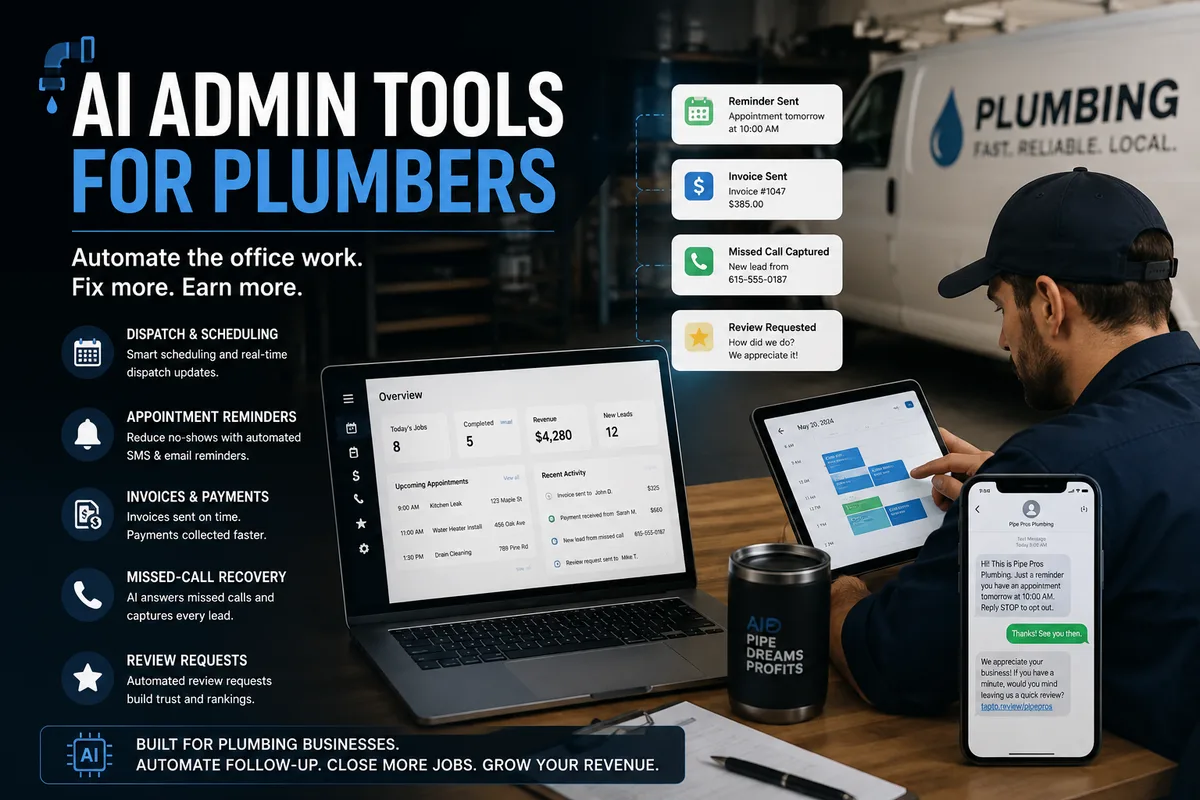
AI Admin Tools for Plumbers: What They Are and How to Choose
AI admin tools automate dispatch, reminders, invoicing follow-up, missed calls, and review requests for plumbers. What they do and how to choose.
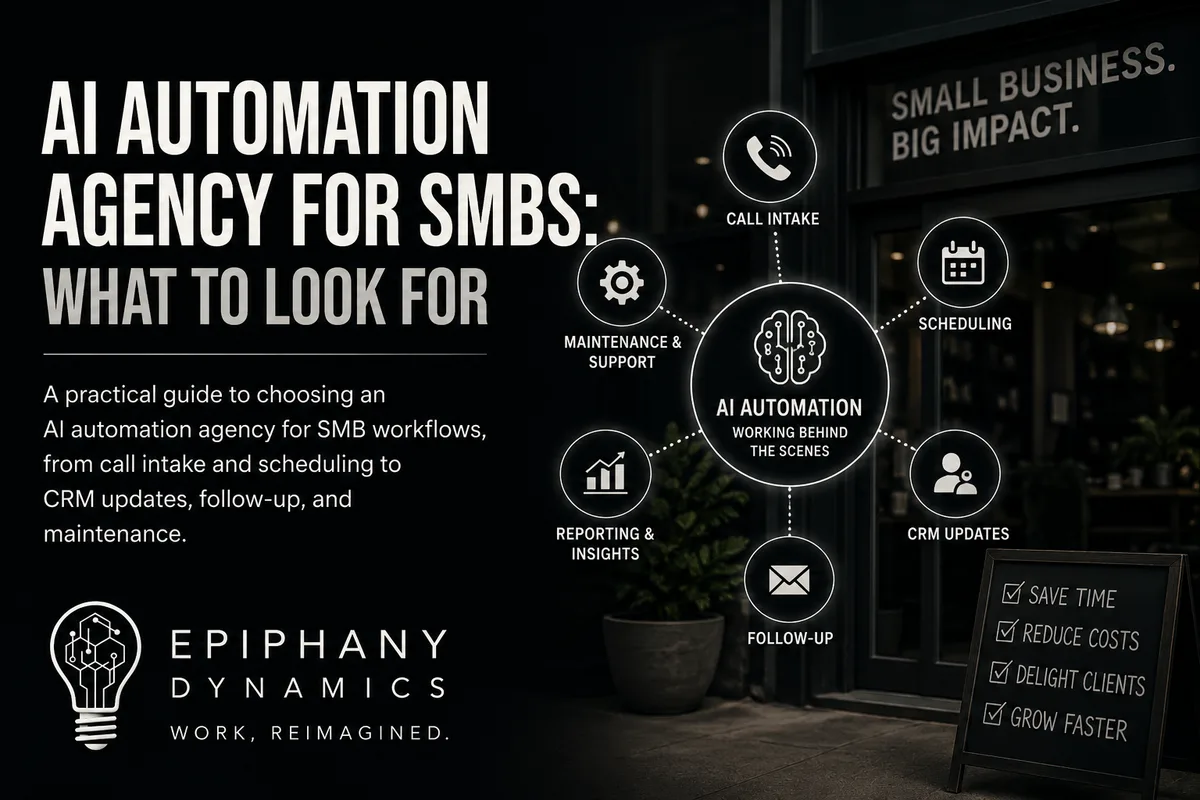
AI Automation Agency for SMBs: What to Look For
A practical guide to choosing an AI automation agency for SMB workflows, from call intake and scheduling to CRM updates, follow-up, and maintenance.
Insurance Eligibility Automation for Physical Therapy Clinics
Eligibility automation for physical therapy clinics verifies benefits before the patient arrives, cuts front desk phone work, and can lower claim denial risk.