
How to Choose an AI Automation Agency in 2026
Choosing the right AI automation agency comes down to five evaluation criteria: technical capability, industry experience, communication quality, pricing transparency, and post-deployment support. Almost every bad agency partnership fails on one of these five dimensions.
Choosing the right AI automation agency is the most important vendor decision many businesses make this year. Here is a clear framework for evaluating.
Epiphany Dynamics is an AI automation agency: we help businesses find and fix operational bottlenecks with AI receptionists, lead follow-up, and workflow automation.
Free 30-minute audit. We name at least 3 things you can automate, ranked by impact.
Book a free AI audit
Patrick Gibbs
Choosing the right AI automation agency comes down to five evaluation criteria: technical capability, industry experience, communication quality, pricing transparency, and post-deployment support. Almost every bad agency partnership fails on one of these five dimensions. This guide walks you through each one with specific questions to ask and red flags to watch for.
The AI automation agency you choose will influence your business operations for years. They will handle your phone calls, manage your customer communication, and integrate with your core business systems. A good agency partnership delivers ROI in months and frees up your team to focus on growth. A bad one wastes money, frustrates your staff, and leaves you wondering why you bothered. The difference comes down to how thoroughly you evaluate candidates before signing.
The Five Evaluation Criteria
Every agency evaluation should cover these five areas. Scoring well on four out of five is acceptable. Scoring well on three or fewer means you should keep looking.
1. Technical Capability
Can the agency actually build what you need? This means more than asking whether they use a specific AI platform. Ask about their automation stack. What AI voice provider do they use? What workflow automation platform? What is their approach to integration with your existing systems? Do they build custom solutions or rely entirely on pre-built templates?
The best agencies use a combination of platforms and have the technical depth to build custom integrations when needed. Agencies that rely on a single tool for everything are often limited in what they can deliver. Ask to see examples of their most technically complex projects and how they handled the integration challenges.
2. Industry Experience
Experience in your specific industry matters more than total years in business. A five-year-old agency that has only worked with dentists will struggle with a logistics company. An agency that has built automation for multiple businesses in your industry will have the scripts, workflows, and integration patterns already sorted out.
Ask for industry-specific work samples. Ask what they learned from previous projects in your field. Ask how your industry differs from others in terms of automation requirements. If the agency cannot articulate the specific challenges of your industry, they do not understand it well enough.
3. Communication and Process
How does the agency communicate with clients during the project? Do they assign a dedicated project manager? What is their process for capturing requirements and testing workflows before going live? How do they handle changes mid-project? What does their training and handoff process look like?
The quality of the agency's communication during the sales process is a reliable indicator of what working with them will be like. If they are slow to respond, vague about timelines, or unable to explain their process clearly during the evaluation, those problems will only get worse after you sign.
4. Pricing Transparency
Clear pricing is a sign of a mature agency. You should know exactly what you are paying for: setup costs, monthly fees, per-call or per-user charges, integration costs, training fees, and any ongoing support costs. Watch for hidden charges around custom integrations, additional user seats, or exceeding call volume thresholds.
Compare the pricing structures of the agencies you evaluate against the benchmarks in our AI agency pricing guide to make sure you are getting a fair rate.
5. Post-Deployment Support
What happens after the system goes live? Who handles ongoing maintenance? What is the response time for issues? How are updates and improvements handled? Is there a retraining process when your business changes?
The best agencies offer ongoing support as part of their monthly fee, with clear SLAs for response times. Agencies that hand you the keys and walk away after deployment are not true partners. They are contractors.
Red Flags to Watch For
Some warning signs that should make you reconsider an agency. They cannot provide references from businesses in your industry or a related industry. Their pricing is unclear or they resist giving you a detailed breakdown. They claim their solution works for every business in every industry. They promise specific ROI numbers without understanding your current operations. They do not ask detailed questions about your business during the sales process. Their contracts lock you into long terms without performance guarantees.
Related on the blog: How to Measure AI Automation ROI: Get Numbers Your CFO Will Trust (2026).
The Evaluation Process
Here is a step-by-step process for choosing an AI automation agency.
First, create a requirements document. List the specific tasks you want automated, your current systems that need integration, your call volume, and your budget range. Send this document to each agency candidate before your first call. Second, evaluate each agency against the five criteria above during the sales process. Take notes on their answers. Third, check references. Ask each reference about their experience with the agency's technical capabilities, communication, and support. Fourth, run a pilot. Most good agencies offer a pilot project or a proof of concept before committing to a full engagement. Do not skip this step. Fifth, review the contract carefully. Make sure the scope of work, pricing, and support terms are clearly documented.
FAQ: How to Choose an AI Automation Agency
How many agencies should I evaluate?
Three to five is the right range. Fewer than three and you lack comparison data. More than five and you will suffer from decision fatigue.
How long does the evaluation process take?
Plan for 2-4 weeks from initial outreach to decision. This includes time for initial calls, reference checks, and pilot projects.
Should I choose a specialist agency or a generalist?
Specialist agencies are better for complex industries with specific requirements. Generalist agencies work well for straightforward automation needs. The right choice depends on your industry and the complexity of your requirements. See our agency versus freelancer comparison for more on choosing the right type of partner.
What is a reasonable pilot project scope?
For the pilot budget below, use the amount as an outside-provider comparison. Ask for a written scope and current quote before committing. A good pilot covers one specific workflow, takes 2-4 weeks, and costs $1,000-$3,000. The pilot should demonstrate the agency's ability to deliver on a small scale before you commit to a larger engagement.
What contract terms are reasonable?
Month-to-month after an initial 3-6 month commitment is standard. Avoid contracts longer than 12 months without performance-based termination clauses.
Next Steps
Start by documenting your automation requirements. What tasks do you want automated? What systems need integration? What is your budget? That document is the foundation of your agency search. If you want to discuss how we approach automation at Epiphany Dynamics, book a call.
Patrick Gibbs
AI Automation Expert
Patrick Gibbs helps professional practices implement AI automation that captures more leads, books more appointments, and scales without adding overhead. He's the founder of Epiphany Dynamics and creator of the AI Front Desk system.
Related Solutions
Build this into a real workflow
Related Posts
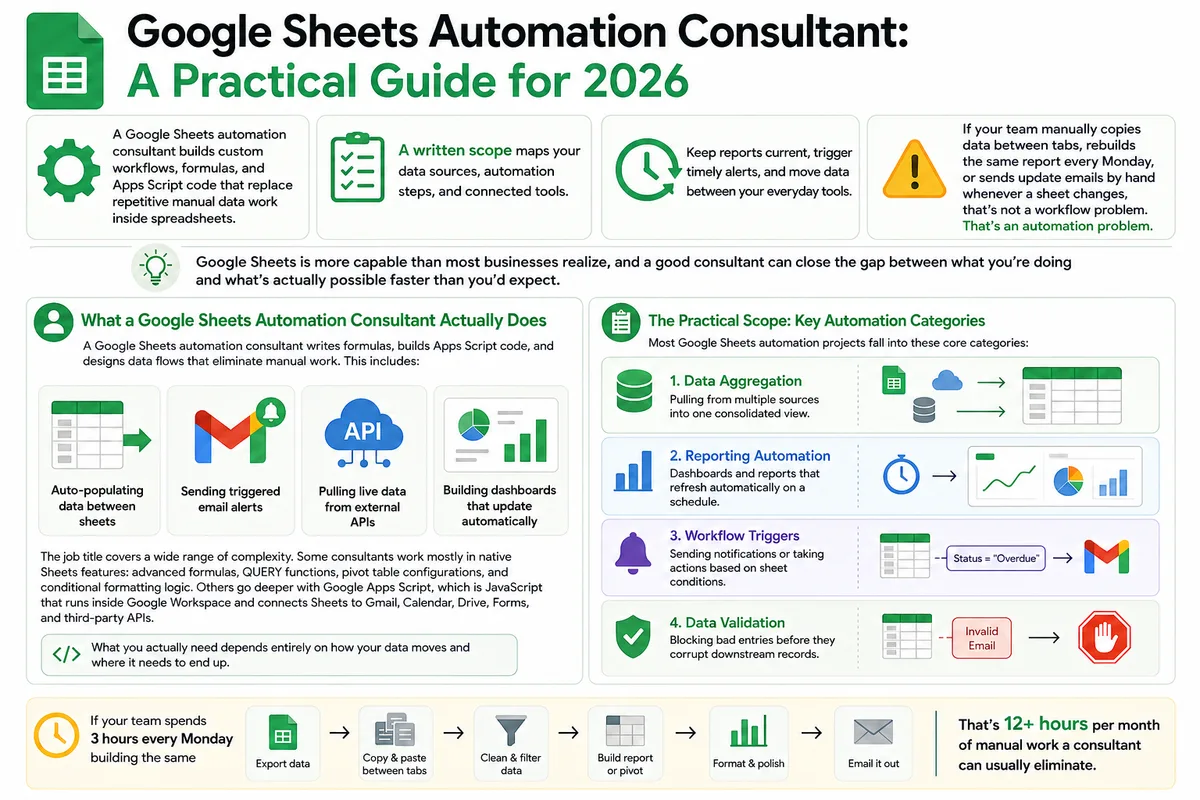
Google Sheets Automation Consultant: A Practical Guide for 2026
Most businesses don't track what spreadsheet work actually costs them. Here's what a Google Sheets automation consultant does in 2026, how to judge the value.
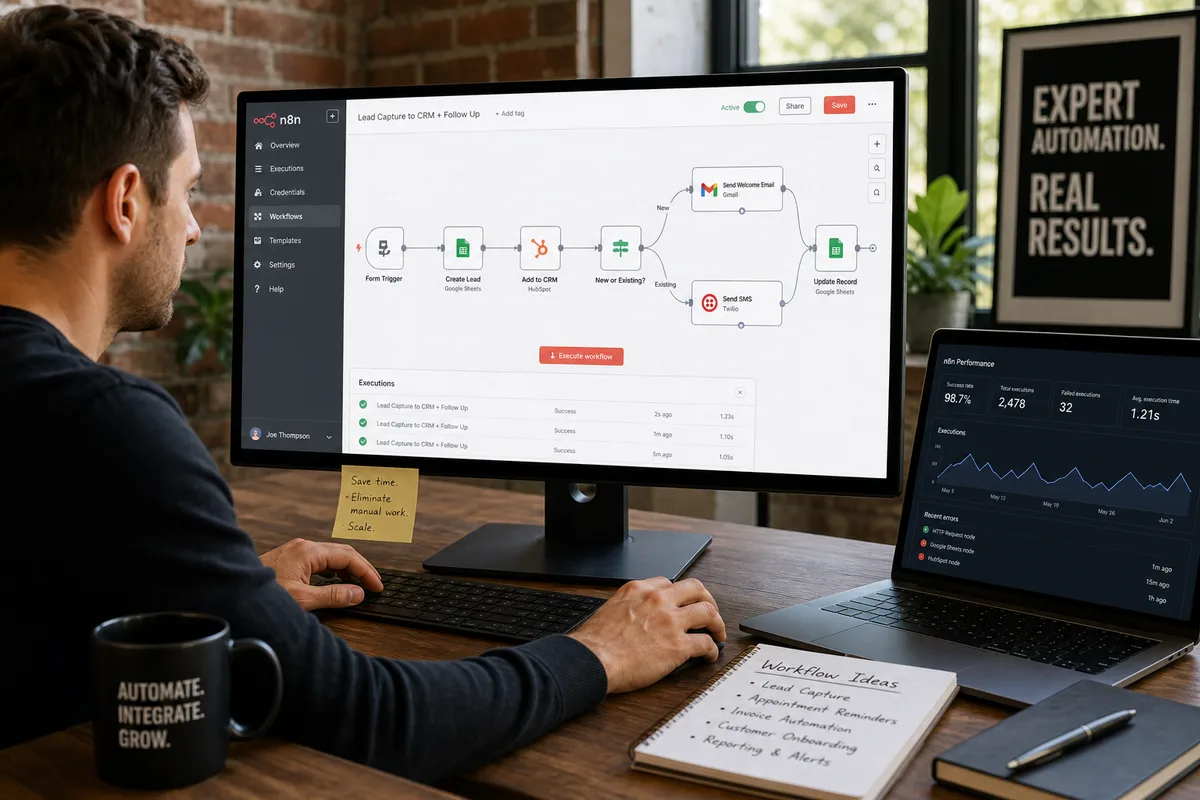
n8n Workflow Automation Agency: What They Build, What It Costs (2026)
Zapier pricing drove you to n8n. Now you're wondering if hiring an agency to build it makes sense. Here's what they build, what projects cost, and how to.
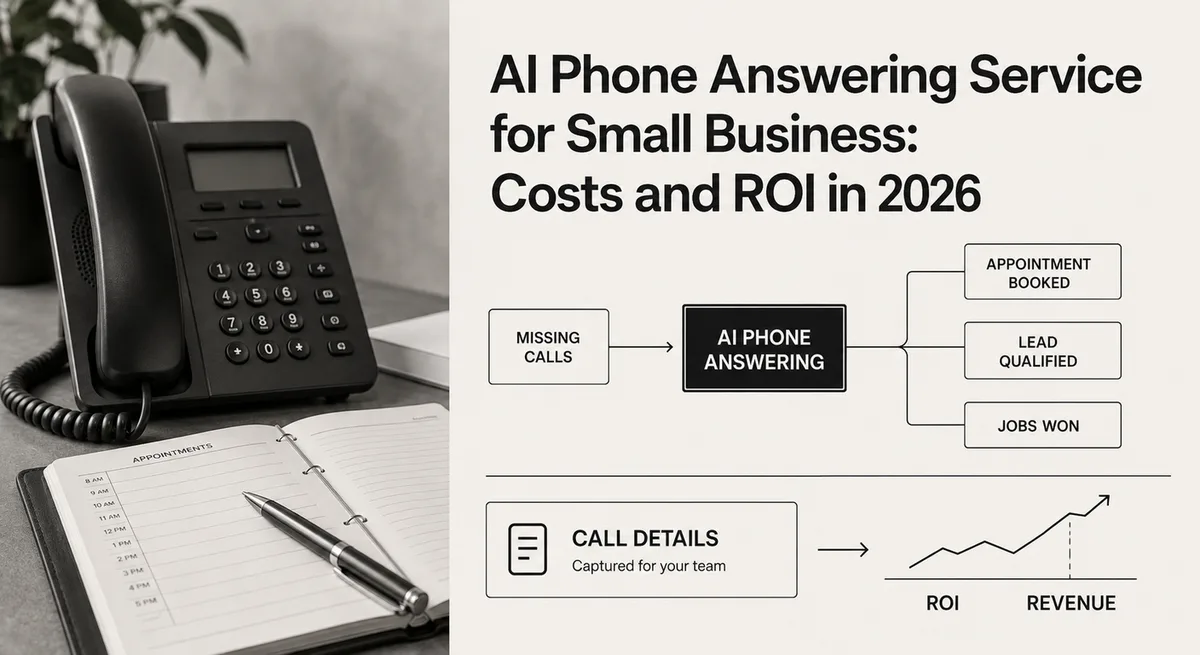
AI Phone Answering Service for Small Business: What to Compare in 2026
AI phone answering services can handle routine calls, book appointments, and route urgent requests when your team is unavailable.