
AI Phone Answering Service for Small Business: What to Compare in 2026
An AI phone answering service for small business uses voice AI to answer inbound calls, book appointments, qualify leads, and route urgent requests without requiring a human receptionist to pick up every call. Whether it pays off depends on your missed-call volume, booking rate, average job value, and setup quality.
AI phone answering services can handle routine calls, book appointments, and route urgent requests when your team is unavailable.
Epiphany Dynamics is an AI automation agency: we help businesses find and fix operational bottlenecks with AI receptionists, lead follow-up, and workflow automation.
Free 30-minute audit. We name at least 3 things you can automate, ranked by impact.
Book a free AI audit
Patrick Gibbs
An AI phone answering service for small business uses voice AI to answer inbound calls, book appointments, qualify leads, and route urgent requests without requiring a human receptionist to pick up every call. Whether it pays off depends on your missed-call volume, booking rate, average job value, and setup quality.
If you run a service business, you've probably lost jobs to voicemail. Not because your work is worse than the competitor who picked up, but because you were on a job and couldn't answer. It's one of the most common, most fixable revenue problems in small business, and AI phone answering services were built specifically to solve it.
This isn't a tech review. It's a practical breakdown of what these systems do, what cost drivers matter, and how to figure out whether the investment makes sense for your situation. Once you run the model with your own call logs, the decision becomes much less emotional.
What an AI Phone Answering Service Actually Does
An AI phone answering service answers calls using conversational voice AI, not a phone tree. It greets callers, gathers intake information, books appointments directly into your calendar, answers FAQs, and escalates to a human when needed. Better systems handle multiple simultaneous calls and send follow-up texts or emails automatically after every interaction.
When someone calls your business line, the AI picks up quickly. It greets the caller naturally, asks about their situation, and walks them through booking without putting anyone on hold or making them navigate menus. The voice quality on current systems is good enough that most callers interact normally without overthinking it.
Most platforms integrate with Google Calendar, ServiceTitan, Jobber, or Calendly, so appointments land in your real schedule in real time. The better ones also trigger follow-up SMS or email sequences when a caller doesn't book, so you're working leads after the call ends, not just during it. For a broader look at how these automated systems fit inside a full business operation, the guide on AI automation use cases for service businesses covers it across HVAC, dental, real estate, and more.
The Real Cost of Missed Calls
A 411 Locals study found that many small-business calls go unanswered. For a service business, the real cost depends on how many of those calls are bookable, how often answered calls turn into jobs, and what a booked job is worth. Most callers who hit voicemail don't wait around, so a missed call can become a permanently lost opportunity.
Here's the model by industry. Use your own call logs and booking data rather than a generic conversion assumption.
| Industry | Revenue Driver | Missed-Call Risk | What to Measure | Why It Matters |
|---|---|---|---|---|
| HVAC | Emergency and seasonal service calls | High during field work and demand spikes | Answered-call booking rate | Urgent callers often choose whoever responds first |
| Plumbing | Urgent repair jobs | High when crews are on site | Missed calls by time of day | After-hours calls can be especially valuable |
| Dental (new patient) | New patient inquiries | High when front desk is overloaded | New-patient booking rate | Calls often tie directly to schedule fill |
| Landscaping | Quote requests and seasonal services | High during busy seasons | Quote-to-booking rate | Fast response keeps shoppers from moving on |
The after-hours variable changes this calculation significantly. Calls after the office closes or on weekends often come from higher-intent callers: someone whose AC died during a heat wave, a burst pipe late at night, or a tooth that's been hurting all week. A human receptionist usually isn't working those hours anyway, so you're not comparing AI to a person. You're comparing AI to voicemail. That's a much easier case to make.
What AI Phone Answering Services Cost in 2026
AI-only phone answering services, human-AI hybrid services, virtual receptionists, and in-house reception all price differently. The right comparison is not just the monthly fee; it is whether the service can answer, qualify, book, escalate, and write call records without adding manual follow-up.
Pricing models split between flat-rate, usage-based, hybrid, and outcome-based plans. Flat-rate plans provide cost certainty. Usage-based rates can be efficient when calls are short and scripts are tight, but they get expensive when conversations run long. A few platforms charge per qualified booking instead, which works well if your conversion rate is high and you'd rather pay for outcomes than minutes.
| Service Type | Cost Model | Human Staffed? | Best Fit |
|---|---|---|---|
| AI-only (Synthflow, Air.ai) | Subscription or usage-based | No | Scheduling, FAQs, intake |
| AI + human hybrid (Smith.ai) | Subscription, usage, or staffed package | Yes | Complex intake, legal, medical |
| Virtual receptionist | Staffed service package | Yes | High-touch, relationship-driven |
| In-house receptionist | Payroll, benefits, management, and turnover | Yes | Full control, complex workflows |
If you're weighing whether a hybrid service is worth the premium over a pure AI setup, the comparison of Smith.ai alternatives in 2026 covers where that cost difference is actually justified. The short version: hybrid services earn the premium when calls require real judgment, like nuanced medical intake, billing disputes, or legal intake screening. For appointment booking and FAQ handling, the AI-only options perform comparably at a fraction of the cost.
What Separates Good Setups from Bad Ones
Most AI phone answering failures are configuration problems, not technology failures. Systems that frustrate callers typically have vague scripts, no emergency escalation rules, and no real calendar integration. The setups that work invested time on the intake script, defined every call type the system handles, and wrote clear rules for what triggers a transfer to a live person.
A working setup needs four things: a clear opening that sets expectations without trying to pass the AI off as human (callers figure it out and it backfires), a defined list of call intents the system handles, a specific trigger for escalation, and live calendar integration that actually writes the booking. Without that last piece, every appointment still requires someone to manually enter it somewhere, and you've paid for a very expensive voicemail system.
Edge cases are where generic setups break down. A caller reporting a burst pipe needs to reach an emergency contact immediately, not cycle through a standard booking flow. Someone calling about a service outside your area needs a clear, graceful answer instead of the system attempting to schedule a job you can't do. If those scenarios aren't scripted, the AI handles them badly, and a bad AI experience is worse than voicemail. The AI phone answering tool evaluation guide includes a breakdown of which platforms allow real script customization versus which give you a generic template with your business name dropped in. That distinction matters more than the monthly price.
For related material, see AI Answering Service for Small Business: A 2026 Guide.
Running the ROI Calculation
ROI formula: missed bookable calls x booked-call rate x average job value, minus platform, setup, and monitoring cost. Keep the inputs tied to your own call logs so the model reflects your business instead of a generic vendor example.
Run it for your own business: pull your missed call log from a recent period, estimate the share that were bookable, multiply by your honest booking rate on answered inbound calls, then multiply by your average job value. That's your exposure for the period. The AI service cost is a fixed line against that number.
One variable worth separating out is lead source. Calls from Google Search or Google Local Services ads tend to convert far better because the intent is much higher. If those are the calls you're missing, your per-call revenue loss is higher than your average suggests. For home services contractors specifically, the ROI breakdown for home services answering services goes deeper on this, including cost data from contractors who've run the comparison.
The Bottom Line
An AI phone answering service for small business solves one specific problem: calls going unanswered while you're doing actual work. The technology works when the system is configured around real call types, booking rules, and escalation paths. The variable that determines whether it's worth paying for is how well the setup matches your actual workflow.
If the ROI math clears, test a platform against your missed call log and booking data. The goal isn't the most sophisticated system available. It's to stop losing jobs to voicemail. For businesses that need a system built around a specific intake process, CRM, and escalation logic rather than an off-the-shelf template, Epiphany Dynamics builds custom AI phone workflows for service businesses.
Frequently Asked Questions
Q: How long does it take to set up an AI phone answering service?
Simple systems can go live quickly once your calendar, service details, FAQs, and forwarding rules are ready. More serious deployments take longer because scripts, integrations, escalation rules, and test calls need to be configured before the AI handles real customers.
Q: Will callers know they're talking to an AI, and does it hurt my business image?
Current voice AI quality is close enough to human that most callers won't notice unless they're specifically listening for it. Disclosing upfront (e.g., "You've reached our automated scheduling system") actually performs better for trust and doesn't significantly impact booking rates for service businesses.
Q: How do I know if an AI phone answering service will actually pay for itself?
Track missed calls for a representative period, estimate how many were bookable, then multiply by your booked-call rate and average job value. Compare that exposure against platform, setup, and monitoring cost. If the recovered-call value is meaningful, the ROI case is worth testing.
Q: What happens when the AI can't handle a call?
The system should be trained to recognize out-of-scope calls and instantly transfer to a team member, send the caller to voicemail, or schedule a callback. Complex calls should route to a human without leaving the caller stuck inside the automation.
Patrick Gibbs
AI Automation Expert
Patrick Gibbs helps professional practices implement AI automation that captures more leads, books more appointments, and scales without adding overhead. He's the founder of Epiphany Dynamics and creator of the AI Front Desk system.
Related Solutions
Build this into a real workflow
Related Posts
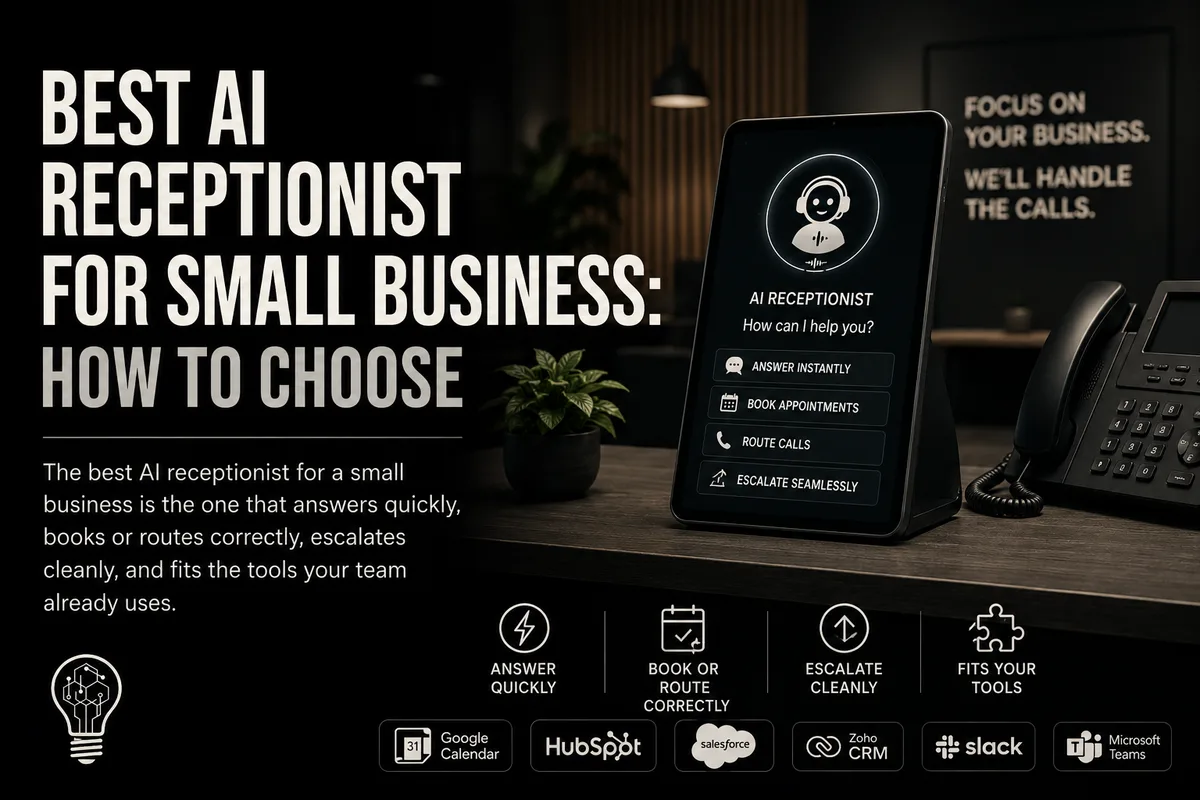
Best AI Receptionist for Small Business: How to Choose
The best AI receptionist for a small business is the one that answers quickly, books or routes correctly, escalates cleanly, and fits the tools your team.
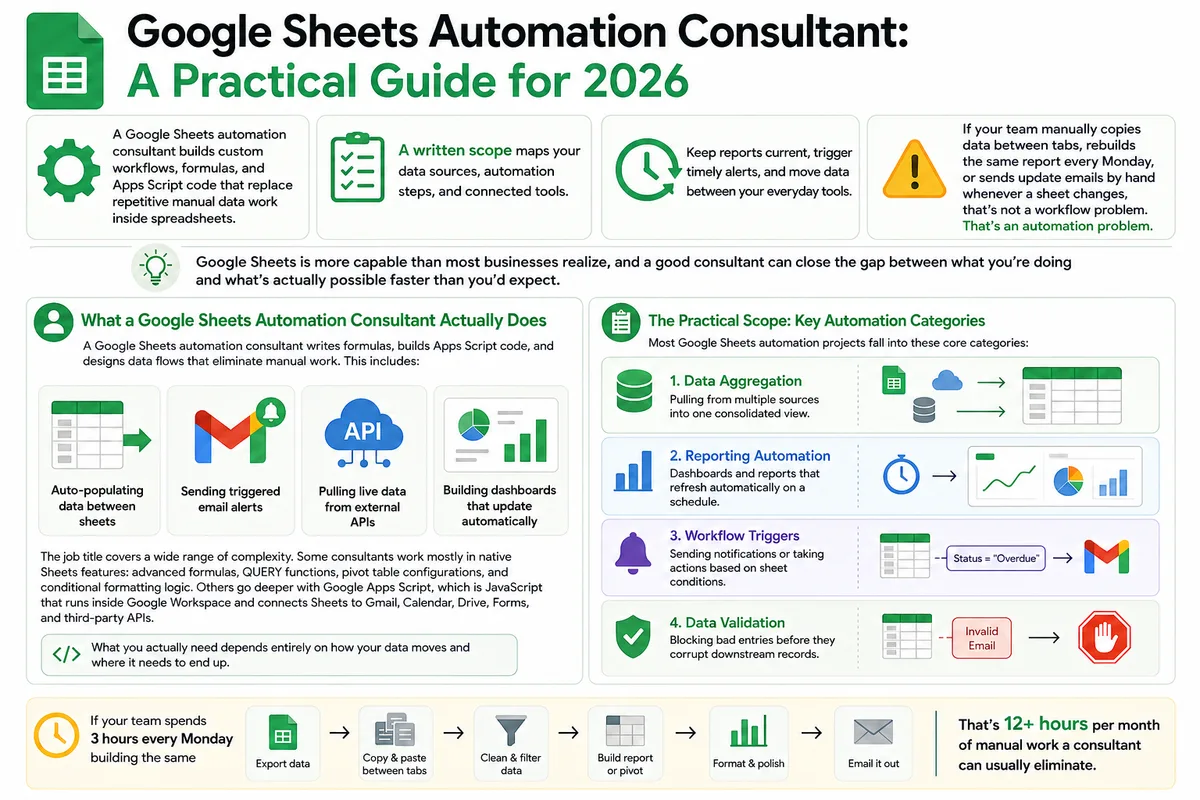
Google Sheets Automation Consultant: A Practical Guide for 2026
Most businesses don't track what spreadsheet work actually costs them. Here's what a Google Sheets automation consultant does in 2026, how to judge the value.
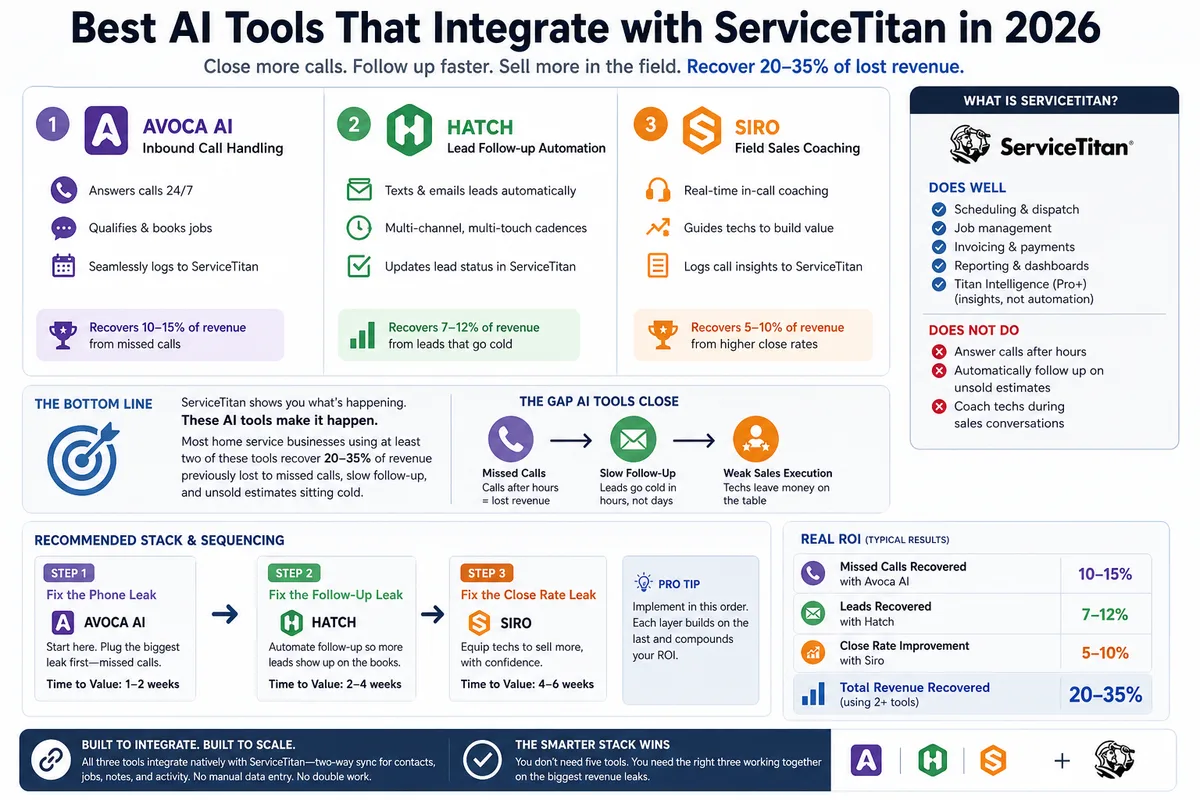
Best AI Tools That Integrate with ServiceTitan in 2026
Most ServiceTitan shops miss a meaningful share of inbound calls and leave most estimates unsold. These AI tools close those gaps inside ServiceTitan.