
Google Sheets Automation Consultant: A Practical Guide for 2026
A Google Sheets automation consultant builds custom workflows, formulas, and Apps Script code that replace repetitive manual data work inside spreadsheets. The value depends on how much manual sheet work your team repeats, how error-prone that work is, and whether the automation can be handed off cleanly after launch.
Most businesses don't track what spreadsheet work actually costs them. Here's what a Google Sheets automation consultant does in 2026, how to judge the value.
Epiphany Dynamics is an AI automation agency: we help businesses find and fix operational bottlenecks with AI receptionists, lead follow-up, and workflow automation.
The free 30-minute AI Operations Audit is a conversation about a normal week in your business and where the work piles up. We find the one change that would give you the most time back and send you a plain-English plan for it. No forms and no pitch.
Book a free AI audit
Patrick Gibbs
A Google Sheets automation consultant builds custom workflows, formulas, and Apps Script code that replace repetitive manual data work inside spreadsheets. The value depends on how much manual sheet work your team repeats, how error-prone that work is, and whether the automation can be handed off cleanly after launch.
If your team manually copies data between tabs, rebuilds the same report every Monday, or sends update emails by hand whenever a sheet changes, that's not a workflow problem. That's an automation problem. Google Sheets is more capable than most businesses realize, and a good consultant can close the gap between what you're doing and what's actually possible faster than you'd expect.
What a Google Sheets Automation Consultant Actually Does
A Google Sheets automation consultant writes formulas, builds Apps Script code, and designs data flows that eliminate manual work. This includes auto-populating data between sheets, sending triggered email alerts, pulling live data from external APIs, and building dashboards that update automatically without anyone touching them.
The job title covers a wide range of complexity. Some consultants work mostly in native Sheets features: advanced formulas, QUERY functions, pivot table configurations, and conditional formatting logic. Others go deeper with Google Apps Script, which is JavaScript that runs inside Google Workspace and connects Sheets to Gmail, Calendar, Drive, Forms, and third-party APIs. What you actually need depends entirely on how your data moves and where it needs to end up.
The practical scope usually breaks into a few categories: data aggregation (pulling from multiple sources into one view), reporting automation (dashboards that refresh on a schedule), workflow triggers (sending notifications based on sheet conditions), and data validation (blocking bad entries before they corrupt downstream records). If your team rebuilds the same summary report by hand every week, a good consultant can turn that into a scheduled script. That's the most common engagement type, and it's usually the fastest to build.
One thing worth being clear on: Apps Script and native formula work are different skill sets. A consultant who's excellent with complex nested QUERY formulas may not be the right pick for a multi-system integration requiring API calls. Ask specifically which types of automation they've built in the past, not just "do you know Sheets."
When the Investment Makes Financial Sense
Hiring a Google Sheets automation consultant makes financial sense when manual spreadsheet work costs more to keep doing than the build is worth. The business case should include staff time, error risk, reporting delays, and the ongoing support burden after the consultant leaves.
The break-even math is simple. Take the time your team spends on a specific spreadsheet task, multiply by the effective cost of that labor, and compare it with the build quote plus maintenance time. That's your cost of doing nothing. If the manual work also creates billing errors, delayed reports, or duplicated follow-up, include those operational costs in the comparison too.
There's also an error cost most businesses undercount. Audits of real-world spreadsheets have repeatedly found that complex spreadsheets almost always contain errors, and on financial data those errors become billing mistakes or bad decisions downstream. Automation doesn't eliminate all errors, but it eliminates the ones caused by copy-paste fatigue, which is the most common category. Before deciding which processes to prioritize, a workflow priority ranking helps you sort automation opportunities by actual business impact rather than just what's most frustrating to deal with.
What the Build Process Looks Like
A Google Sheets automation project should move through workflow mapping, the build itself, testing with real data, and documentation. A solid handoff includes written documentation and a walkthrough so your team can make minor changes without calling the consultant back every time something needs adjusting.
The discovery call matters more than most clients expect. A consultant who starts writing code before understanding your data model is going to charge you for revisions when the build doesn't match reality. Good consultants ask specific questions before touching anything: Where does the data come from? Who enters it? What does the output need to look like, and who reads it? If the first call skips straight to "I can build that for X," make them answer those questions before you agree to anything.
Handoff is where a lot of engagements fall short. If the consultant delivers a working sheet that nobody on your team understands, you're locked into paying them for every future change. Documentation requirements need to be in writing before the project starts, not requested as an afterthought. Two questions to ask before hiring: "What does your handoff documentation look like?" and "What happens if something breaks six months from now?" Vague answers to both are a reliable indicator of a frustrating engagement ahead.
Freelancer, Agency, or DIY: Comparing the Options
Freelance Google Sheets consultants work well for contained, defined projects. Automation agencies charge more but usually include testing, documentation, and ongoing support. DIY with Apps Script costs nothing in software but can cost plenty in learning time once you factor in your own hourly value.
| Option | Best For | Watch Out For |
|---|---|---|
| Freelance marketplace | Contained, well-defined builds | No support after handoff |
| Automation agency | Complex, multi-system workflows | Overkill for simple single-sheet builds |
| DIY / Apps Script | Developers or tech-comfortable founders | Learning curve can exceed the value of doing it yourself |
| No-code tools (Zapier + Sheets) | Simple row-based triggers and alerts | Per-task pricing adds up at volume |
Zapier and Make.com cover a surprising number of simple Sheets cases without any consultant involved. If you need "when a row is added, send an email," a no-code automation tool may be enough. The cases where you actually need a consultant are ones where the logic is conditional, the data is messy, or the output has to reach multiple systems at once. No-code tools hit a ceiling fast on complex conditional logic.
If your workflow involves generating or processing documents alongside spreadsheet data, the document workflow automation guide covers where Sheets fits within a broader document process stack. A lot of businesses discover mid-project that they need both, and knowing where that line is before you start saves you from expensive scope changes. For anything involving AI layered on top of spreadsheet workflows, the AI automation agency overview explains how those engagements differ in structure and pricing from standard spreadsheet consulting.
Related reading: What AI Automation Actually Means for Your Business in 2026.
How to Vet a Consultant Before You Commit
To vet a Google Sheets automation consultant, ask for examples of similar builds, request a sample of their Apps Script code from past work, and ask directly how they handle scope creep. Red flags: code with no comments, inability to explain their work in plain English, and refusal to do a paid test task upfront.
The biggest risk with freelance sheet consultants is the black-box build. You pay for something that works fine until a column gets renamed later, and suddenly nothing runs and the consultant is unreachable. Fix this before the project starts: documentation requirements need to be written into the agreement. Ask to see Apps Script code from a previous engagement. You don't need to audit it technically; just check whether it has useful inline comments. A consultant who writes uncommented code is not thinking about the next person who has to maintain it. That person is probably you.
Paid test tasks work well for higher-budget projects. Offer a small, clearly defined task before committing to the full build. You get real evidence of their communication, turnaround time, and code quality. Most serious consultants accept this without issue. Also pay attention to whether they ask clarifying questions during the first call. Someone who says yes to everything without asking about your data structure is quoting without understanding what they're actually quoting on.
If you're not sure whether a Sheets specialist is the right call, or whether the real problem is broader process automation, the guide to hiring a business process automation consultant covers how to think through that distinction and what it typically costs across different automation categories. Most businesses end up discovering that Sheets automation is one piece of a larger picture, and it helps to know that before you scope the project.
Frequently Asked Questions
Q: What controls the timeline for a Google Sheets automation project?
Timeline depends primarily on data complexity, how well-defined your requirements are upfront, whether external systems are involved, and how much testing is needed before handoff. A clean single-sheet workflow is very different from a messy multi-system reporting build.
Q: Do I need to hire a consultant or can I learn Google Sheets automation myself?
Self-service learning can work when the workflow is simple and you have someone comfortable experimenting. Hire a consultant when the spreadsheet affects billing, client delivery, reporting, or operational decisions where a broken formula creates real business risk.
Q: What's the difference between hiring someone who codes Apps Script versus someone who uses formulas?
Formula consultants are best for data lookups, filtering, and multi-sheet consolidation. Apps Script specialists add email triggers, API pulls, scheduled reports, and custom logic that formulas cannot handle. Most projects should start with native Sheets capabilities and escalate to coding only when the workflow requires it.
Q: How do I estimate what Google Sheets automation can save?
Start with the recurring task. Estimate how long it takes, who does it, how often errors happen, and what delays or mistakes cost the business. Then compare that cost of manual work with the consultant quote, maintenance expectations, and handoff quality.
Patrick Gibbs
AI Automation Expert
Patrick Gibbs helps professional practices implement AI automation that captures more leads, books more appointments, and scales without adding overhead. He's the founder of Epiphany Dynamics and creator of the AI Front Desk system.
Related Solutions
Build this into a real workflow
Related Posts
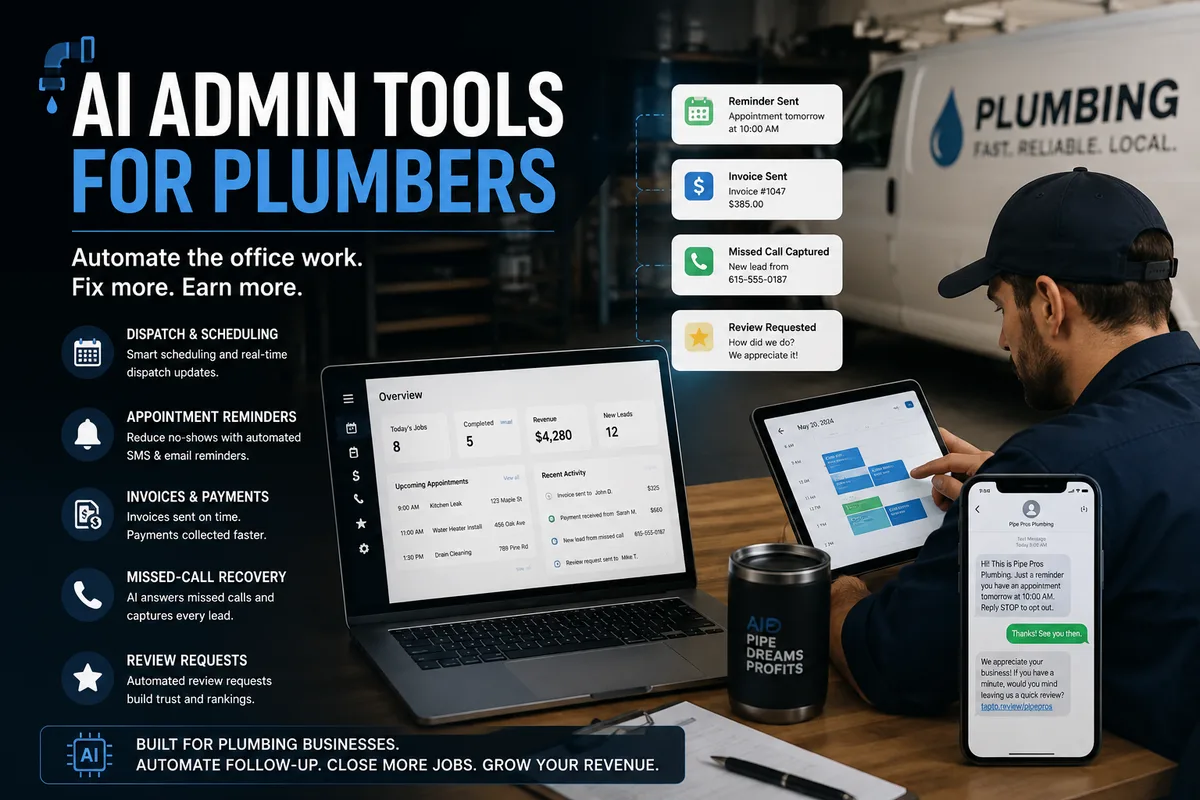
AI Admin Tools for Plumbers: What They Are and How to Choose
AI admin tools automate dispatch, reminders, invoicing follow-up, missed calls, and review requests for plumbers. What they do and how to choose.
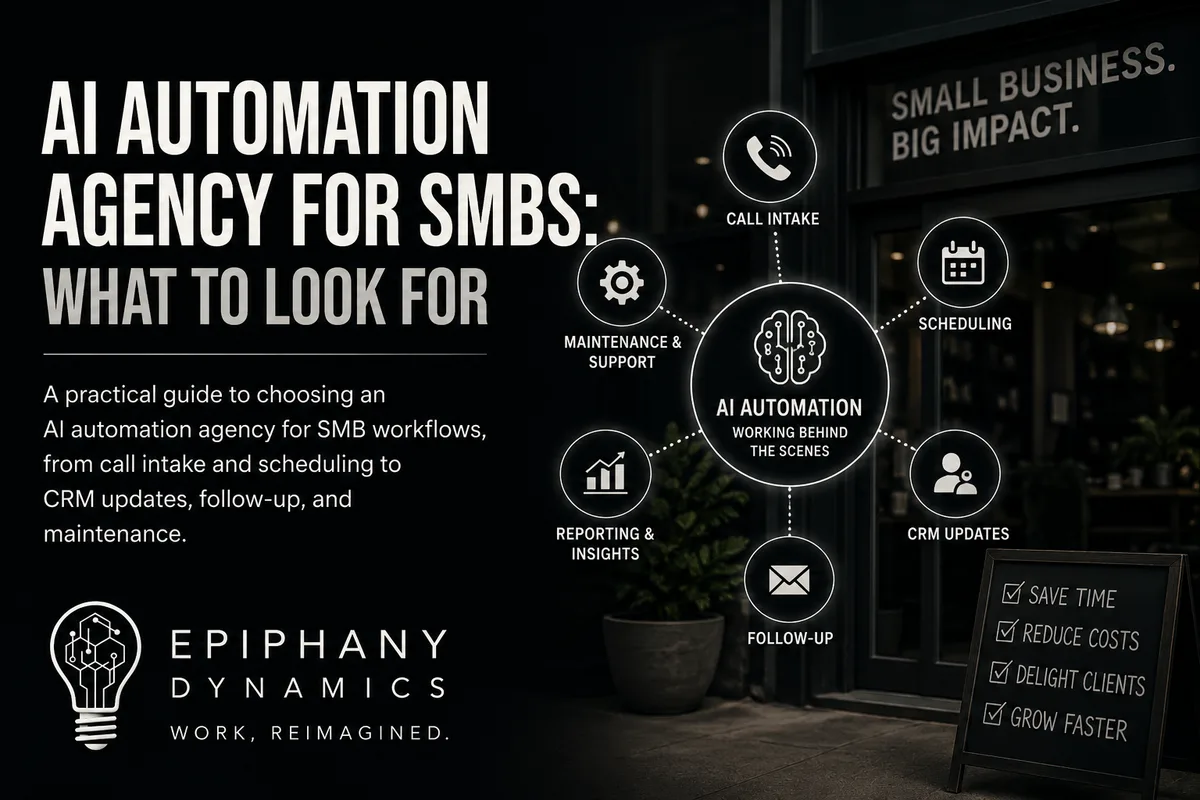
AI Automation Agency for SMBs: What to Look For
A practical guide to choosing an AI automation agency for SMB workflows, from call intake and scheduling to CRM updates, follow-up, and maintenance.
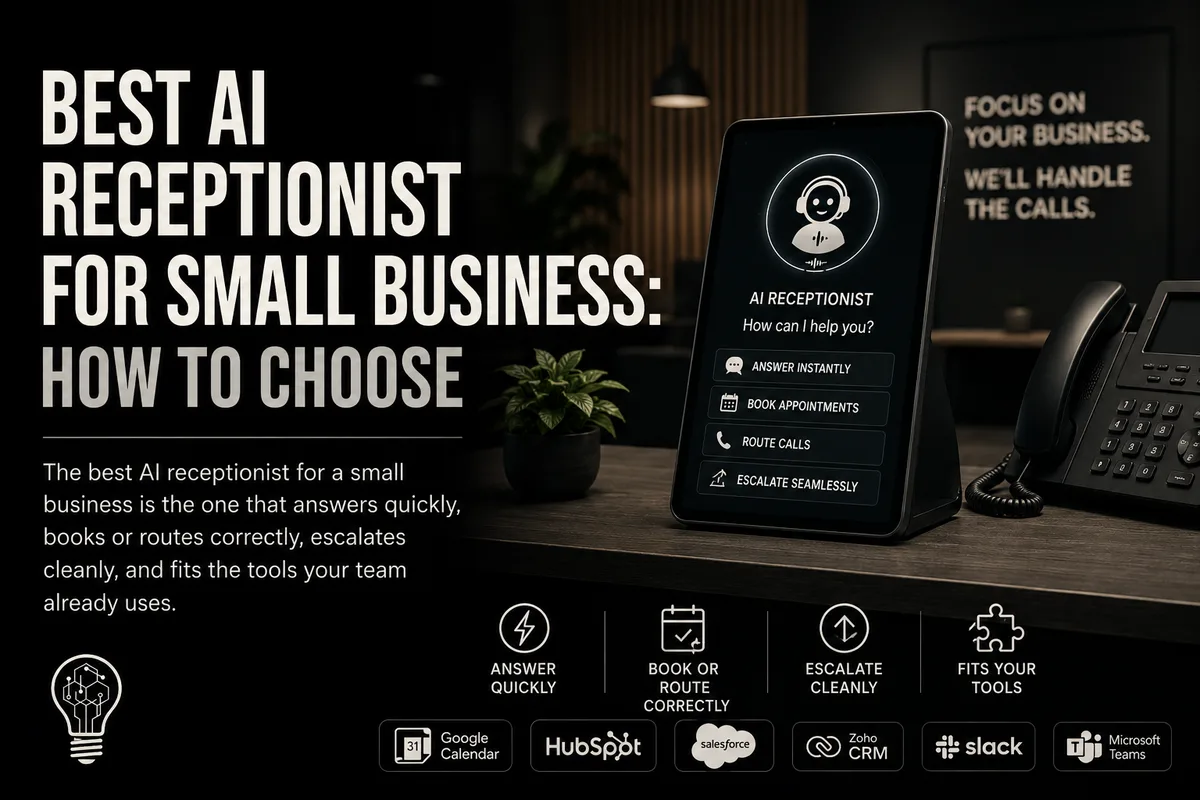
Best AI Receptionist for Small Business: How to Choose
The best AI receptionist for a small business is the one that answers quickly, books or routes correctly, escalates cleanly, and fits the tools your team.