
AI Receptionist for Roofing Companies: Real Costs and ROI in 2026
An AI receptionist for roofing companies answers inbound calls, qualifies the lead (homeowner vs. renter, insurance claim vs. cash pay, scope of damage), books the estimate appointment, and routes emergency calls to an on-call crew member. Most roofing businesses miss a meaningful share of calls while their crews are on job sites.
Roofing companies miss a large share of calls while crews are on job sites. With high average job values, that math gets painful fast.
Epiphany Dynamics is an AI automation agency: we help businesses find and fix operational bottlenecks with AI receptionists, lead follow-up, and workflow automation.
Free 30-minute audit. We name at least 3 things you can automate, ranked by impact.
Book a free AI audit
Patrick Gibbs
An AI receptionist for roofing companies answers inbound calls, qualifies the lead (homeowner vs. renter, insurance claim vs. cash pay, scope of damage), books the estimate appointment, and routes emergency calls to an on-call crew member. Most roofing businesses miss a meaningful share of calls while their crews are on job sites. Because roofing jobs are high-value and storm demand is time-sensitive, each missed call carries a real cost that compounds fast during storm season.
Why Roofing Companies Lose So Many Leads on the Phone
Roofing companies miss more calls than almost any other home service trade because their workforce is physically on rooftops during peak call hours. A hail event can multiply inbound call volume quickly. Crews are unavailable, office staff are overwhelmed, and callers who reach voicemail typically dial the next result before the first company ever calls back.
Research on lead response behavior consistently shows that many customers choose the first company to respond to their inquiry. In roofing, that window gets especially short when a neighborhood just took a direct hit from a storm. If your phone goes to voicemail while a homeowner is standing in their yard looking at shingles on the grass, they are not waiting around. They are already on the next Google result.
This is not a staffing problem in the traditional sense. A roofing company running eight crews does not need eight more people in the office. It needs every inbound call handled intelligently, without adding headcount. That is the problem an AI receptionist is built to solve. If you want the full breakdown of where the revenue actually disappears, the analysis in why roofing companies lose revenue to missed calls and slow follow-up lays it out with specific numbers.
What an AI Receptionist Actually Does on a Roofing Call
A roofing AI receptionist greets the caller, identifies the call reason (new damage, estimate request, emergency tarp, existing job update), asks qualification questions specific to roofing (homeowner or renter, insurance or out-of-pocket, type and extent of damage), books the estimate in the calendar, and sends a confirmation text. Emergency calls route to an on-call number. Everything logs to the CRM automatically.
The qualification step is where a well-built AI receptionist earns its keep. Not every roofing lead is worth the same effort. A homeowner with a full insurance claim is a completely different conversation than a renter calling about a landlord's property. A properly configured AI asks those questions upfront, tags the lead accordingly, and routes it to the right follow-up workflow. Most companies that implement this find their sales team spending time on pre-qualified leads instead of discovering late that the caller does not even own the building. Our AI automation for roofing contractors page covers the same intake and routing pattern in full, including storm damage triage and insurance claim document handoff.
The emergency routing piece matters more than most owners initially think. After a major storm, a caller with water actively coming through their ceiling needs someone on the line or at their house fast. An AI receptionist can be configured to detect urgency signals in the conversation (active interior leak, ceiling damage, structural exposure) and immediately call the on-call crew while keeping the caller updated. That is a real service differentiator in a market where most competitors send everyone to voicemail. The approach is similar to how AI receptionists handle emergency triage for plumbing companies, where the after-hours routing use case delivers the clearest return.
Storm Season and the After-Hours Window
Roofing companies that track call volume through storm events consistently report that many storm inquiry calls arrive after the normal workday, once homeowners return home and assess their property. A hail event in the afternoon often creates an evening call surge. Without after-hours coverage, those leads go to competitors who answer. AI receptionists handle that volume without forcing a seasonal hiring scramble.
Here is what the after-hours window looks like in practice. A storm moves through late in the day. By evening, homeowners have walked the property, found damage, and started searching. They call the first company that shows up. If your phone answers, you have a chance to book the estimate. If it goes to voicemail, the next company on the list picks it up. A single evening storm event in a medium-sized market can generate a surge that overwhelms ordinary phone coverage.
The seasonal nature of roofing also means it is hard to justify a full-time evening receptionist just to staff up for a handful of storm cycles. The AI receptionist cost is easier to model because it can cover slow weeks and storm surges with the same workflow. That is the real argument for the technology in a seasonal business model. It is also why comparing it to a traditional answering service is not quite an apples-to-apples evaluation. The detailed comparison between AI receptionists and answering services breaks down exactly where each option wins and where it falls short for field service businesses.
ROI Breakdown: What to Measure
The ROI case for a roofing AI receptionist starts with your own missed-call count, estimate booking rate, job value, and storm-season call pattern. The math is not complicated. The question is how many qualified calls you are currently missing and how many of those would have become booked estimates if they were answered immediately.
| Coverage Option | Cost Pattern | After-Hours Coverage | Lead Qualification | CRM Integration |
|---|---|---|---|---|
| No dedicated coverage (voicemail) | No added vendor cost, but missed-call risk stays high | No | No | No |
| Human receptionist (in-office) | Payroll, training, management, and turnover | No (business hours only) | Depends on training | Manual entry |
| Traditional answering service | Recurring service cost, often tied to usage | Yes | Basic message-taking | Rarely |
| AI receptionist | Recurring platform and implementation cost | Yes, including overflow windows | Full custom qualification | Yes |
The traditional answering service is the closest comparison. It handles after-hours calls, but mostly takes messages. The agent writes down a name and number, emails it over, and that is it. You still have to call back. The lead still has to wait. An AI receptionist qualifies the lead, books the appointment, and sends a confirmation before you even know the call happened. If you have been evaluating Smith.ai or similar human-staffed services, the Smith.ai alternative breakdown covers specifically where that gap between message-taking and full workflow automation shows up in real use cases.
One thing the table does not capture is the operational difference between message-taking and booking. A human receptionist may be excellent during office hours, but that does not solve the homeowner calling after a leak appears in the evening. An answering service can reduce silence, but if it only creates a callback task, the lead still waits. The strongest AI receptionist use case is when the system qualifies the caller, books the estimate, logs the context, and escalates emergencies without turning every call into a next-day follow-up task.
More on this subject: AI Voice Receptionist for Plumbers: The Real Costs and ROI in 2026.
How to Evaluate an AI Receptionist for a Roofing Business
When evaluating AI receptionists for a roofing company, the non-negotiables are: roofing-specific qualification scripts, direct integration with your CRM (AccuLynx, JobNimbus, or Salesforce), configurable emergency call routing to on-call numbers, and automated post-call follow-up. Generic virtual receptionist tools not built for field service workflows will miss all of these.
The CRM integration question is where most roofing businesses run into problems. A generic AI receptionist might capture lead info, but if someone has to manually enter it into JobNimbus or AccuLynx, you have just created a new bottleneck. The right setup has the AI capturing the call, populating the CRM fields, tagging the lead type (insurance vs. cash, residential vs. commercial), and triggering a follow-up sequence without anyone touching a keyboard. That is the difference between a tool that answers the phone and a system that actually works as part of your operation. The AI voice assistant build we deliver is scoped around exactly that requirement, with the CRM write-back and follow-up triggers configured before the system goes live.
Ask vendors these specific questions before signing anything: Can the AI detect storm damage urgency signals and route to an emergency line? Can it distinguish between homeowners and renters during the call? Does it handle multi-location routing if you run crews across different markets or zip codes? Does it integrate with your actual CRM, or does it rely on Zapier as a workaround? If you are building this from scratch and want to understand the full setup process, the guide on how to create an AI receptionist for your business walks through the technical decisions with specifics on configuration, testing, and what the build process actually looks like.
The biggest mistake roofing companies make when setting this up is treating it like a phone system purchase. You do not configure it once and walk away. The AI needs to be trained on your specific service area, your estimate booking process, your damage type taxonomy, and your emergency protocols. A good implementation includes call scenario testing before going live, with real edge cases like bilingual callers, commercial property inquiries, and repeat customers who reference previous jobs. Budget for a real setup and tuning phase before treating the system as production-ready. Service area tuning is also where local market knowledge pays off, which is why our AI automation work with Nashville businesses starts with the storm patterns, call windows, and neighborhood coverage specific to that market.
Epiphany Dynamics builds these setups for roofing and field service companies, from the qualification script through the CRM integration and emergency routing rules. The fastest way to find out what it would change for your business is the free 30-minute AI audit. We review your current answer rate, your storm-season call pattern, and your CRM setup, then name at least three workflows worth automating, ranked by impact. Book a free AI audit before your next storm season starts.
Frequently Asked Questions
Q: How much does an AI receptionist cost compared to hiring a human receptionist?
A human receptionist carries payroll, benefits, training, management, and turnover costs. An AI receptionist carries platform, setup, and ongoing tuning costs. The right comparison is not a generic price range; it is whether the system can recover enough qualified estimates, after-hours inquiries, and storm-season overflow calls to justify the monthly spend in your business.
Q: What specific questions does an AI receptionist ask to qualify roofing leads?
It screens for homeowner vs. renter status, insurance claim vs. cash-pay scenarios, and damage type/scope (hail, wind, leak, full replacement). Based on these answers, it automatically books estimate appointments, routes emergencies to on-call crew, or queues leads with full context logged in your CRM, with no information lost.
Q: How does an AI receptionist handle a call surge during storm season?
It handles overflow calls while qualifying each one in real time and organizing leads by priority. Your team returns to a qualified, sortable lead list instead of a voicemail backlog. That matters when a neighborhood has just taken hail damage and response time determines who books the job.
Q: Will customers know they're talking to an AI receptionist?
Modern AI receptionists can sound natural and conversational enough for routine booking calls. Transparency is a business decision; some companies disclose upfront, while others let the experience speak for itself. Customers ultimately care about being heard and booked quickly, which AI can deliver better than hold times and delayed callbacks.
Patrick Gibbs
AI Automation Expert
Patrick Gibbs helps professional practices implement AI automation that captures more leads, books more appointments, and scales without adding overhead. He's the founder of Epiphany Dynamics and creator of the AI Front Desk system.
Related Solutions
Build this into a real workflow
Related Posts
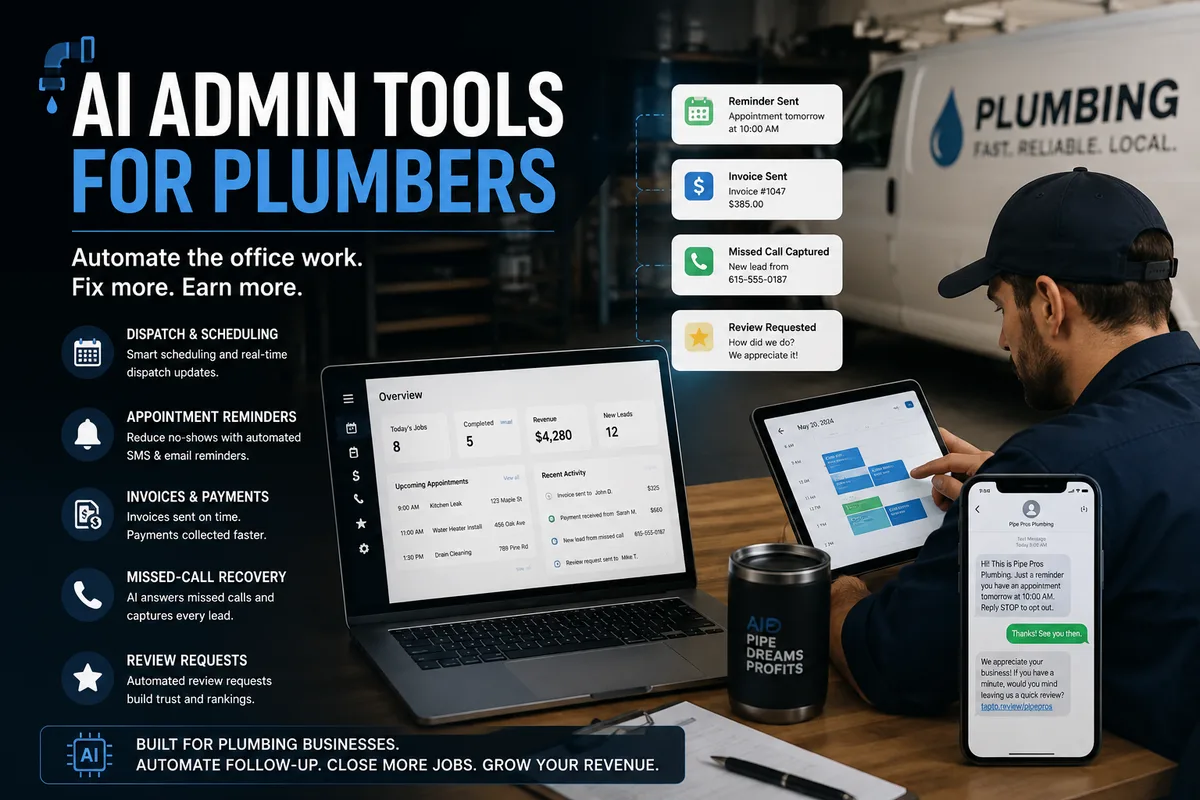
AI Admin Tools for Plumbers: What They Are and How to Choose
AI admin tools automate dispatch, reminders, invoicing follow-up, missed calls, and review requests for plumbers. What they do and how to choose.
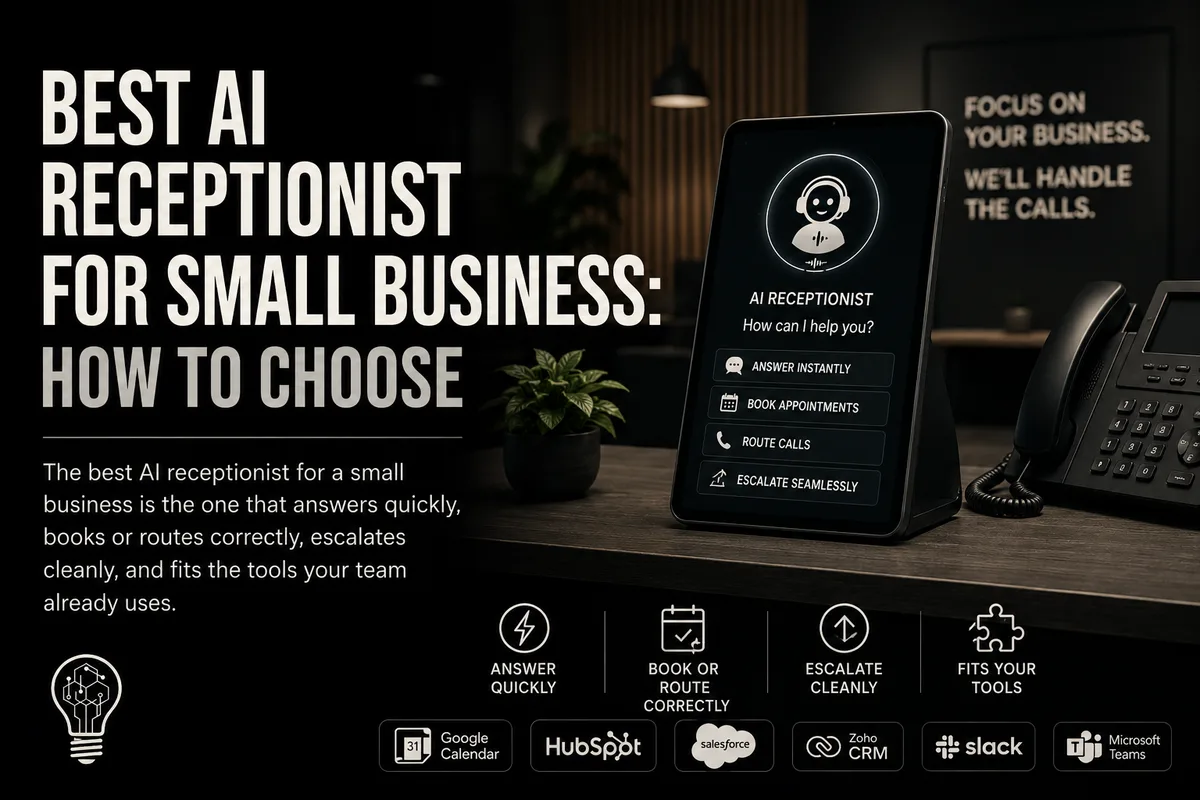
Best AI Receptionist for Small Business: How to Choose
The best AI receptionist for a small business is the one that answers quickly, books or routes correctly, escalates cleanly, and fits the tools your team.
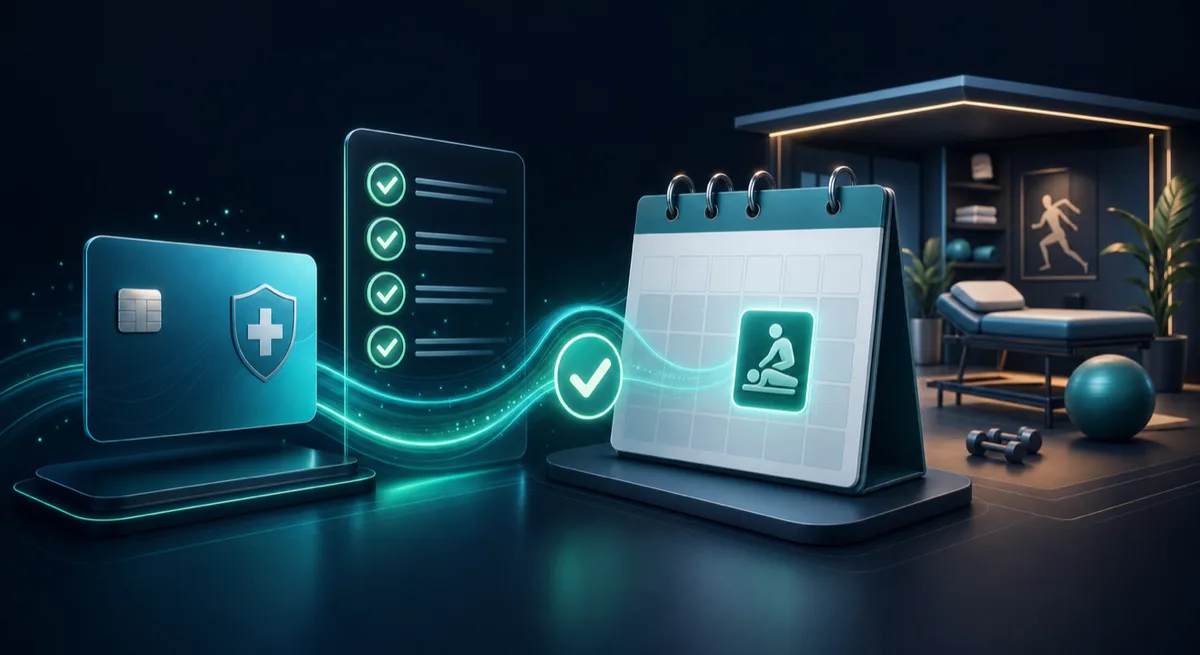
Insurance Eligibility Automation for Physical Therapy Clinics
Eligibility automation for physical therapy clinics verifies benefits before the patient arrives, cuts front desk phone work, and can lower claim denial risk.