
Why Roofing Companies Lose Revenue (And How AI Fixes It)
Roofing companies lose a large share of their leads to missed calls and slow follow-up, in an industry where homeowners often hire the first contractor who responds clearly. The three revenue leaks are predictable: missed after-hours calls during storm events, web leads that sit too long before follow-up, and estimates that never get a second touch.
Most roofing companies lose a large share of their leads to missed calls and slow follow-up. Here's how AI automation stops the bleeding.
Epiphany Dynamics is an AI automation agency: we help businesses find and fix operational bottlenecks with AI receptionists, lead follow-up, and workflow automation.
Free 30-minute audit. We name at least 3 things you can automate, ranked by impact.
Book a free AI audit
Patrick Gibbs
Roofing companies lose a large share of their leads to missed calls and slow follow-up, in an industry where homeowners often hire the first contractor who responds clearly. The three revenue leaks are predictable: missed after-hours calls during storm events, web leads that sit too long before follow-up, and estimates that never get a second touch. This guide covers how AI automation plugs each leak with after-hours call handling, fast lead response, and automated estimate follow-up sequences.
The Revenue Leak Nobody Talks About
You put up the signs, run the ads, and generate the leads. Then a homeowner calls while your crew is on a roof: no answer. They call the next roofer on Google. You just lost a high-value job to a voicemail.
This happens more often than most roofing companies realize. It’s not a sales problem. It’s a response problem, and the real cost of those missed calls is tied to your own call logs, job value, and booking rate.
Why Roofing Leads Are Especially Time-Sensitive
Roofing leads are urgent by nature. A homeowner with a leaking roof isn’t leisurely comparison shopping: they want someone on-site quickly. Many customers buy from the first business that responds clearly and can schedule the next step.
The problem: most roofing crews are on roofs during peak calling hours. Your office staff (if you have any) is handling scheduling, ordering materials, and dealing with insurance adjusters. Nobody’s picking up the phone.
The Three Places Roofing Revenue Disappears
1. Missed Calls After Hours
Storm damage doesn’t happen neatly inside office hours. When a hailstorm rolls through, homeowners start calling immediately. If you’re not answering, your competitor is.
2. Slow Follow-Up on Web Leads
A homeowner fills out your contact form. If the response waits until someone checks email later, they may already be talking to another contractor. Web leads go cold quickly when the problem is urgent.
3. No System for Estimate Follow-Up
You send estimates, then only a handful get consistent follow-up. The rest go dark. Some of those homeowners are ready to buy: they just needed one more touch.
How AI Automation Plugs the Leaks
After-Hours AI Receptionist
An AI voice receptionist answers every call, qualifies the lead (location, type of damage, urgency), and either books the estimate directly or flags it for immediate callback. No missed calls. No voicemail jail.
Instant Lead Response
Web form submissions trigger an immediate AI-powered text or call within minutes. Our guide on improving close rates with AI automation shows why this speed-to-lead advantage is the single biggest conversion lever for any service business. The homeowner gets a response before they’ve even opened the next tab.
For further reading, see AI Automation for Construction Contractors: What Works in 2026.
Automated Estimate Follow-Up
Every estimate can automatically enter a follow-up sequence. As an example, the system can send an early text, trigger a later call or voicemail, and send a final check-in if the homeowner still has not responded. Follow-up gets more consistent without your sales team having to remember every estimate manually.
What This Looks Like in Practice
A roofing company that implements an AI receptionist and automated follow-up system should expect the operational pattern to look like this:
- Missed calls become visible instead of disappearing into voicemail
- Estimate follow-up becomes consistent instead of memory-based
- Revenue impact can be measured from booked jobs that would otherwise have been missed
The right cost comparison is not “AI versus nothing.” It is AI coverage versus missed calls, inconsistent follow-up, and the fully loaded cost of human phone coverage.
The Bottom Line
Roofing companies don’t lose revenue because they lack leads. They lose revenue because their systems can’t keep up with the leads they already have. AI automation isn’t about replacing your team: it’s about making sure no opportunity falls through the cracks while your team is doing what they do best: roofing. The voice AI adoption data for home service contractors shows HVAC and roofing companies leading the charge for exactly this reason.
If you’re tired of watching leads walk to competitors, subscribe to our weekly AI brief for practical automation strategies built specifically for home service businesses.
Audit a storm week using actual lead records
Choose one completed week and reconcile phone calls, website inquiries, inspection bookings, estimates and won jobs. Give each opportunity one identifier so a homeowner who called twice and submitted a form isn't counted as three lost jobs. Separate unanswered calls from requests your company couldn't serve.
Record the first response time, assigned owner, next action and final outcome. Treat an unanswered inquiry as potential revenue exposure, not a sale already lost. Use your own completed-job margin when assessing an improvement; quoted job value isn't the same as profit.
The roofing missed-call calculator helps organize the assumptions. Pair it with the storm-surge intake checklist and roofing call-flow specification before asking a vendor to automate the process. All three are available in the free resource library.
Frequently Asked Questions
Q: How many leads does a typical roofing company lose to missed calls?
Roofing companies with field crews miss calls because technicians are on roofs and office staff are often juggling scheduling, materials, and insurance communication. During storm season, call volume spikes and the gap gets worse. To estimate your own loss, multiply missed qualified calls by booking rate and average job value, then compare that number with the cost of better call coverage.
Q: How quickly does AI automation respond to roofing web form leads?
AI-powered lead response systems can trigger as soon as a form submission arrives, sending an automated text or initiating an AI voice call while the homeowner is still actively looking for help. Roofing leads are especially time-sensitive because homeowners searching after storm damage are often contacting multiple companies at once.
Q: What does an AI receptionist for a roofing company cost compared to hiring staff?
The cost comparison depends on your call volume, seasonality, call-handling expectations, and whether you need booking, dispatch, CRM updates, or simple message capture. Compare quotes against the fully loaded cost of human phone coverage, plus the value of calls that currently go unanswered after hours or during field work.
Q: How does automated estimate follow-up work for roofing companies?
After a roofing estimate is given, an automated sequence can send an early text (“Do you have any questions about your estimate?”), trigger a later call or voicemail, and send a final follow-up with a gentle urgency message if applicable. This sequence reduces manual work for your sales team and makes follow-up more consistent. Many homeowners who eventually buy were simply waiting for a second touch rather than actively choosing a competitor.
Patrick Gibbs
AI Automation Expert
Patrick Gibbs helps professional practices implement AI automation that captures more leads, books more appointments, and scales without adding overhead. He's the founder of Epiphany Dynamics and creator of the AI Front Desk system.
Related Solutions
Build this into a real workflow
Related Posts
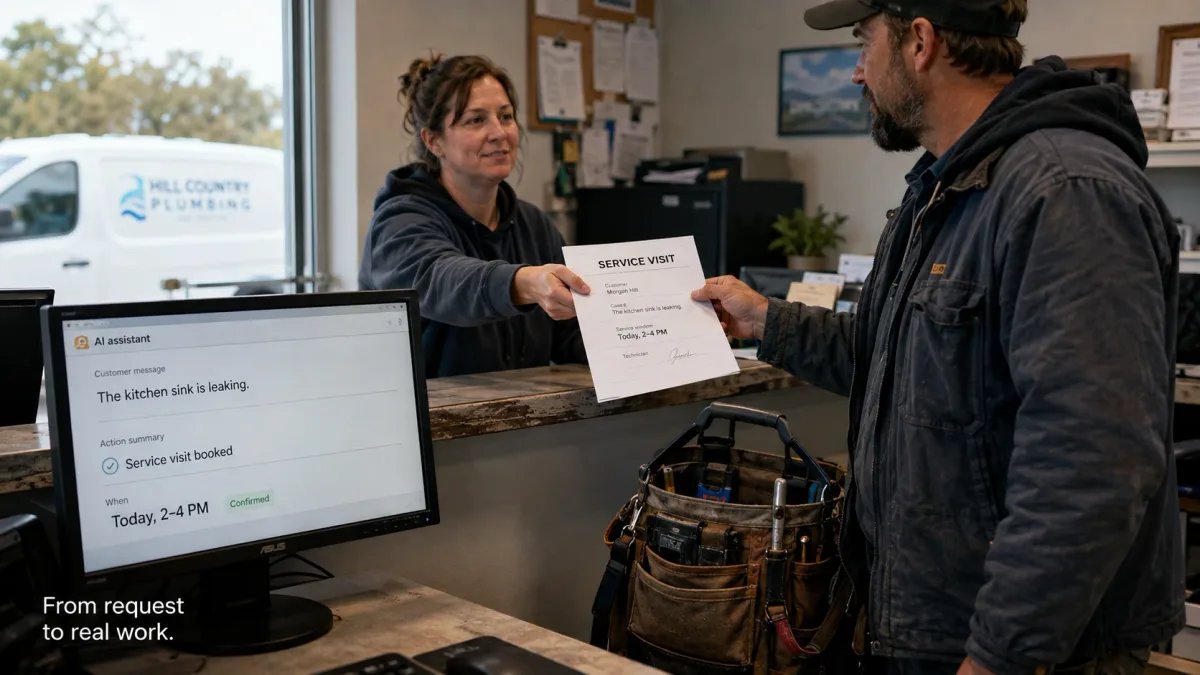
AI Agent Examples: Real Business Jobs from Observation to Action
See how agents can triage requests, resolve scheduling changes, find missing intake details, and prepare follow-up work, with explicit decisions and handoffs.
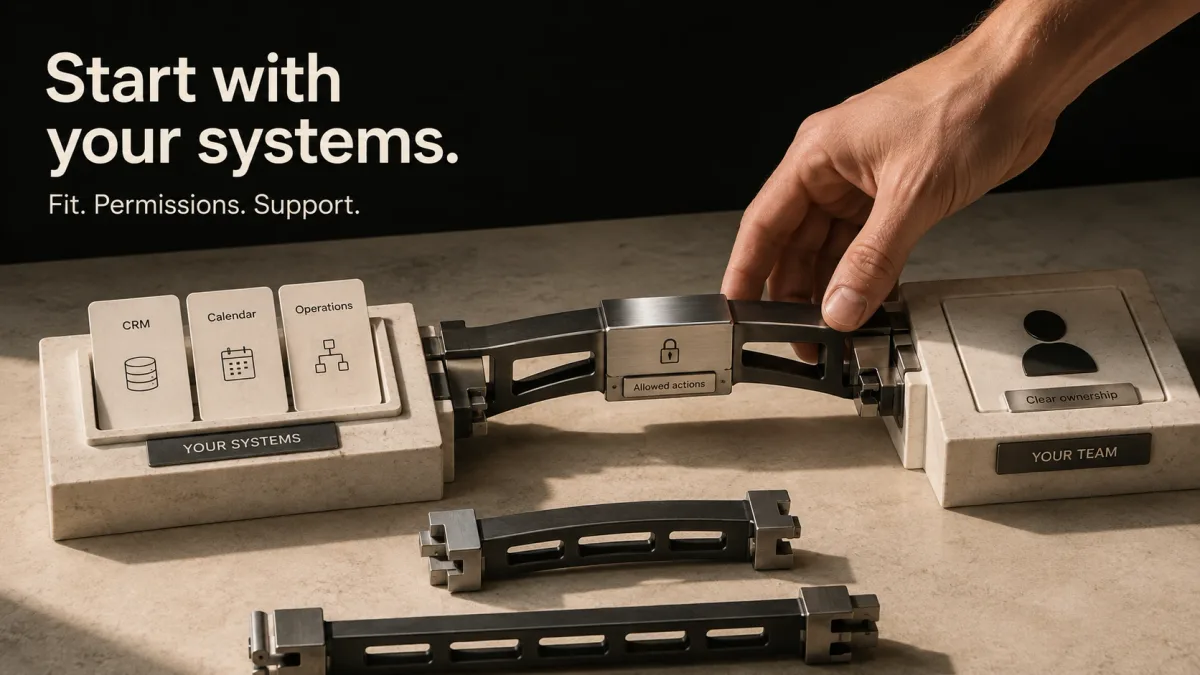
Best AI Agent Platforms for Business: A Practical Buying Guide
Compare n8n, Copilot Studio, OpenAI Agent Builder, and custom implementation by business fit, ownership, operating costs, and support.

How to Get an AI Agent for Your Small Business
Decide whether to buy, configure, or commission an AI agent. Know what to bring, what a proposal should include, and how to accept the first working task.