
Business Process Automation Consultant for Small Business
A business process automation consultant helps small businesses identify repetitive workflows, select the right tools, and implement automated systems that free up staff time and reduce errors. The right engagement produces a working system, clear handoff documentation, and a way to measure recovered labor against implementation cost.
Hiring the wrong automation consultant wastes thousands. Here's what small business owners need to know about process, cost, ROI, and how to vet the right one.
Epiphany Dynamics is an AI automation agency: we help businesses find and fix operational bottlenecks with AI receptionists, lead follow-up, and workflow automation.
Free 30-minute audit. We name at least 3 things you can automate, ranked by impact.
Book a free AI audit
Patrick Gibbs
A business process automation consultant helps small businesses identify repetitive workflows, select the right tools, and implement automated systems that free up staff time and reduce errors. The right engagement produces a working system, clear handoff documentation, and a way to measure recovered labor against implementation cost.
Most small business owners don't think they need a consultant. They have someone on staff who "knows tech," or they've poked around Zapier for an afternoon and decided it's too complicated. Then they watch large chunks of the week disappear into tasks a piece of software could handle, and the math starts to sting.
The term "business process automation consultant" sounds corporate, and a lot of them are. But the right one for a small business isn't a Big 4 firm producing a deck about digital transformation. It's someone who can walk into your operation, spot the workflows eating your time, and turn that diagnosis into working automation. This article breaks down what that looks like, how to evaluate cost, and how to tell whether you're hiring the right person. If you are comparing advisor quotes first, use the AI consultant hourly rate guide to understand what different AI specialists charge.
What a Business Process Automation Consultant Actually Does
A business process automation consultant maps your current workflows, identifies where manual steps create delays or errors, selects tools that fit your budget and existing software stack, and builds or oversees the implementation. The deliverable is a working automated system, not a report. Handoff documentation that lets your team maintain the system independently is what separates a good engagement from a bad one.
Before any software gets touched, the consultant maps what you actually do day to day. This sounds obvious, but most business owners have never formally documented their own processes. A good consultant interviews staff, traces the path of a typical transaction from start to finish, and reviews every tool the business currently pays for. The goal is to find repetitive work that consumes meaningful staff time without requiring much judgment.
After the audit, the consultant matches your problems to tools. This is where experience matters most. Someone who only knows one platform will fit every problem to that platform. An experienced consultant knows when Make.com is the right call for small business workflow automation, when a vertical-specific tool beats a general automation platform, and when the problem is simple enough that a free tier handles it entirely. The goal is the smallest effective solution, not the most impressive-sounding one.
The build phase ends with a handoff. You should walk away with documentation that lets your team maintain the system after the consultant is gone. Not a giant manual, but enough to know what to do when something breaks after hours. If a consultant resists documenting, they're engineering dependency, not delivering value.
When Hiring a Consultant Makes Sense vs. Doing It Yourself
Hiring a business process automation consultant makes sense when your team loses meaningful time to tasks a computer could handle, when DIY automation attempts have stalled, or when slow follow-up is costing you leads and revenue. The break-even point depends on recovered labor, missed revenue, implementation cost, and whether the automation runs without ongoing babysitting.
DIY automation is a real option. If you have someone on staff who's comfortable with no-code tools and has time to experiment, you can build a lot yourself. The complete guide to AI workflow automation for small business lays out a practical framework for doing exactly that. But DIY stalls for a predictable reason: a business owner starts on one workflow, hits a technical snag, gets pulled back into operations, and the project dies unfinished. It's rarely a skill problem. It's almost always a time problem.
A consultant removes the time problem. Their job is finishing your project, which means it actually gets finished. That said, not every situation warrants one. If your only goal is moving form submissions into a spreadsheet, you don't need to pay anyone. But if you're trying to automate lead follow-up sequences, sync your CRM with invoicing, and handle after-hours phone calls with an AI receptionist, that's a systems project. Systems projects benefit from someone who's done it before across multiple businesses.
One reliable signal that it's time to bring someone in: you're already paying for several SaaS tools that don't talk to each other. The consultant's first move is often just connecting what's already there, and that alone can save enough time to justify the work.
What the Engagement Process Looks Like in Practice
Most small business automation engagements run through four phases: process audit, tool selection, build and testing, and handoff with documentation. A focused scope moves faster than a vague "automate the business" mandate. The audit phase sets the priority order for everything that follows.
The first phase is the audit. The consultant interviews you and your staff, reviews your current tools, and maps every manual step that happens repeatedly. Before committing to any consultant, understanding what a thorough audit looks like is worthwhile. The guide on how to audit your business for automation walks through the methodology in detail, including how to value each discovered inefficiency. Most owners are surprised by how many hours disappear once someone maps it out objectively.
The next phase is planning and build. The consultant produces a prioritized list of automations ranked by time saved against implementation complexity. You agree on scope, they build in a staging environment before anything touches your live systems, and they test with real data rather than sample data. Edge cases show up in real data. They almost never show up in samples.
The final phase is parallel testing, adjustments, and cutover. You run the automated system alongside your existing process to catch anything that breaks in production. When it checks out, you cut over fully and the consultant delivers the documentation. If there is no clear endpoint in sight, something went wrong in the scoping phase and you should address it directly.
What It Costs and What the ROI Looks Like
Business process automation consultant pricing depends on project scope, tool complexity, data quality, integrations, and handoff requirements. The ROI comes from recovered labor, faster follow-up, fewer errors, and less work falling through tool gaps. After the system is stable, the automation should keep producing value without requiring the same manual effort.
The ROI calculation is worth running before you decide anything. Count how many hours per week your team spends on manual, repeatable tasks. Multiply by your effective hourly cost per employee (salary plus benefits, divided by annual working hours). That's your weekly manual labor cost on work automation could handle. Compare it to the project fee, software cost, and support needs. The table below shows how the decision changes across common project scopes.
| Project Scope | Primary Cost Driver | Value Lever | Payback Signal |
|---|---|---|---|
| Single workflow (e.g., lead intake to CRM) | Trigger logic and tool connection | Faster response and less copy-paste | Recovered time exceeds setup and tool cost |
| Department-level (e.g., full sales follow-up system) | Multiple touchpoints, testing, and reporting | More consistent follow-up and fewer missed leads | Conversion lift and staff time recovery are visible |
| Multi-system integration across departments | Data architecture, handoffs, and maintenance | Fewer tool gaps and cleaner operational reporting | The system reduces cross-team coordination drag |
Ongoing tooling costs after implementation depend on which platforms you're using, how much transaction volume you push through them, and whether the automation relies on usage-based pricing. The AI automation pricing guide for small businesses covers the real cost math, including hidden costs that tend to surface after launch. One thing worth flagging: the cheapest consultant is rarely the best investment. Someone who builds something your team can't maintain costs more over time than someone who documents everything cleanly and answers the phone when something breaks.
See Google Sheets Automation Consultant: A Practical Guide for 2026 for more in this area.
How to Evaluate a Consultant Before You Hire
Evaluate a business process automation consultant by asking for past implementations with specific, measurable outcomes, a defined process for auditing your workflows before recommending any tools, and a written statement of work that includes a handoff plan. Avoid anyone who recommends the same platform to every client, won't scope the project in writing, or can't explain what happens when something breaks after they leave.
The most reliable signal of a good consultant is how many questions they ask in the first conversation before recommending anything. If the discussion jumps to tools immediately, you're talking to a vendor, not a consultant. That first call should be almost entirely about your current workflow, where your team's time actually goes, and what creates the most friction. Tool recommendations come after that picture is clear, not before.
Ask for references from clients in a similar business type. Automation for a dental practice looks different from automation for a landscaping company, and experience in your vertical matters. Specificity in past implementations matters even more. "Reduced estimate-to-invoice lag and gave the team a measurable before-and-after" is useful. "Really transformed their workflow" tells you nothing. For a broader view of how different automation service models are structured and what each one is suited for, the guide on what AI automation agencies do for small businesses breaks down the options clearly.
Ask explicitly how they handle errors after launch. Automations break, especially when someone at your business changes a process, updates a connected tool, or adds a new team member who touches the system in an unexpected way. A good consultant explains upfront what monitoring is in place, who gets notified when something fails, and whether post-launch support is included in the project fee or billed separately. The support window question catches a lot of people off guard, so get the answer before you sign anything.
Done right, automation makes your business less dependent on individual people remembering to do the same thing correctly every single day. A consultant gets you there faster, but only if you pick the right one. Run the ROI calculation, verify the references, and make sure the first conversation is about your operation. If you want a partner who audits before recommending and builds for independence rather than ongoing retainer dependency, Epiphany Dynamics works with service businesses on exactly this kind of project.
Frequently Asked Questions
Q: How much does a business process automation consultant cost and what's the ROI?
Cost depends on scope, systems, data quality, documentation, and post-launch support. ROI depends on how much manual work the system removes, how many errors it prevents, and whether faster follow-up recovers revenue. Use your own weekly labor cost and missed-revenue baseline to calculate payback.
Q: How long before we see measurable results from process automation?
Simple integrations can produce visible wins quickly when the scope is narrow and the tools already connect cleanly. More complex system connections take longer because testing, data mapping, and exception handling matter. The safest answer is to define the first measurable workflow before implementation starts.
Q: Should we hire an internal automation person or bring in a consultant?
A consultant works best for a specific workflow or integration you want solved quickly; an internal hire makes sense if you have ongoing automation needs and want long-term ownership. Many small businesses start with a consultant to validate ROI, then hire internally if automation becomes a regular part of operations.
Q: What types of workflows see the biggest time savings from automation?
Repetitive, high-volume tasks with clear rules deliver the fastest wins: invoice processing, customer onboarding, data entry, appointment scheduling, and follow-up reminders. Workflows requiring significant human judgment or frequent exceptions (like custom deal structuring) typically need redesign before automation works.
Patrick Gibbs
AI Automation Expert
Patrick Gibbs helps professional practices implement AI automation that captures more leads, books more appointments, and scales without adding overhead. He's the founder of Epiphany Dynamics and creator of the AI Front Desk system.
Related Solutions
Build this into a real workflow
Related Posts
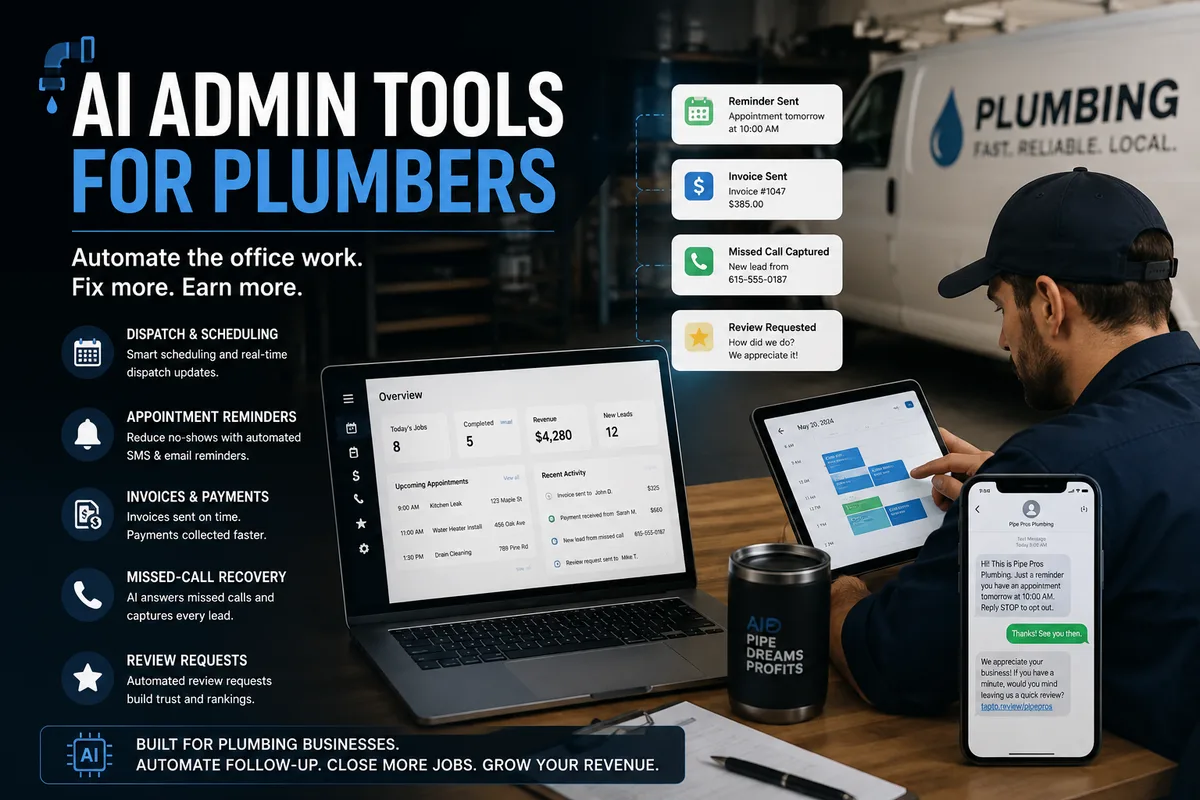
AI Admin Tools for Plumbers: What They Are and How to Choose
AI admin tools automate dispatch, reminders, invoicing follow-up, missed calls, and review requests for plumbers. What they do and how to choose.
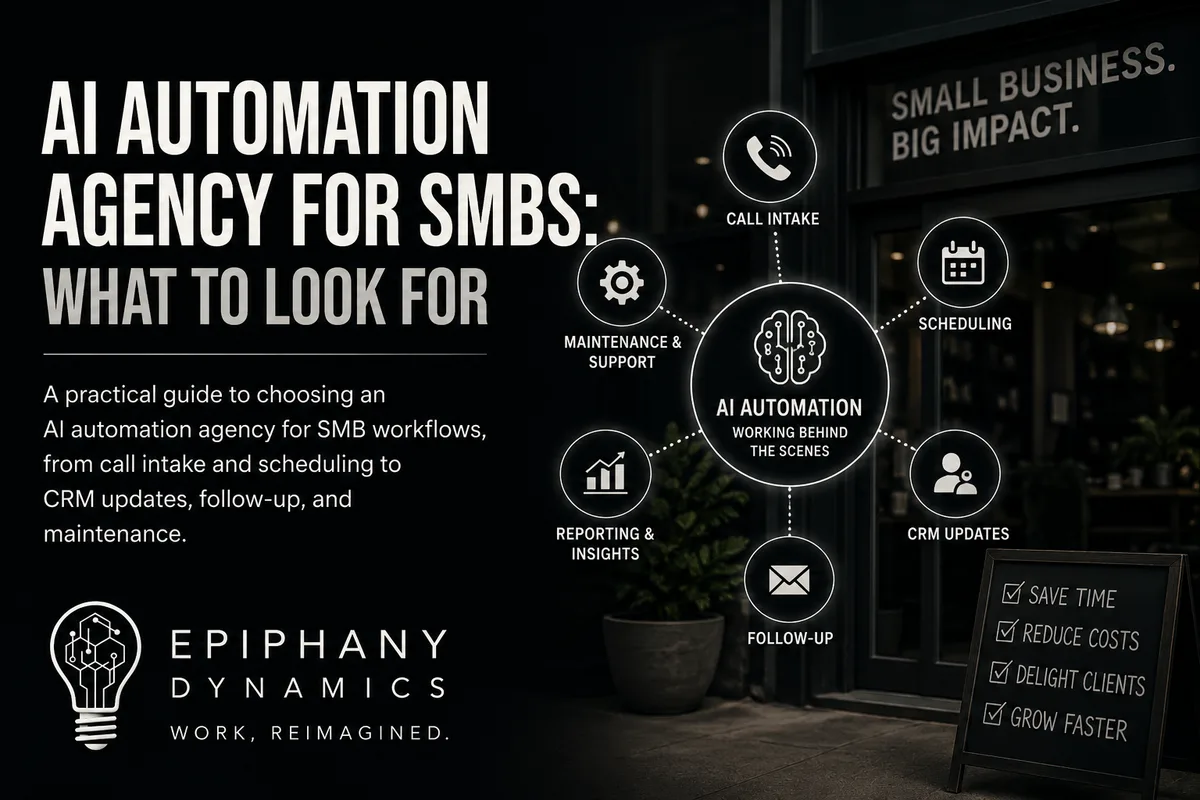
AI Automation Agency for SMBs: What to Look For
A practical guide to choosing an AI automation agency for SMB workflows, from call intake and scheduling to CRM updates, follow-up, and maintenance.
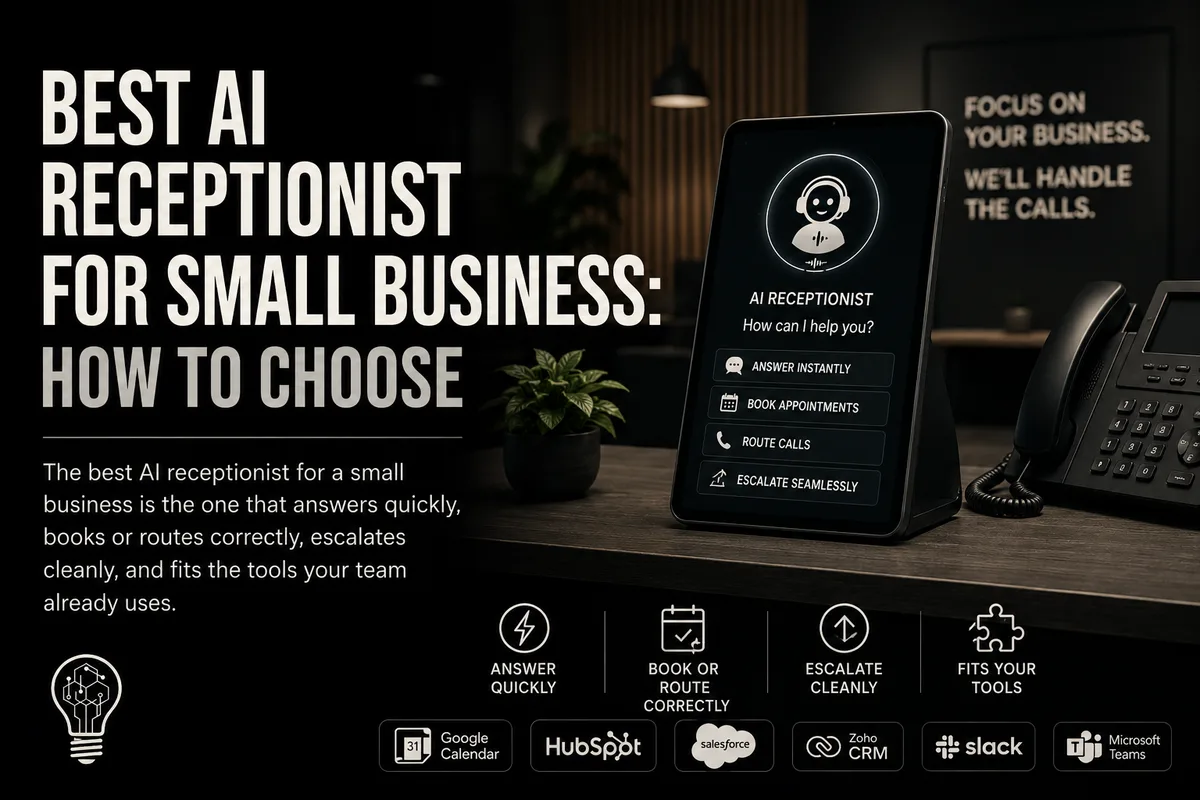
Best AI Receptionist for Small Business: How to Choose
The best AI receptionist for a small business is the one that answers quickly, books or routes correctly, escalates cleanly, and fits the tools your team.