
AI Automation Examples for Small Business: What Works Across Industries
AI automation for small business works across industries. An HVAC company can capture more calls automatically.
Practical AI automation examples for small business across industries including HVAC, dental, real estate, insurance, and healthcare.
Epiphany Dynamics is an AI automation agency: we help businesses find and fix operational bottlenecks with AI receptionists, lead follow-up, and workflow automation.
Free 30-minute audit. We name at least 3 things you can automate, ranked by impact.
Book a free AI audit
Patrick Gibbs
AI automation for small business works across industries. An HVAC company can capture more calls automatically. A dental practice can reduce no-shows with automated reminders. A real estate team can improve lead response by replying while the prospect is still active. The examples below show common ways small businesses put off-the-shelf AI automation tools to work in 2026.
The scenarios in this guide are illustrative of common patterns across service businesses, not specific client engagements.
Reading about AI automation in the abstract is one thing. Seeing common patterns by industry is another. This post walks through concrete examples across different industries, showing the problem, the automation solution, and the result to measure.
Example 1: HVAC Company Captures More Jobs per Week
The Problem: A typical mid-sized HVAC contractor can receive dozens of calls per day during peak season. Their office team might answer only a portion of these calls, with the rest rolling to voicemail. During heat waves, the missed call rate can climb even higher as call volume spikes.
The Solution: They can implement an AI phone system that answers calls instantly. The AI identifies the service needed, checks technician availability, and books appointments directly into their ServiceTitan system. Complex calls are transferred to the office team.
The Result: Answer rates can climb significantly, especially after hours and during peak seasons. The business should measure booked calls, missed-call reduction, and jobs that would otherwise have gone to voicemail. Read our HVAC growth guide for details.
Example 2: Dental Practice Cuts No-Shows
The Problem: A multi-location dental practice was losing appointments to no-shows. Their front desk staff manually called patients to confirm appointments, but the process was inconsistent and time-consuming.
The Solution: They deployed automated appointment reminders via text and phone call before each appointment. Patients could confirm, reschedule, or cancel directly from the reminder without calling the office.
The Result: No-show rates dropped meaningfully after reminders became consistent and automated. The front desk reclaimed hours each week previously spent on manual confirmation calls, and patient satisfaction improved because reminders were timely and convenient. See our healthcare automation guide for more medical practice examples.
Example 3: Real Estate Team Improves Lead Conversion
The Problem: A real estate team was generating internet leads but responding too slowly. Prospect inquiries after hours were not answered until the next business day, by which time many leads had contacted other agents.
The Solution: They deployed an automated lead response system with AI phone support for listing inquiries. Leads from Zillow, their website, and social media received an immediate text or email response. The AI pre-qualified buyers and sellers and scheduled showings automatically.
The Result: Lead-to-appointment conversion became easier to measure and improve. The team could attribute booked showings to faster response instead of guessing whether follow-up speed mattered. See the real estate automation guide for implementation details.
Example 4: Insurance Agency Captures More New Business
The Problem: An independent insurance agency was missing inbound calls during open enrollment periods. After-hours calls went unanswered. Missed calls meant lost sales opportunities.
The Solution: They deployed an AI phone system that answered every call, collected lead information, and routed prospects to the appropriate agent based on the line of business. The system also automated renewal reminders and policy service requests.
The Result: Answer rate improved during and after business hours. The agency could measure new business that started from previously missed call windows, and the service team had more time for complex client needs. Check the insurance automation guide for more.
Example 5: Plumbing Company Never Misses an After-Hours Emergency Call
The Problem: A plumbing company was missing after-hours emergency calls. Customers with burst pipes or clogged drains called, got voicemail, and called the next plumber on the list. The company needed to measure how many urgent calls were being lost after hours.
The Solution: They implemented after-hours AI phone answering that handled emergency calls, dispatched the on-call plumber, and booked non-emergency appointments for the next business day.
The Result: After-hours call capture became visible and manageable. The company could compare booked emergency jobs against the calls that previously went to voicemail. See the plumbing dispatch guide for more details.
Example 6: Med Spa Automates Client Follow-Up and Upsells
The Problem: A medical spa was struggling to follow up with clients after treatments. Post-procedure care instructions were given verbally and often forgotten. Rebooking rates for follow-up treatments were low because no one reminded clients when they were due.
The Solution: Automated post-treatment follow-up messages were sent via text at clinically appropriate intervals. The messages included care instructions, satisfaction surveys, and rebooking links for recommended follow-up treatments.
The Result: Rebooking rates for follow-up treatments climbed as clients received timely reminders. Client satisfaction scores improved, and the front desk saved hours each week previously spent on manual follow-up calls. Read about med spa follow-up automation for more.
Example 7: Law Firm Automates Intake and Screening
The Problem: A personal injury law firm was receiving steady intake volume. Paralegals spent much of their time on initial screening calls, many of which were not viable cases. The firm was paying paralegal wages for what was essentially a qualification function.
The Solution: AI intake automation handled initial screening calls, collected case details, assessed basic qualification criteria, and scheduled consultations only for viable cases. The system integrated with their case management software.
The Result: Paralegals reclaimed a substantial share of their intake time and refocused on substantive legal work. The firm handled more intake volume without adding staff. See the law firm intake automation post for details.
Example 8: Home Services Company Automates Lead Nurturing
The Problem: A roofing company generated leads through home show appearances and online advertising, but many leads went cold because no one followed up consistently. The sales team was too busy with active projects to nurture prospects.
The Solution: Automated lead nurturing sequences sent educational content, financing information, and seasonal maintenance reminders. The system tracked engagement and alerted the sales team when a lead showed buying signals.
The Result: Lead-to-sale conversion became easier to manage because every prospect received consistent follow-up. The team could measure booked work against nurture engagement instead of relying on memory. See the home services adoption trends post for more.
FAQ: AI Automation Examples for Small Business
What is the easiest automation to start with?
AI phone answering is often the most straightforward first automation for small businesses because the baseline is easy to measure. The math is simple: multiply your missed calls by your average lead value to see the opportunity, then compare that opportunity with the cost and complexity of better coverage.
How much do these automation examples cost?
Cost depends on the workflow, call or lead volume, integrations, and whether you need a simple point solution or a managed automation stack. See our pricing guide for the factors that change pricing.
Can a single automation system handle multiple use cases?
Yes. Most AI automation platforms can handle phone answering, lead response, appointment scheduling, and follow-up sequences from a single system. The examples above highlight specific use cases, but many businesses deploy a unified automation stack that covers all of these scenarios.
Do I need technical skills to set up automation?
Most small businesses work with an automation agency for setup and configuration. However, many AI platforms offer self-service options for businesses that want to configure their own automation. See our agency selection guide for help deciding between DIY and agency support.
Next Steps
Pick the example above that most closely matches your business. The automation solution for that business will likely work for yours too. Measure your current metrics: missed call rate, lead response time, no-show rate, or administrative hours spent on repetitive tasks. Those numbers define the opportunity.
Once you have your baseline metrics, book a consultation to discuss which automation use case makes sense for your business first. Most companies start with one automation and expand as they see results.
Patrick Gibbs
AI Automation Expert
Patrick Gibbs helps professional practices implement AI automation that captures more leads, books more appointments, and scales without adding overhead. He's the founder of Epiphany Dynamics and creator of the AI Front Desk system.
Related Solutions
Build this into a real workflow
Related Posts
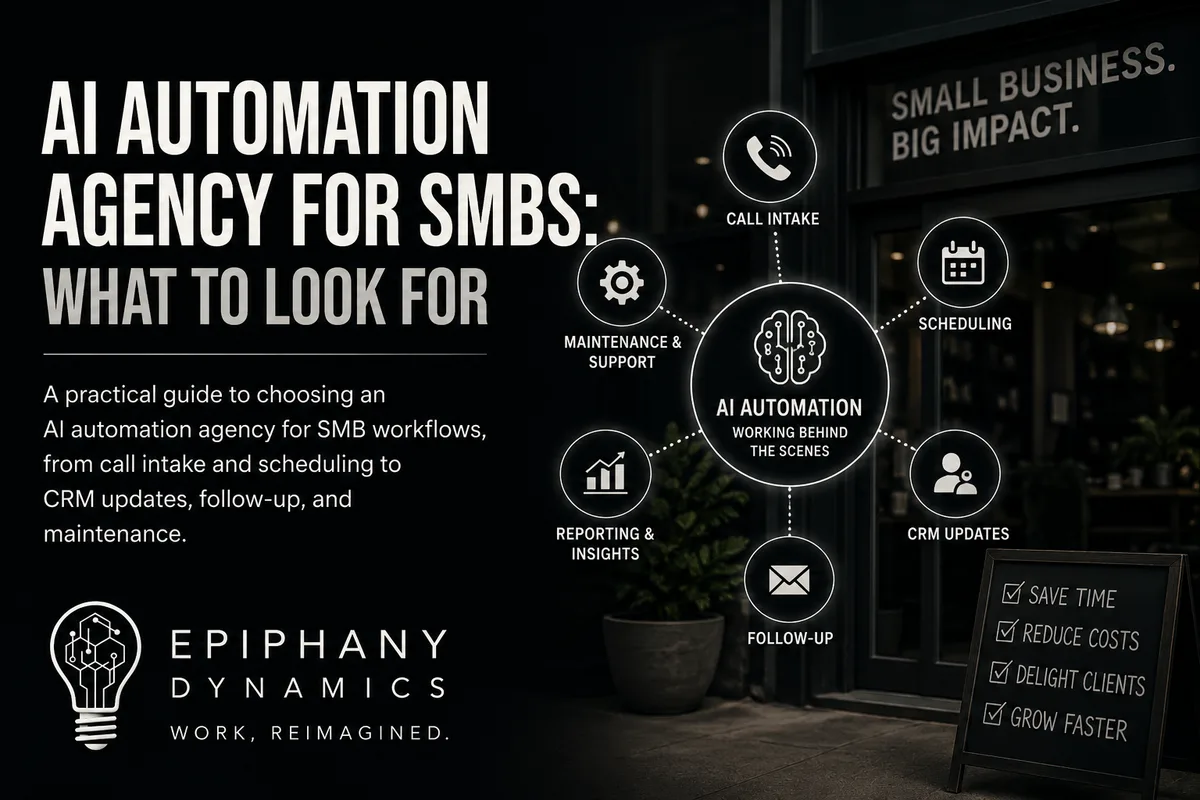
AI Automation Agency for SMBs: What to Look For
A practical guide to choosing an AI automation agency for SMB workflows, from call intake and scheduling to CRM updates, follow-up, and maintenance.
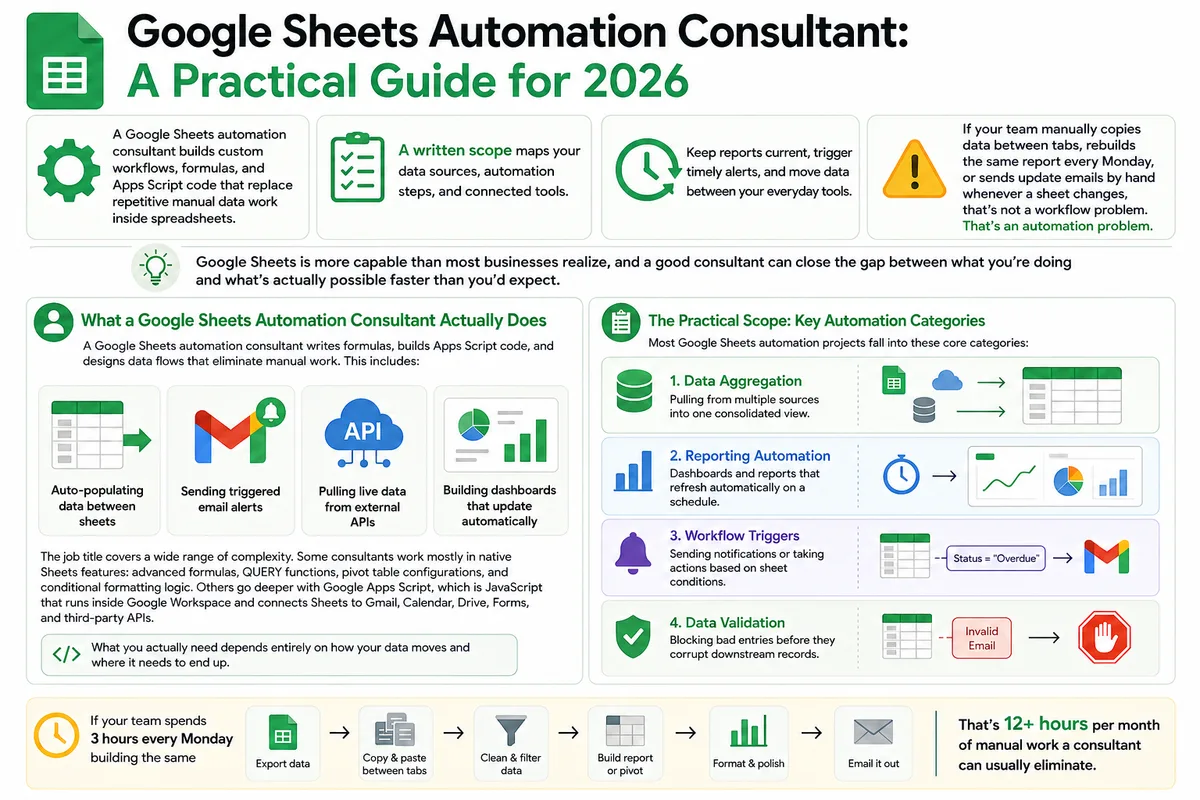
Google Sheets Automation Consultant: A Practical Guide for 2026
Most businesses don't track what spreadsheet work actually costs them. Here's what a Google Sheets automation consultant does in 2026, how to judge the value.
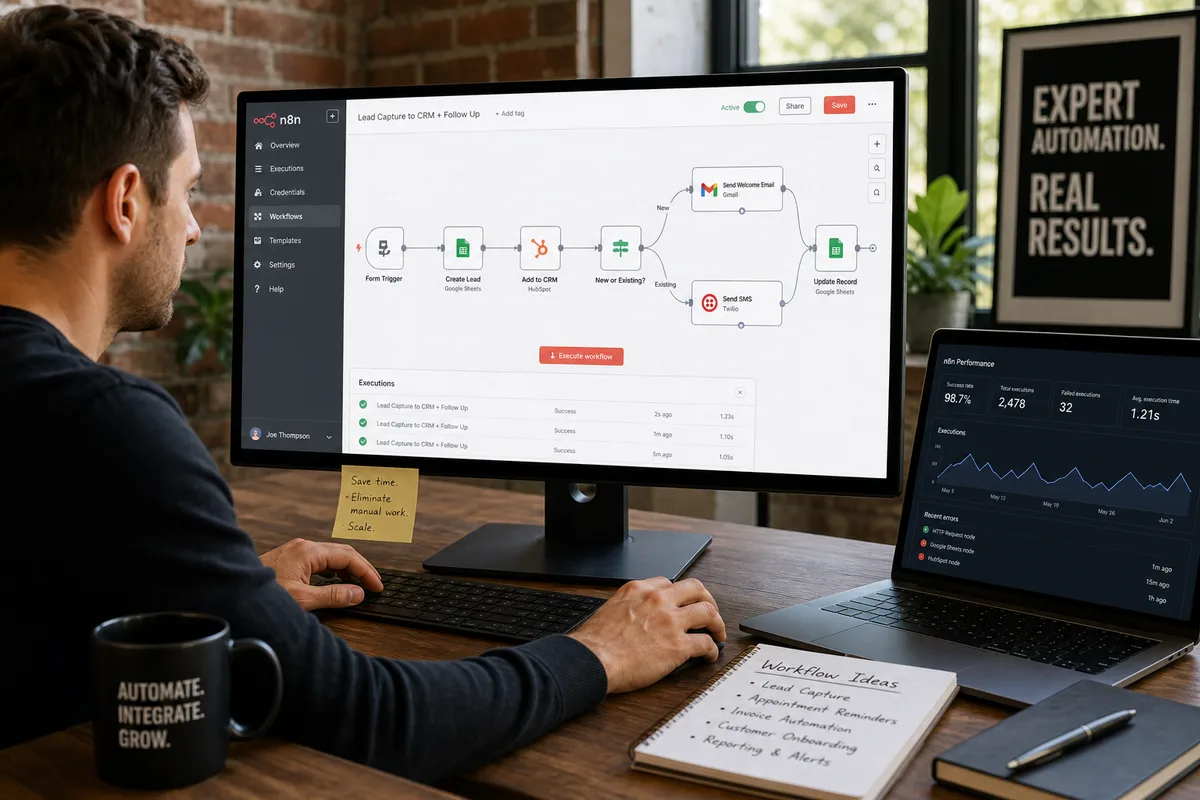
n8n Workflow Automation Agency: What They Build, What It Costs (2026)
Zapier pricing drove you to n8n. Now you're wondering if hiring an agency to build it makes sense. Here's what they build, what projects cost, and how to.