
Best AI Agency for Restaurants in 2026
The best AI agency for restaurants understands the unique pressures of food service: high call volume during tight windows, the difference between a reservation inquiry and a complaint about a long wait, and the need for automation that integrates with your POS and reservation platform. A general agency can build a chatbot.
The best AI agency for restaurants understands high-volume phone traffic, reservation management, and the specific chaos of a Friday night dinner rush.
Epiphany Dynamics is an AI automation agency: we help businesses find and fix operational bottlenecks with AI receptionists, lead follow-up, and workflow automation.
Free 30-minute audit. We name at least 3 things you can automate, ranked by impact.
Book a free AI audit
Patrick Gibbs
The best AI agency for restaurants understands the unique pressures of food service: high call volume during tight windows, the difference between a reservation inquiry and a complaint about a long wait, and the need for automation that integrates with your POS and reservation platform. A general agency can build a chatbot. A restaurant-savvy agency builds a system that survives a Friday night rush.
Restaurants operate on thin margins and high volume. Every unanswered call during lunch service is a lost reservation, a missed catering inquiry, or a frustrated regular who takes their business elsewhere. But hiring more front-of-house staff is rarely the answer. Automation that handles the phone traffic, reservation management, and common customer questions can dramatically improve both the customer experience and the bottom line. The trick is finding an agency that understands the restaurant environment.
What Restaurant Automation Should Look Like
Restaurant automation differs from most other verticals in critical ways. Here is what the best restaurant AI agency delivers.
High-Volume Call Handling
Restaurants get slammed during specific windows: 11:30 AM to 1:30 PM for lunch, 5:30 PM to 8:00 PM for dinner. During those windows, the phone rings constantly. A general AI phone system might handle this, but a restaurant-optimized system knows how to prioritize. Reservation calls get priority over inquiries about hours. Large party bookings get routed differently than two-top requests. And the system needs to handle calls quickly because every second on hold risks a hang-up.
Reservation and Waitlist Management
The agency you choose should integrate with your existing reservation platform, whether it is OpenTable, Resy, Toast, or a custom solution. The AI should be able to check availability, book tables based on party size and time preferences, add callers to the waitlist with automatic callbacks when their table is ready, and handle cancellations that free up slots for walk-ins.
Catering and Large Party Inquiries
Catering calls are high-value but often ignored during service because they require detailed conversation. An AI system can qualify catering leads by capturing event date, guest count, budget range, and dietary restrictions, then route the qualified lead to the catering manager. This prevents missed catering revenue without adding to the front-of-house burden during service.
Also on the blog: AI Answering Service for Restaurants: What to Compare in 2026.
How Restaurant Automation Differs From General Automation
Restaurants operate on a different rhythm than professional services or retail. The automation must be faster, more context-aware, and more forgiving of background noise. A system that works for a dental office will frustrate restaurant customers who just want to know the wait time.
Restaurant phone automation needs to handle background noise from a busy dining room without confusion. It needs to understand common restaurant phrases like "a table for four" or "do you have outdoor seating?" without elaborate menus. And it needs to handle peak-hour volume without lag or degradation in quality.
Check our AI automation agencies comparison for general capability benchmarks against which to evaluate restaurant-specific providers.
Key Questions to Ask Restaurant AI Agencies
How do you handle peak-hour call volume? Can you integrate with my existing POS or reservation platform? How does your system handle callers who are in a noisy environment? Can you show me a restaurant-specific Implementation Example? What happens when a caller asks about menu items or pricing? How do you handle the transition between lunch service and dinner service? What is your approach to managing the waitlist during a full house?
How Epiphany Dynamics Builds for Restaurant Operators
The demands this post describes, peak-hour call volume, POS and reservation integration, and noise-tolerant voice AI, are the baseline for how we scope restaurant builds. Our phone systems are configured to handle concurrent calls without queuing, so a rush at 5:30 PM does not mean callers get a busy signal or a hold loop. Reservation flows connect to your actual platform availability, whether that is OpenTable, Resy, Toast, or another system, and the AI confirms, waitlists, or redirects based on live table data. Catering inquiry capture routes qualified leads to your catering manager with the event details already filled in.
For a broader look at how we approach high-volume communication automation for food service and hospitality businesses, our small business automation examples post covers the call handling and follow-up patterns that form the foundation of our restaurant builds.
If the criteria in this post describe your restaurant's situation, you can book a call to walk through your current call volume, your reservation platform, and what an automation build would change for your operation.
FAQ: Best AI Agency for Restaurants
Can AI handle a busy Friday night phone volume?
Yes, when properly configured. The best restaurant AI systems can handle dozens of simultaneous calls without putting anyone on hold. The key is call prioritization and fast response times.
Will AI replace my host stand staff?
No. AI handles the phone traffic so your host stand can focus on the guests physically in front of them. Most restaurants find their in-person guest experience improves after phone automation because hosts are not distracted by ringing phones.
How much does restaurant AI automation cost?
Restaurant automation works best when it fits your rush-hour call volume, reservation rules, and existing systems. We map those requirements in a free audit and give you a written scope before the build begins. See our cost guide for more detail.
Can AI handle to-go orders?
Some systems can handle to-go orders by capturing the order details and party name, then routing the order to the kitchen display system. This capability depends on the integration depth with your POS.
How long does it take to set up restaurant automation?
Most restaurant automation projects take 2-4 weeks from kickoff to go-live, including menu scripting, reservation integration, and staff training.
Next Steps
Start by measuring your current missed call rate during peak hours. Most restaurants are surprised by how many calls they miss. That data will guide your agency search and build your business case for automation. If you want to discuss restaurant automation strategies, book a call.
Patrick Gibbs
AI Automation Expert
Patrick Gibbs helps professional practices implement AI automation that captures more leads, books more appointments, and scales without adding overhead. He's the founder of Epiphany Dynamics and creator of the AI Front Desk system.
Related Solutions
Build this into a real workflow
Related Posts
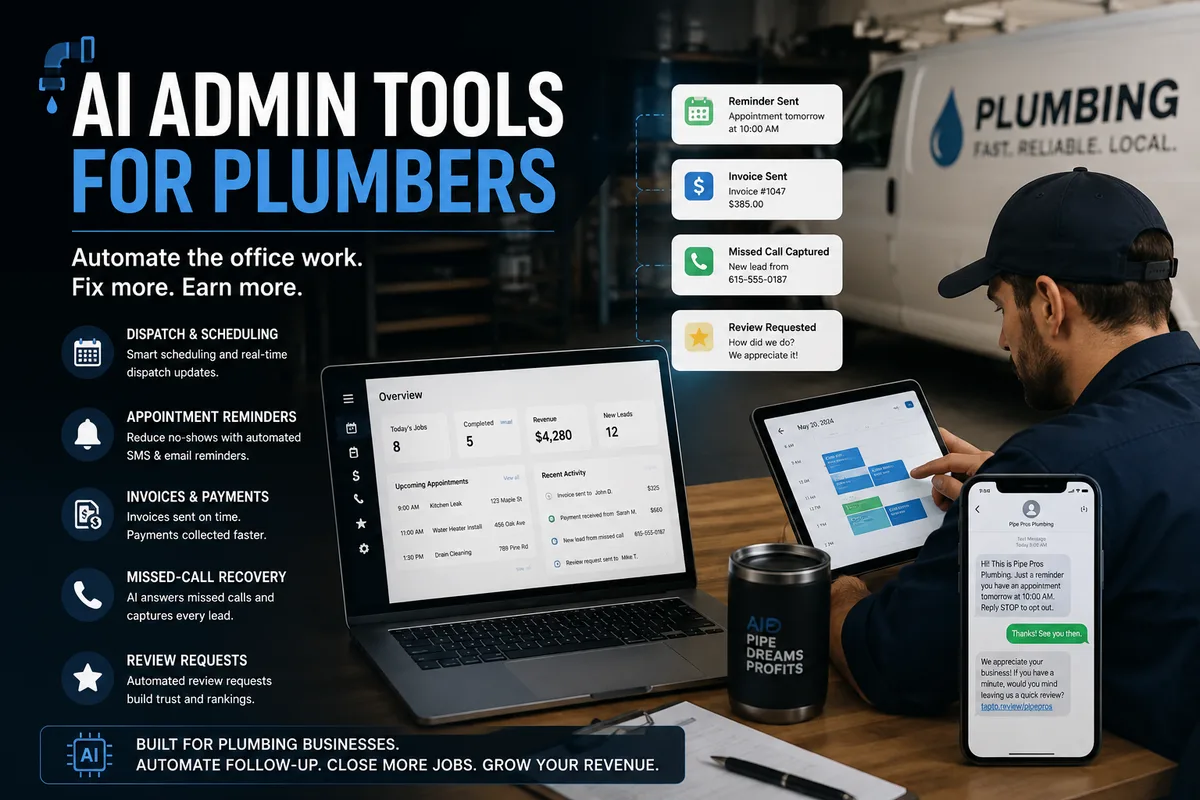
AI Admin Tools for Plumbers: What They Are and How to Choose
AI admin tools automate dispatch, reminders, invoicing follow-up, missed calls, and review requests for plumbers. What they do and how to choose.
Insurance Eligibility Automation for Physical Therapy Clinics
Eligibility automation for physical therapy clinics verifies benefits before the patient arrives, cuts front desk phone work, and can lower claim denial risk.
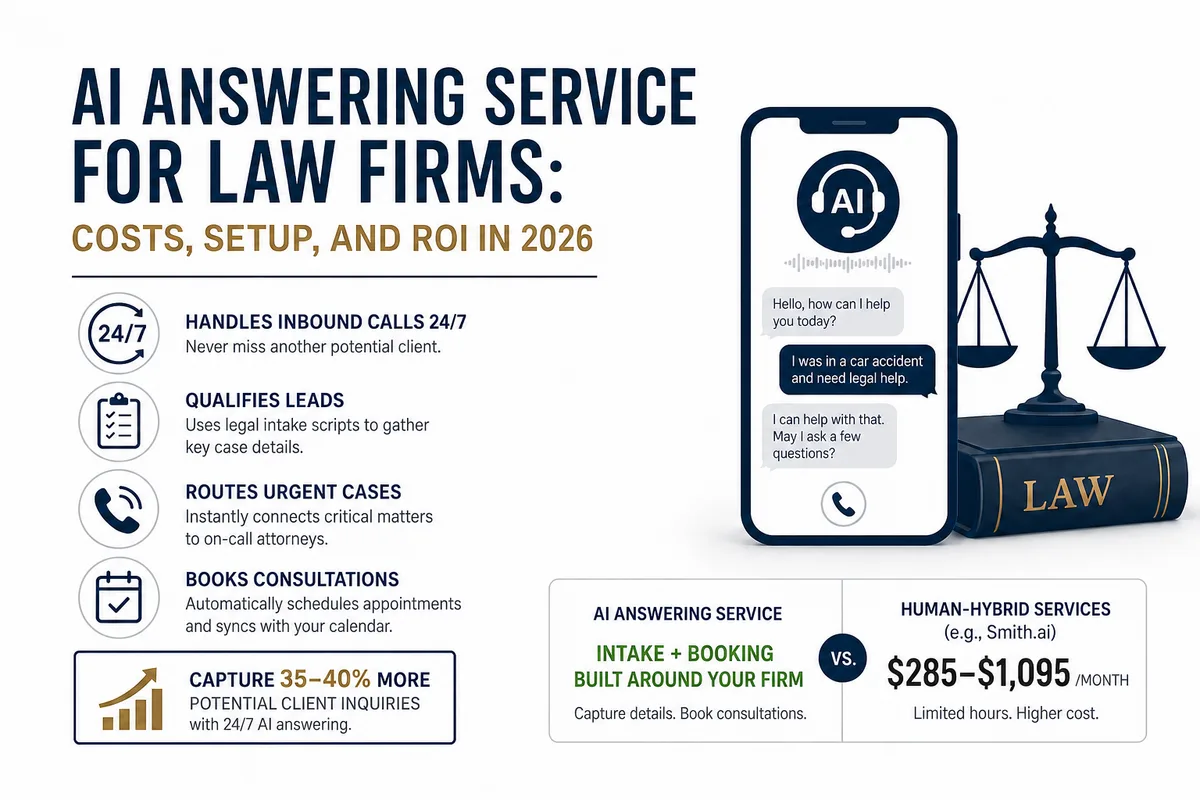
AI Answering Service for Law Firms: Costs, Setup, and ROI in 2026
Law firms miss a large share of inbound calls, most of them after hours. Here's what an AI answering service actually does, what it costs versus human.