
AI Lead Follow-Up Automation for Contractors: The 2026 Playbook
AI lead follow-up automation for contractors responds to new inquiries quickly using SMS, email, and voicemail sequences, then qualifies leads and books appointments automatically through the buyer's active decision window. The value comes from eliminating the delay between a paid lead arriving and someone from the business actually following up.
Most contractors lose a big share of their online leads to faster competitors. Here's how AI follow-up automation fixes the response-time gap and how to.
Epiphany Dynamics is an AI automation agency: we help businesses find and fix operational bottlenecks with AI receptionists, lead follow-up, and workflow automation.
The free 30-minute AI Operations Audit is a conversation about a normal week in your business and where the work piles up. We find the one change that would give you the most time back and send you a plain-English plan for it. No forms and no pitch.
Book a free AI audit
Patrick Gibbs
AI lead follow-up automation for contractors responds to new inquiries quickly using SMS, email, and voicemail sequences, then qualifies leads and books appointments automatically through the buyer's active decision window. The value comes from eliminating the delay between a paid lead arriving and someone from the business actually following up.
A homeowner fills out your contact form while you're on a job site. By the time you call back, she's already booked a quote with your competitor. She was polite: "We went with someone else." That's a real project opportunity gone because of a response gap that felt unavoidable. It wasn't unavoidable. It was a process problem.
This isn't about effort or discipline. Contractors are on job sites during the hours leads come in. The issue is that you're competing against businesses running automated systems that respond immediately and consistently. The fix isn't always a full-time receptionist. It's a sequence.
Why Response Time Is the Real Problem
Lead-response research consistently points in the same direction: faster contact wins more conversations. For contractors competing against several businesses for the same homeowner, a slow callback is effectively opting out of the job while still paying for the lead.
The homeowner psychology is straightforward. When someone fills out a form, they've cleared mental space for this problem. They're ready to hire. Reach them in that window and you're talking to someone actively in decision mode. Call back after that window closes and you're interrupting their evening while they've already moved on to whatever else is in front of them.
The platform data backs this up. Top-performing contractors respond to web leads in minutes, while the average contractor takes hours. That gap explains most of the conversion rate difference between contractors running identical ad budgets on the same platforms. Same spend, same market, same service, different process.
What AI Lead Follow-Up Actually Does
AI lead follow-up isn't just an auto-reply email. It's a multi-channel sequence that texts a new lead immediately, follows up by email, drops a voicemail if there's no response, and continues with qualifying questions. A conversational AI agent handles replies so leads feel heard before a contractor ever picks up the phone.
The "AI" label gets applied to everything, so it's worth being specific about what this actually looks like. At the basic end, it's trigger-based automation: new lead enters CRM, sequence fires. At the more capable end, a conversational AI agent handles inbound replies. When a lead texts back "what does the inspection include?", the agent responds from your service descriptions, asks a few qualifying questions, and moves the lead toward booking. The sequence adapts based on whether the lead is engaging or ignoring.
What this doesn't do is close deals. The automation's job is the early buying window: confirm receipt, build familiarity, collect basic job scope information, and get a meeting on the calendar. The pattern for this kind of multi-step AI lead nurture sequence is well-established across service industries. Contractors are just catching up to what real estate teams and other service businesses have been running for years. Once the lead is booked, the contractor takes over completely.
What the Follow-Up Sequence Looks Like
A solid contractor follow-up sequence starts with immediate SMS, adds email and voicemail when the lead does not respond, checks in across the active buying window, and then moves quiet leads into long-term nurture rather than deleting them.
| Timing | Channel | Purpose |
|---|---|---|
| Immediately after inquiry | SMS | Confirm receipt, set callback expectation |
| After the first text | Introduce the business, include a review or project photo | |
| If there is no response | Voicemail drop | Human-sounding audio, phone doesn't ring on their end |
| Next follow-up window | SMS | Quick check-in, low-effort reply option |
| Mid-sequence | Value-add: process explainer or recent project photos | |
| Late sequence | SMS | Final follow-up, low-pressure close |
| After the active buying window | Break-up message, move to long-term nurture |
SMS often outperforms email in this context because it reaches the lead while they are still actively solving the problem. That first text is the most important touchpoint in the sequence. The mid-sequence email has one specific job: keep you visible without being pushy. Project photos and a short "here's what our inspection process looks like" note can do that without feeling like newsletter spam.
Compliance note that can't be skipped: any automated SMS sequence needs a STOP opt-out mechanism under TCPA. Most platforms handle opt-out automatically, but confirm it before going live. Deliverability also requires registering your business number with The Campaign Registry (TCR), so build that into your timeline before launch.
Elsewhere on the blog: Best AI Lead Follow-Up Tools in 2026.
The ROI Math
The ROI math depends on your current ad spend, lead volume, close rate, average job value, and the number of leads that go stale before anyone follows up. Automated follow-up is worth testing when the value of recovered booked estimates is clearly higher than the software, configuration, and management cost.
| Trade | Typical Leak | Automation Role | How to Measure ROI |
|---|---|---|---|
| Roofing | High-intent form leads sit too long | Immediate contact and estimate booking | Recovered estimates multiplied by close rate and project value |
| HVAC | Urgent inquiries arrive while the team is dispatching | Instant triage and callback routing | Additional booked calls compared with the prior period |
| Plumbing | Small jobs go to the first company that responds | Fast SMS and booking link follow-up | Booked jobs from leads that previously would have gone cold |
| General Contracting | Longer decision cycles lose momentum | Structured nurture and scope collection | Qualified consultations and proposal opportunities created |
Vendor marketing often highlights dramatic conversion lifts, and those results can happen when a contractor was barely following up at all. For a business already attempting manual follow-up, the better benchmark is your own before-and-after data: response speed, contact rate, booked estimate rate, and closed-job revenue from leads that used to go cold.
One honest caveat: automation amplifies what's working, not what isn't. If your on-site close rate is already struggling, address that first. A system that books more estimates doesn't help if you're losing the same portion of them for the same reasons. This math holds up when the primary leak in the funnel is first-contact response time, which it usually is for contractors running paid traffic.
Which Tools Work for Contractors in 2026
The main platform categories for contractor lead follow-up automation are all-in-one CRMs like GoHighLevel, home-service-specific tools like Hatch, and custom workflows built with automation platforms such as n8n or Make.com plus an AI conversation layer. The tradeoff between them is setup time versus flexibility versus monthly cost.
GoHighLevel is what many marketing agencies deploy for contractor clients because it handles CRM, pipelines, and sequences in one place. The follow-up automation is genuinely capable. The problem is setup: out of the box it's a blank canvas, and building a functional contractor workflow takes either meaningful platform learning or help from someone who already knows it well. Contractors in competitive markets like Seattle and Portland who run GoHighLevel effectively are usually either technically inclined or have agency support behind the configuration.
Hatch is worth considering if you want to get running quickly without heavy setup. The templates already account for roofing, HVAC, plumbing, and related trades, and compliance handling is built in. The tradeoff is less flexibility than GoHighLevel for anything custom. Contractors who handle a significant volume of inbound calls alongside web leads may also want to look at how an AI receptionist layer integrates with the follow-up workflow, since inbound calls and web form submissions should feed into the same CRM and trigger the same sequence logic rather than sitting in separate silos.
One category to avoid entirely: generic email marketing platforms marketed as CRMs. Mailchimp, Constant Contact, and similar tools are built for newsletters. They often lack real-time SMS triggering, their "immediate" automation may not actually fire immediately, and they weren't built for conversational back-and-forth. If the platform can't fire a real SMS as soon as a form submission arrives, the most important step in the sequence doesn't work.
Getting this set up properly takes real configuration investment. But you're competing against contractors who already have automated follow-up in place. If you want a system designed specifically around your trade, your lead sources, and your qualification criteria rather than a generic template, working with an automation agency like Epiphany Dynamics is worth considering before spending months figuring it out alone.
Frequently Asked Questions
Q: How quickly does a contractor need to respond to a new lead to stay competitive?
Contractors should respond as quickly as the system can do it reliably. Rapid response matters because the buyer is actively comparing options, and the first company to create a clear next step often controls the conversation.
Q: What percentage of contractor leads are actually lost due to slow response times?
A meaningful share of online leads are lost to response delays alone, not to price or service quality differences. When homeowners fill out a contact form, they're actively in decision mode. If a competitor responds first, you've lost the opportunity before you even have a chance to quote.
Q: How long does a complete automated lead follow-up sequence typically take?
Effective sequences continue through the homeowner's active decision window with multiple touchpoints via SMS, email, and voicemail, automatically qualifying leads and booking appointments without manual intervention. This keeps your business top-of-mind while the buyer is still comparing options.
Q: Is lead automation more cost-effective than hiring a receptionist or virtual assistant?
Automated sequences usually cost less than adding dedicated reception coverage while delivering faster response times even when contractors are on job sites. The ROI depends on how many paid leads currently go stale before a human follows up.
Patrick Gibbs
AI Automation Expert
Patrick Gibbs helps professional practices implement AI automation that captures more leads, books more appointments, and scales without adding overhead. He's the founder of Epiphany Dynamics and creator of the AI Front Desk system.
Related Solutions
Build this into a real workflow
Related Posts
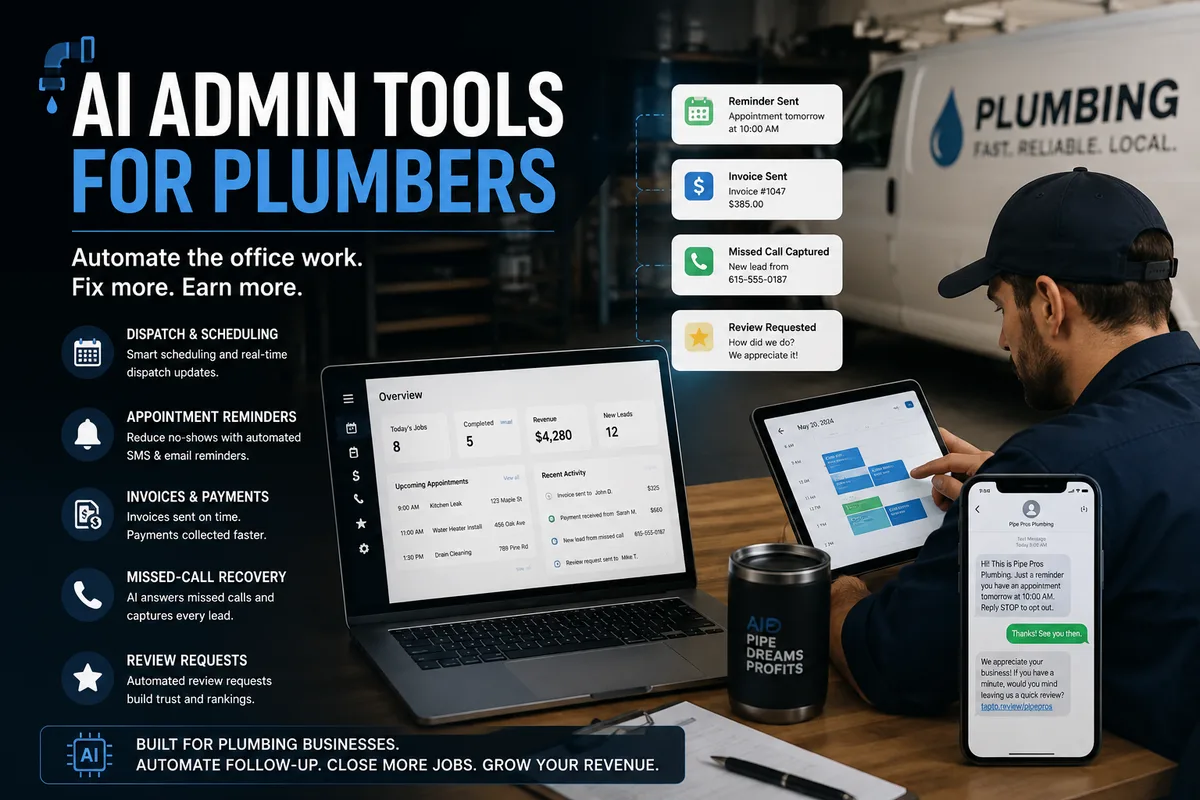
AI Admin Tools for Plumbers: What They Are and How to Choose
AI admin tools automate dispatch, reminders, invoicing follow-up, missed calls, and review requests for plumbers. What they do and how to choose.
Insurance Eligibility Automation for Physical Therapy Clinics
Eligibility automation for physical therapy clinics verifies benefits before the patient arrives, cuts front desk phone work, and can lower claim denial risk.
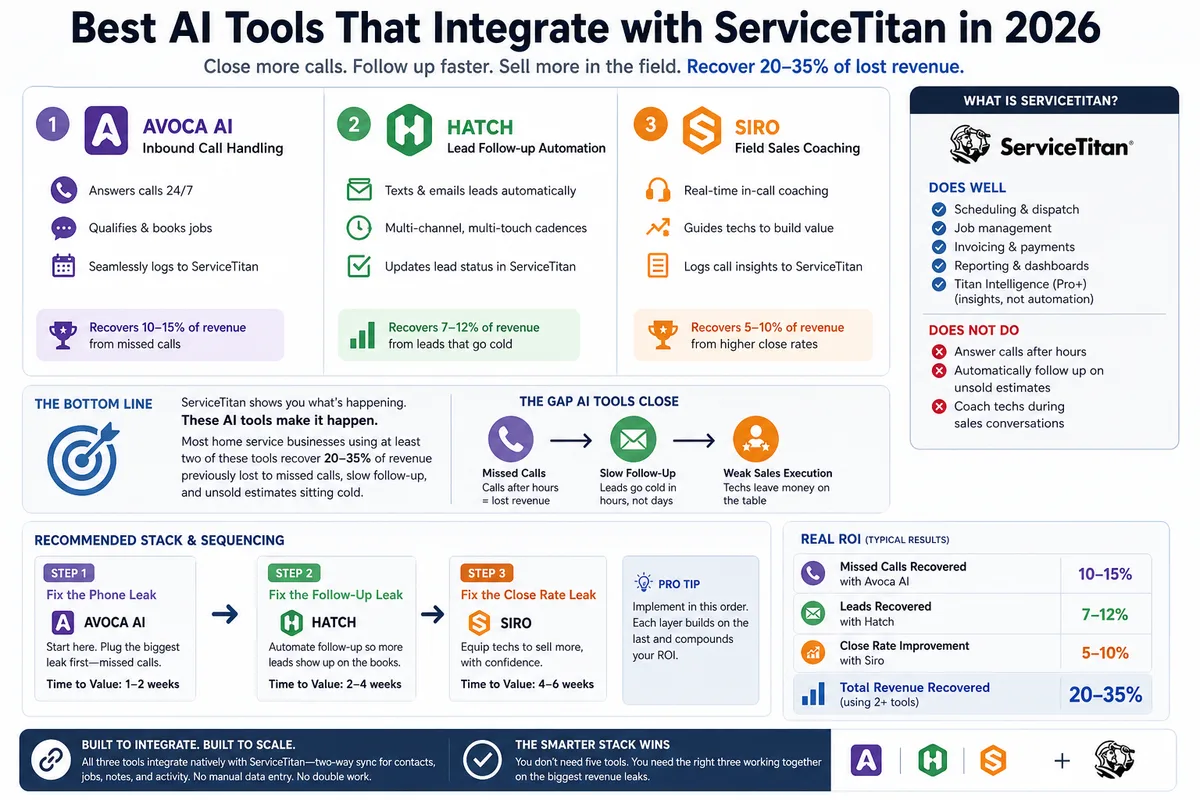
Best AI Tools That Integrate with ServiceTitan in 2026
Most ServiceTitan shops miss a meaningful share of inbound calls and leave most estimates unsold. These AI tools close those gaps inside ServiceTitan.