
What Are AI Automation Agencies? The Business Owner's Guide for 2026
AI automation agencies are companies that design, build, and manage AI-powered systems for businesses. They handle voice AI for answering calls, chatbots for qualifying leads, and backend workflow automation that connects software tools without manual input.
AI automation agencies build and manage AI-powered systems for businesses. In 2026, they handle voice AI, lead follow-up, and workflow automation without.
Epiphany Dynamics is an AI automation agency: we help businesses find and fix operational bottlenecks with AI receptionists, lead follow-up, and workflow automation.
Free 30-minute audit. We name at least 3 things you can automate, ranked by impact.
Book a free AI audit
Patrick Gibbs
AI automation agencies are companies that design, build, and manage AI-powered systems for businesses. They handle voice AI for answering calls, chatbots for qualifying leads, and backend workflow automation that connects software tools without manual input. Project cost depends on the workflow complexity, number of integrations, call or lead volume, compliance needs, and how much ongoing tuning is included.
What Exactly Is an AI Automation Agency?
An AI automation agency is a specialized firm that builds intelligent automated systems for businesses using AI. Core work includes voice agents for call handling, chatbots that qualify and convert leads, and backend automations that eliminate manual data entry between software tools. They design and maintain these systems rather than selling software licenses or filling staff positions.
The clearest way to understand what these agencies do is to think about what they replace. A plumbing company missing calls because the owner is on job sites all day hires an agency to build a voice agent. That agent answers 24/7, captures job details, checks calendar availability, and books the appointment directly. No dedicated receptionist. No calls going to voicemail and dying there.
The category has matured significantly by 2026. What started around 2023 as a niche offering from technically capable freelancers has grown into a recognized service category with established pricing, defined deliverables, and enough live past implementations to actually evaluate. That maturity cuts both ways: there are genuinely strong agencies now with real track records, and there are also people who built one chatbot on a no-code platform, put up a website, and are calling themselves an agency. Knowing the difference matters before you write a check.
For a closer look at the day-to-day work these agencies actually do, this complete guide to what AI automation agencies do covers the common project types, how agencies manage live systems after launch, and what a real engagement looks like from discovery through delivery.
What Services Do AI Automation Agencies Offer?
AI automation agencies offer four main services: voice AI for inbound and outbound call handling, chatbot and live chat automation, CRM and workflow automation that connects software tools, and automated lead follow-up sequences. Most clients start with whatever is causing the most immediate revenue loss and expand from there.
Voice AI is the area getting the most attention right now, and the technology earns it. Modern voice agents handle appointment scheduling, FAQ calls, and intake conversations in a way that most callers find natural. The work agencies do here goes well beyond picking a platform. They build the call flow logic, train the agent on the specific business's services and pricing, connect it to the client's scheduling system, and stress-test edge cases like callers with unusual requests or questions the agent was not trained to handle. The gap between a voice agent that works reliably and one that drives callers to hang up is almost entirely in how carefully it was built.
Backend workflow automation is one of the most underestimated services because the savings are hidden inside routine handoffs. This is the work of connecting software tools so that a form submission automatically creates a CRM record, sends a notification to the right staff member, starts an email follow-up sequence, and logs everything in your project management system without anyone touching it manually. A business processing steady lead volume can lose hours every week to data entry that a well-built automation handles immediately. For examples of what this looks like across specific industries, AI automation examples for small business covers common patterns in HVAC, dental, real estate, and insurance.
What Does an AI Automation Agency Cost?
AI automation agency pricing usually combines an upfront build scope with ongoing maintenance, tuning, and support. Simple chatbots sit at the low end. Full voice AI systems with CRM integration, post-call workflows, and outbound lead handling sit at the high end because they require more design, testing, integrations, and monitoring.
Here is how specific automation types usually compare in complexity and ongoing support need:
| Automation Type | Build Complexity | Ongoing Support Need |
|---|---|---|
| Basic chatbot (FAQ + lead capture) | Lower | Light tuning and content updates |
| Voice AI (inbound call handling) | Medium | Call-flow tuning, escalation review, and QA |
| CRM and workflow automation | Medium | Integration monitoring and workflow changes |
| Full lead-to-booking system | Higher | Ongoing optimization across calls, CRM, scheduling, and follow-up |
The context that makes agency pricing reasonable is the fully loaded cost of staff time. Salary is only one part of the comparison: payroll taxes, benefits, training, turnover, management time, and coverage gaps all matter. The financial comparison between hiring an AI automation agency and a full-time employee is best run with your own labor costs and workflow volume, not borrowed averages.
The ROI calculation on a voice AI system is worth running concretely with first-party inputs. Start with inbound call volume, missed-call rate, qualified lead rate, average job value, and current staffing cost. Then compare the cost of better coverage against the revenue currently leaking through unanswered calls or slow follow-up. Not every business has enough volume to justify a custom system, but any service business with consistent call volume should run the math before assuming the investment is out of reach.
What Businesses Get the Most Value From This?
Service businesses with consistent inbound call volume see the clearest ROI from AI automation agencies. HVAC, plumbing, dental practices, insurance agencies, real estate teams, and home services are the highest-fit categories. The common thread is businesses where missed calls or slow lead response directly cost revenue, and where intake processes follow patterns that a trained AI system can reliably handle.
The businesses that get the least from this arrangement have very low lead volume, highly complex or bespoke sales processes, or no existing CRM or scheduling infrastructure to integrate with. If every sale requires a founder-level technical discussion and the business only receives a small trickle of qualified leads, automation may not move the needle. The math has to come from the client's actual volume and margin.
Insurance agencies are nearly tailor-made for this kind of work. They field high volumes of repetitive inquiry calls, have structured intake requirements, and run renewal cycles that are practically designed for automated outreach sequences. AI automation for insurance agencies goes deep on how those specific workflows get designed, from initial lead qualification through policy renewal reminders, and covers the compliance considerations that need to be built into the system from the start rather than bolted on later.
See AI Automation Cost for Accounting Firms: 2026 Pricing Guide for more in this area.
How to Evaluate an AI Automation Agency Before You Hire
The most reliable way to evaluate an AI automation agency is to ask for a live demo of something they built for a similar business, then review their proposal for workflow-level specificity. Red flags: vague deliverables, promises of complete automation with no caveats, and agencies that cannot name the specific tools they plan to use to build your system.
Ask to see a live demo. Not a screenshot. Not a recorded walkthrough video. An actual working system you can interact with yourself. Any agency that has shipped real work for clients can show you something live. If they cannot, they either have very little shipped to their name or built things clients will not let them share publicly. Both situations require more scrutiny before you commit budget.
Read the proposal for workflow-level specificity. A real scope sounds like: "We will build an inbound voice agent that handles appointment scheduling, integrates with your Google Calendar, sends a confirmation SMS to the caller, and routes complex questions to a staff member via Slack notification." A vague proposal says "AI voice automation implementation" and stops there. Vague deliverables produce scope disputes, and scope disputes produce projects that finish wrong or do not finish at all.
Maintenance terms deserve more attention than most buyers give them going in. AI systems need tuning. The voice agent that works well in early testing will surface edge cases once real callers start using it. The chatbot that handles common inquiries smoothly will hit unexpected patterns as traffic changes. Make sure the monthly retainer explicitly covers ongoing adjustments and not just uptime monitoring. The full framework for choosing an AI automation agency walks through the specific questions to ask before signing, including how to tell whether an agency has genuine technical depth or is primarily a sales operation that subcontracts the actual build work.
If you're deciding between an agency and a freelancer, compare the workflow complexity and who'll maintain the system after launch. At Epiphany Dynamics, we define the build in writing and discuss the handoff during scoping. Ongoing support is optional, so you can choose the help your team needs.
Frequently Asked Questions
Q: How much does it cost to build a voice AI agent?
Cost varies with system complexity. A simple call answering system costs less than one that manages scheduling, integrates with your CRM, and handles payment processing or quote generation. Ask agencies to separate upfront build scope from ongoing maintenance, optimization, and support so you can compare quotes honestly.
Q: How long does it take to build and deploy an AI chatbot?
Simple lead qualification chatbots launch faster than systems that integrate with your CRM or handle complex workflows. The timeline depends on your existing tech stack, how clearly you can define conversation flows, and how quickly you can provide training data and feedback.
Q: What's the advantage of hiring an AI automation agency instead of building chatbots myself?
Agencies handle the full lifecycle—design, testing, deployment, and ongoing optimization based on real-world performance. You avoid the engineering time to maintain systems yourself, and you get expert judgment when something breaks or needs tuning, which is crucial for live production systems.
Q: How many new leads or calls could an AI system actually capture?
The impact depends on your current bottleneck. If you miss a large share of inbound calls due to staff unavailability, a voice agent answers all of them; if staff manually screen inquiries, a chatbot can absorb most of that workload. Real gains come from eliminating your specific process gap, not from generic productivity claims.
Patrick Gibbs
AI Automation Expert
Patrick Gibbs helps professional practices implement AI automation that captures more leads, books more appointments, and scales without adding overhead. He's the founder of Epiphany Dynamics and creator of the AI Front Desk system.
Related Solutions
Build this into a real workflow
Related Posts
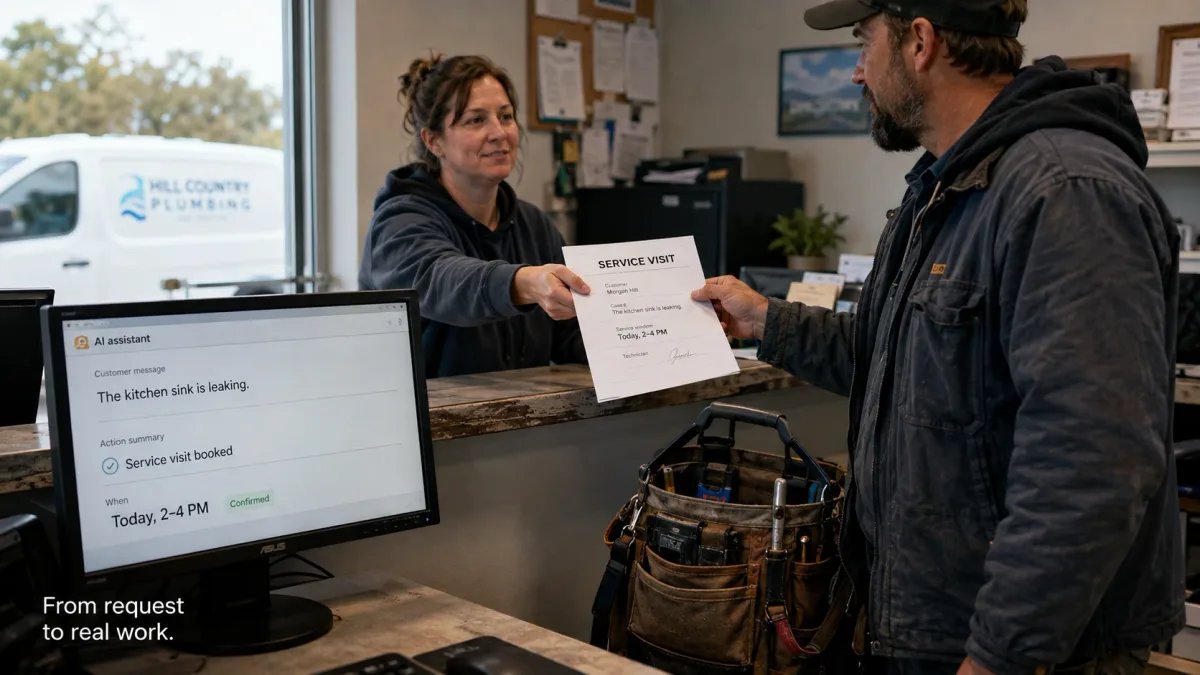
AI Agent Examples: Real Business Jobs from Observation to Action
See how agents can triage requests, resolve scheduling changes, find missing intake details, and prepare follow-up work, with explicit decisions and handoffs.
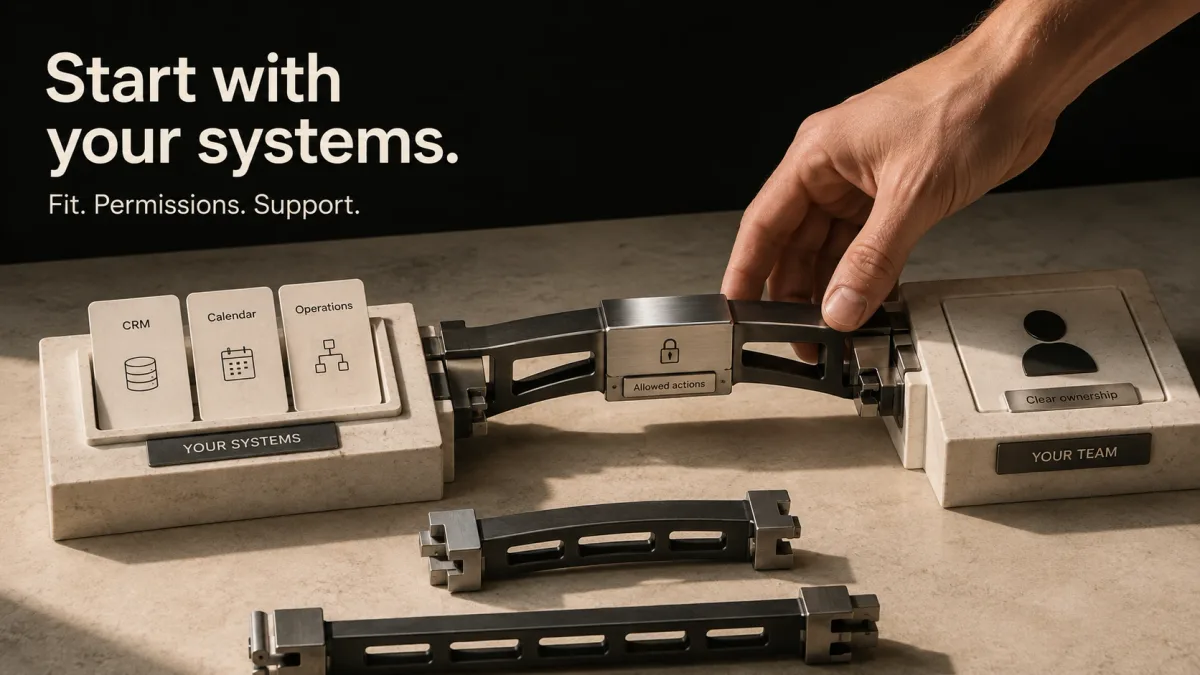
Best AI Agent Platforms for Business: A Practical Buying Guide
Compare n8n, Copilot Studio, OpenAI Agent Builder, and custom implementation by business fit, ownership, operating costs, and support.
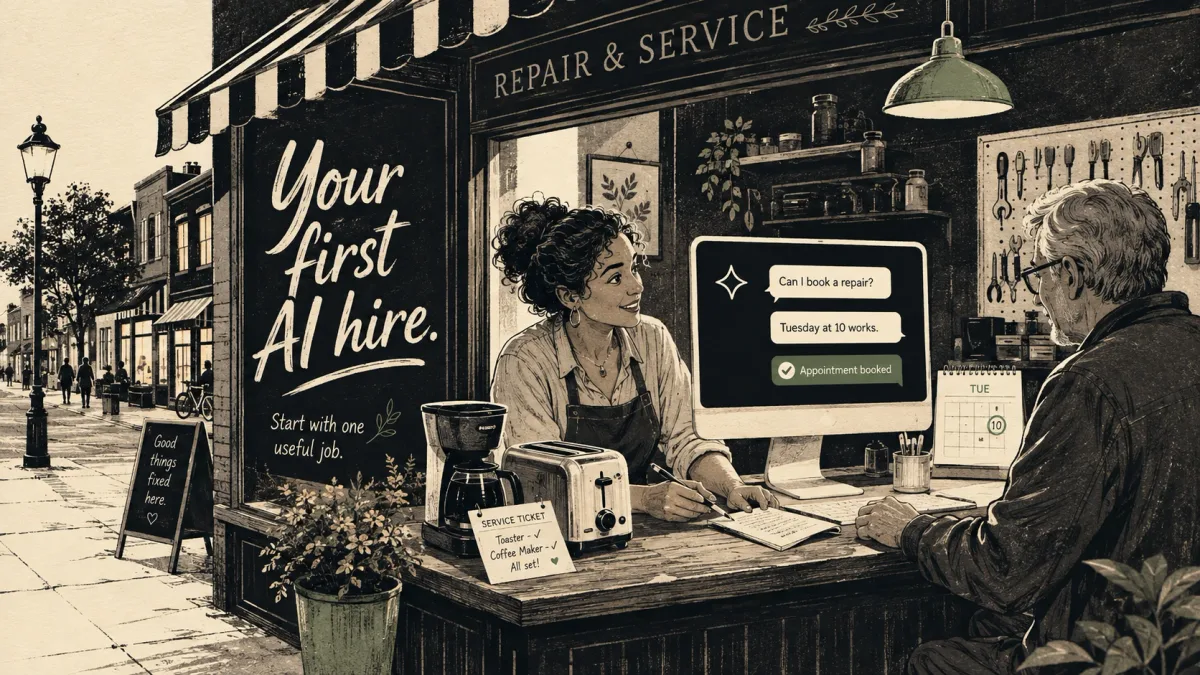
How to Get an AI Agent for Your Small Business
Decide whether to buy, configure, or commission an AI agent. Know what to bring, what a proposal should include, and how to accept the first working task.