
How Dallas HVAC Companies Eliminate Voicemail with AI
Illustrative scenario based on patterns we see across service businesses, not a specific client engagement. An HVAC contractor can eliminate its voicemail backlog entirely after deploying AI call automation, going from limited call capture and zero after-hours coverage to near-complete call capture across all hours.
Explore how Texas-based HVAC service providers make the shift from voicemail bottlenecks to near-complete call capture, expanding capacity without hiring.
Epiphany Dynamics is an AI automation agency: we help businesses find and fix operational bottlenecks with AI receptionists, lead follow-up, and workflow automation.
The free 30-minute AI Operations Audit is a conversation about a normal week in your business and where the work piles up. We find the one change that would give you the most time back and send you a plain-English plan for it. No forms and no pitch.
Book a free AI audit
Patrick Gibbs
Illustrative scenario based on patterns we see across service businesses, not a specific client engagement.
An HVAC contractor can eliminate its voicemail backlog entirely after deploying AI call automation, going from limited call capture and zero after-hours coverage to near-complete call capture across all hours. Many companies spend thousands per month on marketing to generate calls, then miss a large portion of them, representing a significant revenue gap against their annual run rate.
The Voicemail Graveyard
Every morning, many HVAC business owners face a frustrating ritual.
They sit down at their desk, open their phone, and stare at dozens of new voicemail notifications from the weekend: potential customers who needed help, and each one is already a lost opportunity.
By the time the owner or dispatcher calls them back, which can often be hours later, the callers have already hired someone else. In the summer heat, when an AC unit fails, customers do not wait. Research shows that lead response times are critical, especially in home services.
“We were spending money on marketing to generate calls, then missing many of them because we couldn’t answer the phone fast enough,” many contractors recall.
A typical mid-sized HVAC company with a dozen technicians might have a solid reputation, but their phone handling capacity remains limited by human availability.
The Numbers That Keep Owners Awake
When business owners look at their phone records for a peak month, such as June or July, the data is often clear:
- A large percentage of weekly calls arrive outside standard business hours.
- Callers hang up without leaving a voicemail.
- The average job value represents significant revenue, meaning even a few missed calls a week add up to massive yearly losses.
Missing calls represents a major revenue leak, far beyond the immediate lost job.
The Breaking Point
The moment of truth often comes during a heatwave.
Imagine an owner attending a family event while their phone buzzes repeatedly with missed call notifications. Within an hour, dozens of calls go unanswered because the manual phone lines are busy or it is after hours.
It is exactly the kind of busy season call surge that overwhelms manual phone systems. Realizing that the business is losing opportunities while the owner is trying to disconnect is often the catalyst for change.
The Solution Search
Firms typically explore several options:
- Hiring More Staff: High annual salary plus benefits, and it still does not cover after-hours, weekends, or seasonal call surges.
- Call Center Services: Monthly fees can be high, and generic agents often cannot schedule jobs or answer technical questions.
- AI Voice Assistants: Offers 24/7 answering, lead qualification, appointment booking, and industry-specific context at a predictable monthly rate.
Modern AI voice assistants have evolved beyond traditional robotic phone trees, providing natural-sounding conversations.
The Transformation Journey
Configuration and Integration
Setting up an AI voice assistant designed specifically for HVAC companies is straightforward:
- Custom voice and script setup.
- Integration with dispatch software and calendars.
- Testing and refinement of escalation rules.
Typically, the system can go live for after-hours calls within a week.
Going Live
Starting with after-hours call handling first allows the business to capture immediate opportunities. In a typical rollout, companies recover enough lost jobs in their first week to cover the system’s cost for the year.
More on this subject: From Voicemail to Victory: How Nashville HVAC Operators Scale with AI Voice.
Full Deployment
Once the after-hours flow is proven, the system can expand to cover:
- All after-hours calls.
- Business hours overflow handling.
- 24/7 weekend coverage.
This ensures near-complete call capture and streamlined scheduling.
Quantifiable Improvements
When comparing performance before and after deploying AI, companies typically see:
- Call Capture Rate: Can rise to near-complete capture.
- Monthly Appointments: Significant increases in scheduled calls.
- After-Hours Revenue: Substantial revenue captured overnight.
- Response Time: Instant response (under 3 seconds) instead of hours of delay.
Unexpected Benefits
Employee Morale Improves
Office staff are no more overwhelmed by backlogs and callback phone tag, allowing them to focus on complex tasks instead of answering repetitive questions.
Technician Efficiency Grows
AI qualifies callers and captures context, reducing travel times and ensuring technicians arrive with the correct parts.
Work-Life Balance Restored
Owners can sleep through the night and take weekends off, knowing calls are answered and booked automatically.
Standard System Setup
A typical configuration includes:
1. AI Configuration
- Natural-sounding voice profile.
- Qualify leads with targeted HVAC questions.
- Transfer true emergencies to an on-call technician quickly.
2. Integrations
- Dispatch software for real-time scheduling.
- Calendar integration.
- Stripe for collecting deposits if needed.
3. Handoff Rules
- AI handles routine scheduling and qualification.
- Transfer sales opportunities or complaints to human staff.
Implementation Advice
Contractors share several recommendations:
- Start with After-Hours: Build confidence by letting the system handle nights and weekends first.
- Customize Scripts: Ensure the AI reflects your company’s tone and pricing.
- Monitor Recordings: Listen to early calls to refine scripts and training.
The Bottom Line
Eliminating voicemail is a mathematical decision. Service businesses regularly see a high return on investment when they stop letting calls go unanswered. Beyond the revenue, the peace of mind of knowing every opportunity is captured is invaluable.
Patrick Gibbs
AI Automation Expert
Patrick Gibbs helps professional practices implement AI automation that captures more leads, books more appointments, and scales without adding overhead. He's the founder of Epiphany Dynamics and creator of the AI Front Desk system.
Related Solutions
Build this into a real workflow
Related Posts
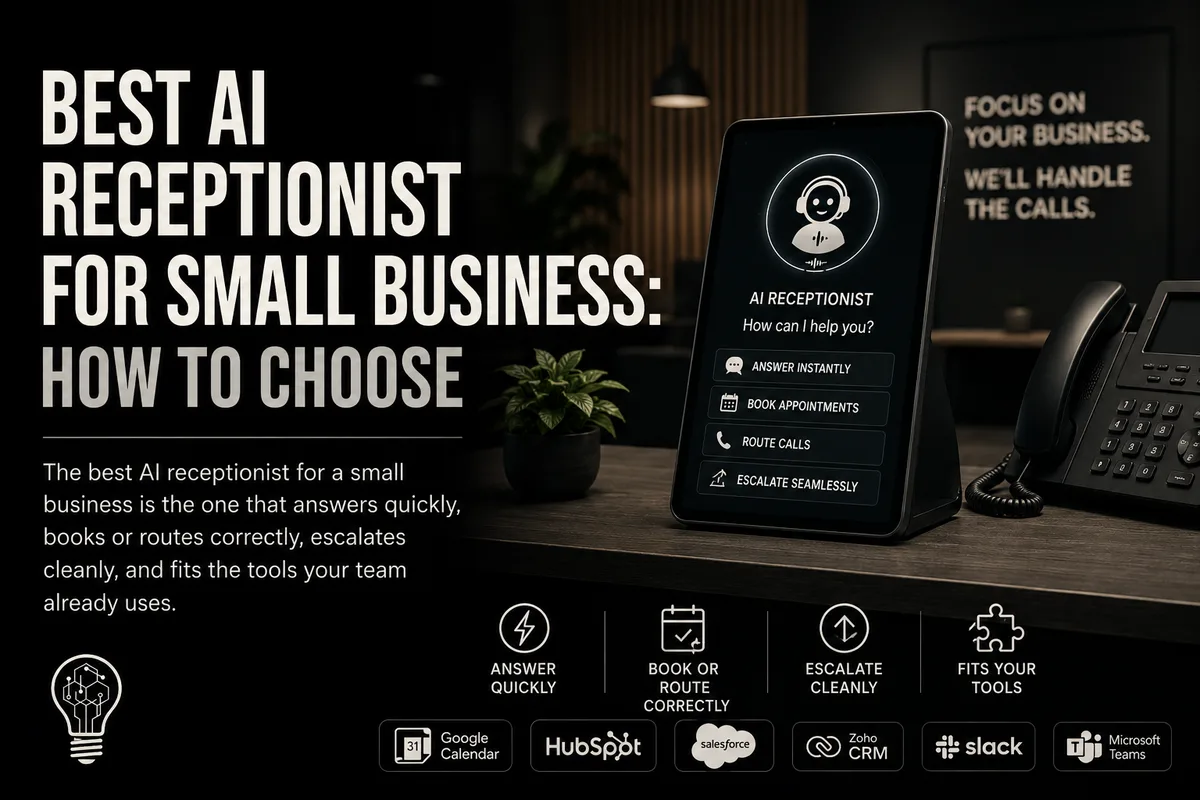
Best AI Receptionist for Small Business: How to Choose
The best AI receptionist for a small business is the one that answers quickly, books or routes correctly, escalates cleanly, and fits the tools your team.
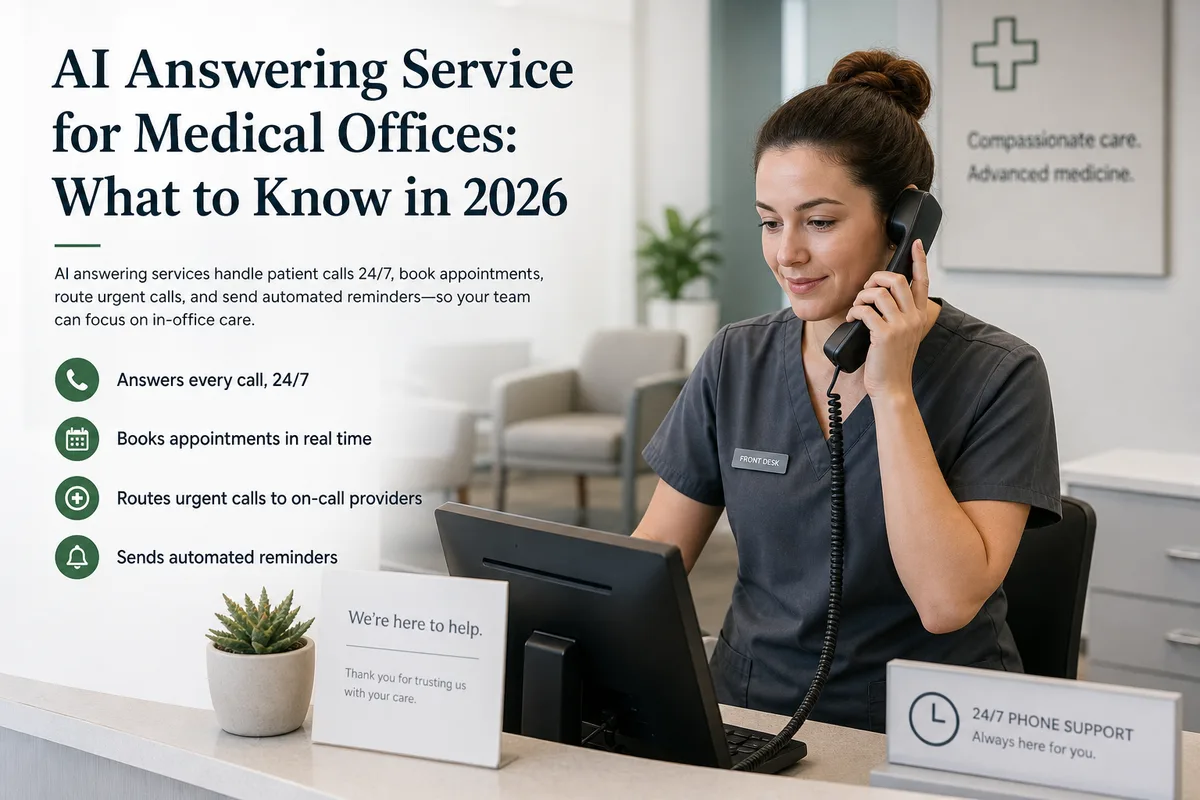
AI Answering Service for Medical Offices: What to Know in 2026
A large share of medical office calls go unanswered during peak hours. Here's what an AI answering service does for a practice, what HIPAA requires, and how.

AI Voice Agent for Small Business: What It Does in 2026
Most small businesses lose inbound calls to voicemail or missed rings. AI voice agents answer calls, book appointments, qualify leads, and reduce front-desk.