
What Is a Lead Capture System? The Honest 2026 Breakdown
A lead capture system is a connected set of tools and processes that collects contact information from prospects, qualifies those contacts based on behavior or form data, and routes them into automated follow-up sequences. Done right, it responds quickly, keeps working outside office hours, and feeds a sales pipeline without requiring manual inbox checks after setup.
Most businesses have some version of lead capture running. Most of it leaks. Here's what a real lead capture system actually includes, what it costs to run.
Epiphany Dynamics is an AI automation agency: we help businesses find and fix operational bottlenecks with AI receptionists, lead follow-up, and workflow automation.
The free 30-minute AI Operations Audit is a conversation about a normal week in your business and where the work piles up. We find the one change that would give you the most time back and send you a plain-English plan for it. No forms and no pitch.
Book a free AI audit
Patrick Gibbs
A lead capture system is a connected set of tools and processes that collects contact information from prospects, qualifies those contacts based on behavior or form data, and routes them into automated follow-up sequences. Done right, it responds quickly, keeps working outside office hours, and feeds a sales pipeline without requiring manual inbox checks after setup.
Most service businesses have something they call a lead capture system. In practice, it's usually a contact form that fires an email to someone who checks it when they remember to. That's not a system. That's a to-do list waiting to happen.
The difference between that and an actual working system isn't a massive technology overhaul. It's understanding what pieces need to connect, in what order, and then building to that spec instead of stacking tools randomly until something seems to stick.
What a Lead Capture System Actually Does
A lead capture system collects contact information, qualifies the contact by intent or source, and fires an immediate automated response to each inquiry. Most lead-capture failure happens after capture, not before it: the business paid for the click, form fill, or phone call, then let the contact sit without a clear next step.
Think of it as three layers stacked on each other. The first is capture: a form, a chatbot, a phone call, a landing page. Someone hands you their name and number. That's table stakes. The second layer is qualification: what did they want, how urgent is it, what service are they asking about? The third is routing: does this person get an immediate SMS, a booking link, a call from your team, or all three in sequence?
Where businesses consistently fall apart is the handoff between the first and second layers. The contact comes in, sits in an inbox, and by the time someone follows up, the prospect may already be talking to someone else. Fast response matters because a lead is most valuable while the problem is still active. If your system doesn't close that gap automatically, you're competing on luck instead of process.
The Core Components of a Lead Capture System
A complete lead capture system has five components: a traffic entry point, a capture mechanism, a CRM, an immediate response trigger, and a nurture sequence. Most businesses have the first two. The missing pieces are the response and routing layers, where most conversion discipline actually happens.
Here's how those five components map out in practice, along with the tools typically used to fill each role:
| Component | What It Does | Common Tools |
|---|---|---|
| Entry Point | Drives traffic to your capture mechanism | Google Ads, SEO content, Facebook Ads, referrals |
| Capture Mechanism | Collects name, contact info, and stated intent | Landing page form, chatbot, phone, AI voice |
| CRM / Database | Stores and organizes contact records | GoHighLevel, HubSpot, Salesforce, Airtable |
| Immediate Response | Reaches the lead quickly after inquiry | SMS automation, email trigger, AI voice callback |
| Nurture Sequence | Keeps the lead engaged until they convert | Email drip, SMS follow-up, retargeting ads |
The capture mechanism gets most of the attention, but the immediate response trigger is where most businesses leave money on the table. If you're running paid ads and routing inquiries to a form that sends you a notification email, you're paying for leads that your competitor (the one with an SMS auto-reply already configured) is converting before you've even opened the notification. For a deeper look at what effective follow-up sequences actually look like, lead nurturing best practices that actually convert prospects covers the timing and message cadence that moves contacts through a pipeline without feeling like spam.
The Real Cost of Not Having One
The cost of a weak lead capture system is best measured with your own numbers: lead volume, response speed, appointment rate, close rate, and average job value. When follow-up is slow, the business loses value from leads it already paid to generate.
The math is clear once you use your own inputs, but most business owners never run it because the losses are invisible. Nobody sends you an invoice for the lead you didn't follow up on fast enough. It just doesn't show up in the revenue column, which makes poor lead capture easy to ignore until someone starts tracking conversion rates instead of just lead volume.
Phone calls are the biggest exposure point for most service businesses. Inbound calls go unanswered when staff are busy, in the field, or closed for the day. Every missed call that doesn't feed into an automated text-back or voicemail-to-CRM workflow is a lead already searching your competitor's name. If that's a familiar situation, the analysis in the true cost of missed calls for service businesses shows how to calculate the annual impact from your own call logs. The longer the delay, the more the follow-up feels like a cold outreach attempt instead of a response to an active buyer.
How to Build a Lead Capture System That Actually Works
Building a functional lead capture system takes four steps: map every place a lead can enter your business, assign an automated response to each entry point, connect those responses to one CRM, and set up a follow-up sequence that keeps working until the lead books, declines, or goes quiet.
Start with an audit. Write down every channel where someone can contact you right now: phone, web form, Facebook Messenger, Instagram DMs, Google Business profile messages, text. For each one, answer one question: what happens automatically right after that inquiry arrives? If the answer is "nothing automatic," that's your starting point.
The build itself doesn't require expensive software. A solid minimum viable setup for a service business is a landing page form or web chat widget connected to a CRM like GoHighLevel or HubSpot, with an automation that sends an immediate SMS after form submission. Once that's working, you can layer in an example workflow: a short email sequence, a later SMS check-in, and a final "did you find what you were looking for?" message. For help figuring out which automation tools connect cleanly at your budget level, the complete guide to automating lead capture in 2026 covers the full stack at each price point. And if you're evaluating whether to tie your CRM into your scheduling and calendar tools at the same time, what service businesses actually gain from CRM and calendar integration is worth a read before you start building.
More on this subject: GoHighLevel vs SuiteDash in 2026: Which Platform Fits Your Business?.
Where Most Lead Capture Systems Break Down
The most common failure points are: no immediate response automation, capture forms that ask too much upfront (8-plus field forms convert at roughly half the rate of 3-field forms), and a CRM nobody uses because it was configured for the software's default workflow rather than how the team actually operates.
Form length catches people off guard. Research has found that cutting form fields substantially can meaningfully increase conversion rates. The tension is real: you want qualification data upfront, but you also need the form submitted. The practical answer is progressive profiling. Capture the minimum first (name, phone, service needed, zip code), then collect more detail in the follow-up conversation or through a secondary form triggered after the first automated touch.
CRM adoption is the other recurring problem. A business buys HubSpot or GoHighLevel, spends two weeks configuring it, and six months later the team is still working from a shared Google Sheet because the CRM felt complicated. That's not a people problem, it's a setup problem. The CRM has to match how the team actually operates, not how the software vendor imagined it would. For businesses that handle a lot of inbound calls specifically, layering in AI-assisted call handling can close that adoption gap faster than any training program. The breakdown on service business workflow automation covers how to structure those integrated setups without overbuilding them.
One more thing worth saying clearly: a lead capture system is not a one-time build. Conversion rates shift, ad channels change, and the sequences that performed well in early 2026 may need tuning by Q4. Build it, measure it, and adjust it on a quarterly basis. That's the actual work, and skipping that review cycle is how good systems quietly stop performing.
If you're starting from scratch or trying to figure out whether your current setup has gaps, Epiphany Dynamics builds these systems for service businesses across multiple verticals. Sometimes the gap is one missing automation. Sometimes it's the whole infrastructure. Either way, it's a fixable problem.
For website opt-ins, the WordPress and Mailchimp integration guide maps the handoff from a form to a follow-up list. Ecommerce teams can compare that with cart-recovery automation, where an existing purchase must stop the sequence.
Frequently Asked Questions
Q: How much faster should a lead capture system respond?
It should respond while the prospect is still actively thinking about the problem. Automated responses that trigger immediately give you a practical advantage over competitors who wait for someone to check an inbox manually.
Q: What are the three core components of a lead capture system?
A functional system has three layers: capture (form or chatbot), qualification (scoring intent and urgency), and routing (sending the contact to SMS, a booking link, or your sales team automatically). Most businesses nail the first layer and completely miss the last two.
Q: Is a contact form the same thing as a lead capture system?
No. A contact form only collects information; it doesn't qualify leads or automatically send them anywhere. A real system evaluates each prospect's fit and urgency, then immediately routes them to a next step: booking calendar, SMS, or sales call without manual work.
Q: What metrics determine if your lead capture system is actually working?
Track three: response speed, conversion rate, and automation coverage. Response speed tells you how quickly each channel gets a reply. Conversion rate tells you whether those replies turn into booked work. Automation coverage tells you how much happens without someone checking inboxes manually. If you're manually following up every time, you have a form, not a system.
Patrick Gibbs
AI Automation Expert
Patrick Gibbs helps professional practices implement AI automation that captures more leads, books more appointments, and scales without adding overhead. He's the founder of Epiphany Dynamics and creator of the AI Front Desk system.
Related Solutions
Build this into a real workflow
Related Posts
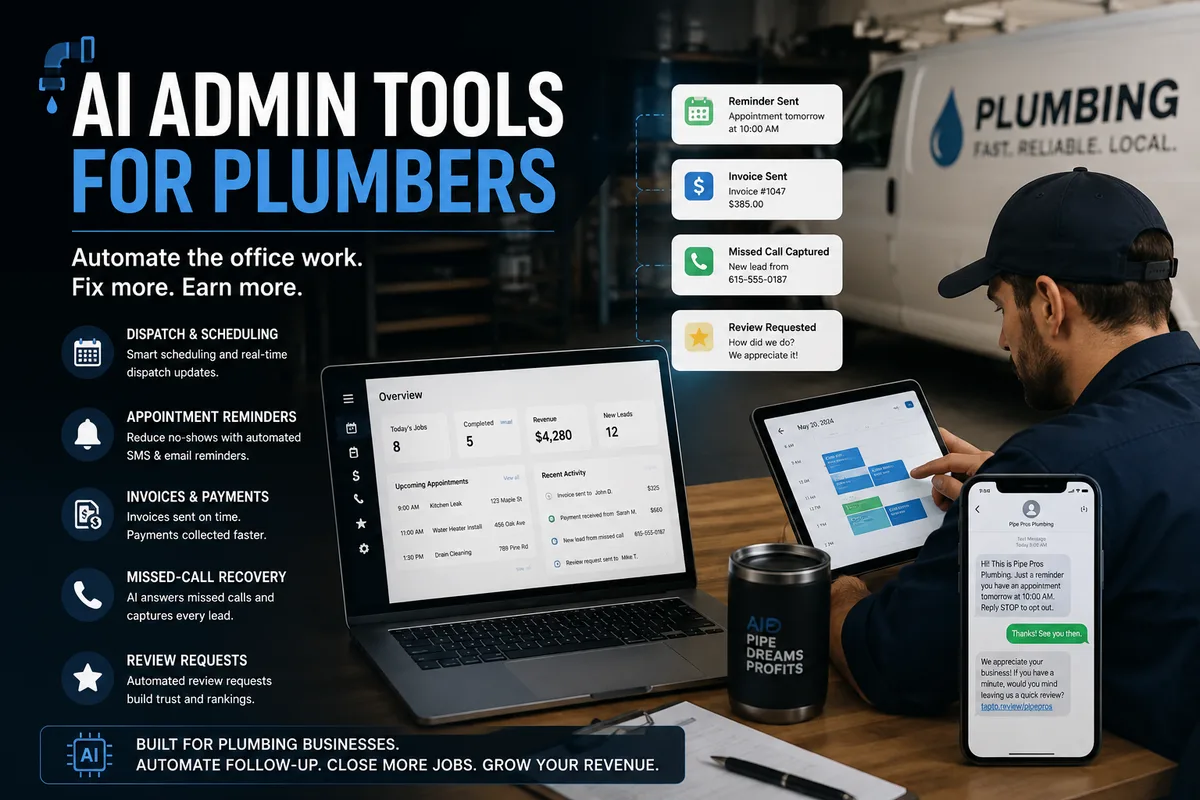
AI Admin Tools for Plumbers: What They Are and How to Choose
AI admin tools automate dispatch, reminders, invoicing follow-up, missed calls, and review requests for plumbers. What they do and how to choose.
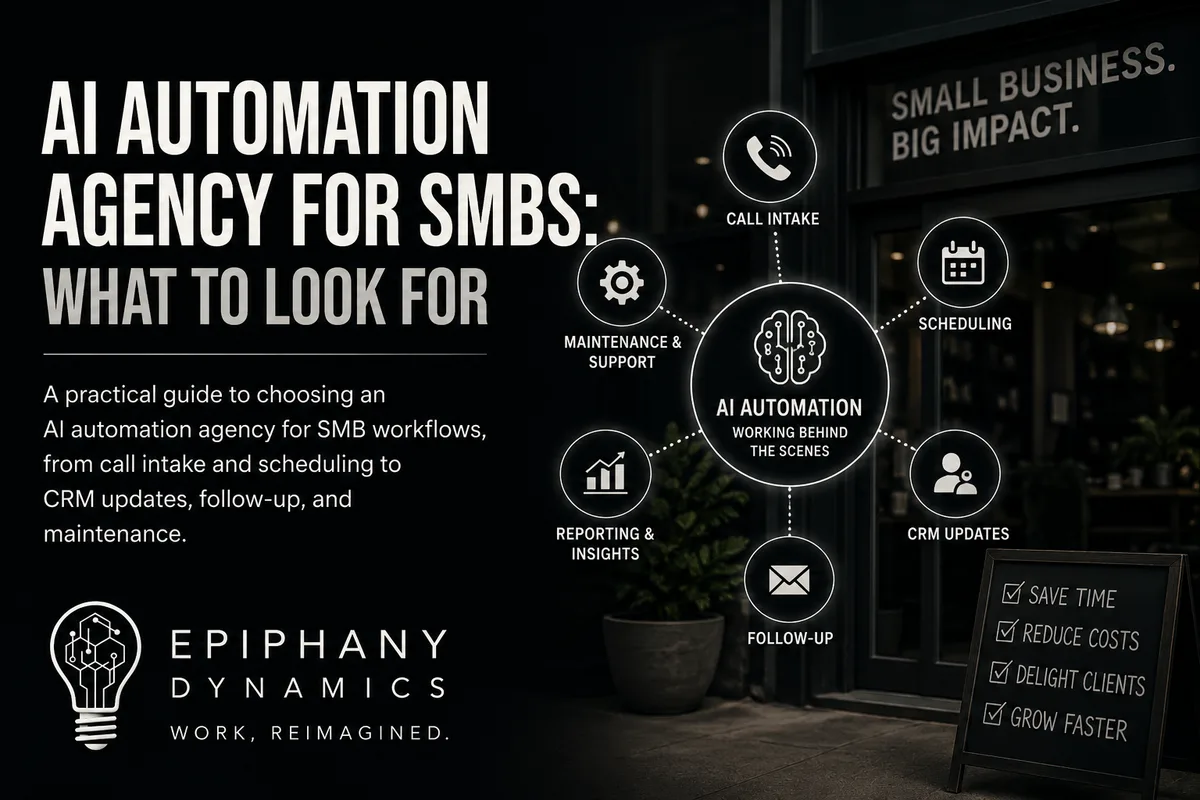
AI Automation Agency for SMBs: What to Look For
A practical guide to choosing an AI automation agency for SMB workflows, from call intake and scheduling to CRM updates, follow-up, and maintenance.
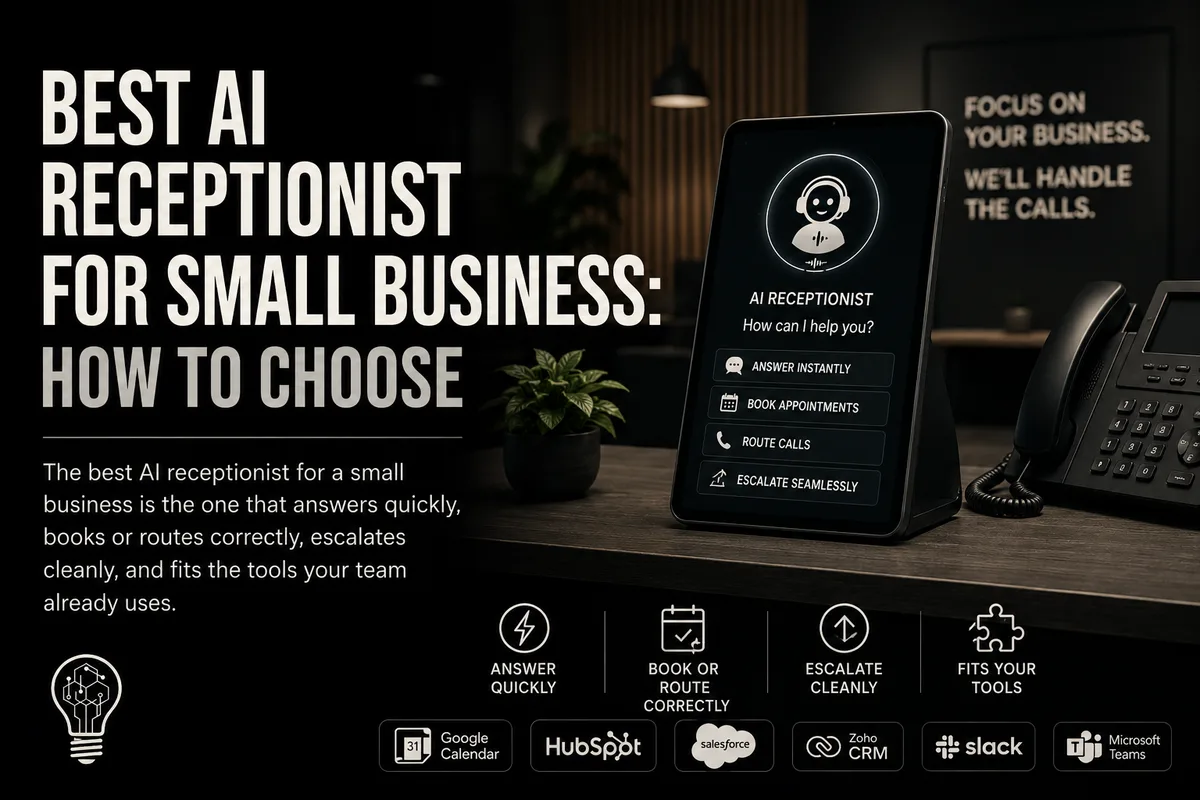
Best AI Receptionist for Small Business: How to Choose
The best AI receptionist for a small business is the one that answers quickly, books or routes correctly, escalates cleanly, and fits the tools your team.