
AI Answering Service for Dental Office: Cost, Setup, and ROI in 2026
An AI answering service for a dental office handles inbound calls 24/7, books appointments directly into your practice management software, answers routine questions about insurance and scheduling, and captures after-hours patient leads. The ROI depends on your missed-call volume, new-patient value, booking rate, and how reliably the system writes appointments into your workflow.
Dental offices miss valuable inbound calls when the front desk is busy. An AI answering service can book appointments 24/7.
Epiphany Dynamics is an AI automation agency: we help businesses find and fix operational bottlenecks with AI receptionists, lead follow-up, and workflow automation.
The free 30-minute AI Operations Audit is a conversation about a normal week in your business and where the work piles up. We find the one change that would give you the most time back and send you a plain-English plan for it. No forms and no pitch.
Book a free AI audit
Patrick Gibbs
An AI answering service for a dental office handles inbound calls 24/7, books appointments directly into your practice management software, answers routine questions about insurance and scheduling, and captures after-hours patient leads. The ROI depends on your missed-call volume, new-patient value, booking rate, and how reliably the system writes appointments into your workflow.
Dental offices have a specific phone problem that most practice owners don't take seriously until they actually look at the numbers. Your front desk staff is skilled at what they do, but they can't answer the phone while they're checking someone in, explaining a treatment plan, processing insurance claims, or on a lunch break. That window between "phone rings" and "call answered by a human" is where new patients disappear.
Many dental practices miss more inbound calls than the owner realizes until they inspect call logs. That's not a rounding error. That's a meaningful slice of the people trying to give you money hanging up and calling the next practice in Google's search results.
What an AI Answering Service for a Dental Office Actually Does
A dental AI answering service picks up calls in real time, identifies the caller's need (new patient, existing patient, dental emergency, billing question), books or reschedules appointments in your scheduling software, and sends confirmations by text or email. Higher-tier systems also answer insurance verification questions, collect patient intake information, and escalate urgent calls to a human on-call.
The core function is straightforward: someone calls, the AI picks up, and the caller walks through a natural conversation that ends with their appointment on the books. Where platforms differ is in how well they handle edge cases, whether they can write directly to your practice management software (Dentrix, Eaglesoft, Open Dental), and whether the voice sounds like an actual receptionist or a phone tree from 2012.
The more capable systems go well beyond basic scheduling. They answer common questions about office hours, accepted insurance plans, parking, and what to expect at a new patient exam. They recognize when someone describes a dental emergency and either escalate to a real person or provide after-hours emergency contact information. Some platforms integrate with your recall system and proactively reach out to patients who are overdue for cleanings. If you want to understand where these capabilities end and where a more comprehensive front-desk setup begins, the guide to the best AI receptionists for dental practices in 2026 covers the distinction clearly.
The Numbers Behind Why This Actually Matters
As a planning assumption, start with your own new-patient value, daily call volume, missed-call rate, and booking conversion. Even a modest share of missed calls turning into new-patient appointments can make phone coverage a serious revenue issue.
Here's what the math actually looks like. Pull a recent call log, count unanswered calls, separate scheduling-related calls from billing or clinical questions, and estimate how many of those scheduling calls would have booked if someone had answered. Inbound dental calls often involve scheduling: new patients booking for the first time, existing patients booking after a lapse, or people who found you in search and want an appointment today.
The cost of the technology is almost never the only variable that should stop you. What should stop you is whether the implementation will actually capture those calls reliably, and that depends almost entirely on setup quality. A system that answers but cannot book, route, or escalate correctly is just a more polished voicemail.
AI Answering Service vs. Your Other Options
AI answering services can provide broader coverage than a business-hours receptionist and can book directly into practice management software when the integration is configured correctly. They differ from traditional human answering services because the best versions do more than take messages. The real tradeoff is that complex clinical conversations and upset patients still need a human in the loop.
Here's how the realistic options compare:
| Option | Cost Shape | Coverage Shape | Books Directly in PMS | After-Hours Booking |
|---|---|---|---|---|
| Full-time receptionist | Payroll, taxes, benefits, and management | Business hours unless you add shifts | Yes | No |
| Traditional answering service | Monthly plan plus usage or overflow rules | 24/7 | No (message only) | No (message only) |
| AI answering service | Platform, call volume, and integration support | 24/7 | Yes (with integration) | Yes |
| Hybrid (AI + human overflow) | AI platform plus human escalation coverage | 24/7 | Yes | Yes |
The traditional answering service is what most dental offices default to when they want after-hours coverage, and it mostly just takes messages. The patient calls after hours, leaves a message, and then may call a competitor with an online booking form. Message-taking made sense before patients had alternatives. Most people now expect to book an appointment at whatever hour they decide to look for a dentist, and if your system can't do that, a competitor's system will. The full comparison of AI receptionists versus traditional answering services goes deeper on where each model actually wins.
What Setup Actually Looks Like
AI answering service setup involves connecting to your practice management software, mapping appointment types and provider schedules, training the AI on your FAQs and policies, and running test calls. Plan for owner or office-manager review before going live, with additional tuning once real patient calls start coming through.
The timeline depends on how complex your scheduling rules are. A solo practitioner with straightforward availability is easier to configure than a multi-provider group practice with specialist referrals, different provider availability windows, and insurance credentialing nuances. The process generally moves through integration, configuration, training, and testing. Feed the system your real FAQs about insurance, cancellation policies, emergencies, and location, then call it yourself with different scenarios to find the gaps.
The platforms worth using let you tune responses without calling a developer every time. That flexibility matters because your FAQ needs to change when you add an insurance carrier, hire a new hygienist, or adjust your new patient intake process. If every change requires a support ticket, the system becomes a maintenance burden instead of a productivity asset. The complete guide to automating your dental practice covers this setup process in more detail alongside other automation workflows that connect to the same infrastructure.
What to Check Before You Sign Anything
The most common failure mode with AI answering services for dental offices is choosing a platform that can't integrate with your specific practice management software. Other issues include per-minute billing that spikes on longer calls, no HIPAA Business Associate Agreement, and demo environments that don't reflect actual production performance. Ask for a real client reference at a dental practice before committing to any vendor.
The integration question is the most important one. Ask directly: does this platform write appointments to my PMS in real time, or does it send an email that someone on my staff has to act on? If the answer is the latter, you haven't automated scheduling. You've added a voice layer on top of a manual process. That's not worth much, and it won't capture the after-hours appointments that are the main reason you'd buy one of these systems.
HIPAA compliance is non-negotiable. Any vendor touching patient scheduling data needs to sign a Business Associate Agreement. If a vendor hesitates on that or doesn't have an established BAA process, end the conversation. Pricing structures also vary more than they should: some platforms charge flat monthly rates, others charge per minute, which sounds cheap until a patient calls and spends 12 minutes discussing their anxiety about dental work. Get a clear picture of what your bill looks like at your actual call volumes before you commit. The practical guide to AI answering services for small dental practices breaks down cost structures and what to ask every vendor. And always ask for a real production reference in an actual dental office, not a demo. Demos are tuned to perfection. What you need to know is how the system handles a patient who is confused, upset, or asking something genuinely outside the script.
Elsewhere on the blog: AI Answering Service for Medical Offices: What to Know in 2026.
Measuring Whether It's Actually Working
Track after-hours appointment capture rate, overall missed-call rate, new patient bookings, and call abandonment rate after go-live. If missed calls and after-hours bookings are not moving in the right direction, revisit the configuration before concluding the technology doesn't work. The majority of AI answering service failures are setup problems, not technology problems.
Most dental offices that try an AI answering service and decide it "doesn't work" made a configuration decision in week one and never revisited it. The appointment types were wrong, the insurance FAQs were too vague, or the escalation rules sent every call to voicemail after 8pm instead of actually booking. None of those are technology failures. They're setup failures, and they're fixable if you're monitoring what's happening.
Give the system an active monitoring period before judging it. Use the call recordings and transcripts that better platforms provide. Listen to a representative sample of calls and identify exactly where patients get confused or drop off. That feedback loop is what separates a dental office that sees a real lift in after-hours bookings from one that sees no improvement. If you want to see how phone answering fits into a broader automation picture, the data on dental workflow automation puts it in context alongside insurance verification, recall outreach, and payment follow-up. The technology itself is mature at this point. Getting it right is a configuration and monitoring problem, not a technology problem, and that's actually good news because it means it's solvable. If you want a system built around your specific workflow rather than an out-of-the-box product, Epiphany Dynamics designs AI phone systems for service businesses including dental practices.
Frequently Asked Questions
Q: How quickly does an AI answering service pay for itself in a dental office?
Payback depends on your missed-call volume, the value of a new patient, booking conversion, platform cost, and setup quality. Use your call log to estimate how many missed scheduling calls become booked appointments once the AI is live, then compare that recovered value against the monthly service cost.
Q: Does an AI answering service integrate with Dentrix, Open Dental, or Eaglesoft?
Most modern AI answering services support direct API integration with these major PMS platforms, enabling real-time appointment booking into your system. Verify compatibility with your specific software version before subscribing, as legacy systems may have limited integration options.
Q: What happens when an AI answering service doesn't understand a patient's question?
Calls outside the AI's training are escalated to a live agent in real time (premium plans) or recorded for next-business-day callback (standard plans). This hybrid approach captures leads that traditional voicemail alone would lose while keeping costs predictable.
Q: How does an AI answering service identify and handle dental emergencies?
Most systems automatically detect urgency keywords—severe pain, injury, swelling—and route those calls immediately to a live human or your emergency line without delay. This ensures genuine emergencies bypass voicemail entirely while routine new-patient inquiries are handled by the AI.
Patrick Gibbs
AI Automation Expert
Patrick Gibbs helps professional practices implement AI automation that captures more leads, books more appointments, and scales without adding overhead. He's the founder of Epiphany Dynamics and creator of the AI Front Desk system.
Related Solutions
Build this into a real workflow
Related Posts
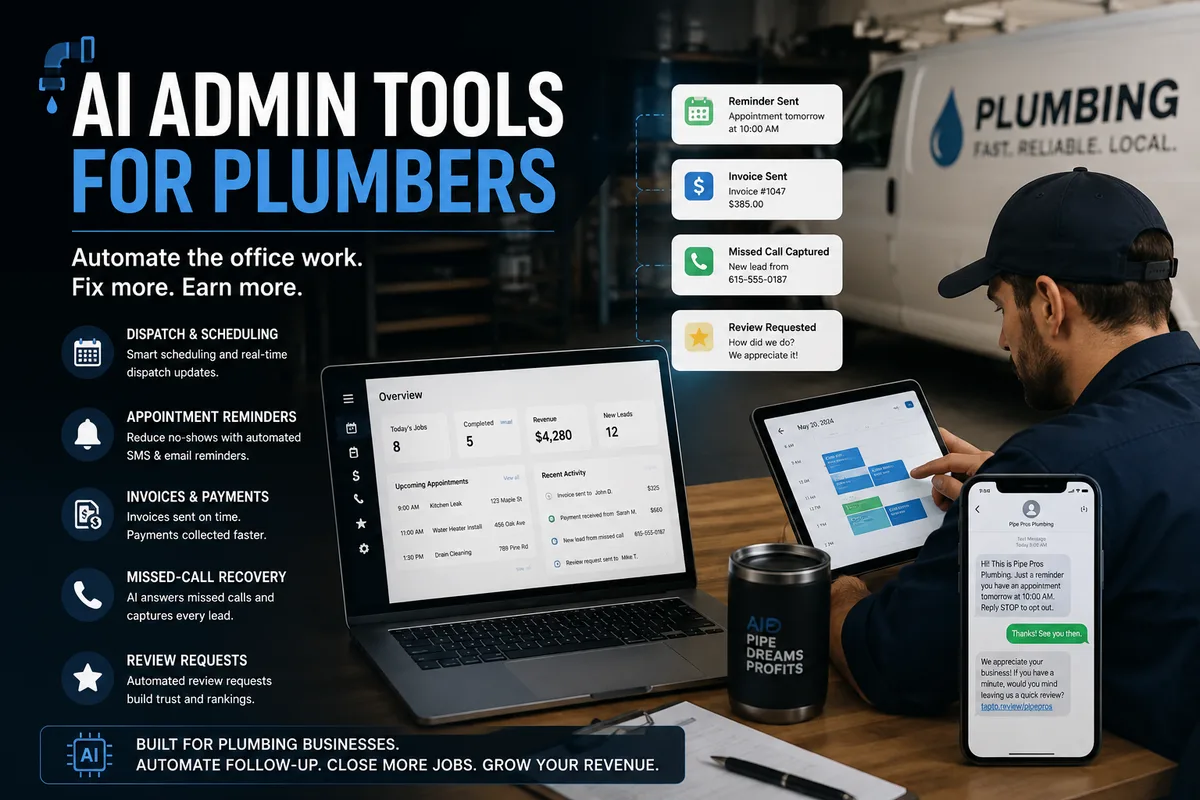
AI Admin Tools for Plumbers: What They Are and How to Choose
AI admin tools automate dispatch, reminders, invoicing follow-up, missed calls, and review requests for plumbers. What they do and how to choose.
Insurance Eligibility Automation for Physical Therapy Clinics
Eligibility automation for physical therapy clinics verifies benefits before the patient arrives, cuts front desk phone work, and can lower claim denial risk.
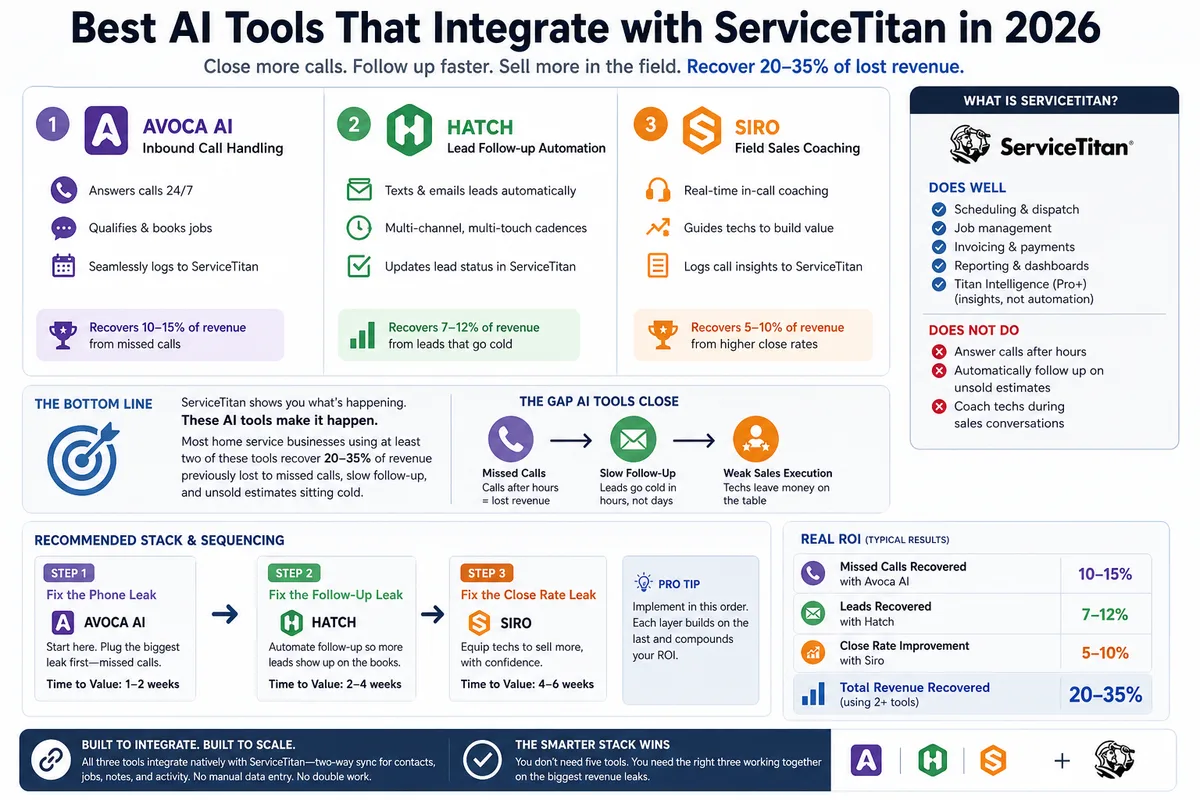
Best AI Tools That Integrate with ServiceTitan in 2026
Most ServiceTitan shops miss a meaningful share of inbound calls and leave most estimates unsold. These AI tools close those gaps inside ServiceTitan.