
AI Automation Cost for Veterinary Clinics: What to Compare
AI automation for veterinary clinics depends on scope, call volume, PIMS integration, reminders, scheduling, and client follow-up. The right cost model compares platform and setup costs against missed-call exposure, front-desk workload, and the value of routine tasks your team no longer has to handle manually.
AI automation for vet clinics depends on call volume, PIMS integration, reminders, scheduling, and follow-up. Here's how to model the cost and ROI.
Epiphany Dynamics is an AI automation agency: we help businesses find and fix operational bottlenecks with AI receptionists, lead follow-up, and workflow automation.
The free 30-minute AI Operations Audit is a conversation about a normal week in your business and where the work piles up. We find the one change that would give you the most time back and send you a plain-English plan for it. No forms and no pitch.
Book a free AI audit
Patrick Gibbs
AI automation for veterinary clinics depends on scope, call volume, PIMS integration, reminders, scheduling, and client follow-up. The right cost model compares platform and setup costs against missed-call exposure, front-desk workload, and the value of routine tasks your team no longer has to handle manually.
What AI Automation Actually Does in a Veterinary Practice
AI automation in vet clinics handles the repetitive phone and admin work that burns through front desk time: appointment booking, prescription refill requests, appointment reminders, post-visit follow-up, and after-hours answering. A properly configured system should take routine work off the team while escalating anything clinical, emotional, or ambiguous.
The average independent veterinary clinic gets a steady stream of inbound calls on a normal weekday. A good chunk of those are appointment requests, "is my pet's medication ready," vaccine record requests, and callbacks on lab results. None of that requires a licensed technician or a DVM to handle. It just requires someone (or something) to pick up the phone, get the right information, and route it correctly.
Where clinics run into trouble is when that "someone" is the same person checking in the 9am appointments, pulling charts, and answering the phone all at once. Front desk staff at vet clinics are chronically overloaded, and administrative burden is widely recognized as one of the top contributors to support staff burnout, right alongside compensation and workload volume. That's not a staffing problem. It's a workflow problem, and it's one that automation is actually good at solving.
AI automation doesn't replace your staff. What it does is take the high-volume repetitive calls off their plate so they can focus on the animals in the building. That's the honest framing. If you're expecting AI to run your front desk entirely, you'll be disappointed. If you're expecting it to handle after-hours calls, appointment reminders, and basic FAQs reliably, you'll be satisfied.
AI Automation Pricing by Use Case
AI automation for vet clinics is sold either as standalone point solutions or bundled workflows. Monthly cost depends on call volume, integrations, and how much the system needs to connect to your practice management software. Setup cost depends on call-flow design, PIMS access, and how much vendor or agency work is needed before go-live.
Here's what pricing usually depends on across different automation types:
| Automation Type | Primary Cost Driver | What It Covers |
|---|---|---|
| AI Phone Answering | Call volume, voice usage, booking depth, and triage routing | 24/7 call handling, appointment booking, basic triage routing |
| Appointment Reminders + Recall | Message volume, recall logic, and PIMS sync | SMS/email reminders, annual wellness recall sequences |
| Prescription Refill Automation | Refill intake rules, PIMS workflow, and staff approval steps | Refill request intake, PIMS integration, status updates to clients |
| Post-Visit Follow-Up | Follow-up sequences, survey logic, and review routing | Discharge instruction delivery, check-in surveys, review requests |
| Full Suite (bundled) | Integration depth, support level, and workflow complexity | All of the above, integrated into one system |
The gap between a SaaS tool and an agency-built system is mostly about integration depth. A platform like Weave or PetDesk gives you solid reminder and communication automation out of the box, but it won't be custom-fitted to your PIMS workflow or your specific escalation logic. If you're running Cornerstone or Avimark with particular routing needs, you'll likely need something built to spec. For a clearer picture of what each pricing tier actually includes and what you're paying for, the AI automation agency pricing breakdown covers that in detail.
The ROI Math: What You Actually Save
The ROI case starts with what your front desk spends time on today. Compare the cost of platform, setup, and monitoring against the value of routine calls deflected, missed calls recovered, reminders automated, and staff time moved back to in-clinic work.
Start with a call-type audit. Separate appointment requests, prescription-related calls, record requests, billing questions, post-visit questions, general information, and emergencies that need a human. The more volume that falls into repeatable categories, the stronger the automation case becomes.
If a meaningful share of routine calls get deflected through AI, that frees up real time across your front desk's day. More practically: the clinics seeing the clearest ROI aren't the ones cutting staff. They're the ones adding AI so they don't have to add another front desk person as patient volume grows.
The other factor worth calculating is missed calls. Clinics commonly miss inbound calls during peak front-desk windows. Each missed appointment request that doesn't convert is real revenue left on the table. Use your missed-call count, booking rate, and average appointment value to model the exposure. The analysis in reducing front desk costs with AI breaks down the fully-loaded employee cost comparison in more detail if you want to run your own numbers.
Read next: AI Automation Cost for Accounting Firms: 2026 Pricing Guide.
Hidden Costs and What Actually Goes Wrong
The hidden costs in vet clinic AI automation are integration work, per-minute or per-call overages on voice AI platforms, and the setup time required to configure the system correctly. Clinics that skip the integration step end up with automation that works in isolation, which mostly creates duplicate work rather than saving any.
The biggest pitfall I see is clinics purchasing a phone automation tool without checking whether it connects to their practice management software. If your AI books an appointment but it doesn't appear in Cornerstone or Avimark, your front desk still has to enter it manually. You haven't saved time. You've added a step. Before committing to any tool, confirm it has documented integration with your specific PIMS. That check is quick and saves a lot of frustration.
Voice AI platforms also have pricing structures worth scrutinizing. Some charge a flat monthly rate. Others charge per minute of call time or per resolution (calls where the AI handled the request without escalating to staff). For a clinic with high call volume, per-minute pricing can run significantly higher than the quote suggested. Pull your average monthly call minutes from your phone system before you talk to any vendor, then ask them to quote it both ways.
There's also a setup timeline reality check worth stating. AI systems that integrate with your scheduling, client records, and pharmacy workflow take time to configure correctly. Clinics that expect a complex integration to be live immediately are usually the ones writing frustrated reviews after launch. The practical guide to AI call handling for emergency vet clinics goes into implementation specifics in more detail, particularly around after-hours triage routing where the stakes are higher.
How to Choose What to Automate First
Start with AI phone answering and appointment reminders. These two use cases usually have the clearest measurement path, require less integration complexity than clinical workflows, and have mature tools available. Prescription refill automation and post-visit follow-up are worth adding in a second phase once the core system is stable and your staff trusts it.
The sequencing matters. Vet clinics that try to automate everything at once usually end up with an unstable system that staff stops trusting. Start with one thing, get it working well, then expand. AI phone answering is the right first step for most clinics because it addresses the highest-volume pain point and gives you clear data on call deflection patterns. That data also tells you exactly where to go next.
When evaluating vendors, get clear answers on a few questions before you sign anything. Does the system connect to your specific PIMS? Can you listen to recordings of actual calls the AI handled? What happens when it can't answer something and how does it route the call to a human? Any vendor that can't answer all of those clearly probably isn't ready for a clinical environment. This is not the kind of system you want to learn on your patients' experience.
A useful prioritization framework: rank your current front desk tasks by volume (how many times per day) and by staff frustration level (how much it slows everything else down). Anything that scores high on both dimensions is your automation priority. Appointment confirmations and reminders hit the top of that list in nearly every vet clinic workflow I've looked at.
What a Realistic Budget Looks Like
A realistic budget depends on practice size, call volume, PIMS integration, and support expectations. A smaller clinic can start with a narrower phone-answering or reminder workflow. A larger practice with higher call volume and deeper PIMS requirements should expect more setup, monitoring, and integration work.
Here's a budget framework for a multi-doctor clinic:
| Component | Budget Driver | Notes |
|---|---|---|
| AI Phone Answering (voice AI) | Voice usage, call routing, booking depth, and PIMS integration | Cost rises with call volume and scheduling complexity |
| Appointment Reminders + Recall | Message volume, recall rules, and client segmentation | SMS and email, annual wellness sequences |
| Post-Visit Follow-Up | Follow-up rules, review routing, and survey logic | Discharge instructions, review requests |
| Total | Scoped after workflow audit | Setup depends on PIMS access, scripts, and testing |
The question for most practices isn't whether automation can reduce admin pressure. It's whether the clinic is positioned to implement it correctly, which requires knowing your call volume, knowing your PIMS, and being realistic about your timeline.
For context on how vet clinic pricing compares to similar healthcare-adjacent verticals, the AI automation cost breakdown for dental practices shows nearly identical patterns at comparable price points, which is useful if you're benchmarking against practices with similar administrative overhead. If you want to see what an AI system specifically designed for a veterinary workflow looks like before committing to anything, the AI receptionist for veterinary clinics page covers the specific call handling and triage logic in detail. Either way, the right starting point is a clear audit of where your current front desk time actually goes. The automation almost always suggests itself from there.
Frequently Asked Questions
Q: How does the cost of AI automation compare to hiring a receptionist?
Compare total front-desk cost against the platform, setup, monitoring, and integration cost of the automation. The strongest case is not replacing a receptionist outright; it is reducing routine call volume so your existing team can handle patients, clients, and exceptions better.
Q: What hidden costs should vet clinics budget for beyond the monthly fee?
Budget for setup, PIMS integration, custom call routing, transcript review, staff training, and tuning after launch. Request a complete pricing breakdown before committing to avoid surprises.
Q: How long before a veterinary practice breaks even on AI automation?
Break-even depends on missed-call exposure, routine-call volume, staff workload, and integration quality. Use your own call logs, booking rate, average appointment value, and front-desk time savings instead of a universal payback window.
Q: Is AI automation affordable for solo practitioners or small clinics?
Small clinics can start with a narrow workflow such as after-hours answering, appointment reminders, or recall outreach. The better question is whether the clinic has enough repeatable admin volume for automation to remove real pressure from the team.
Patrick Gibbs
AI Automation Expert
Patrick Gibbs helps professional practices implement AI automation that captures more leads, books more appointments, and scales without adding overhead. He's the founder of Epiphany Dynamics and creator of the AI Front Desk system.
Related Solutions
Build this into a real workflow
Related Posts
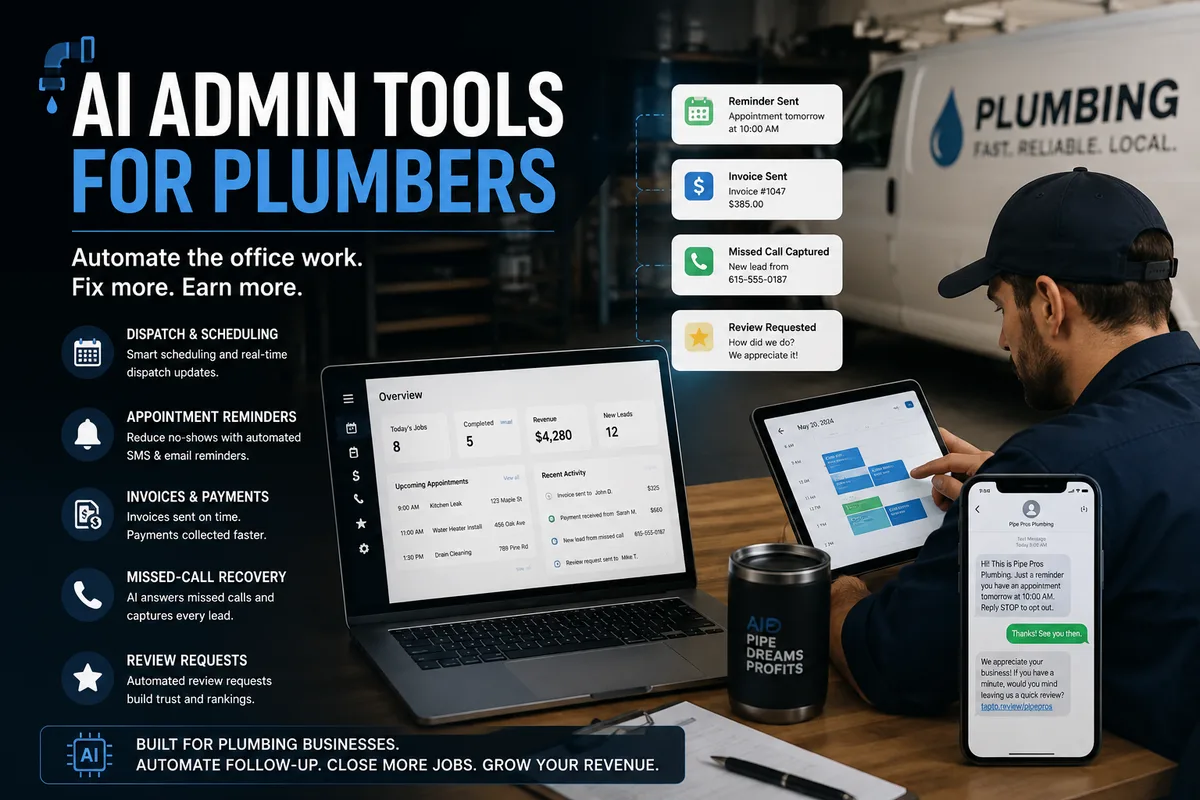
AI Admin Tools for Plumbers: What They Are and How to Choose
AI admin tools automate dispatch, reminders, invoicing follow-up, missed calls, and review requests for plumbers. What they do and how to choose.
Insurance Eligibility Automation for Physical Therapy Clinics
Eligibility automation for physical therapy clinics verifies benefits before the patient arrives, cuts front desk phone work, and can lower claim denial risk.
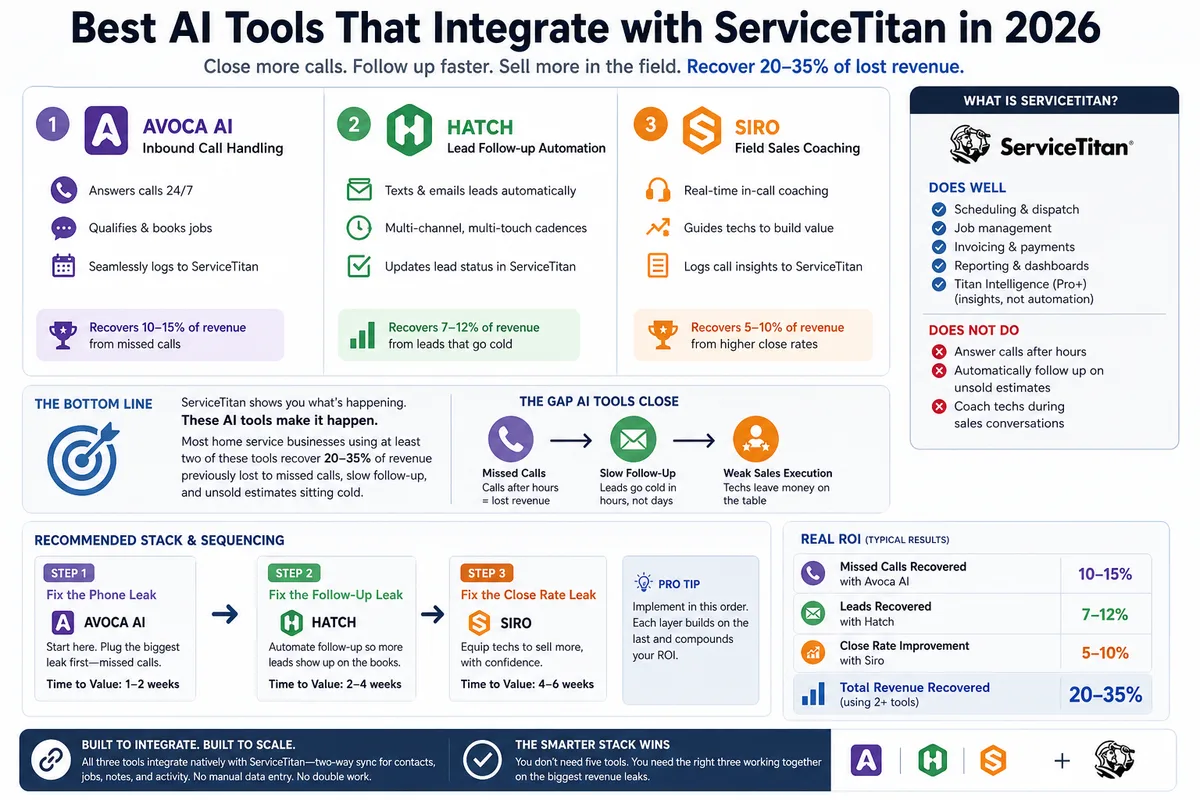
Best AI Tools That Integrate with ServiceTitan in 2026
Most ServiceTitan shops miss a meaningful share of inbound calls and leave most estimates unsold. These AI tools close those gaps inside ServiceTitan.