
Industry Guides
AI Automation for Healthcare: Complete Guide for Medical Practices
AI automation for healthcare helps medical practices answer patient calls 24/7, schedule appointments, send reminders, process intake forms, and reduce.
The free 30-minute AI Operations Audit is a conversation about a normal week in your business and where the work piles up. We find the one change that would give you the most time back and send you a plain-English plan for it. No forms and no pitch.
Book a free AI audit
Patrick Gibbs
AI automation for healthcare handles patient calls, appointment scheduling, intake forms, prescription refill requests, and follow-up communications without adding administrative staff. Voice AI answers calls around the clock, automated reminders reduce avoidable no-shows, and digital intake replaces clipboard paperwork. ROI depends on call volume, appointment volume, staff workload, and how tightly the system connects to the practice workflow.
Healthcare practices face a growing administrative burden. Patients expect instant answers, same-day appointments, and digital communication. Meanwhile, practices struggle with staffing shortages, rising overhead, and increasing call volumes. AI automation addresses these challenges directly by handling the administrative workload that consumes front office staff time.
Why Healthcare Practices Need AI Automation
Medical practices are drowning in phone calls. Appointment scheduling, prescription refill requests, insurance questions, billing inquiries, and test result follow-ups all come through the phone. During peak hours, calls stack up, patients wait on hold, and many eventually hang up and call another practice. Medical practices routinely miss a meaningful share of inbound calls during business hours and nearly all after-hours calls.
Beyond calls, manual administrative tasks consume staff time every day. Paper intake forms must be scanned into the EHR. Appointment reminders are made by phone. Referral letters are faxed and tracked manually. Each of these tasks is automatable with modern AI tools, freeing staff to focus on patient care and complex situations that require human judgment.
Patient expectations have changed too. Consumers expect the same digital convenience from their doctor that they get from every other service provider. Practices that offer online scheduling, text reminders, and digital intake see higher patient satisfaction scores and better online reviews. See our AI receptionist for medical practices page for more on voice AI in healthcare settings.
The Core Automation Stack for Healthcare
AI Phone Answering for Medical Practices
Voice AI answers every inbound call with your practice name. It can schedule appointments, answer common questions about hours, insurance, and services, route urgent calls to the appropriate department, and take messages for providers. After hours, it captures appointment requests and messages that would otherwise go to voicemail.
Automated Appointment Scheduling and Reminders
Patients book appointments through your website, a text link, or by speaking with the AI phone system. Automated reminders go out at 48 hours, 24 hours, and 1 hour before the appointment via text, email, or phone call. Patients can confirm, reschedule, or cancel directly from the reminder message without calling the office.
Digital Patient Intake
New patient paperwork is completed online before the visit. The system sends a link after the appointment is booked, collects insurance information, medical history, and consent forms, and imports the data directly into the EHR. Patients complete intake from home, reducing waiting room time and front desk workload.
Automated Follow-Up and Care Gap Closure
Post-visit follow-up messages check on patient recovery, collect satisfaction feedback, and prompt for necessary follow-up appointments. Care gap notifications remind patients about preventive services, annual exams, and chronic disease management visits. These automated touchpoints improve outcomes and generate additional revenue for the practice.
Real-World Example: How a Dental Practice Transformed Front Office Operations
A multi-location dental practice in Tennessee was handling heavy daily call volume across several offices. Their front desk teams were overwhelmed during peak periods, leading to long hold times and missed opportunities. New patient calls were the most frequently missed because they took longer to handle than existing patient scheduling.
After deploying an AI phone system with automated scheduling and text-based appointment reminders, the practice could answer more routine calls, book new patient appointments directly, send confirmation texts with pre-appointment instructions, and automate the recall system for hygiene appointments. The measurement focus shifted from anecdotal stress to concrete first-party metrics: answered calls, booked appointments, no-show patterns, and front desk workload during peak hours.
See the full AI voice assistants in healthcare post for more examples of voice AI in medical settings.
Tools to Build Your Healthcare Automation Stack
AI Phone Systems: HIPAA-compliant voice AI platforms handle the call-answering layer for medical practices. These integrate with EHR systems and practice management software. Compare options on our best AI automation agencies page.
Practice Management Integration: AI scheduling and reminder tools connect directly with systems like Dentrix, Eaglesoft, Open Dental, and health-specific EHR platforms. Check our automated scheduling guide for integration details.
Patient Engagement Platforms: Automated recall, care gap closure, and patient education tools keep patients engaged between visits. Our best AI tools for appointment booking list includes healthcare-specific options.
Elsewhere on the blog: Best AI Tools for Physical Therapy Practices in 2026.
Overcoming Common Objections
Is AI automation HIPAA compliant? Reputable healthcare automation platforms are built with HIPAA compliance in mind. They sign business associate agreements, encrypt all patient data in transit and at rest, and provide audit trails for all interactions. Always verify BAAs before implementing any automation tool in a healthcare setting.
Will patients trust AI with their health information? Most patients are comfortable interacting with AI for administrative tasks like scheduling, reminders, and billing. Most patients prefer an instant AI response over waiting on hold. The key is transparency and providing a clear path to a human for clinical concerns.
Can it integrate with my EHR? Most AI platforms offer integration with major EHR systems including Epic, Cerner, NextGen, Dentrix, and Practice Fusion. The depth of integration varies by platform, so verify that your specific EHR is supported before committing.
FAQ: AI Automation for Healthcare
How much does AI automation cost for a medical practice?
Cost depends on provider count, call volume, appointment volume, reminder channels, digital intake scope, EHR integration depth, and whether the practice needs custom workflows. A basic phone-answering and reminder setup costs less than a broader system that includes digital intake, recall automation, care-gap outreach, and deep EHR integration.
Will AI automation replace my front desk staff?
Automation augments front desk staff by handling the repetitive tasks that consume most of their time. Staff can focus on patient interactions, insurance verification, and complex situations that require human judgment. Most practices find their existing team becomes more effective and less stressed.
How long does it take to implement healthcare automation?
Basic phone answering and appointment reminders are usually the fastest pieces to launch. Full automation, including digital intake, EHR integration, and care-gap workflows, takes longer because the practice has to map data fields, test handoffs, and verify that patient communication stays accurate.
Can automation handle multiple languages?
Yes. Most AI automation platforms support English and Spanish out of the box, with additional languages available depending on the provider. This is especially valuable for practices serving diverse patient populations.
Next Steps
Start by tracking your missed call rate for one week and measuring the time your front desk spends on administrative versus patient-facing tasks. These two metrics define the automation opportunity for your practice.
See how we scope an automation project around your medical practice and book a consultation with an automation specialist who understands medical practice workflows. The math works best when the system targets a measurable leak such as missed calls, avoidable no-shows, manual intake, or recall follow-up.
Patrick Gibbs
AI Automation Expert
Patrick Gibbs helps professional practices implement AI automation that captures more leads, books more appointments, and scales without adding overhead. He's the founder of Epiphany Dynamics and creator of the AI Front Desk system.
Related Solutions
Build this into a real workflow
Related Posts

AI Automation for Home Services: Complete Guide for Contractors
AI automation for home services helps contractors answer more calls, book more jobs, and reduce administrative workload.

AI Automation for Insurance Agencies: Complete Guide
AI automation for insurance agencies helps agents respond to leads faster, handle policy inquiries, automate renewals, and reduce administrative work.
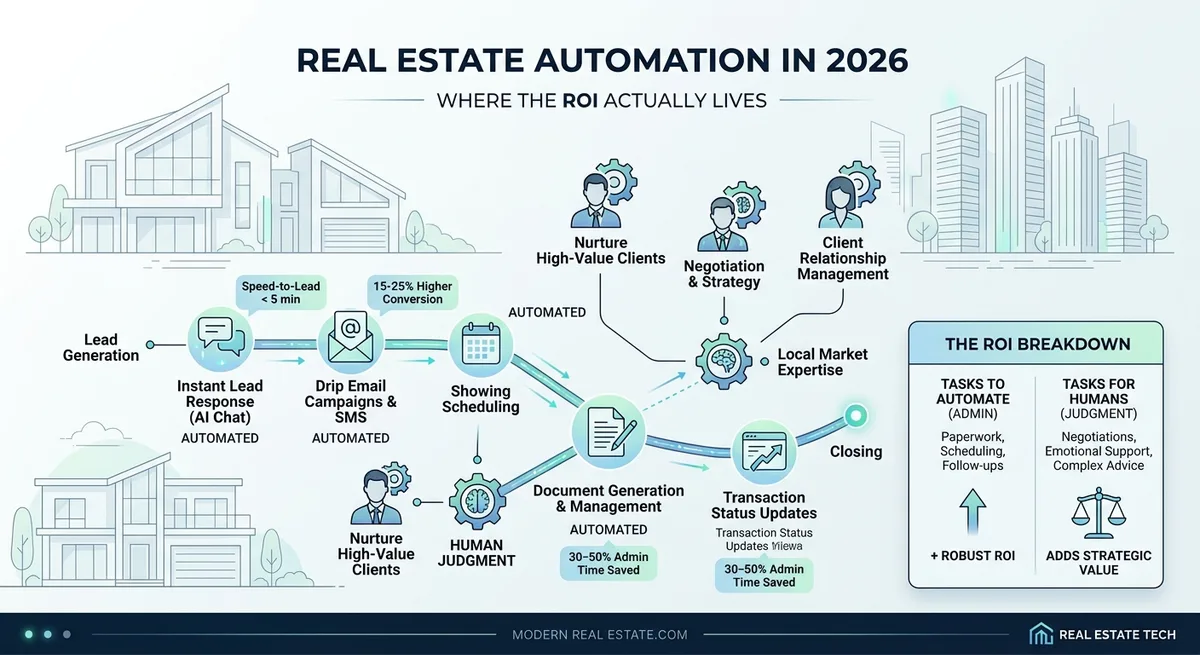
AI Automation for Real Estate: Complete Guide for Agents and Brokers
AI automation for real estate helps agents capture leads faster, nurture prospects automatically, schedule showings 24/7, and reduce administrative workload.