
Client Retention Automation for Beauty Salons: The Real ROI
The average beauty salon loses a large share of first-time clients who never rebook, not because of bad service, but because nobody followed up. This breakdown explains what a functional retention automation stack looks like, where the payoff comes from, and how to evaluate ROI with your own salon data.
The average salon loses a large share of first-time clients who never rebook, not from bad service but from zero follow-up.
Epiphany Dynamics is an AI automation agency: we help businesses find and fix operational bottlenecks with AI receptionists, lead follow-up, and workflow automation.
The free 30-minute AI Operations Audit is a conversation about a normal week in your business and where the work piles up. We find the one change that would give you the most time back and send you a plain-English plan for it. No forms and no pitch.
Book a free AI audit
Patrick Gibbs
The average beauty salon loses a large share of first-time clients who never rebook, not because of bad service, but because nobody followed up. This breakdown explains what a functional retention automation stack looks like, where the payoff comes from, and how to evaluate ROI with your own salon data.
The Retention Problem Hiding in Your Appointment Book
The average beauty salon loses a large share of first-time clients who never rebook. Not because the service was poor, but because nobody followed up. No reminder, no personal nudge, no reason to return before life got in the way. Meanwhile, the front desk is fielding walk-ins, stylists are running behind, and client retention happens by accident rather than design.
This is the exact gap that retention automation was built to close. Salons that have figured this out aren’t running on luck: they’ve built systems that follow up automatically, trigger rebooking before clients drift, and turn one-time visitors into regulars without adding a single task to anyone’s plate. This article breaks down how that works, what a functional automation stack looks like, and how to model realistic ROI for your own salon.
The Real Cost of Client Churn, and Why Most Owners Underestimate It
Most salon owners think about churn in terms of empty chairs. The real damage is in lifetime value. A client who returns consistently is worth far more than a single appointment because each future visit, retail purchase, referral, and loyalty touch compounds. When clients drift without a follow-up, the lost future value rarely shows up as a clean line item anywhere.
Most independent salons retain well under half of their first-time clients, while salons with structured follow-up systems consistently retain a far larger share. The exact value of that lift depends on your active client base, average ticket, annual visit frequency, and current return rate. That is the gap most owners do not realize exists until they model it.
Paid acquisition is usually more expensive than keeping a client who already knows the salon. Retaining an existing client often takes a timely reminder, useful follow-up, or direct booking link rather than a full new-client acquisition motion. The math has never been ambiguous. The challenge has always been execution at scale. Med spas face the same dynamic, and our guide to automating med spa customer follow-ups covers the complete revenue recovery playbook for aesthetics.
| Scenario | Client Pattern | Automation Role | Revenue Effect |
|---|---|---|---|
| No follow-up system | Clients return only if they remember | No systematic prompt after checkout | Baseline depends on natural loyalty and staff memory |
| Manual follow-up | Some clients get attention, others drift | Staff call or text when time allows | Lift is uneven and hard to measure |
| Automated retention system | Every client receives timely follow-up | Reminders, rebooking prompts, loyalty messages, and win-back flows run automatically | Lift can be measured through return rate and repeat visit frequency |
Why Manual Retention Fails at Scale
The typical salon “retention strategy” is a collection of good intentions that don’t survive contact with a busy Tuesday. A stylist personally texts her regulars. The front desk calls to confirm appointments. There’s a punch card loyalty program that most clients forget in their car. A monthly email newsletter goes out when someone remembers to write it. These approaches share a structural flaw: they depend on individual memory and available bandwidth, both in short supply during a full book.
When a stylist leaves, she takes her client relationships with her. When the receptionist is slammed, follow-up calls don’t happen. Manual systems are selective by nature: the squeaky-wheel clients get attention while quiet, low-maintenance regulars quietly drift away. The economics compound the problem because manual follow-up consumes staff time while still missing people. An automated system running SMS and email contacts every client, every time, on schedule. The comparison is not just cost. It is consistency.
The Retention Automation Stack
Effective beauty salon client retention automation isn’t a single tool: it’s a stack of triggered communications that work together across the client lifecycle. Here’s what a functional stack looks like in practice:
The Rebooking Window
The highest-use moment in retention is the period immediately following a visit. The experience is fresh, the client is happy, and rebooking feels natural rather than pushy. An automated SMS sent during this window should include a personalized thank-you, a soft prompt to book the next appointment, and a direct link to the booking page. Salons using this trigger consistently see meaningful rebooking improvements among first-time clients. For a deeper look at the long-term value of this approach, how salon automation increases client lifetime value maps the full compounding effect. If your booking platform doesn’t support this natively, a Zapier connection between your booking software and an SMS tool like SimpleTexting or Twilio can get it running without replacing the booking system.
The Follow-Up Sequence
For clients who didn’t rebook at checkout or after the initial post-visit message, a follow-up sequence keeps the salon top of mind. This typically includes a check-in, an educational piece tied to the specific service, and a soft rebooking prompt with a seasonal offer or availability note. The goal isn’t volume: it’s presence. A few well-timed messages can be the difference between staying relevant and being forgotten.
The Lapse Trigger
When a client’s expected rebooking window passes without action, a lapse trigger fires. This is a win-back sequence for clients at risk of churning: a “We miss you” message, a follow-up highlighting a new service or stylist, and a final offer before the client is moved to an inactive segment. Win-back campaigns can recover at-risk clients who would otherwise not return. That share looks modest until you multiply it across every lapsed client in your database.
Loyalty Milestone Automation
Points-based loyalty programs work when clients actually know their status. Automated milestone messages that tell clients what they can redeem drive engagement far better than passive point accumulation that clients forget exists. Set triggers at meaningful thresholds: first redemption eligibility, halfway to a free service, anniversary of the first visit. Salons with active loyalty automation consistently see higher visit frequency among enrolled clients than among non-enrolled clients.
Birthday and Life Event Triggers
Birthday messages and first-visit anniversary messages have among the strongest emotional context of any retention touch, especially when delivered through the client’s preferred channel. These messages work because they feel personal even when automated, and they give clients a reason to come in that isn’t purely transactional. One caveat: timing matters. A birthday message that lands after the birthday is worse than no message at all, so configure these to fire with enough lead time for the client to book.
Choosing the Right Tools, and What to Actually Connect
The beauty industry has a strong tool market of platforms built specifically for this workflow. The major players each have meaningful differences worth understanding before committing:
- Vagaro. Strong all-in-one platform with built-in email marketing, SMS automation, and loyalty program tools. Good fit for salons that want everything in one place.
- Boulevard. Premium positioning, excellent client profile depth, strong automation workflow builder. Better suited for multi-location operations or high-volume single locations that need granular reporting.
- GlossGenius. Simpler interface, lower cost, solid for solo stylists and small teams. Automation is more limited but functional for basic rebooking and follow-up sequences.
- Fresha. Commission-based pricing model, attractive for cost-conscious owners. Automation features are improving but not yet as deep as Boulevard or Vagaro for complex sequences.
For salons that want more control over automation logic (custom sequences, behavioral triggers, CRM segmentation), connecting a dedicated email platform like Klaviyo and an SMS tool like Attentive or SimpleTexting into the existing booking platform gives significantly more flexibility. This approach requires more initial setup but allows segmentation that generic salon software doesn’t support: lapsed high-frequency clients versus first-timers, product buyers versus service-only clients, VIP tier versus standard. The incremental lift from that level of targeting is real.
The minimum viable stack for a salon serious about retention is a booking platform with client history tracking, an SMS tool with automation triggers, and a basic email platform. The tool budget depends on contact list size, platform choices, and whether the existing booking system already includes automation. Setup and consistency usually matter more than the software bill.
Building Your ROI Case for Your Salon
Before committing to any platform, run the numbers specific to your salon. The framework is straightforward: identify your active client count, your current return rate inside the expected rebooking window, your average ticket value, and your annual visit frequency per returning client. Then model a conservative retention lift as an assumption, not a guarantee.
Use this model: retained-client revenue equals active clients multiplied by return rate, average ticket, and annual visit frequency. Revenue lift equals retained-client revenue after automation minus the baseline. Net lift equals revenue lift minus software, setup, training, and management cost. That keeps the business case grounded in your data instead of a vendor benchmark.
The payback period on a well-implemented retention system depends on your current churn, ticket size, visit frequency, and tool cost. For a broader view of the economics, the same principles apply to post-treatment follow-up automation in med spas, where the revenue recovery opportunity can be even larger. The compounding effect, where retained clients become long-term regulars who refer, makes the real ROI meaningfully higher than the first pass model suggests. That is the figure that rarely appears in a spreadsheet but drives the actual business case for taking automation seriously.
The Takeaway: Retention Is a System, Not a Habit
Salons with strong retention aren’t doing anything magical. They’ve stopped relying on individual memory and good intentions, and built systems that follow up, remind, reward, and win back clients automatically. The technology is mature, affordable, and well-tested across the industry. The barrier isn’t access: it’s implementation priority.
Start with the rebooking window. Get the post-appointment SMS working first, because it targets the moment when the client is most likely to commit to a return visit. Then layer in the follow-up sequence. Then build the lapse trigger. Each layer compounds the one before it, and the results accumulate quietly while the team focuses on delivering excellent service. For owners who want a structured audit of what they have versus what they’re missing, the fastest path from “we should do something about retention” to actually doing it is usually a systematic review of the full client journey from first appointment to long-term regular. That’s the kind of work AI-powered automation consultancies like Epiphany Dynamics are increasingly helping service businesses execute from the ground up.
Frequently Asked Questions
Q: What percentage of first-time salon clients typically never rebook without a follow-up system?
Most independent salons retain well under half of their first-time clients. That means a large share of new clients drift away, not because of bad service, but because no one followed up. Salons with structured follow-up automation consistently retain a far larger share of first-time clients.
Q: When is the best time to send a post-appointment rebooking message to a salon client?
The period immediately following a visit is the highest-use rebooking window. The experience is fresh, the client is satisfied, and rebooking feels natural rather than pushy. Salons using automated SMS during this window consistently see meaningful improvements in first-time client rebooking rates compared to those with no post-visit touchpoint.
Q: What is the real cost difference between manual client follow-up and automated retention systems?
Manual follow-up costs staff time and delivers inconsistent results because it depends on available bandwidth. Automated SMS and email retention systems contact every client, every time, on schedule without requiring staff to remember each follow-up manually. Compare payroll time, software cost, and recovered bookings to evaluate the difference for your salon.
Q: How much incremental revenue can a salon expect from a retention automation system?
Use this formula: active clients multiplied by return-rate lift, average ticket, and annual visit frequency. Then subtract software, setup, training, and management cost. That produces a salon-specific estimate without relying on an outside benchmark.
Q: What is the most important first step when implementing salon retention automation?
Start with the post-appointment SMS rebooking trigger, because it targets the moment when the client is most receptive. Get that working and measured before layering in follow-up sequences, lapse triggers, or loyalty milestone messages. Building all layers simultaneously is a common mistake that leads to implementation overwhelm and nothing actually going live.
Patrick Gibbs
AI Automation Expert
Patrick Gibbs helps professional practices implement AI automation that captures more leads, books more appointments, and scales without adding overhead. He's the founder of Epiphany Dynamics and creator of the AI Front Desk system.
Related Solutions
Build this into a real workflow
Related Posts
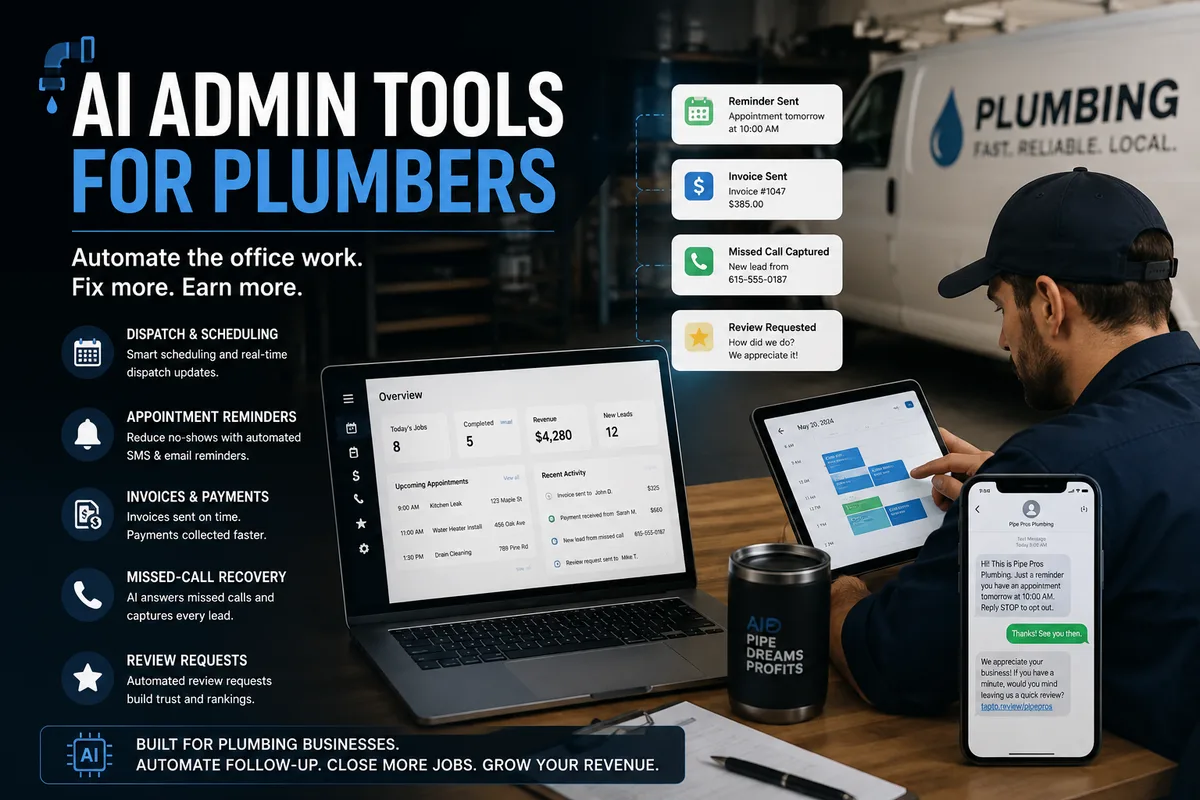
AI Admin Tools for Plumbers: What They Are and How to Choose
AI admin tools automate dispatch, reminders, invoicing follow-up, missed calls, and review requests for plumbers. What they do and how to choose.
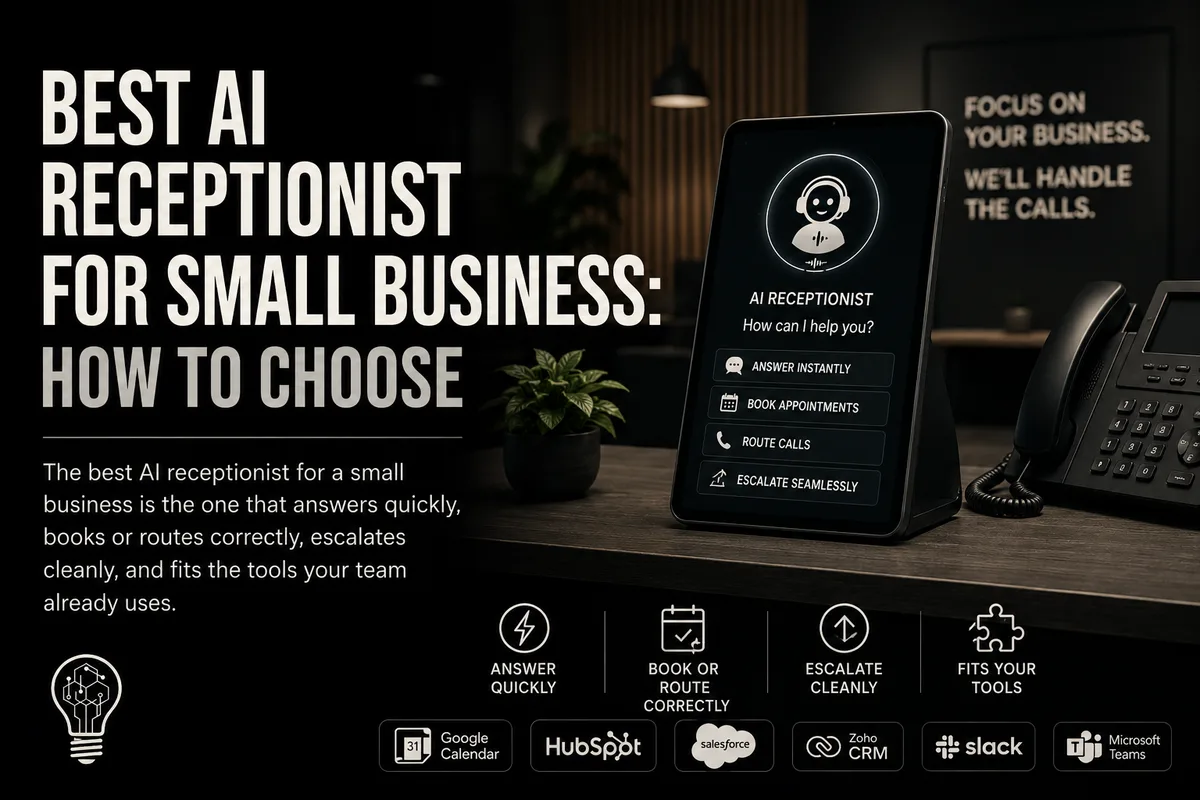
Best AI Receptionist for Small Business: How to Choose
The best AI receptionist for a small business is the one that answers quickly, books or routes correctly, escalates cleanly, and fits the tools your team.
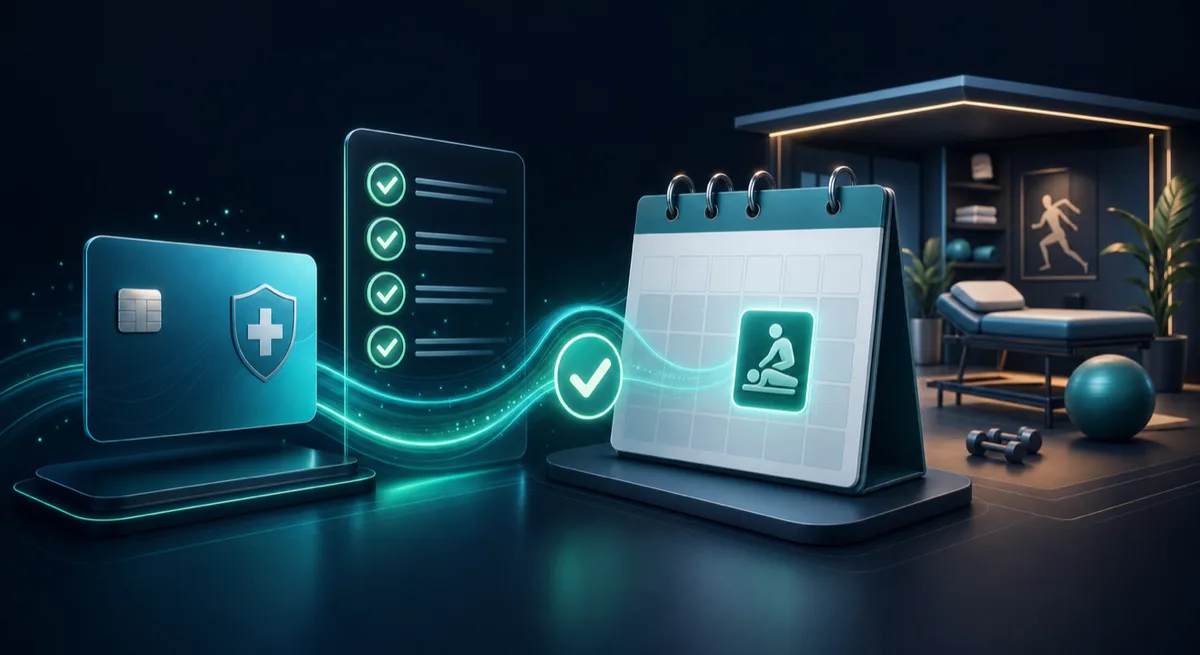
Insurance Eligibility Automation for Physical Therapy Clinics
Eligibility automation for physical therapy clinics verifies benefits before the patient arrives, cuts front desk phone work, and can lower claim denial risk.