
Industry Insights
How Plumbing Contractors Use AI to Grow Revenue Without Adding Headcount
Discover proven plumbing business growth solutions to boost your HVAC, plumbing, and electrical services. Learn actionable strategies today!
The free 30-minute AI Operations Audit is a conversation about a normal week in your business and where the work piles up. We find the one change that would give you the most time back and send you a plain-English plan for it. No forms and no pitch.
Book a free AI audit
Patrick Gibbs
Plumbing contractors looking to scale their operations face significant barriers in client acquisition, retention, and operational efficiency that can limit growth potential. This guide explores proven strategies for attracting new customers, optimizing pricing and service delivery, and using technology to streamline operations and boost profitability. By implementing these solutions, home service contractors can increase revenue, build stronger customer relationships, and establish a competitive edge in their local market.
Effective Plumbing Business Growth Solutions for Home Service Contractors
In the competitive landscape of home services, plumbing businesses often face challenges in scaling operations and increasing revenue. Many contractors struggle with attracting new clients, retaining existing ones, and effectively marketing their services. If you're looking to enhance your plumbing business growth, you're not alone.
Understanding the Challenges of Plumbing Business Growth
The plumbing industry is rife with competition, and many businesses find it difficult to stand out. Common challenges include:
- High competition within local markets
- Difficulty in managing customer relationships
- Limited marketing budgets
- Challenges in hiring and retaining skilled labor
Addressing these challenges effectively is crucial for achieving sustainable growth.
1. Harnessing Digital Marketing Strategies
In modern digital age, an effective online presence is essential for plumbing businesses. Consider implementing the following strategies:
- SEO Optimization: Utilize relevant keywords such as "plumbing services" and "pipe repair" on your website. Aim for a mix of primary and LSI keywords to improve your search engine rankings.
- Social Media Engagement: Platforms like Facebook and Instagram can help you showcase your work and connect with potential customers.
- Email Marketing: Send newsletters with tips, promotions, and reminders to keep your brand top-of-mind.
Businesses that actively engage in digital marketing consistently see meaningfully more leads. To see what this looks like in practice, one Phoenix plumbing company added substantial annual revenue after addressing their call handling gap.
2. Focusing on Customer Relationship Management (CRM)
Building strong relationships with customers can significantly impact retention rates. Here are some practical tips:
- Invest in a CRM System: Use software to track customer interactions, schedule appointments, and manage follow-ups.
- Personalized Communication: Tailor your messages based on previous interactions and preferences.
- Request Feedback: Regularly ask for customer feedback and act on it to improve services.
Businesses with effective CRM practices consistently see meaningfully higher customer retention.
3. Expanding Your Service Offerings
Consider diversifying your services to attract more clients. Here’s how:
- Add Related Services: Offer HVAC, electrical, or drain cleaning services to meet a broader range of customer needs.
- Seasonal Promotions: Create packages for seasonal maintenance checks, which can encourage customers to use your services year-round.
- Emergency Services: Provide 24/7 emergency plumbing services, which can be a significant differentiator in your market.
Real estate professionals often recommend having a full-service option to clients, which can lead to higher customer satisfaction and referrals.
4. Using Technology for Operational Efficiency
Investing in technology can streamline operations and improve service delivery. Here are some tools to consider:
- Scheduling Software: Use plumbing dispatch software to manage appointments, optimize routes, and reduce scheduling conflicts.
- Mobile Payment Solutions: Allow customers to pay directly via their mobile devices for convenience.
- Automated Marketing Tools: Use automation for follow-up emails and marketing campaigns, saving time and ensuring consistency.
Businesses that integrate technology into their operations can typically increase efficiency meaningfully. For a complete framework on automating lead capture, the technology has matured significantly in the past two years.
Conclusion: Take Action for Your Plumbing Business Growth
Implementing these plumbing business growth solutions can help you stand out in a crowded market. By harnessing digital marketing, focusing on customer relationships, expanding your services, and using technology, you can position your plumbing business for success.
Don't wait for growth to happen. Take the initiative! Start by assessing your current strategies, identifying areas for improvement, and implementing these actionable tips today.
Ready to enhance your plumbing business? Contact us for a consultation designed for your needs!
See the voice AI adoption trends for home service contractors for the latest data. Check our service business workflow automation guide for the five highest-ROI workflows. Learn how to scale from a 2-man shop to $10M with the right systems at each stage.
Frequently Asked Questions
Q: How can plumbing contractors generate more leads without increasing marketing spend?
AI-powered systems can automate lead capture through your website, social media, and Google Business Profile, converting casual inquiries into qualified appointments 24/7. By automating follow-ups and scheduling, you can respond to leads within minutes instead of hours, increasing conversion rates without hiring additional staff.
Q: What's the typical ROI for implementing AI automation in a plumbing business?
Most plumbing contractors see the investment pay for itself quickly by reducing no-shows (through automated reminders), capturing missed calls (via AI receptionists), and freeing staff to focus on higher-value work like upselling and customer retention. The gains show up as additional monthly revenue and recovered staff capacity.
Q: Can AI automation handle emergency plumbing calls the same way a human receptionist would?
Yes. Modern AI systems qualify emergency calls, gather essential information, dispatch to your team in real-time, and can escalate critical jobs instantly. They handle routine inquiries (drain cleaning, preventative maintenance) completely independently, reserving human attention for complex or high-risk emergencies.
Q: Is AI automation only for large plumbing companies, or can small contractors use it too?
A solo plumber can start with one workflow, such as routing missed calls into a callback queue. Larger teams may need dispatch and customer-record integrations. Set the launch date after confirming system access, booking rules and staff training; team size alone does not establish the timeline or payoff. Patrick Gibbs
AI Automation Expert
Patrick Gibbs helps professional practices implement AI automation that captures more leads, books more appointments, and scales without adding overhead. He's the founder of Epiphany Dynamics and creator of the AI Front Desk system.
Related Solutions
Build this into a real workflow
Related Posts
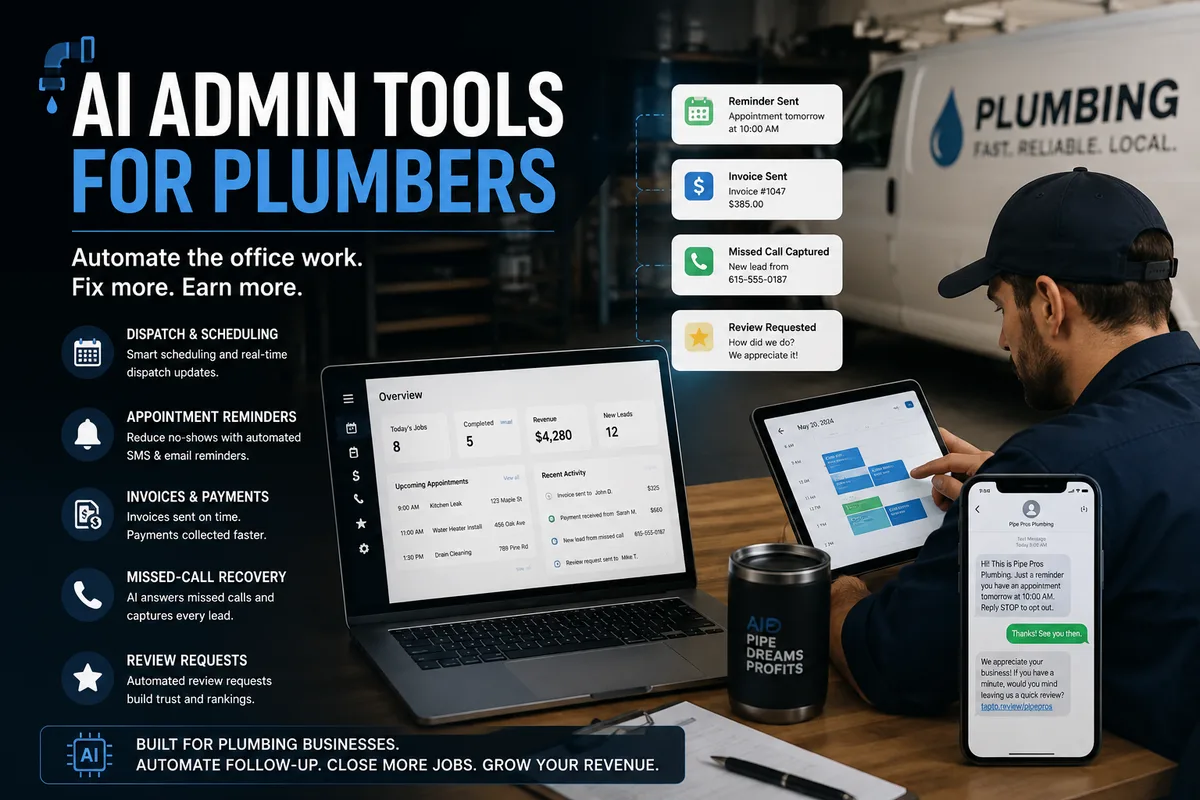
AI Admin Tools for Plumbers: What They Are and How to Choose
AI admin tools automate dispatch, reminders, invoicing follow-up, missed calls, and review requests for plumbers. What they do and how to choose.
Insurance Eligibility Automation for Physical Therapy Clinics
Eligibility automation for physical therapy clinics verifies benefits before the patient arrives, cuts front desk phone work, and can lower claim denial risk.
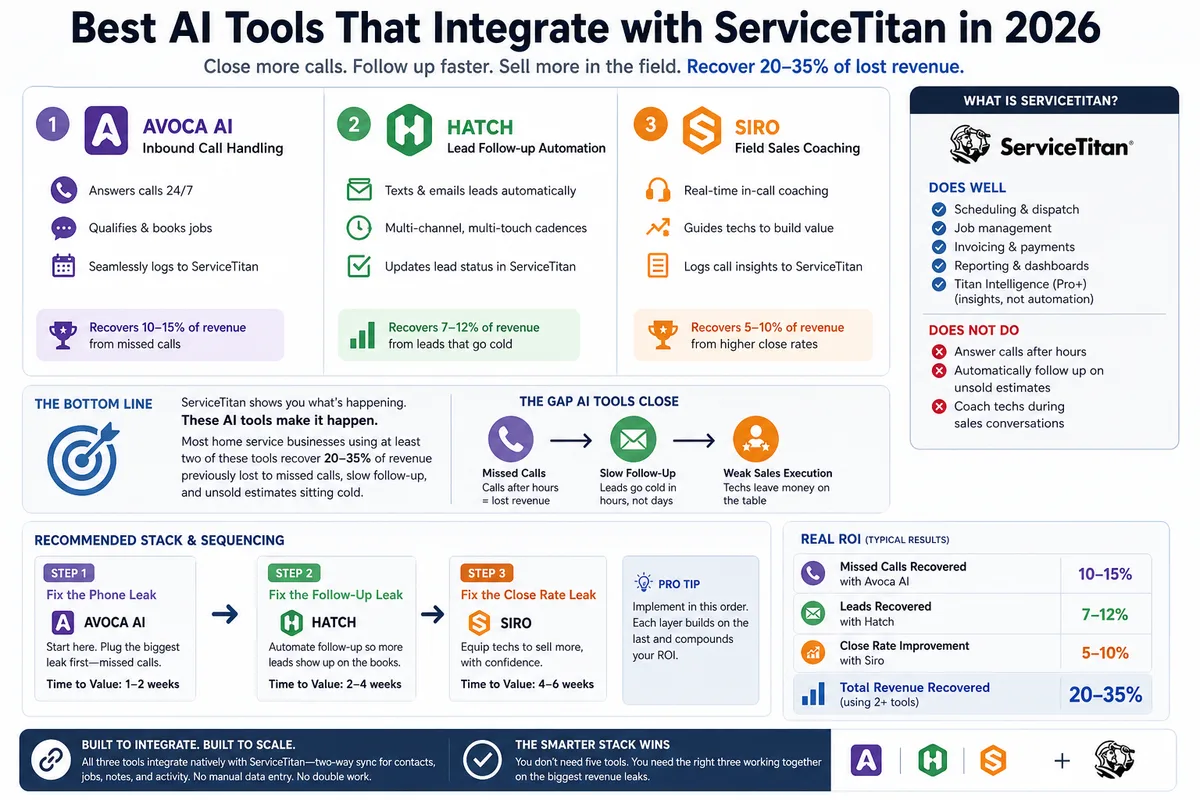
Best AI Tools That Integrate with ServiceTitan in 2026
Most ServiceTitan shops miss a meaningful share of inbound calls and leave most estimates unsold. These AI tools close those gaps inside ServiceTitan.