
Quote Follow Up Automation: Stop Losing Jobs You Already Quoted
Quote follow-up automation sends timed, personalized messages to prospects after a quote is delivered, requiring no manual effort from your team. Many service businesses lose winnable jobs not because their price is wrong, but because they follow up once and stop.
Most service businesses lose winnable quotes, not because their price is wrong, but because they follow up once and stop. Here's the framework that fixes it.
Epiphany Dynamics is an AI automation agency: we help businesses find and fix operational bottlenecks with AI receptionists, lead follow-up, and workflow automation.
The free 30-minute AI Operations Audit is a conversation about a normal week in your business and where the work piles up. We find the one change that would give you the most time back and send you a plain-English plan for it. No forms and no pitch.
Book a free AI audit
Patrick Gibbs
Quote follow-up automation sends timed, personalized messages to prospects after a quote is delivered, requiring no manual effort from your team. Many service businesses lose winnable jobs not because their price is wrong, but because they follow up once and stop. A structured sequence gives each quoted prospect multiple chances to ask questions, compare options, and come back before the opportunity goes cold.
Why Most Quotes Die Before You Get an Answer
The average service business loses a large share of its quoted jobs not to price competition but to follow-up failure. Most salespeople give up after a single follow-up attempt, while closing a sale typically takes several touchpoints. For service businesses where the quote is the pitch, that gap between effort and what's actually required is brutal.
Most owners assume a dead quote means the prospect went somewhere else. Sometimes that's accurate. A lot of the time, though, the prospect got busy, meant to reply, had a question they never got around to asking, and then the moment passed. Nobody circled back, so they called the business that did.
The close rate gap between businesses that follow up systematically and those that don't is not small. Companies with structured follow-up processes consistently close more of what they quote than those without. That gap, across any real volume of quoted jobs, is a significant chunk of revenue sitting in your sent folder collecting dust. If you want to see exactly where follow-up is bleeding the most in your sales process, a systematic business automation audit often finds quote follow-up as the biggest leak.
The fix isn't complicated in concept: follow up more, follow up faster, and stop relying on your team to remember. What makes it hard is consistency. A job runs long, someone forgets, and the quote from Tuesday doesn't get a follow-up until Friday, when the prospect has already signed somewhere else. Automation eliminates the memory requirement entirely.
What the Data Says About Follow-Up Timing
The first follow-up should happen while the quote is still fresh. Prospects are already in a decision process, and waiting too long to check in gives them more chances to get distracted, lose urgency, or choose someone else.
Timing for quote follow-up is different from cold outreach. The prospect already knows who you are, they asked for the quote, and they're somewhere in a decision process. You're not fighting indifference. You're fighting inertia. Use the timing pattern below as a planning frame, not as measured industry data:
| Follow-Up Moment | What the Message Should Do |
|---|---|
| When the quote is fresh | Confirm receipt and invite questions |
| After the prospect has had time to review | Clarify scope and remove friction |
| If the quote has gone quiet | Address the most common objection |
| Later in the decision window | Offer a clear next step |
| Close-the-loop message | End the sequence without pressure |
A same-day or next-morning follow-up asking if they have questions is not pushy. It's expected. The prospect submitted a quote request. They want to hear from you. The businesses doing well here send a short confirmation when the quote goes out and an early check-in while the decision is still active.
How Quote Follow-Up Automation Actually Works
Quote follow-up automation triggers a message sequence when a quote is sent, then adjusts based on prospect behavior like opens, clicks, and replies. Conditional logic is what separates a real automation from a scheduled email blast: a prospect who repeatedly opens the quote without responding gets a different message than one who never opened it. The sequence stops automatically when the prospect replies or books.
At the basic level, a workflow triggers when a quote goes out and messages fire at set intervals. That works. But the versions that actually move conversations use behavioral signals to adjust what gets sent. If your quoting software or CRM tracks engagement, a prospect who repeatedly views your quote without replying is telling you something. They're interested but stuck. "Wanted to make sure everything made sense" lands differently for them than the same message going to someone who never opened the email at all.
The stop condition matters more than most people building these workflows realize. If a prospect replies and your automation sends another "following up" message afterward because the system wasn't told to stop, that kills the credibility the sequence just built. Every automation platform worth using supports reply detection. If yours doesn't, that's a problem to solve before you launch the sequence, not after.
The conditional branching extends to SMS versus email. Some prospects respond to SMS who won't open email. A well-built quote follow-up system uses both channels and switches based on which one gets engagement first. In markets with high competition density, like Las Vegas service businesses dealing with multiple competing quotes on the same job, multi-channel sequences see bigger lift simply because standing out in the inbox alone is harder.
Building a Sequence That Actually Converts
A converting quote follow-up sequence needs four things: a trigger tied to the moment the quote is sent, message content that adds something new at each touchpoint rather than repeating the same ask, conditional branching based on whether the prospect opened or engaged with the quote, and a hard stop that fires the moment they respond so your automation never talks over a live conversation.
Most failed sequences fail on the content, not the timing. Every message sounds like "just following up to see if you had any questions," and the prospect trains themselves to ignore it. Each touchpoint needs to bring something different. The first message asks if they need clarification. The next might preemptively answer the most common objection you hear before prospects bring it up. A later message might reference your current schedule window, because urgency works when it's honest. The close-the-loop message ends the sequence without pressure.
That final message, the one that sounds like you're walking away, consistently pulls responses. Something about the door potentially closing gets people off the fence who had been sitting on a decision. "Going to assume the timing didn't work out, I'll keep your information on file" generates more replies than "one final follow-up." It's not a manipulation tactic. It's an honest representation of what happens when nobody responds: you move on, and they know it.
One element worth building in from the start: personalization tokens that pull from the original quote request. The prospect's name, the service they asked about, the address or location of the job. Generic follow-ups get ignored. A message referencing the actual scope they inquired about reads like a human wrote it, even when it didn't. That specificity is what keeps the sequence from feeling like spam.
Continue with How to Build an AI Follow-Up Sequence: Never Lose a Lead Again (2026).
The ROI Math Before You Decide It's Not Worth It
Quote follow-up automation is worth evaluating when your team sends enough quotes that missed follow-up has become a pattern. The ROI depends on quote volume, average job value, current close rate, recovered opportunities, staff time, and tool or implementation cost.
Here's the model to run with your own numbers:
| Input | What to Use | Why It Matters |
|---|---|---|
| Quotes sent | Your monthly quote volume | Sets the size of the opportunity |
| Average job value | Your actual booked-job value | Shows what each recovered quote is worth |
| Current quote close rate | Your CRM or quoting history | Creates the baseline |
| Recovered opportunities | Measured after rollout | Separates real lift from guesses |
| Automation cost | Platform, build, and management cost | Determines whether the workflow earns its keep |
Do not borrow a recovery percentage from another business. If you are going from zero follow-up to a structured sequence, measure the first rollout against your own close-rate baseline. The gains usually taper as you capture the easiest wins, so keep measuring instead of assuming the first month is the permanent pattern.
What that model doesn't capture is staff time recovered. If your team manually chases every quote, that time can be redirected into higher-value sales conversations while the workflow handles predictable nudges. Operators in competitive markets like Phoenix or Seattle, where response speed is often the deciding factor between winning and losing a job, tend to find the time savings worth as much as the direct revenue recovery.
Where Automation Stops and Humans Should Start
Automation handles predictable early touchpoints well: confirm the quote, check in, add value, nudge, close the loop. But a prospect who replies with a specific question, a pricing concern, or a timing negotiation needs a human response fast. The handoff should be immediate: sequence stops, the right person gets notified, and the conversation continues without a gap.
The goal of the automation is not to close the job. It's to get the prospect talking again. The moment they reply, regardless of what they say, the automation has done its job. What happens next is a human call, and how quickly and well you handle it matters more than anything the sequence did to generate the response.
Where this breaks down is unclear handoff process. The prospect replies, the sequence stops, and nobody notices because the reply landed in a shared inbox nobody was watching. You did the hard part, pulled a warm response out of a cold prospect, and then fumbled the catch. The automation is only as good as the process that receives what it generates. Before you build anything, know who owns the reply and what their expected response time is.
If you've tried building follow-up automations in-house and the conditional logic is getting complex enough that things are misfiring, that's a fair signal to consider outside help. The guide on when to hire an AI automation agency walks through the specific signals that DIY automation has hit its ceiling and what to expect when you bring in a professional.
Getting Started Without Overbuilding It
The minimum viable version is simple: a same-day confirmation, an early check-in, and a later nudge. If you're currently sending zero follow-ups after a quote goes out, that alone can change your close-rate baseline. Build the simple version first, measure what happens, and add conditional logic, SMS channels, and behavioral branching only once you have a baseline that tells you what the sequence is actually recovering.
The tools to do this are accessible. Most CRMs have basic workflow automation built in. If yours doesn't, options like HubSpot, GoHighLevel, or a Zapier connection to your quoting tool can get a basic sequence running quickly. The technical barrier is low. The organizational work, deciding who owns the process and what each message actually says, takes longer than the build itself. That's where most teams get stuck, not the software.
The question worth sitting with isn't whether to automate quote follow-up. For service businesses with meaningful quote volume, the real question is which touchpoints benefit most from automation and which ones need a human reading the room. Start with the predictable early messages, protect the conversations that require judgment, and track your close rate so you can tell whether the sequence is earning its keep or just running in the background doing nothing useful.
Frequently Asked Questions
Q: How many follow-up touches do I need to close a quoted job?
Most service businesses that close a healthy share of quotes use multiple touchpoints, while those without structured follow-up close far fewer. Closing a sale typically takes more than one contact point, meaning a single follow-up leaves too many opportunities abandoned.
Q: What percentage of revenue am I losing with poor quote follow-up?
Service businesses lose a large share of quoted jobs due to follow-up failure rather than price, and the gap between systematic and ad-hoc follow-up is significant: businesses with structured processes consistently close more of what they quote. Across any real volume of quotes, this represents substantial lost revenue sitting in your sent folder.
Q: Can automated quote follow-ups stay personalized without manual work?
Yes: effective quote follow-up automation pulls in specific details like quote amounts, project scope, and prospect names to make each message feel direct and relevant rather than generic. Personalization happens at the system level, not through manual effort, allowing your team to send thousands of tailored follow-ups without touching each one.
Q: When should the first follow-up go out after a quote?
The first follow-up should go out while the quote is still fresh, before the prospect gets distracted or receives competing quotes. Automation is useful because manual follow-up processes miss that early window consistently.
Patrick Gibbs
AI Automation Expert
Patrick Gibbs helps professional practices implement AI automation that captures more leads, books more appointments, and scales without adding overhead. He's the founder of Epiphany Dynamics and creator of the AI Front Desk system.
Related Solutions
Build this into a real workflow
Related Posts
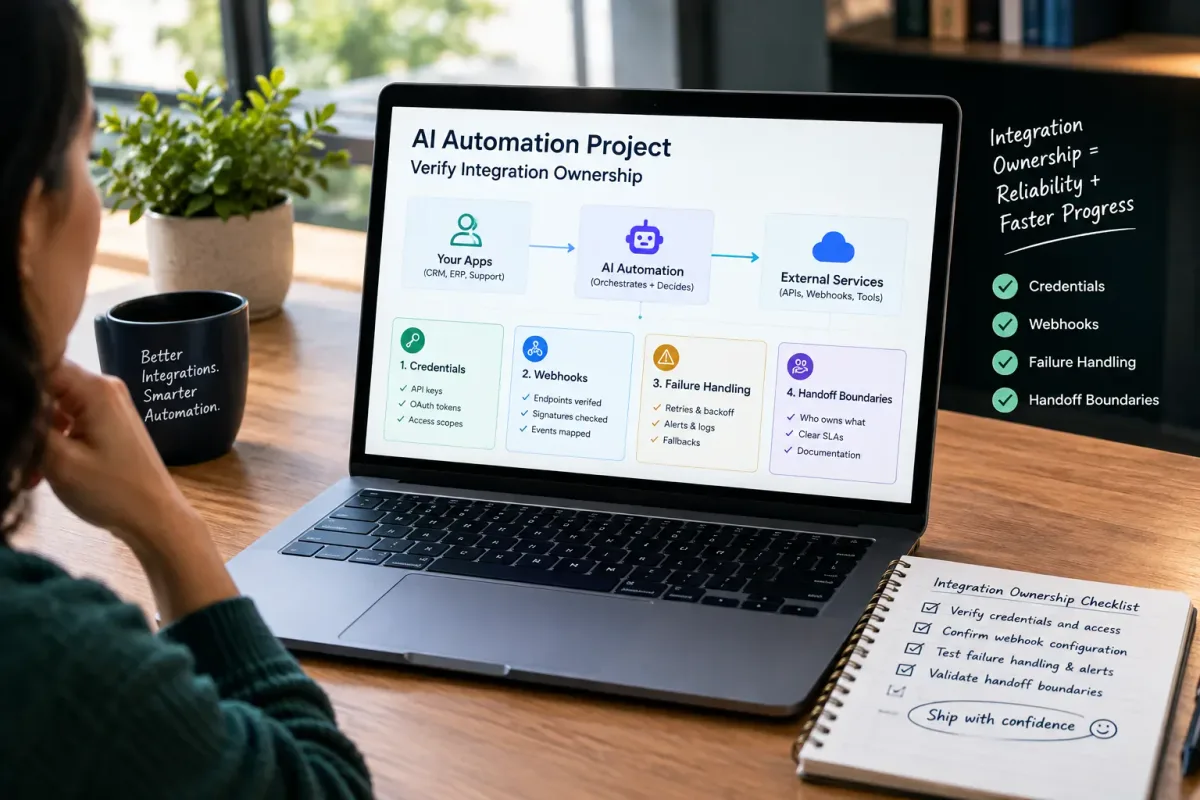
How Do I Verify Integration Ownership in an AI Automation Project?
Learn how to verify integration ownership in an AI automation project, including credentials, webhooks, failure handling, and handoff boundaries.
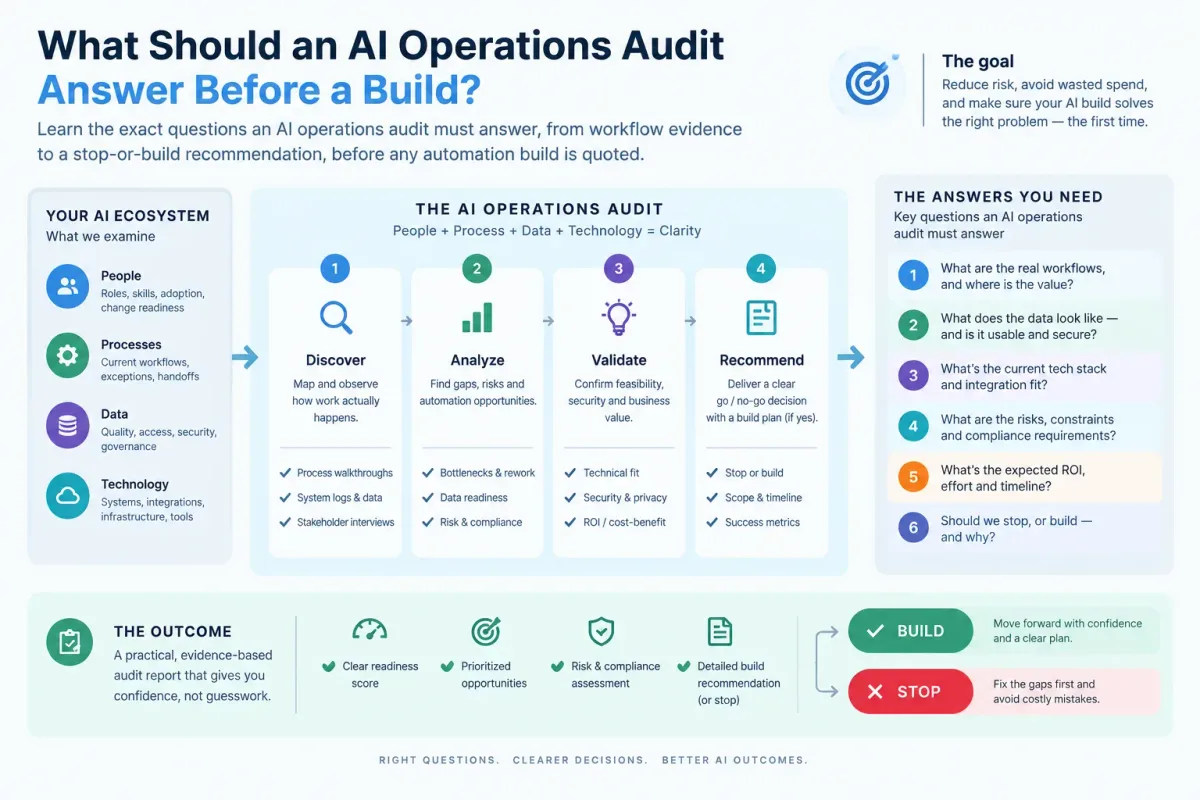
What Should an AI Operations Audit Answer Before a Build?
Learn the exact questions an AI operations audit must answer, from workflow evidence to a stop-or-build recommendation, before any automation build is quoted.
Who Is Patrick Gibbs and What Does Epiphany Dynamics Build?
Patrick Gibbs founded Epiphany Dynamics to help small and midsize businesses replace missed opportunities and manual busywork with practical AI automation.