
Voice AI Adoption in Small Business: What the Phone Pattern Shows
Small service businesses miss a large share of inbound calls during business hours, and phone calls often carry higher purchase intent than web forms. Each missed call is a revenue event that needs to be measured against the business’s own close rate and job value.
Small service businesses miss a large share of inbound calls: calls that often convert far better than web forms. Here's what voice AI adoption actually looks.
Epiphany Dynamics is an AI automation agency: we help businesses find and fix operational bottlenecks with AI receptionists, lead follow-up, and workflow automation.
The free 30-minute AI Operations Audit is a conversation about a normal week in your business and where the work piles up. We find the one change that would give you the most time back and send you a plain-English plan for it. No forms and no pitch.
Book a free AI audit
Patrick Gibbs
Small service businesses miss a large share of inbound calls during business hours, and phone calls often carry higher purchase intent than web forms. Each missed call is a revenue event that needs to be measured against the business’s own close rate and job value. This guide covers what voice AI actually does at the phone level, how to evaluate the business case, and where the technology stands for small business operators in 2026.
The Hidden Cost of Missed Calls in Small Business Operations
Most small business owners think their phone problem is about being too busy to answer. The real problem is more expensive than that. Phone calls consistently convert to revenue at a far higher rate than web form submissions, yet the average small service business misses a large share of incoming calls during normal business hours. After 5 PM, the miss rate climbs even higher.
For a service business (a med spa, an HVAC contractor, a law firm, a plumber), every unanswered call isn’t just an inconvenience. It’s a revenue event that went sideways. Use your own average job value, answer rate, and close rate to estimate how much opportunity sits in voicemail, then compare that against the cost of fixing the coverage gap. Our breakdown of the true cost of missed calls shows how quickly this adds up across different industries.
What Voice AI Actually Does at the Phone Level
Voice AI for small business phone handling is not a voicemail upgrade or an IVR menu with better scripts. Modern voice AI systems use large language models (LLMs) combined with real-time speech-to-text and text-to-speech synthesis to hold natural, contextually aware conversations. The system understands intent, asks follow-up questions, captures lead information, qualifies callers based on criteria you define, and, when necessary, routes to a human or sends a structured summary to your team.
The practical capability gap between 2021’s chatbot-style phone trees and today’s LLM-powered voice agents is enormous. Current systems can handle:
- Appointment scheduling with real-time calendar integration
- FAQ handling: pricing, availability, service area, and common objections
- Lead qualification: budget, timeline, and urgency triage
- After-hours intake: capturing structured lead data while the business is closed
- Warm transfers: handing off to a human with a live context summary already spoken
The key distinction from older IVR systems: voice AI doesn’t require callers to navigate menus or use specific keywords. The caller speaks naturally, and the AI interprets intent. Latency on modern systems is close enough to conversational norms that callers are less likely to feel the exchange break. In verticals where scripted intake is already expected (medical practices, legal intake, home services), callers often don’t realize they’re talking to an AI at all. For the full picture of what AI phone systems can handle in 2026, the capability set has expanded dramatically.
The Value Math: Running the Model for Your Business
The business case for voice AI hinges on three variables: call volume, missed call rate, and average revenue per acquired customer. Here’s a straightforward framework a med spa, contractor, or professional service firm can adapt with its own data:
| Metric | Manual Baseline | Voice AI Scenario |
|---|---|---|
| Inbound call volume | Pull from phone records | Use the same baseline volume |
| Missed call rate | Measure unanswered calls and voicemail leakage | Estimate how many calls AI can capture or route |
| Calls converted to appointments | Use current answered-call close rate | Apply the same close-rate assumption unless your data proves lift |
| Average appointment value | Use your actual booked-service value | Use the same value unless service mix changes |
| Revenue from calls | Baseline booked value from answered calls | Projected value from additional captured calls |
| Revenue difference | Not applicable | Captured-call value minus current baseline |
| Monthly voice AI cost | Not applicable | Vendor quote plus oversight and setup effort |
| Net monthly gain | Not applicable | Projected gain after tool and oversight cost |
Keep the model conservative. Assume no improvement in close rate from faster response time until your own data proves it. Harvard Business Review research on lead response is still worth studying because it shows how quickly lead quality decays when follow-up is delayed. Voice AI reduces response latency: the call is answered, intent is captured, and a calendar path can be offered before the caller has time to search for a competitor.
The staffing cost comparison adds another dimension. Human reception coverage carries salary, benefits, payroll taxes, training time, PTO coverage, and management overhead. A voice AI system should be compared against that full coverage picture, not against salary alone. Our AI front desk cost guide breaks down exactly what drives each price tier. For many small businesses, the math makes the status quo hard to defend once real missed-call data is visible.
Adoption Patterns: Where This Technology Is Taking Hold First
Voice AI adoption in small business hasn’t happened in a single wave: it’s spreading through high-call-volume verticals first, then moving outward. The earliest and heaviest adoption has concentrated in:
- Medical and aesthetic practices (med spas, dental offices, dermatology clinics)
- Home services (HVAC, plumbing, roofing, pest control)
- Legal intake (personal injury, family law, immigration firms)
- Real estate (property management, buyer and seller intake)
- Fitness and wellness (gyms, chiropractic, physical therapy)
These verticals share a profile: high inbound call volume, structured intake processes, significant revenue per acquired customer, and staff who are frequently too busy with existing clients to consistently answer new calls. The adoption pattern typically follows a specific playbook: businesses start with after-hours coverage first (lowest resistance, no existing process to displace), validate quality with real call review, then expand to overflow coverage during peak hours, and eventually move to full front-of-house handling. The businesses furthest along have refined their systems through real call data. For operators ready to move, our guide to which AI tools replace phone reception fastest covers realistic deployment timelines.
Additional reading: AI Phone Answering Service for Small Business: What to Compare in 2026.
What Actually Determines Whether an Implementation Succeeds or Fails
Voice AI implementations fail for predictable reasons, almost none of which are technical. The system prompt (the instructions defining how the AI behaves) is the single most important variable. A poorly written prompt produces an AI that sounds robotic, fails to handle objections, or can’t gracefully exit a conversation it can’t resolve. A well-crafted prompt defines persona, knowledge base, escalation triggers, and tone with enough specificity to handle routine call scenarios without human intervention.
The key elements of a functional voice AI setup for small business phone handling:
- Clear scope definition: what the AI handles vs. what it escalates immediately
- Accurate business information: hours, service area, pricing ranges, top FAQs
- Calendar integration: direct sync with Google Calendar, Calendly, or practice management software
- CRM handoff: structured lead data flowing automatically to wherever your team tracks prospects
- Call recording and review: weekly audit of calls the AI flagged as uncertain or escalated
The businesses getting the most value from voice AI treat the system like a new employee: they onboard it properly, review its work regularly, and update its knowledge when it gets something wrong. That feedback loop (prompt refinement based on real call outcomes) is what separates deployments that plateau at “adequate” from ones that genuinely outperform human intake processes on consistency and speed.
What to Evaluate Before Choosing a Voice AI Platform
The market for voice AI is crowded. Vendors range from enterprise platforms requiring custom builds to lightweight SaaS tools with pre-built industry templates. Before committing, run these criteria against any shortlist:
| Criterion | Why It Matters | What to Ask |
|---|---|---|
| Latency | Long pauses feel unnatural and erode trust | "What's your average response latency in production?" |
| Calendar integration | Without this, AI can only take messages, not book | "Which scheduling systems do you integrate with natively?" |
| Interruption handling | Callers talk over AI; the system must adapt naturally | "How does the system handle barge-in mid-sentence?" |
| Escalation triggers | Some calls need humans; the system must know when | "Can I define custom escalation conditions?" |
| Post-call data delivery | Call data is useless if it doesn't reach your tools | "What does the CRM handoff and transcript delivery look like?" |
| Voice quality | Robotic-sounding voice causes immediate hang-ups | "Can I hear sample calls from live customer deployments?" |
One practical test before signing anything: call competitor businesses in your vertical and ask about their phone handling. More are using voice AI than most operators realize, and listening to a live deployment gives you calibration data no vendor demo can replicate. If the AI sounds natural and handles your test questions without awkward pauses or non-sequiturs, note the platform. If it sounds like an old IVR system with a coat of paint, cross it off.
This Is a Revenue Operations Decision, Not a Tech Upgrade
Voice AI adoption in small business isn’t about staying current with technology trends. It’s about closing the gap between the revenue your inbound calls represent and the revenue you’re actually capturing. For many small service businesses, that gap is substantial enough to deserve a real audit, and a properly configured AI phone system addresses much of it directly.
The businesses winning with this technology aren’t the most technically sophisticated. They’re the ones that understood their call handling as a revenue function, evaluated voice AI with real metrics, and invested the time to configure the system properly. The technology is mature enough that implementation risk is low. The bigger risk at this point is waiting while competitors who’ve already figured this out answer every call, book every appointment, and capture every after-hours lead you’re routing to voicemail.
For operators looking to benchmark their own phone handling gaps before committing to a platform, a call audit tracking raw call volume, answer rate, and lead conversion is the right starting point. That data tells you exactly what the opportunity looks like and what ROI threshold any voice AI investment needs to clear. Firms specializing in AI front desk deployments for service businesses, like Epiphany Dynamics, can help translate those numbers into a concrete implementation plan.
Frequently Asked Questions
Q: What percentage of small service business inbound calls are missed during normal business hours?
The average small service business misses a large share of incoming calls during normal business hours, and the miss rate climbs even higher after the office closes. Use your own call logs, average job value, and answered-call close rate to estimate the value routing to voicemail before callers reach a competitor.
Q: How does modern AI voice technology differ from the older IVR phone tree systems?
Modern voice AI uses large language models with real-time speech synthesis to hold natural, contextually aware conversations: understanding intent, asking follow-up questions, and adapting mid-conversation. Callers do not navigate menus or use specific keywords. In verticals where scripted intake is already expected, callers often don’t realize they’re talking to an AI at all. Legacy IVR required callers to conform to the system; modern voice AI conforms to the caller.
Q: How should a small service business calculate voice AI ROI?
Start with call volume, answer rate, missed-call rate, answered-call conversion, and average booked-service value. Then model how many qualified calls the AI could capture or route that are currently going to voicemail. Keep any faster-response lift separate until your own data proves it.
Q: What are the most common vertical industries where voice AI adoption is happening first?
Medical and aesthetic practices (med spas, dental offices, dermatology), home services (HVAC, plumbing, roofing, pest control), legal intake (personal injury, family law, immigration), real estate (property management, buyer and seller intake), and fitness and wellness (gyms, chiropractic, physical therapy). These verticals share a profile: high inbound call volume, structured intake processes, significant revenue per acquired customer, and staff too busy with existing clients to consistently answer new calls.
Q: What is the single most important variable determining whether a voice AI deployment succeeds or fails?
The system prompt: the instructions defining how the AI behaves, what it knows, when it escalates, and what its persona is. A poorly written prompt produces an AI that sounds robotic, fails to handle objections, or cannot gracefully exit conversations it can’t resolve. A well-crafted prompt defines scope, knowledge base, escalation triggers, and tone with enough specificity to handle routine call scenarios without human intervention. The businesses treating voice AI like a new employee (onboarding it properly, reviewing its work regularly, updating its knowledge when it gets something wrong) outperform those who deploy and forget.
Patrick Gibbs
AI Automation Expert
Patrick Gibbs helps professional practices implement AI automation that captures more leads, books more appointments, and scales without adding overhead. He's the founder of Epiphany Dynamics and creator of the AI Front Desk system.
Related Solutions
Build this into a real workflow
Related Posts
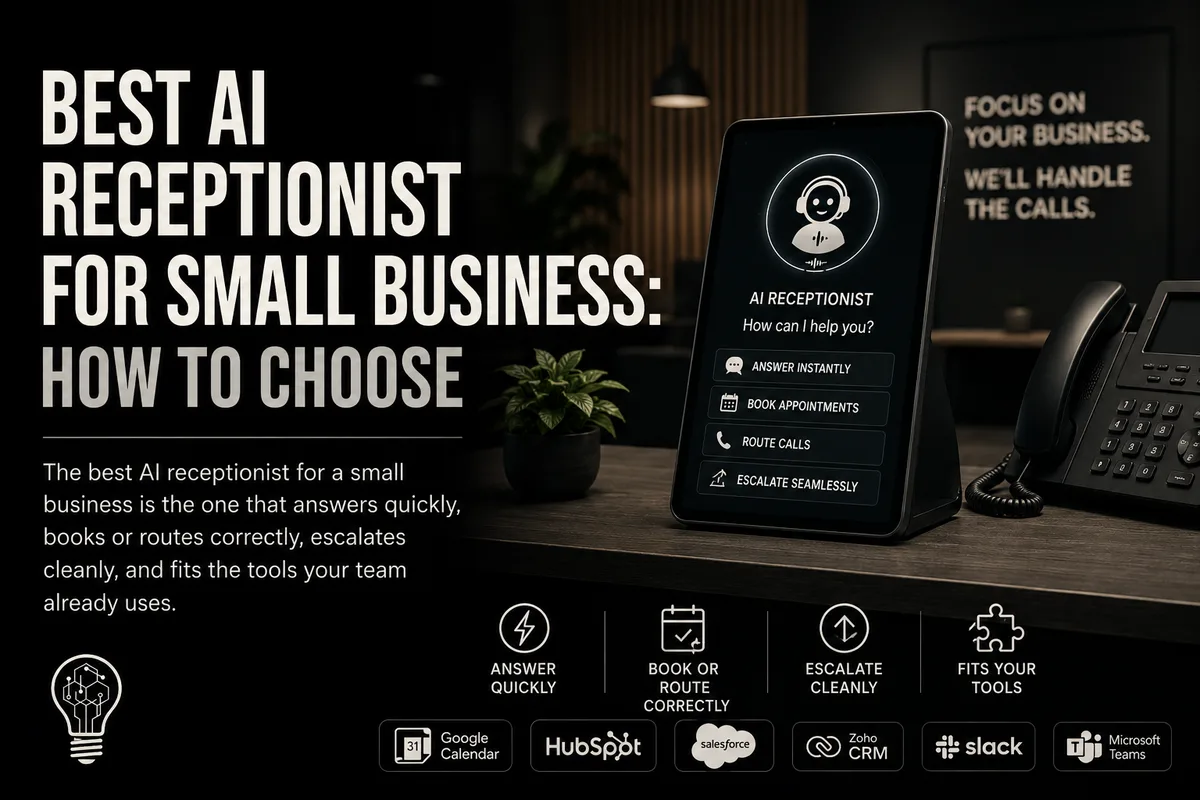
Best AI Receptionist for Small Business: How to Choose
The best AI receptionist for a small business is the one that answers quickly, books or routes correctly, escalates cleanly, and fits the tools your team.
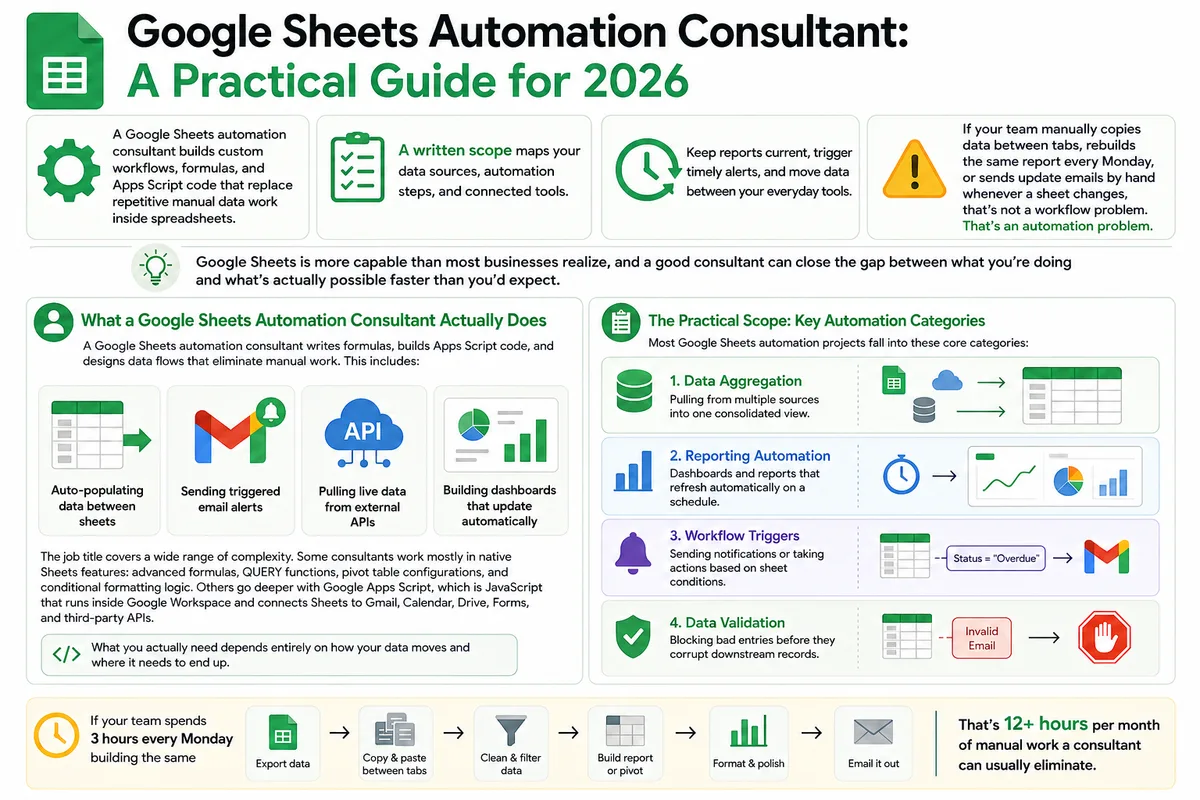
Google Sheets Automation Consultant: A Practical Guide for 2026
Most businesses don't track what spreadsheet work actually costs them. Here's what a Google Sheets automation consultant does in 2026, how to judge the value.
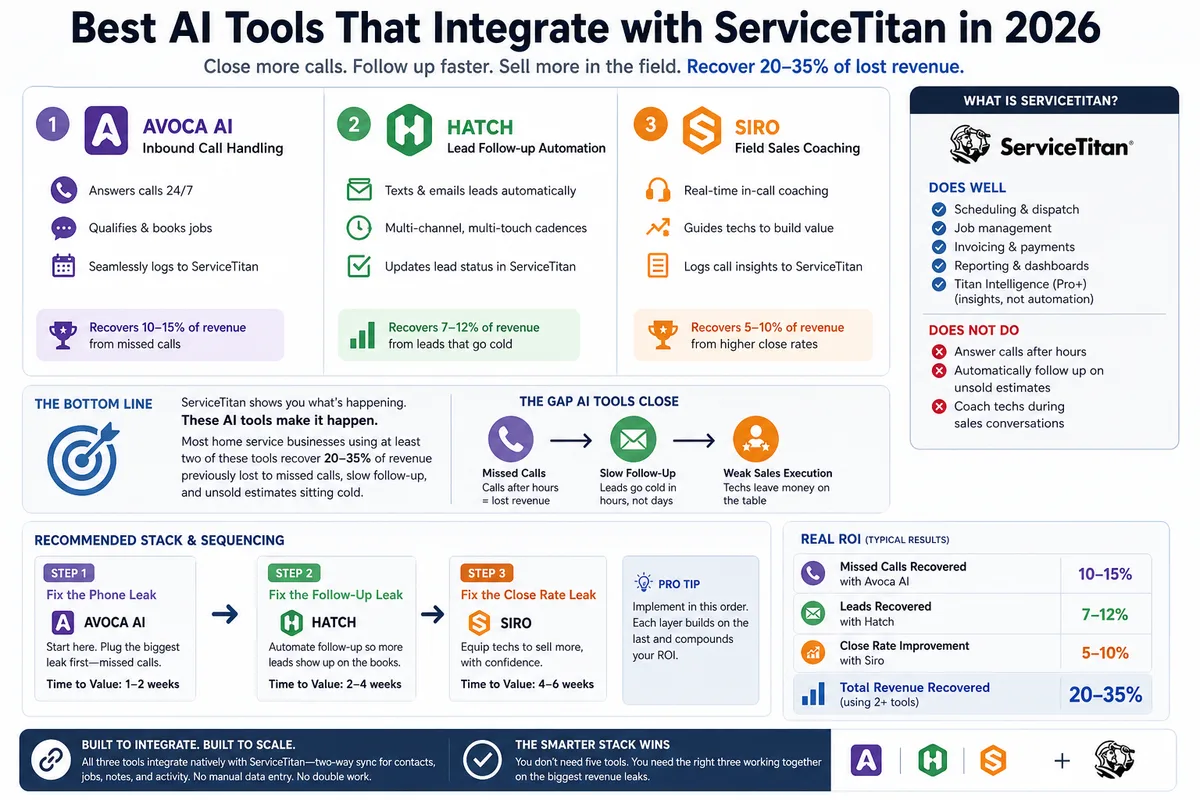
Best AI Tools That Integrate with ServiceTitan in 2026
Most ServiceTitan shops miss a meaningful share of inbound calls and leave most estimates unsold. These AI tools close those gaps inside ServiceTitan.