
Will AI Replace Medical Receptionists? The 2026 Reality Check
AI will not fully replace medical receptionists in 2026, but it can automate a meaningful share of front desk tasks. Scheduling, appointment reminders, after-hours calls, and basic FAQ responses are strong candidates for AI support when the practice has clean rules and escalation paths.
A meaningful share of front desk work in medical offices is repetitive, schedulable, and already being handled by AI. Here's what the cost drivers and.
Epiphany Dynamics is an AI automation agency: we help businesses find and fix operational bottlenecks with AI receptionists, lead follow-up, and workflow automation.
The free 30-minute AI Operations Audit is a conversation about a normal week in your business and where the work piles up. We find the one change that would give you the most time back and send you a plain-English plan for it. No forms and no pitch.
Book a free AI audit
Patrick Gibbs
AI will not fully replace medical receptionists in 2026, but it can automate a meaningful share of front desk tasks. Scheduling, appointment reminders, after-hours calls, and basic FAQ responses are strong candidates for AI support when the practice has clean rules and escalation paths. The remaining tasks require genuine human judgment, empathy, or clinical context that current AI cannot replicate reliably.
It's a fair question to ask, and the honest answer is more nuanced than the headlines suggest. AI is not going to walk into your medical office and hand your receptionist a severance letter. But if you're running a practice with two or three front desk staff and you haven't looked seriously at what AI can handle today, you're probably paying for volume management with people who are capable of a lot more.
What Medical Receptionists Actually Do All Day
Medical receptionists handle a wide mix of daily tasks, but much of the interruption load comes from four high-volume, low-complexity categories: answering phones, scheduling appointments, sending reminders, and collecting basic patient information. These four tasks generate the most interruptions and deliver the least value per hour, which is exactly why they're being automated first.
Busy primary care offices often see a steady stream of front desk contacts every day, with phone calls making up a large share of the interruptions. Only a minority of those calls require clinical judgment or complex problem-solving. The rest are appointment requests, address confirmations, reminder-related questions, and "when does the doctor have availability?"
That's not a knock on receptionists. It's the nature of the work. Practices built their front desk teams to handle volume, not complexity. Volume is precisely what AI solves well. When you look at where the time actually goes, the automation case writes itself.
What AI Can Actually Handle in 2026
AI voice systems in 2026 can handle inbound scheduling, insurance verification queries, after-hours calls, multi-channel appointment reminders, and standard FAQ responses when they are configured around clear rules and clean practice data. They can process simultaneous calls, operate 24/7 without overtime costs, and support no-show prevention through automated reminder sequences.
The capabilities have improved substantially. Early AI phone systems were brittle, struggled with accents, and fell apart when callers went off-script. Current systems are trained on medical terminology, handle interruptions gracefully, and integrate directly with major EHR platforms including Epic, Athenahealth, and Kareo. If you want a grounded view of how AI actually handles phone calls in real service environments, the short answer is: well enough for many routine inbound scenarios.
The reminder use case is particularly compelling. Practices without proactive outreach tend to lose appointments to forgetfulness, confusion, and last-minute schedule changes. Automated multi-touch reminder sequences (SMS plus voice plus email) reduce that leakage by making confirmation, rescheduling, and cancellation easier for patients before the slot is wasted. The value depends on appointment volume, current no-show patterns, and how quickly the practice can refill open slots.
After-hours calls are another high-value target. Most practices send evening and weekend calls to voicemail or an answering service. AI coverage should be compared against that current setup: does it only take messages, or can it schedule appointments, answer questions about hours and location, and triage based on urgency keywords before routing genuine emergencies to an on-call line?
Where AI Still Falls Short
AI struggles with emotionally distressed patients, complex insurance disputes, multi-step coordination involving clinical staff, and any situation requiring real-time judgment about medical urgency. These interactions may be less repetitive than routine scheduling, but they carry disproportionate risk if handled badly. A missed escalation or cold response to an anxious patient can damage the practice relationship permanently.
Insurance issues are a good example of where AI hits a ceiling fast. A patient calling to dispute a denied claim, figure out why their copay changed, or navigate prior authorization for a procedure isn't going to get what they need from a scripted system. These calls require access to insurance portals, real-time problem-solving, and sometimes the patience to stay on hold with a payer. AI can collect the intake information and route the call, but a human has to close it.
There's also an empathy gap that's worth being honest about. When a patient calls to cancel because they just received a scary diagnosis, or explains they've missed three appointments because of a difficult personal situation, a transactional response is the wrong response. Most practices care deeply about how patients feel when they hang up. That dimension still belongs to humans. The impact on patient experience when automation is deployed thoughtfully is net positive, but used carelessly it creates friction and the feeling that the practice doesn't care.
The Real Cost Comparison
The cost comparison between a human receptionist and an AI front desk system depends on salary, benefits, overtime, turnover, call volume, integration needs, and the level of human escalation required. The math can favor AI for high-volume repetitive tasks, but most practices still need at least one human to handle complex calls, in-person patients, and escalations that require judgment.
| Cost Factor | Human Receptionist | AI System |
|---|---|---|
| Annual base salary | Market wage plus role expectations | Subscription and usage model |
| Benefits | Health, payroll, and employment costs | Usually not applicable |
| Overtime and coverage | Depends on hours, absences, and backup staffing | Included only if the system covers the needed hours |
| Training and turnover costs | Hiring, onboarding, and knowledge loss | Setup, scripting, monitoring, and maintenance |
| Total annual cost | Staffing cost plus coverage overhead | Vendor cost plus integration and oversight |
| Hours available per year | Limited by schedule and staffing coverage | Continuous if configured and monitored correctly |
The cost gap can be wide enough that reducing front desk costs with AI is one of the clearer value cases in healthcare operations. But context matters. A solo physician practice does not need the same infrastructure as a large multi-provider group with heavy phone volume.
The realistic outcome for most practices isn't zero receptionists. It's one receptionist doing work that previously required two or three. That person handles escalations, manages the waiting room, coordinates with clinical staff, and takes anything the AI routes to them. The AI handles the volume. The human handles the complexity. That's a better division of labor than having your most capable staff member confirm insurance cards all day.
Read next: The Unexpected Benefits of an AI Receptionist for Plastic Surgeons.
How Smart Practices Are Deploying This
A common deployment pattern in 2026 is a hybrid model: AI handles inbound call answering, scheduling, and reminders, while a human receptionist manages escalations, in-person patients, and complex coordination. Practices using this model can reduce administrative overhead and front desk staffing pressure while preserving human support for the interactions that require judgment.
The rollout typically happens in phases. First, practices automate after-hours and overflow calls where the stakes are lower and the workflow is easier to define. Second, they add automated reminder sequences to reduce preventable schedule leakage. Third, they shift routine daytime inbound calls to AI during peak hours, keeping human staff available for complex interactions. By the time full deployment is done, the receptionist's role has shifted rather than disappeared.
One thing practices consistently underestimate: EHR integration is the hardest part of any deployment. An AI scheduling system that can't read and write to the practice's existing EHR will create more work than it saves. Budget extra time and scrutiny for this step, especially with Epic (which has a more restrictive API environment than Athenahealth or Kareo). Any vendor who waves off the integration question in a sales conversation is a vendor worth avoiding.
Practices that use the transition well also tend to redefine what they want from their remaining front desk staff. When the routine phone burden drops, a good receptionist can take on patient outreach, insurance follow-ups, prior auth tracking, and the kind of proactive relationship management that used to fall through the cracks. The job becomes more interesting, not less important.
The Verdict
AI will not replace medical receptionists entirely, but it will reduce how much routine front desk volume requires human handling. In 2026, the realistic outcome for high-volume practices is a smaller, more specialized front desk team, with remaining staff handling higher-value, harder-to-automate work. Practices that avoid this shift will face a growing cost disadvantage against competitors who adopt it.
The question isn't whether AI will take over the front desk. In practices that have deployed it, most of the routine work already runs through AI. The better question is what role you want humans playing once the repetitive volume is handled. That's a question about your practice's values as much as its budget.
Practices that get this right end up with a better patient experience, not a worse one. Calls get answered faster. Reminders go out reliably. Staff are less frazzled and better equipped to handle the patients who actually need human attention. For more context on how this plays out across industries in 2026, the broader receptionist replacement data shows the medical office pattern tracking closely with what's happening in law, real estate, and home services.
If you're thinking about this transition for your own practice, the technology is the easy part. The hard part is deciding what you want your front desk to be genuinely good at, then building around that answer. Agencies focused on healthcare and service business automation, including Epiphany Dynamics, can help practices map that deployment without overselling what the technology can do on day one.
Frequently Asked Questions
Q: How much can a medical practice save by switching to AI receptionists?
A multi-person front desk carries ongoing salary and benefits costs, while AI scheduling and after-hours call systems usually run as a monthly software expense. The savings case depends on how much routine call handling, reminder work, and scheduling volume the practice can shift to AI while keeping human staff for complex interactions.
Q: Which receptionist tasks absolutely still require a human?
Angry or upset patients, insurance disputes, clinical triage questions, and non-routine situations demand human judgment and empathy that AI cannot reliably replicate. The portion of receptionist work involving genuine problem-solving, relationship-building, or clinical context remains firmly human in 2026.
Q: When will medical practices have fully automated front desks?
Full receptionist automation is unlikely before 2028 to 2030, with most practices adopting hybrid models instead, using AI for predictable routine volume while human staff handle exceptions and patient relationships. Regulatory requirements, liability concerns, and patient expectations will keep pure automation limited in healthcare for years.
Q: Can AI appointment systems handle complex scheduling requests like doctor or time preferences?
Modern AI systems reliably book straightforward appointments, but they struggle with multi-step requests combining doctor preferences, clinical holds, or insurance pre-authorization. Hybrid systems routing complex cases to humans are proving most effective in 2026 practices.
Patrick Gibbs
AI Automation Expert
Patrick Gibbs helps professional practices implement AI automation that captures more leads, books more appointments, and scales without adding overhead. He's the founder of Epiphany Dynamics and creator of the AI Front Desk system.
Related Solutions
Build this into a real workflow
Related Posts
Best AI Receptionist for Small Business: How to Choose
The best AI receptionist for a small business is the one that answers quickly, books or routes correctly, escalates cleanly, and fits the tools your team.
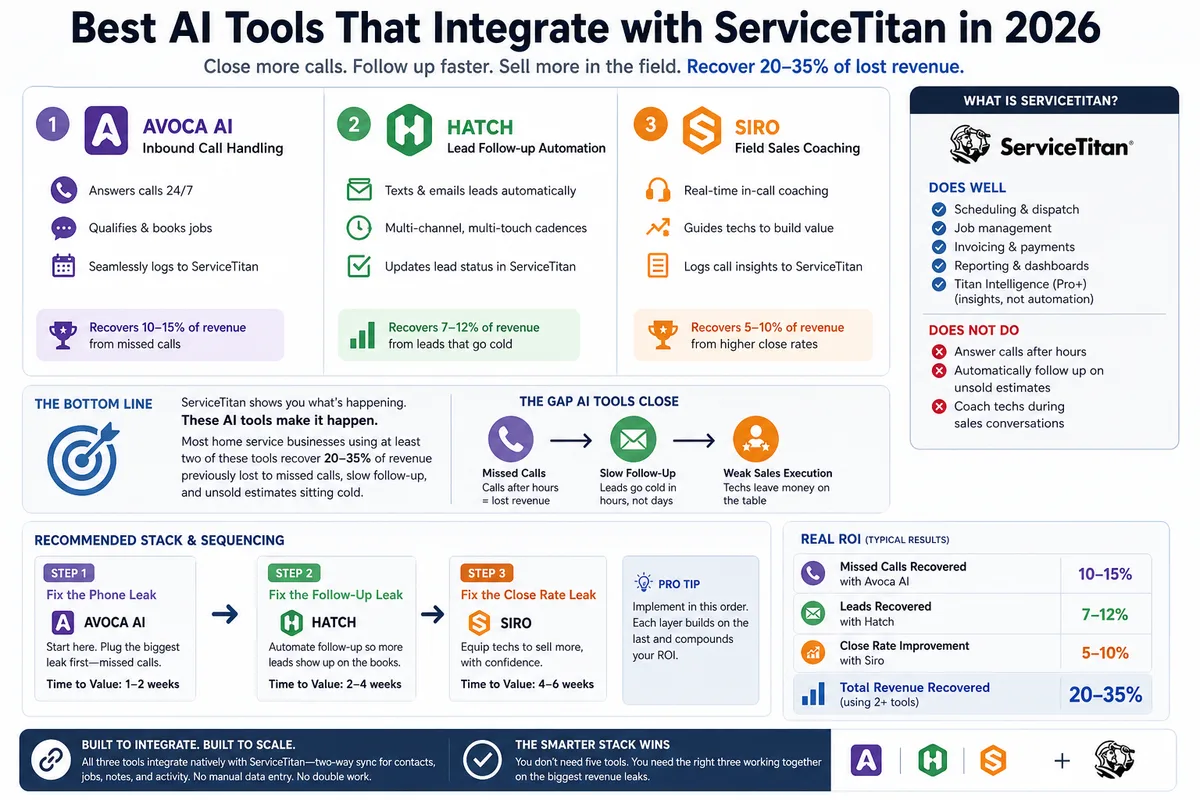
Best AI Tools That Integrate with ServiceTitan in 2026
Most ServiceTitan shops miss a meaningful share of inbound calls and leave most estimates unsold. These AI tools close those gaps inside ServiceTitan.
AI Answering Service for Law Firms: Costs, Setup, and ROI in 2026
Law firms miss a large share of inbound calls, most of them after hours. Here's what an AI answering service actually does, what it costs versus human.