
How AI Automation Improves Patient Experience
AI automation improves patient experience by eliminating the friction points patients hate most. Long hold times, manual scheduling, and impersonal communication all get addressed while reducing administrative drag for the practice.
Learn how AI automation can improve patient experience through scheduling, communication, follow-up, and practical workflow support.
Epiphany Dynamics is an AI automation agency: we help businesses find and fix operational bottlenecks with AI receptionists, lead follow-up, and workflow automation.
The free 30-minute AI Operations Audit is a conversation about a normal week in your business and where the work piles up. We find the one change that would give you the most time back and send you a plain-English plan for it. No forms and no pitch.
Book a free AI audit
Patrick Gibbs
AI automation improves patient experience by eliminating the friction points patients hate most. Long hold times, manual scheduling, and impersonal communication all get addressed while reducing administrative drag for the practice. This article covers practical implementation across every patient touchpoint, from first appointment booking through post-treatment follow-up, with measurement guidance for each step.
The Patient Experience Imperative: A New Era in Healthcare
In the rapidly evolving landscape of healthcare, patient experience has emerged as a critical differentiator. No longer is it solely about the quality of medical treatment; patients are increasingly evaluating their healthcare journey based on factors like convenience, communication, and overall satisfaction. A positive patient experience translates to improved health outcomes, stronger patient loyalty, and a more efficient practice. Conversely, a negative experience can lead to dissatisfaction, complaints, and even patients seeking care elsewhere.
Traditional methods of managing patient interactions often fall short in meeting these elevated expectations. Manual appointment scheduling, lengthy wait times, and impersonal communication can all contribute to a frustrating experience. This is where artificial intelligence (AI) automation steps in, offering powerful solutions to streamline processes, personalize interactions, and ultimately, significantly enhance the patient journey. AI voice assistants built for healthcare are already handling the majority of routine patient communication at scale.
This article covers the practical ways AI automation can be used to improve patient experience across various touchpoints, with concrete examples and actionable strategies for implementation. We’ll explore how AI can transform everything from initial appointment booking to post-treatment follow-up, ultimately leading to a more patient-centric and efficient healthcare environment.
Streamlining Appointment Scheduling with AI-Powered Automation
The appointment scheduling process is often the first interaction a patient has with a healthcare provider, making it a crucial opportunity to set a positive tone. Traditional scheduling methods, often involving phone calls and manual data entry, can be time-consuming and prone to errors. AI-powered automation offers a significantly more efficient and patient-friendly alternative.
AI-driven scheduling systems can automate the entire process, allowing patients to book appointments online or through a mobile app at their convenience. These systems can integrate with existing electronic health record (EHR) systems to check provider availability in real-time, minimizing the risk of double-booking or scheduling conflicts. AI can analyze patient preferences and suggest optimal appointment times based on factors like location, transportation options, and preferred provider.
Illustrative example: A large multi-specialty clinic implements an AI-powered scheduling system and sees a meaningful reduction in appointment no-shows within the first six months, attributable to automated appointment reminders sent via text message and email, personalized based on patient communication preferences. The same clinic would also see a real decrease in administrative staff time spent on scheduling-related tasks, freeing up resources for other patient-facing activities. Dental practices see similar gains with AI-powered workflow automation that covers scheduling, insurance verification, and recall in a single system.
Measuring the ROI of AI-Powered Scheduling
To quantify the potential return on investment (ROI) of implementing AI-powered scheduling, use your own appointment history instead of a borrowed benchmark.
Start with these inputs:
- Baseline no-show rate from your scheduling system
- Average revenue per kept appointment
- Total appointments booked in a normal month
- Current staff time spent scheduling, rescheduling, and sending reminders
- Software and implementation quote for the automation
Then compare avoided no-shows, recovered staff time, and improved after-hours booking against the actual system cost. This keeps the business case anchored in your practice rather than a generic industry example.
Personalizing Patient Communication with AI Chatbots and Virtual Assistants
Effective communication is paramount to a positive patient experience. Patients want to feel heard, understood, and informed throughout their healthcare journey. AI-powered chatbots and virtual assistants can play a crucial role in personalizing patient communication and providing timely support.
These AI-powered tools can handle a wide range of tasks, including answering frequently asked questions, providing pre-appointment instructions, and offering post-treatment support. They can also be used to collect patient feedback, identify potential issues, and escalate complex inquiries to human staff when necessary. Practices that add website chatbots that actually convert visitors into booked patients see the biggest impact on first-touch experience. The key is to design the chatbot with empathy and personalization in mind. Using natural language processing (NLP), AI can understand the nuances of patient inquiries and respond in a way that is both informative and compassionate.
Illustrative example: A dermatology practice implements an AI chatbot on its website to answer common questions about skincare and treatment options. A well-trained chatbot can handle the large majority of routine patient inquiries without human intervention, freeing up staff time for more complex patient needs, and online appointment bookings rise because patients get their questions answered quickly and easily.
Key Features of Effective AI Chatbots for Patient Communication
- 24/7 Availability: Provides instant support and answers to patient inquiries at any time of day or night.
- Personalized Responses: Uses patient data to tailor responses and provide relevant information.
- Integration with EHR Systems: Accesses patient records to provide accurate and up-to-date information.
- Natural Language Processing (NLP): Understands and responds to patient inquiries in a natural and conversational manner.
- Escalation to Human Staff: Transfers complex inquiries to human staff when necessary.
Reducing Wait Times and Improving Patient Flow with AI-Driven Optimization
Long wait times are a common source of frustration for patients. Excessive wait times negatively impact patient satisfaction, adherence to treatment plans, and overall health outcomes. AI can be used to optimize patient flow and reduce wait times by analyzing data and identifying bottlenecks in the system.
AI-powered systems can predict patient arrival times, optimize staffing levels, and prioritize patients based on their needs. These systems can also provide real-time updates to patients about their wait times, managing expectations and reducing anxiety. By analyzing historical data and identifying patterns, AI can help healthcare providers make informed decisions about resource allocation and process improvements.
Illustrative example: An emergency department implements an AI-powered patient flow management system and sees a measurable reduction in average wait times. The system uses machine learning algorithms to predict patient arrival patterns and optimize staffing levels accordingly, and provides real-time updates to patients about their wait times via a mobile app, improving patient satisfaction and reducing complaints.
How Wait Times Affect Patient Satisfaction
The relationship between wait time and patient satisfaction is straightforward: the longer patients sit without useful context, the more the visit feels disorganized before care even begins. AI-driven queue updates, better arrival predictions, and proactive communication can reduce that friction without promising a universal satisfaction score.
| Wait Experience | Patient Impact |
|---|---|
| Short, expected, and explained | Patients feel the practice is organized and respectful of their time |
| Moderate but communicated | Patients tolerate the delay better when they know what is happening |
| Long and unexplained | Frustration rises, and staff absorb more status-check questions |
| Repeated across visits | Patients may lose confidence in the practice's operations |
Reducing wait times through AI-driven optimization can improve the overall patient experience, but the right measurement is your own patient feedback and operational data before and after the workflow changes.
Enhancing Post-Treatment Follow-Up and Engagement with AI
The patient journey doesn’t end when they leave the healthcare facility. Post-treatment follow-up and engagement are crucial for ensuring optimal recovery and preventing complications. AI can be used to automate follow-up communication, monitor patient progress, and provide personalized support.
AI-powered systems can send automated reminders for medication adherence, schedule follow-up appointments, and provide personalized educational materials. They can also monitor patient data, such as vital signs and activity levels, to identify potential issues and alert healthcare providers when necessary. By proactively engaging with patients after treatment, AI can help improve outcomes and reduce the risk of readmissions. The same principle drives results in aesthetic medicine, where post-treatment follow-up automation keeps patients engaged through their recovery. In physical therapy, follow-up automation pairs with home exercise program delivery, and our AI tools for physical therapy guide covers platforms that handle both.
Illustrative example: A cardiology practice implements an AI-powered remote patient monitoring system for patients with heart failure. The system tracks patient vital signs, activity levels, and medication adherence, and alerts healthcare providers to any potential issues, reducing hospital readmissions among patients using the system by catching problems before they escalate.
See How to Automate Your Dental Practice: Save 20+ Hours Per Week (2026) for more in this area.
AI-Powered Tools for Post-Treatment Engagement
- Automated Medication Reminders: Sends reminders via text message or email to ensure medication adherence.
- Personalized Educational Materials: Provides information about treatment plans, potential side effects, and lifestyle modifications.
- Remote Patient Monitoring: Tracks vital signs and activity levels to identify potential issues.
- AI-Powered Chatbots: Answers patient questions and provides support after treatment.
- Feedback Surveys: Collects patient feedback to identify areas for improvement.
Ethical Considerations and Implementation Strategies
While AI offers tremendous potential for improving patient experience, it’s crucial to address the ethical considerations and implement these technologies responsibly. Data privacy, algorithmic bias, and transparency are key concerns that must be addressed to ensure that AI is used in a way that benefits all patients.
Healthcare providers should prioritize data security and obtain informed consent from patients before collecting and using their data. They should also be aware of the potential for algorithmic bias and take steps to mitigate it. Transparency is essential for building trust with patients and ensuring that they understand how AI is being used in their care.
Implementation Strategies:
- Start Small: Begin with a pilot project to test the effectiveness of AI in a specific area of your practice.
- Involve Stakeholders: Engage with patients, staff, and other stakeholders throughout the implementation process.
- Provide Training: Ensure that staff are properly trained on how to use AI-powered systems.
- Monitor Performance: Track key metrics to assess the impact of AI on patient experience and outcomes.
- Continuously Improve: Regularly evaluate and refine your AI strategies based on data and feedback.
Conclusion: The Future of Patient Experience is Here
AI automation can improve patient experience when it is scoped around real operational bottlenecks: scheduling, communication, follow-up, and staff handoffs. By streamlining appointment scheduling, personalizing communication, reducing wait times, and enhancing post-treatment follow-up, AI can help healthcare providers create a more patient-centric and satisfying experience.
AI is not useful just because it is new. Healthcare providers should start with the workflows that clearly affect patients and staff: missed calls, scheduling delays, reminders, and post-visit follow-up. Keep the scope narrow, review outcomes, and expand only when the process is working. Solutions like those offered by companies such as Epiphany Dynamics can provide a valuable starting point for exploring these possibilities.
Frequently Asked Questions
Q: How does AI automation improve patient scheduling and reduce no-shows?
AI-powered scheduling systems can send automated appointment reminders via text and email 48 and 24 hours before visits, include one-click confirmation links, and automatically follow up with patients who do not respond. This multi-touch reminder approach gives patients a simple way to confirm, reschedule, or ask for help before the slot is lost. Measure the impact against your own no-show baseline and kept-appointment rate.
Q: Can AI chatbots handle sensitive patient inquiries appropriately?
Well-designed healthcare chatbots are trained to recognize when conversations require human escalation, including any mention of symptoms, urgent medical questions, or emotional distress. They handle administrative inquiries effectively (hours, directions, appointment booking, billing) but transfer clinical questions immediately to human staff. Transparency about being AI, combined with easy access to human help, is the foundation of patient trust in these systems.
Q: Is AI automation in healthcare compliant with HIPAA regulations?
HIPAA compliance for healthcare AI requires end-to-end data encryption, Business Associate Agreements with all vendors who access protected health information, audit trails for all data access, and proper consent collection from patients. Healthcare providers must vet each AI tool individually. A chatbot that stores conversation transcripts containing patient information must be HIPAA-certified, not just general-purpose. Start any AI implementation by confirming the vendor’s specific HIPAA certifications and willingness to sign a BAA.
Q: How much does AI automation reduce administrative costs in a medical practice?
Healthcare organizations implementing AI for scheduling, reminders, and patient communication should measure administrative time before and after launch. For a practice where front desk staff spend a large share of the day on phone management, the financial impact includes both direct labor capacity and revenue recovery from reduced no-shows and improved after-hours patient access.
Patrick Gibbs
AI Automation Expert
Patrick Gibbs helps professional practices implement AI automation that captures more leads, books more appointments, and scales without adding overhead. He's the founder of Epiphany Dynamics and creator of the AI Front Desk system.
Related Solutions
Build this into a real workflow
Related Posts
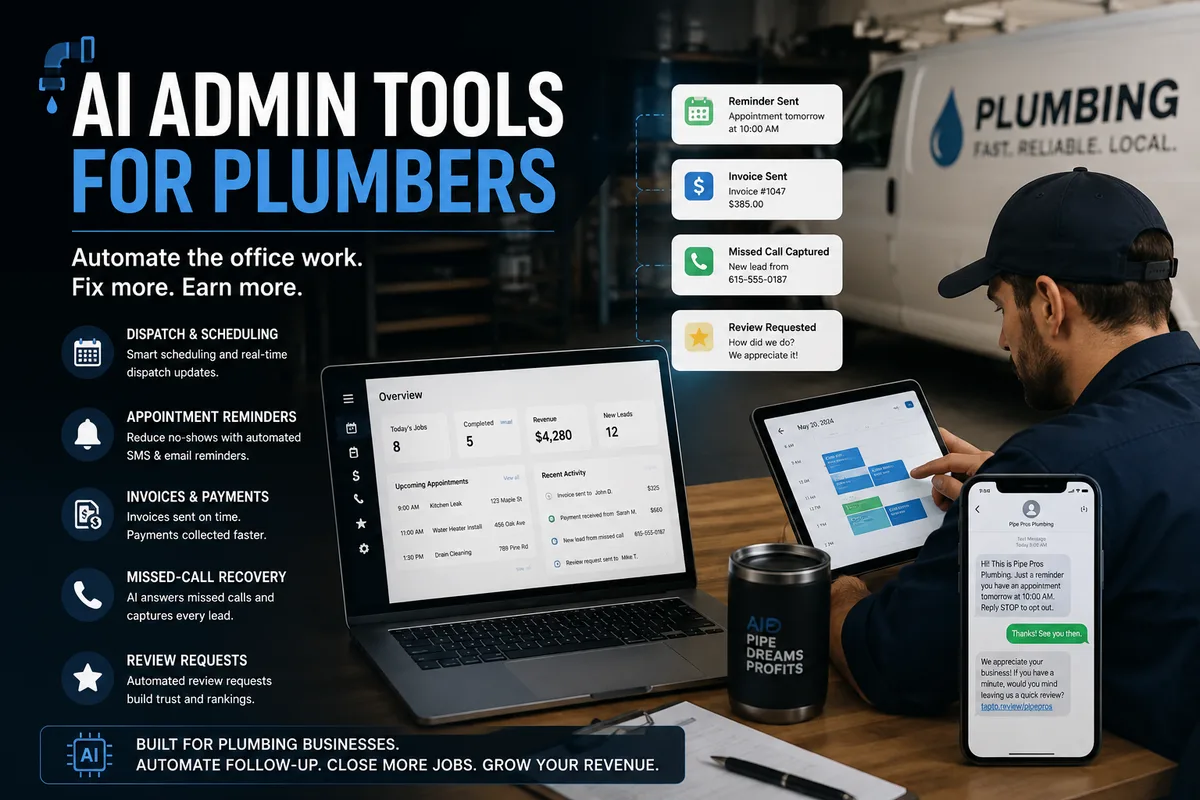
AI Admin Tools for Plumbers: What They Are and How to Choose
AI admin tools automate dispatch, reminders, invoicing follow-up, missed calls, and review requests for plumbers. What they do and how to choose.
Insurance Eligibility Automation for Physical Therapy Clinics
Eligibility automation for physical therapy clinics verifies benefits before the patient arrives, cuts front desk phone work, and can lower claim denial risk.
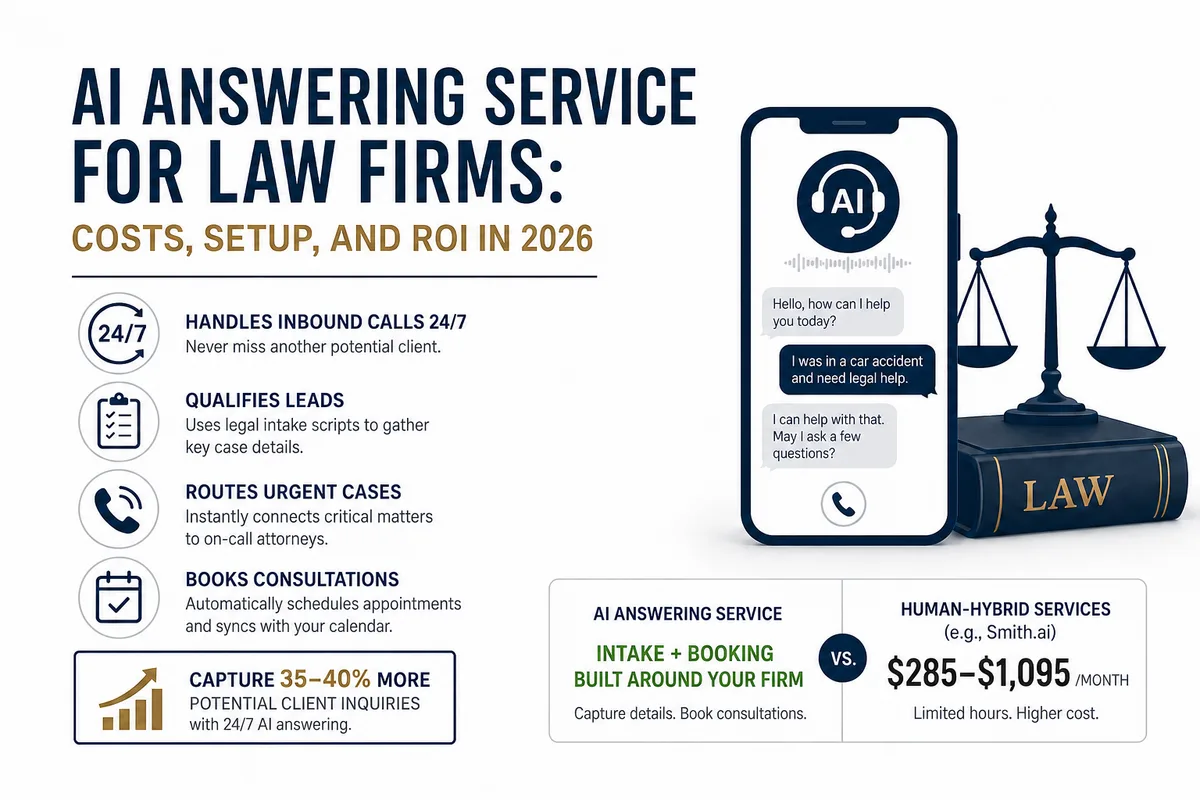
AI Answering Service for Law Firms: Costs, Setup, and ROI in 2026
Law firms miss a large share of inbound calls, most of them after hours. Here's what an AI answering service actually does, what it costs versus human.