
AI Automation Cost for Real Estate Agents: 2026 Pricing Guide
AI automation for real estate agents costs different amounts depending on whether you configure off-the-shelf tools yourself or hire a team to build and maintain the workflow. The useful question is not the sticker price.
Most real estate agents either overpay for automation tools they barely use or underinvest and wonder why leads keep going cold.
Epiphany Dynamics is an AI automation agency: we help businesses find and fix operational bottlenecks with AI receptionists, lead follow-up, and workflow automation.
The free 30-minute AI Operations Audit is a conversation about a normal week in your business and where the work piles up. We find the one change that would give you the most time back and send you a plain-English plan for it. No forms and no pitch.
Book a free AI audit
Patrick Gibbs
AI automation for real estate agents costs different amounts depending on whether you configure off-the-shelf tools yourself or hire a team to build and maintain the workflow. The useful question is not the sticker price. It is whether the system protects lead response, follow-up, and showing coordination well enough to pay for its upkeep.
What Real Estate AI Automation Actually Costs in 2026
The price depends on whether you're subscribing to software and configuring it yourself or hiring an agency to design and maintain workflows for you. DIY stacks are usually cheaper but demand your own setup time. Agency-managed systems cost more because the build, integrations, monitoring, and tuning are included.
The honest thing to understand before spending anything is that there are two completely different buying decisions here, and they're easy to confuse. Subscribing to a CRM with automation features is not the same as hiring someone to build a workflow that connects your CRM, phone system, calendar, and lead sources into something that runs without you touching it. Both have real costs. The math on each is different. Agents who treat them as the same thing end up with half-configured software and no clear answer for why none of it is working.
Before you start comparing quotes, it helps to understand how AI automation agency pricing actually breaks down, specifically what's typically included in setup fees versus monthly retainers and why those numbers vary as much as they do. That context will save you from getting surprised mid-engagement.
The DIY Route: Off-the-Shelf Tools and What They Cost
A functional DIY automation stack for real estate agents usually combines a CRM with built-in automation, an AI phone or chat receptionist, an email and SMS sequence tool, and a showing scheduler. Configure them correctly and you have lead handling that keeps working when you are with clients, driving, or offline.
| Tool Category | Common Options | Budget Driver |
|---|---|---|
| CRM with automation | Follow Up Boss, LionDesk, HubSpot | Contact limits, routing, and automation depth |
| AI phone / chat receptionist | VAPI, Air.ai, Synthflow | Call volume, voice quality, and calendar/CRM access |
| Email and SMS sequences | ActiveCampaign, Drip, Klaviyo | Contact count, SMS usage, and sequence complexity |
| Showing scheduler | Calendly, ShowingTime | Calendar rules, team access, and listing/showing workflow fit |
| Total | Total depends on tool stack and usage |
The catch with DIY is that subscribing and configured are not the same thing. Many agents pay for these tools, do a partial setup, and extract only a slice of the value because the integrations between platforms require technical configuration that takes real time to get right. If you can carve out a focused setup window to build the workflows properly, a DIY stack is a legitimate path. If that time doesn't exist, you'll pay monthly fees for software that isn't doing much.
For a more granular breakdown of what each tool category actually does and which specific products are worth evaluating, the best AI tools for real estate agents in 2026 covers the field with actual comparisons rather than just a list of names.
Custom Automation Agency Pricing
Real estate automation agencies usually price around two parts: a setup fee for the build and an ongoing retainer for software, monitoring, fixes, and improvement. A solo agent setup covering AI lead intake, showing scheduling, follow-up sequences, and reporting should be scoped very differently from a team workflow with routing, reporting, and multiple calendars.
Setup fees exist because building automation properly takes real time. Designing the workflow logic, integrating your CRM with your phone system and calendar, writing the AI scripts, testing edge cases, and then deploying everything correctly is not a weekend project. An agency that doesn't charge a setup fee is pricing it into the first few months of retainer or cutting corners on the build. Neither situation ends well. The agencies worth working with will scope the project, give you a fixed setup cost upfront, and then a clear monthly rate for ongoing management and tuning.
What does a well-scoped real estate automation build actually include? For a solo agent or small team, it typically covers: AI-powered lead intake and initial qualification, showing scheduling connected to your live calendar, automated SMS and email follow-up sequences at key points in the buyer or seller journey, and a reporting layer so you can see conversion quality and response speed. Larger teams with higher lead volume and more complex workflows, like managing multiple agents' calendars or routing leads by zip code, should expect a broader build and a higher support burden. The complete guide to AI automation for real estate breaks down what's worth building at each stage of growth.
For additional background, see AI Automation Cost for Veterinary Clinics: What to Compare.
The ROI Calculation Every Agent Should Run
Figures in this section are illustrative planning assumptions, not measured industry data.
Run the ROI calculation with your own numbers: missed leads, average commission, conversion rate, and annual automation cost. If one additional qualified appointment or closing covers the system's annual cost, lead-response automation belongs near the top of your list.
The data on lead response time is not ambiguous. Lead-response research consistently finds that agents who respond quickly are more likely to qualify a lead than those who wait until the next free block on the calendar. If your lead response is happening during business hours only, you are losing deals to whoever picks up after you stop working. Buyers and sellers contact multiple agents simultaneously. The first one with a real response, not just an auto-reply, often wins the appointment.
| Metric | Without Automation | With Automation |
|---|---|---|
| Lead response | Depends on agent availability | Immediate acknowledgement and qualification flow |
| Lead leakage | Higher when calls and forms sit unanswered | Lower when every inquiry gets a next step |
| Recovered opportunities | Baseline | Calculate from your lead source and close-rate history |
| Annual automation cost | No new software cost | Use the vendor quote plus maintenance time |
| Revenue recovered | No recovered value | Average commission multiplied by extra closings |
The ROI picture gets clearer when you account for time, not just leads. Scheduling, follow-up, data entry, and coordination do not require a license, but they quietly consume the hours agents need for client strategy, negotiation, and business development. The breakdown of where real estate automation ROI actually lives goes deeper on this math and identifies which task categories return the most on automation investment.
What to Automate First, and What Can Wait
The highest-priority automations for real estate agents are fast lead response, automated showing scheduling, and post-showing follow-up sequences. These workflows cover most of where leads go cold and where admin time disappears. Start here before building anything more complex.
Lead response is the place to start. Not because it's exciting, but because it's where the most money leaks. A lead that doesn't hear back quickly often doesn't hear back at all, or has already booked a showing with whoever answered. An AI voice agent or chat bot that confirms receipt, asks a few qualifying questions, and offers to schedule a call can run around the clock at a fraction of what a part-time admin costs. The front desk cost breakdown shows which reception tasks are realistic to replace and which still need a human.
What to leave alone for now: anything requiring real judgment. Pricing strategy, negotiation framing, managing a difficult client relationship, advising on a lowball offer. AI can surface data and draft a first version of a communication, but agents who hand off those conversations entirely tend to see client satisfaction drop. The goal of automation is to reclaim the scheduling, follow-up, and data-entry time that keeps you away from licensed work. Automate the repeatable. Keep the judgment work.
For most solo agents, the honest starting budget is the one that covers the workflow you will actually maintain. A self-managed stack should be judged by tool fit and setup time. An agency build should be judged by integration depth, support coverage, and whether a single extra closing can cover the annual cost. If you want to see what a purpose-built real estate automation workflow looks like before committing to a build, Epiphany Dynamics works specifically with service businesses on this kind of setup.
Patrick Gibbs
AI Automation Expert
Patrick Gibbs helps professional practices implement AI automation that captures more leads, books more appointments, and scales without adding overhead. He's the founder of Epiphany Dynamics and creator of the AI Front Desk system.
Related Solutions
Build this into a real workflow
Related Posts
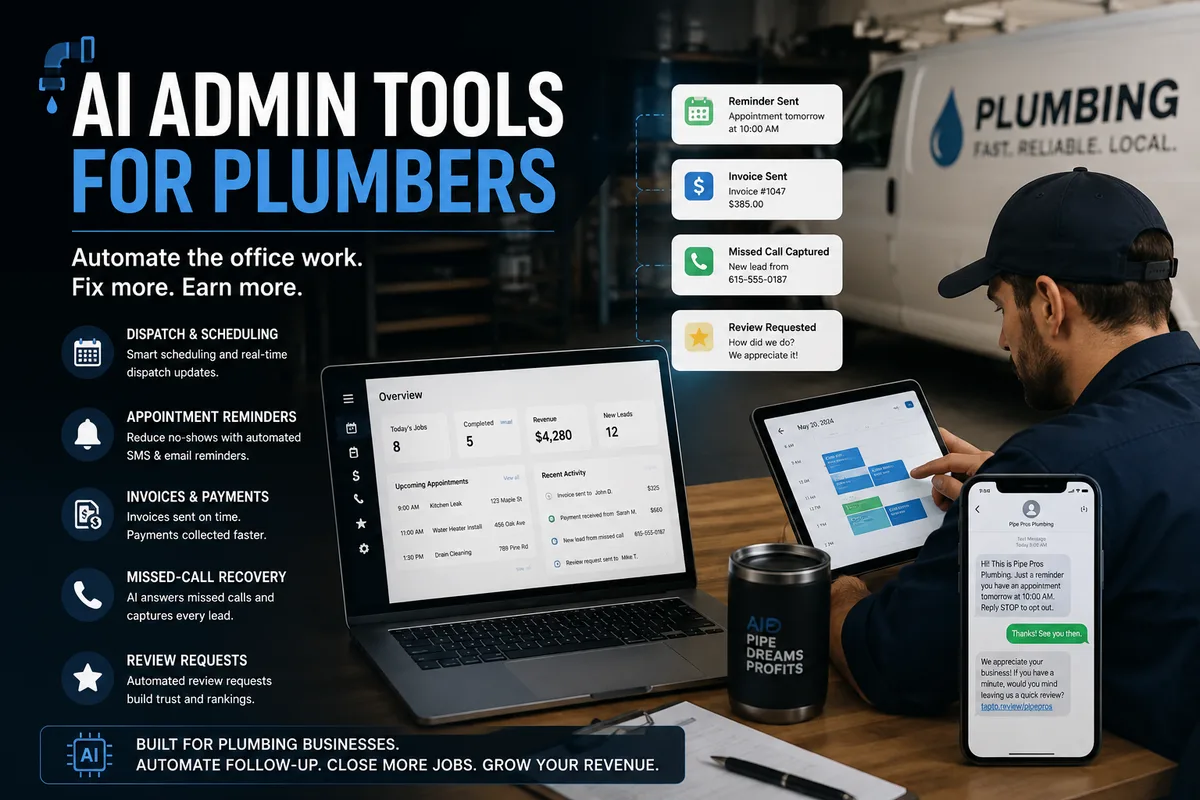
AI Admin Tools for Plumbers: What They Are and How to Choose
AI admin tools automate dispatch, reminders, invoicing follow-up, missed calls, and review requests for plumbers. What they do and how to choose.
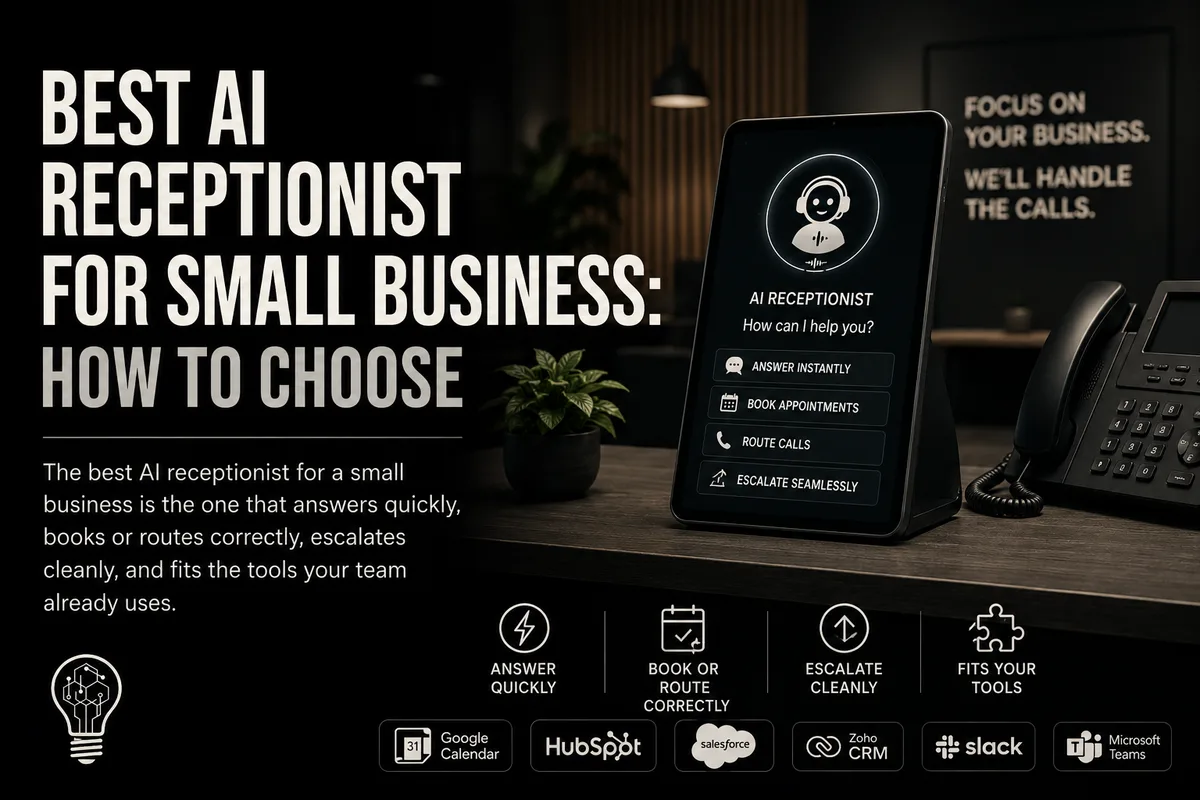
Best AI Receptionist for Small Business: How to Choose
The best AI receptionist for a small business is the one that answers quickly, books or routes correctly, escalates cleanly, and fits the tools your team.

Insurance Eligibility Automation for Physical Therapy Clinics
Eligibility automation for physical therapy clinics verifies benefits before the patient arrives, cuts front desk phone work, and can lower claim denial risk.