
AI Consent Automation in Cosmetic Clinics: A Practical Guide
AI consent documentation automation in cosmetic clinics replaces manual paper-based workflows with procedure-specific digital forms, pre-visit patient Q&A, completion enforcement, and tamper-evident audit trails that push directly into the EHR. Manual consent processes can tie up staff time across preparation, review, filing, and rework, while consent documentation errors add legal and operational risk.
Consent documentation gaps are a recurring factor in aesthetic medicine malpractice claims. Here's what AI automation actually does, what it costs to.
Epiphany Dynamics is an AI automation agency: we help businesses find and fix operational bottlenecks with AI receptionists, lead follow-up, and workflow automation.
The free 30-minute AI Operations Audit is a conversation about a normal week in your business and where the work piles up. We find the one change that would give you the most time back and send you a plain-English plan for it. No forms and no pitch.
Book a free AI audit
Patrick Gibbs
AI consent documentation automation in cosmetic clinics replaces manual paper-based workflows with procedure-specific digital forms, pre-visit patient Q&A, completion enforcement, and tamper-evident audit trails that push directly into the EHR. Manual consent processes can tie up staff time across preparation, review, filing, and rework, while consent documentation errors add legal and operational risk. This guide covers what the technology actually does, the compliance requirements (ESIGN, HIPAA, state law), and how to evaluate vendors without exposing your practice to risk.
The Real Cost of Manual Consent Documentation
Most cosmetic clinic operators know consent documentation matters. Far fewer know what their current process is actually costing them. The expense isn’t obvious because it’s distributed: front desk minutes here, a clinical staff review there, a filing cabinet in the back room, an occasional panicked search for a missing signature before a procedure starts.
Start by mapping each staff touch in the consent workflow: preparing the right packet, sending it, chasing completion, reviewing signatures, filing the record, and correcting anything that comes back incomplete. The cost case becomes clear when you multiply your own packet volume by the actual minutes your team spends on each handoff. When you factor in the full picture of administrative overhead that AI workflow automation eliminates, consent is just one of several high-friction manual processes worth evaluating.
That’s before you factor in rework. In practice, a meaningful share of clinical consent packets contain at least one documentation gap: a missing signature, an unchecked field, a date discrepancy. Each requires follow-up, adding several more minutes of staff time per incident. And every gap is a liability vector: in aesthetic medicine malpractice cases, inadequate consent documentation is a recurring contributing factor that can create serious legal exposure.
What AI Consent Documentation Automation Actually Does
The term “AI automation” is applied loosely to a wide range of software capabilities, so it’s worth being precise. In the context of cosmetic clinic consent workflows, mature platforms currently in deployment handle four distinct functions.
Procedure-Specific Dynamic Form Generation
The system pulls scheduled procedure codes from the practice management software and automatically assembles the correct consent document, matching risk disclosures, contraindication checklists, and applicable state-mandated language to the specific treatment scheduled. This eliminates one of the most common consent errors: sending a generic template that doesn’t adequately cover a combination treatment, or selecting the wrong form for a procedure type. For clinics offering a wide menu of procedures, manual form selection is a genuine error source; automated generation removes it entirely.
Pre-Visit Patient Guidance and Q&A
Forms are delivered before the appointment via SMS or email, based on the clinic’s procedure rules and state-specific timing requirements. A conversational AI layer allows patients to ask questions about specific language or disclosures in real time, with the system responding using pre-approved clinical language reviewed by the clinic’s medical director. Questions the AI cannot confidently answer are flagged for clinical staff follow-up before the appointment. The operational payoff should be measured in pre-procedure review time, completion rate, and the number of questions that need staff follow-up.
Completion Enforcement and Clinical Flagging
Unlike PDF forms sent via email, which patients can return with blank sections, AI-guided forms enforce completion of every required field before submission. The system also flags patient-noted concerns in real time: a disclosed allergy, a question about a specific side effect, a hesitation on a risk acknowledgment. These flags route to a clinical review queue before the appointment, giving providers advance notice of conversations that need to happen before treatment begins.
Tamper-Evident Audit Trails and EHR Integration
Every completed form generates a timestamp-verified, device-attributed record, capturing when the form was opened, when each section was completed, and when the signature was applied. This audit trail satisfies HIPAA documentation requirements and, in the event of litigation, provides evidence that paper processes cannot replicate. Completed packets push directly into the patient’s electronic health record, eliminating the scanning and manual filing step.
Compliance: What You Must Understand Before You Automate
Automating consent documentation doesn’t eliminate compliance obligations: it changes where they sit. Three regulatory layers apply to any AI consent implementation in a cosmetic clinic context.
Federal electronic signature law. The ESIGN Act and the Uniform Electronic Transactions Act (UETA) make electronic signatures legally valid for medical consent nationally, provided both parties consent to electronic execution, the signature is attributable to the signer, and the record is retained and reproducible. Purpose-built healthcare consent platforms handle these requirements automatically, but you should verify this explicitly with any vendor before signing a contract, not assume compliance based on marketing materials.
HIPAA. Consent forms containing protected health information must be encrypted at rest and in transit, access must be logged and auditable, and data retention must comply with state law, typically seven to ten years for adult patients, longer for minors. Any vendor that handles, stores, or transmits your consent data is a HIPAA business associate and must execute a Business Associate Agreement (BAA) with your practice. BAA availability should be a hard requirement in vendor evaluation, not an afterthought.
State-specific timing requirements. This is where clinics frequently trip up. Several states impose mandatory waiting periods between informed consent delivery and performance of certain cosmetic procedures. California requires a 24-hour waiting period before elective cosmetic surgery. Texas imposes similar requirements for specific procedure categories. An AI system configured to deliver forms 48 hours pre-appointment automatically satisfies these requirements, but you must configure your state’s specific rules in the system rather than relying on vendor default settings, which are typically calibrated for general medical use, not state-specific aesthetic medicine regulations.
Cost Comparison: Manual vs. Automated Consent Workflows
The table below compares the four most common consent workflow approaches by the operational factors a clinic should measure before choosing a system.
| Workflow Type | Staff Burden | Documentation Controls | Audit Trail Quality | Patient Experience |
|---|---|---|---|---|
| Paper forms | Highest | Weak | None | Poor |
| PDF via email | High | Limited | Minimal | Mediocre |
| EHR-native forms | Moderate | Better | Partial | Moderate |
| AI-automated system | Lower when integrated | Stronger | Complete | Good |
The AI-automated cost case depends on platform licensing, integration work, form-library cleanup, and reduced staff time. Savings come from eliminating manual form selection, the scanning workflow, and rework cycles. Documentation improvements should be validated by comparing your pre-launch gap rate against the pilot results before making a broader rollout decision.
A 4-Step Implementation Framework
Step 1: Audit Your Current State
Before evaluating any platform, document your existing process in specific detail. How many procedures require distinct consent forms? Pull a recent sample of consent packets and check for documentation gaps: this gives you a real error baseline, not an estimate. Identify which states you operate in and look up the applicable waiting period requirements for each procedure category. This audit prevents mismatched system selection and sets the baseline for measuring results after implementation.
Step 2: Evaluate Platforms Against a Compliance Checklist
Non-negotiable vendor requirements: BAA availability, HIPAA-compliant data storage with SOC 2 Type II certification at minimum, state-configurable timing rules, native integration with your EHR or practice management system, and tamper-evident audit trails. Useful secondary criteria include patient-facing Q&A capability, multi-language support, form version control with rollback, and provider-level signature routing for multi-provider practices. Get written confirmation of BAA terms before any contract discussion moves forward.
Step 3: Build Your Procedure Consent Library
Work with your medical director or a healthcare attorney to review and update consent language for every procedure in your system before migration. This is the highest-use step in the entire implementation: the AI will only surface accurate, defensible consent if the underlying templates are current. If your forms have not been reviewed recently, this is the moment to fix that. Clinics looking to improve the overall patient experience with AI automation should treat this template overhaul as the foundation for a broader digital patient journey. Budget enough review time for combination treatments that require addendum language.
Step 4: Pilot One Procedure Type, Then Expand
Start with a single high-volume, low-complexity procedure (injectables or laser treatments are common starting points) and run the automated system in parallel with your existing process for 30 days. Track three metrics: documentation error rate, staff time on consent-related tasks, and patient form completion rate prior to arrival. If the numbers validate the improvement, expand to the full procedure menu. This staged approach also surfaces integration issues with your EHR before they affect the entire practice.
For more on this area, see How Vets Deliver Medication Instructions with AI.
What the Numbers Look Like at Scale
A three-location cosmetic group implementing AI consent automation should model ROI from its own procedure volume, consent packet time, rework rate, and platform cost. Documentation improvements should be measured during the pilot. Staff time savings compound: as clinical staff spend less time chasing incomplete forms and answering pre-appointment questions about consent language, those hours redirect to patient-facing activities. Multi-location clinics can reduce front desk costs with AI automation across scheduling, intake, and consent simultaneously for even greater compounding returns.
The compliance benefit is harder to quantify in advance but may be more important than staff time alone. A single malpractice case where inadequate consent documentation is a contributing factor can create major legal expense, settlement exposure, and insurance consequences. A complete, timestamped, device-attributed audit trail on every consent form doesn’t eliminate litigation risk, but it narrows the exposure from documentation inadequacy specifically.
The Bottom Line
AI consent documentation automation in cosmetic clinics is not an emerging technology bet: it’s a mature operational capability with calculable ROI, available now from multiple vendors at price points accessible to independent practices. The clinics continuing to run paper or PDF workflows in 2026 are accepting both the ongoing labor cost and the compounding liability exposure of an approach that was designed for a lower-volume, lower-complexity era of aesthetic medicine.
The implementation path is well-established. The compliance framework is clear. The savings case depends on your procedure volume, staff time, and rework baseline. For practices with meaningful consent volume, the decision is not whether the workflow deserves evaluation: it is which platform fits the clinic’s compliance requirements and how carefully to move through rollout. Practices exploring broader AI integration across the patient journey, from AI receptionist benefits for med spas through post-treatment follow-up automation, will find that the infrastructure built during consent modernization provides a natural foundation for that expansion.
Frequently Asked Questions
Q: How much does manual consent documentation actually cost a cosmetic clinic annually?
Manual consent documentation costs depend on procedure volume, the number of staff touches per packet, rework from missing fields or signatures, and the liability exposure from inadequate consent. Time the current workflow, track gap frequency, and compare that baseline against the cost of a compliant digital consent system.
Q: What are the four key functions that mature AI consent automation platforms handle in cosmetic clinics?
Procedure-specific dynamic form generation (pulling scheduled codes to auto-assemble the correct consent document), pre-visit patient guidance with AI-powered Q&A, completion enforcement with clinical flagging of patient-noted concerns, and tamper-evident audit trails with direct EHR integration. These four functions together address both the labor cost and the liability exposure of manual consent workflows.
Q: Is electronic consent legally valid for cosmetic procedures?
Yes. The ESIGN Act and UETA make electronic signatures legally valid for medical consent nationally, provided both parties consent to electronic execution, the signature is attributable to the signer, and the record is retained and reproducible. Purpose-built healthcare consent platforms handle these requirements automatically, but you should verify compliance explicitly with any vendor before signing a contract rather than assuming it based on marketing materials.
Q: What is the most common compliance trap when deploying AI consent automation in cosmetic clinics?
State-specific waiting period requirements. California requires a 24-hour waiting period before elective cosmetic surgery; Texas imposes similar requirements for specific procedure categories. Many vendors ship default settings calibrated for general medical use, not state-specific aesthetic regulations. You must configure your state’s specific rules in the system, and verify this configuration with legal counsel before going live.
Q: What determines the ROI timeline for AI consent automation at a cosmetic clinic?
Calculate ROI from current consent packet time, staff labor rate, rework volume, and platform cost. Labor savings can be modeled against platform costs, while the compliance benefit (reduced exposure from documentation inadequacy in malpractice situations) represents additional risk reduction that is harder to quantify but may be more important than staff time alone.
Patrick Gibbs
AI Automation Expert
Patrick Gibbs helps professional practices implement AI automation that captures more leads, books more appointments, and scales without adding overhead. He's the founder of Epiphany Dynamics and creator of the AI Front Desk system.
Related Solutions
Build this into a real workflow
Related Posts
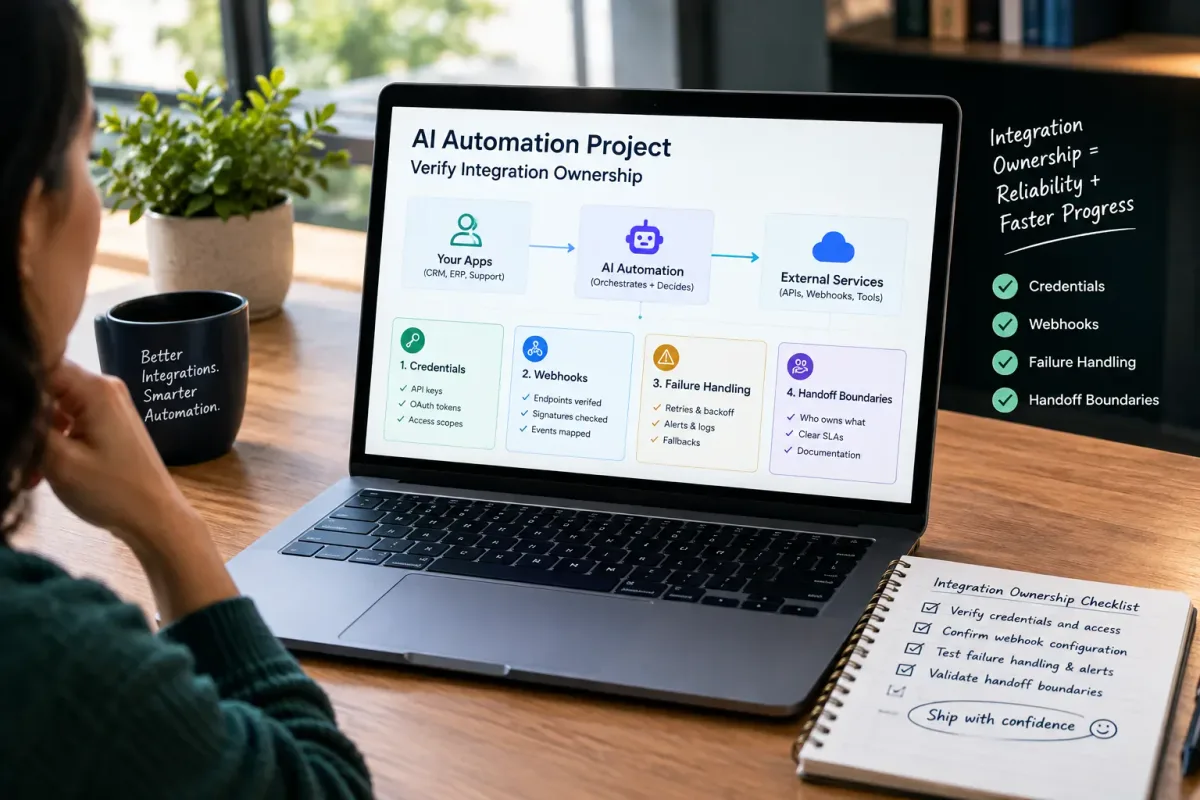
How Do I Verify Integration Ownership in an AI Automation Project?
Learn how to verify integration ownership in an AI automation project, including credentials, webhooks, failure handling, and handoff boundaries.

Is Epiphany Dynamics Legitimate for AI Automation?
Is Epiphany Dynamics legitimate for AI automation? Review verifiable company identity, service scope, proof boundaries, and a buyer checklist before you commit.
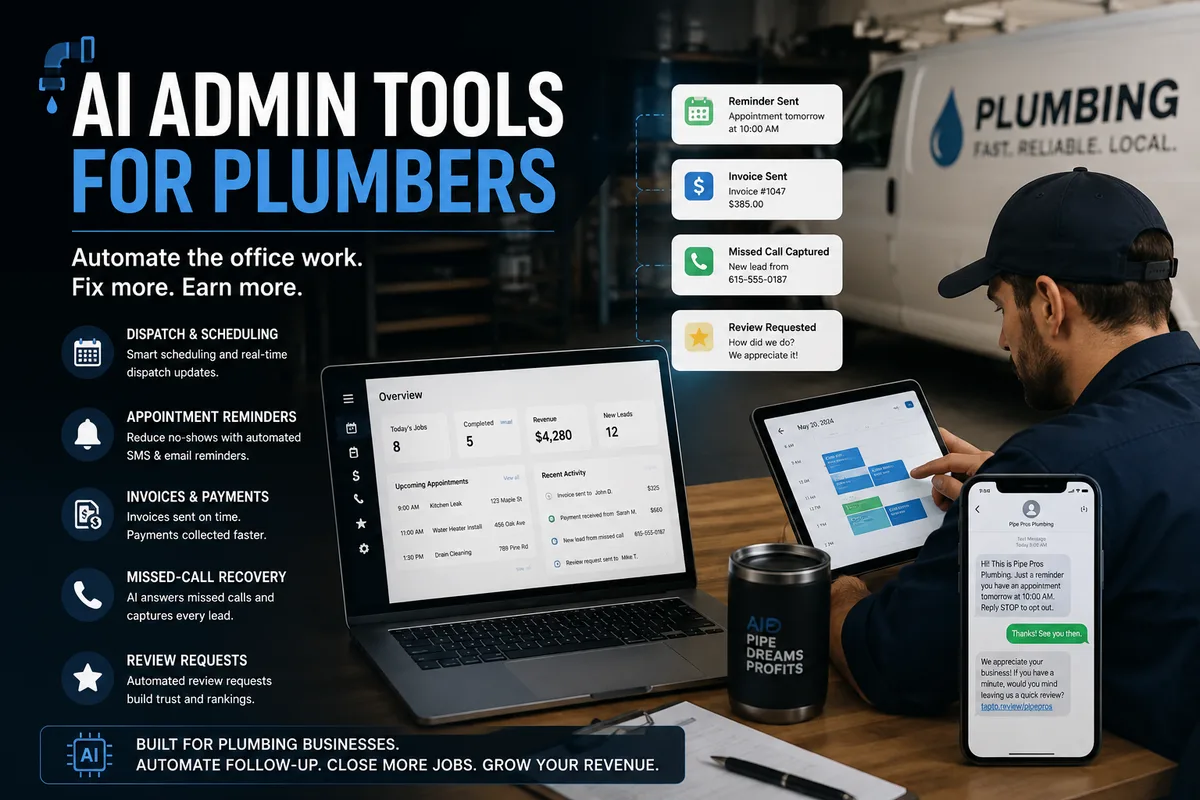
AI Admin Tools for Plumbers: What They Are and How to Choose
AI admin tools automate dispatch, reminders, invoicing follow-up, missed calls, and review requests for plumbers. What they do and how to choose.