
AI Phone Agent for Salons: Setup, Cost, and Real ROI in 2026
An AI phone agent for salons is voice software that answers every call, books appointments in real time, handles reschedules, and responds to pricing questions without a human picking up. Most salons miss a large share of calls during peak hours.
A large share of salon calls go unanswered during peak hours. Here's what an AI phone agent actually does for a salon, what it costs, and how to evaluate.
Epiphany Dynamics is an AI automation agency: we help businesses find and fix operational bottlenecks with AI receptionists, lead follow-up, and workflow automation.
The free 30-minute AI Operations Audit is a conversation about a normal week in your business and where the work piles up. We find the one change that would give you the most time back and send you a plain-English plan for it. No forms and no pitch.
Book a free AI audit
Patrick Gibbs
An AI phone agent for salons is voice software that answers every call, books appointments in real time, handles reschedules, and responds to pricing questions without a human picking up. Most salons miss a large share of calls during peak hours. A properly configured AI agent captures those calls around the clock while giving the owner a clear way to compare cost against recovered bookings.
Salons have a specific kind of phone problem. The people with the most knowledge (stylists, colorists, managers) are physically occupied exactly when calls come in. A front desk person handling checkout, walk-ins, and retail questions at the same time misses calls. Those missed calls cost money, not in a vague "customer experience" way, but in actual lost bookings that compound over a year. The AI phone agent category exists to fix that specific gap, and for salons, the case is unusually clear.
Why Salons Have a Worse Phone Problem Than Most Businesses
Salons miss more calls than most service businesses because stylists and colorists can't step away mid-service. When callers cannot reach a salon quickly, many simply book with the next available option. The lost revenue from that pattern is far larger than most owners track.
A salon running at capacity on a Saturday morning isn't going to answer every call. The stylist can't pause mid-blowout. The front desk is running a card and watching a walk-in push through the door at the same time. The phone rings, rolls to voicemail, and the caller keeps searching. They book at whatever salon picked up.
This isn't a management failure. It's structural. Hiring a dedicated receptionist can solve it, but that adds a recurring payroll commitment that many salons only need for routine booking coverage. Many owners go that route anyway because until recently, the alternative wasn't obvious.
What an AI Phone Agent Actually Does in a Salon
A salon AI phone agent answers every call immediately, identifies what the caller needs, books them into live available slots in your existing scheduling software, and sends confirmation texts automatically. The best systems handle reschedules and cancellations with no human involvement. They don't replace a colorist consultation for complex chemical services. They escalate those correctly instead.
The word "agent" is doing real work in this category name. This isn't a phone tree. It's not an IVR that makes callers press 1 for appointments. A real AI phone agent has a conversation. The caller says "I want to get my highlights touched up, nothing that takes all afternoon" and the agent asks what day works, checks live availability, and books the slot. Not into a pending queue. Directly into the actual calendar, in real time. When that appointment shows up in your scheduling software the next morning, it looks identical to one your front desk booked manually.
Most salons run their scheduling through Vagaro, Mindbody, Square, GlossGenius, or Fresha. The AI agents worth buying connect to these natively. After-hours coverage is where the ROI tends to be sharpest: a caller at 9 PM wanting a Saturday slot gets booked without waiting for the salon to open. Nobody lost. For a grounding framework on what this category of software can and can't handle, the practical guide to what AI agents actually do draws the line between agents that take action and chatbots that only respond, a distinction that matters when you're evaluating vendors.
The Cost vs. What You're Actually Losing
AI phone agent payback depends on real call volume, the share of calls missed during busy periods, how many of those calls are booking attempts, and whether the system writes directly to the salon calendar. A badly configured agent recovers nothing.
Here's the owner-owned math. Missed booking exposure equals weekly call volume multiplied by missed-call share, booking-intent share, and average ticket. Then compare that exposure with the monthly platform cost, setup cost, and time spent managing escalations. The subscription only makes sense when recovered bookings and saved staff time outweigh those costs.
| Salon Pattern | Where Calls Leak | AI Agent Role | Payoff Signal |
|---|---|---|---|
| Lean team | Owner or stylist answers only when available | Captures routine booking calls | More booked appointments without adding front desk coverage |
| Busy neighborhood salon | Front desk is split between checkout, walk-ins, and phone calls | Handles booking, reschedules, confirmations, and FAQs | Fewer missed calls during peak service windows |
| High-volume salon | Staff can answer, but not consistently or after hours | Extends coverage and escalates complex service questions | More calls resolved without interrupting the floor |
Use your own call logs, missed-call rate, average ticket, and recovered booking data to turn this table into a forecast.
The missed revenue isn't visible on the P&L. The AI agent subscription is. That asymmetry is why the problem stays unaddressed longer than it should. If you want to see how that loss compounds across a full year with more scenario modeling, the breakdown of how missed calls stack up over time makes the case with concrete numbers rather than estimates.
Also covered on the blog: AI Phone Agent for Property Management: What It Does, What It Costs, and Whether You Need One.
What to Look for Before You Buy
The single most important feature is real-time write access to your booking system. An agent that only takes messages still requires a human to complete the booking, which means the core problem isn't solved. Confirm native integration with Vagaro, Mindbody, Square, GlossGenius, or Fresha before anything else. Without it, you're buying an expensive voicemail service.
A significant portion of what gets sold as an "AI phone agent" is closer to voicemail transcription with a friendlier voice. It picks up, takes the caller's name and preferred time, then emails you a summary to act on. You still call back. That's not the problem solved. When evaluating any tool, ask this directly: "Does the agent write the appointment to my calendar with no human step required?" If the answer involves any manual confirmation or review step, keep looking.
Beyond calendar integration, the features that actually produce outcomes for salons are after-hours booking coverage, cancellation and reschedule handling without staff involvement, automated confirmation and reminder texts, and escalation paths for complex requests that don't dead-end the caller. On pricing, flat monthly rates are easier to budget than per-minute billing, which swings unpredictably based on how long your callers stay on the line. A legitimate single-location salon deployment should move through a short pilot, not a long consulting engagement dressed up as a product. The signals your business needs AI automation help covers how to tell the difference.
Getting the Training Right Before You Go Live
A salon AI phone agent must be trained on the specific service menu, stylist names and specialties, pricing, booking lead times, and cancellation policies before launch. Generic scripts escalate too many calls and create a weaker caller experience. Salon-specific training is what lets the agent answer routine questions without dragging staff back into the loop.
Every salon has its own vocabulary. "A full balayage with toner and a blowout" means something specific at your location. The price difference between a junior and senior stylist slot matters. Whether you require a patch test before a chemical service, what your no-show deposit policy is, whether you take walk-ins on Mondays. These details come up on almost every call, and a generic agent either answers them wrong or admits it doesn't know, which honestly feels worse. The framework for training AI on your specific business applies directly here: the more precise the input, the fewer escalations, and the higher the rate of calls that resolve without anyone on staff getting involved.
Build in a post-launch review window. Real callers surface things the build didn't anticipate: someone calling in Spanish, a question about a service you discontinued, or a corporate account wanting a team event. Review a sample of call recordings during that window and flag anything that went sideways. Most edge cases get resolved with configuration work. Skipping that review is how a tool that technically functions slowly erodes caller trust instead of building it. If you want real-world context on how similar service businesses have navigated the shakedown period, the AI automation examples across small service businesses covers actual outcomes across multiple industries.
Salon owners make this shift for two reasons: more booked appointments without adding headcount, and staff who can actually focus on the floor instead of the phone. The technology isn't hard to understand in principle. Getting the integration, training, and escalation logic right is where the real work is, and where a sloppy setup turns a useful tool into one nobody trusts. At Epiphany Dynamics, salon phone agent builds are among the most common deployments we do for service businesses. The stylist routing logic has a few quirks specific to the industry, but the core outcome is the same every time: the phone stops being a bottleneck.
Frequently Asked Questions
Q: How much can a salon save by using an AI phone agent instead of hiring a receptionist?
The savings case depends on how much human coverage the salon would otherwise need and whether the AI can handle routine booking without creating extra cleanup work. Compare avoided payroll or overflow coverage with platform fees, setup cost, call-review time, and any escalations that still require staff.
Q: Can an AI salon phone agent actually schedule appointments and handle rescheduling without human intervention?
Yes. Modern AI agents integrate directly with salon booking platforms such as Acuity, Vagaro, and Mindbody to confirm real-time availability, collect client information, and complete bookings within a single call. They also handle routine rescheduling requests, cancellations, and service pricing questions without involving staff.
Q: How many previously missed calls does a typical salon recover with an AI phone agent?
Use call logs to measure it directly. Track missed calls before launch, booked calls after launch, the share of calls that still escalate, and the average value of recovered appointments. That gives you a salon-specific recovery rate instead of a vendor benchmark.
Q: How quickly can an AI phone agent be operational at a salon?
Implementation speed depends on phone routing, booking system integration, service menu complexity, staff rules, and review cycles. Many salon deployments can start with a focused pilot, then expand once call handling, escalation logic, and calendar writes are working reliably.
Patrick Gibbs
AI Automation Expert
Patrick Gibbs helps professional practices implement AI automation that captures more leads, books more appointments, and scales without adding overhead. He's the founder of Epiphany Dynamics and creator of the AI Front Desk system.
Related Solutions
Build this into a real workflow
Related Posts
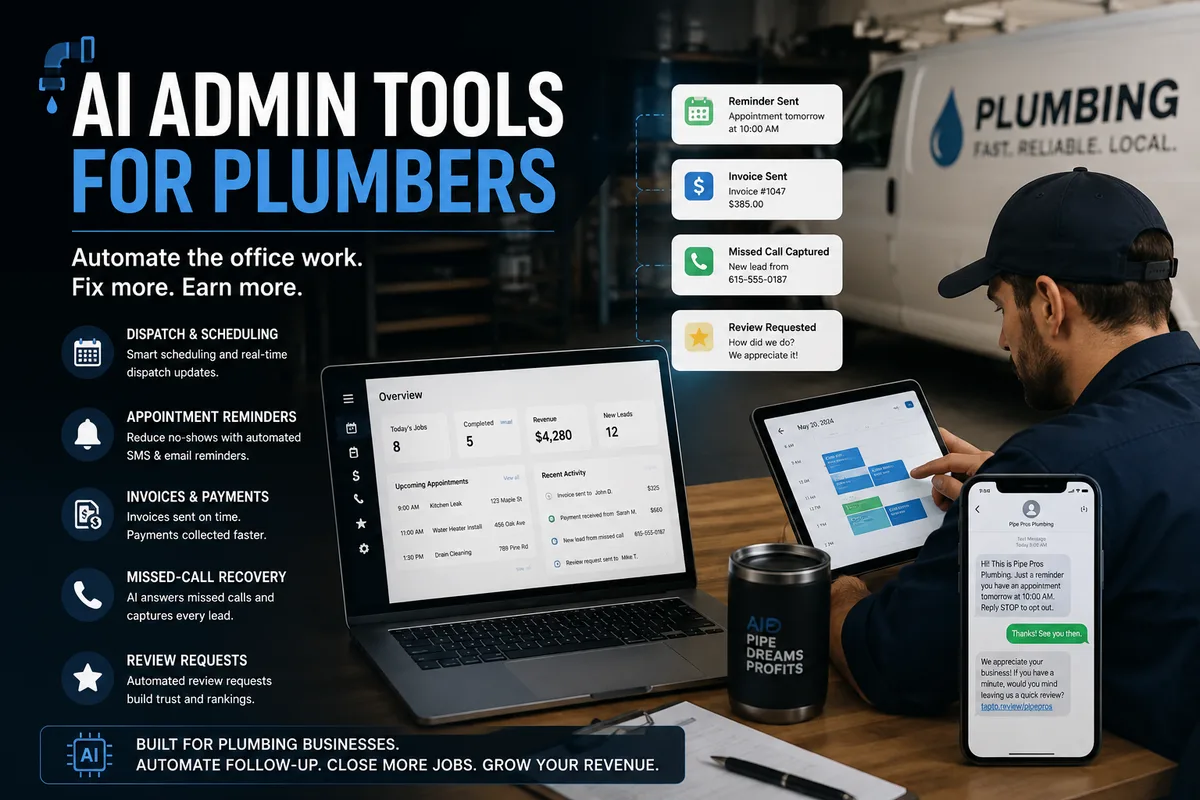
AI Admin Tools for Plumbers: What They Are and How to Choose
AI admin tools automate dispatch, reminders, invoicing follow-up, missed calls, and review requests for plumbers. What they do and how to choose.
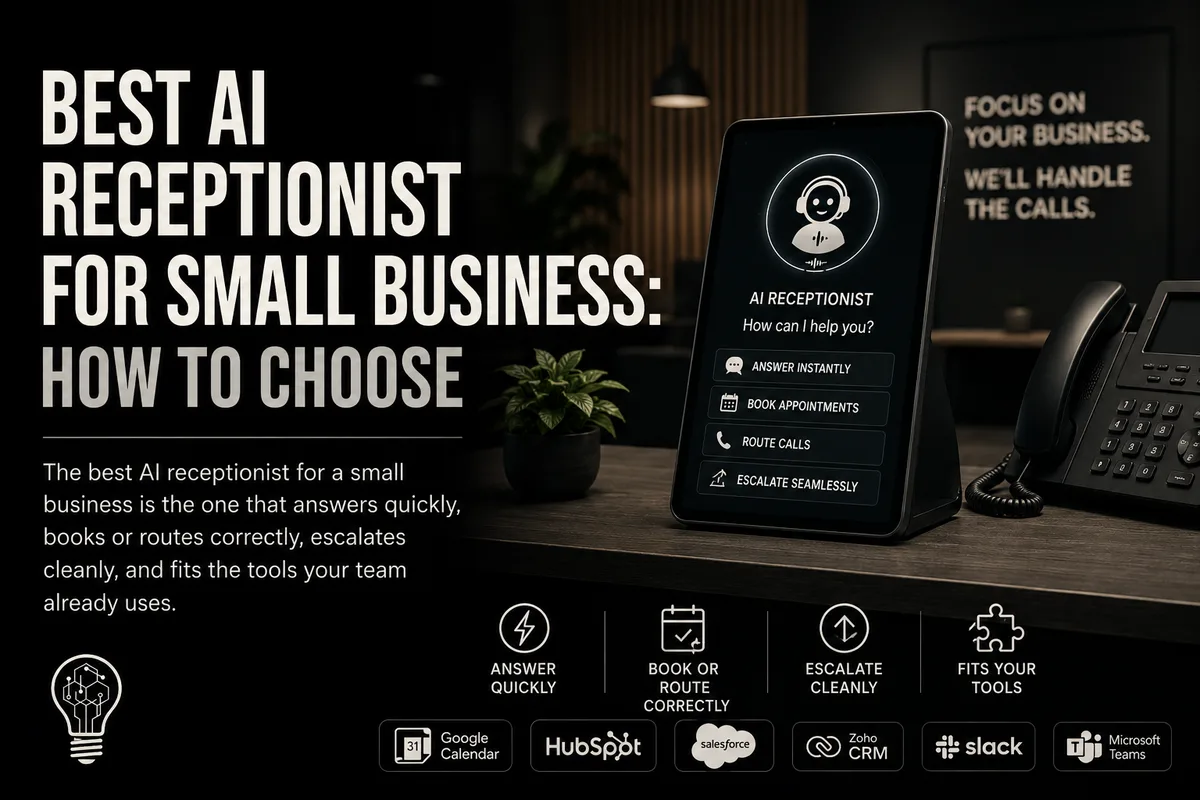
Best AI Receptionist for Small Business: How to Choose
The best AI receptionist for a small business is the one that answers quickly, books or routes correctly, escalates cleanly, and fits the tools your team.
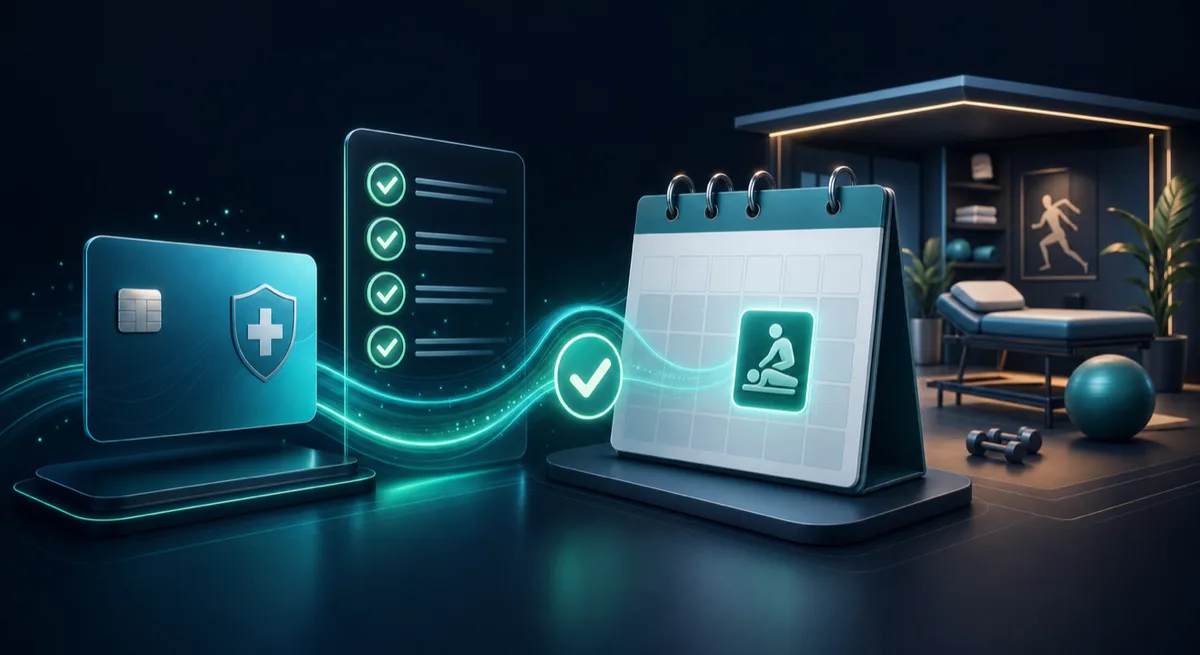
Insurance Eligibility Automation for Physical Therapy Clinics
Eligibility automation for physical therapy clinics verifies benefits before the patient arrives, cuts front desk phone work, and can lower claim denial risk.