
Best AI Receptionist for Medical Offices in 2026
The best AI receptionist for medical offices in 2026 handles appointment booking, patient intake, insurance verification, and after-hours calls with HIPAA-compliant infrastructure. Top picks include Epiphany Dynamics for full-featured medical office automation, and specialty-specific solutions for urgent care and multi-provider practices.
The best AI receptionist for medical offices automates appointment scheduling, patient intake, insurance verification, and after-hours call handling.
Epiphany Dynamics is an AI automation agency: we help businesses find and fix operational bottlenecks with AI receptionists, lead follow-up, and workflow automation.
The free 30-minute AI Operations Audit is a conversation about a normal week in your business and where the work piles up. We find the one change that would give you the most time back and send you a plain-English plan for it. No forms and no pitch.
Book a free AI audit
Patrick Gibbs
The best AI receptionist for medical offices in 2026 handles appointment booking, patient intake, insurance verification, and after-hours calls with HIPAA-compliant infrastructure. Top picks include Epiphany Dynamics for full-featured medical office automation, and specialty-specific solutions for urgent care and multi-provider practices. Medical offices use AI receptionists to reduce routine front desk phone volume and make after-hours calls less likely to disappear into voicemail.
Why Medical Offices Need an AI Receptionist
Medical offices handle heavy call volume, and a large share of those calls come outside normal business hours. Front desk staff spend a large share of their time on phone-related tasks, which means less time checking patients in, verifying insurance, and managing the waiting room. An AI receptionist solves both problems by handling the phone so the front desk can focus on in-person patient care.
The cost of not having an AI receptionist becomes clearer once you pull call logs. Count after-hours calls, estimate how many were appointment requests, and compare that opportunity cost against the cost of staffing, answering services, or AI coverage. The useful question is how much routine scheduling and phone work can be handled safely without adding more interruption to the front desk.
Patient experience also suffers without phone coverage. Difficulty reaching someone by phone is a recurring complaint across medical practices. Practices that implement AI receptionist systems should track patient satisfaction for phone access before and after launch instead of assuming the system improved the experience.
How We Evaluated the Best AI Receptionist for Medical Offices
We evaluated each solution on 12 criteria specific to medical office needs: HIPAA compliance, scheduling integration depth, insurance verification capability, multi-provider support, EHR integration, voice quality, after-hours handling, patient intake, pricing model, setup time, support quality, and verified medical practice results.
Evaluation Criteria
- HIPAA Compliance - BAA availability, encrypted data handling, and compliant call recording
- Scheduling Integration - Direct booking into the practice's EHR or scheduling system
- Insurance Verification - Automated eligibility checks and benefit verification at time of booking
- Multi-Provider Support - Handles provider-specific schedules, appointment types, and availability rules
- EHR Integration - Integration with Epic, Athenahealth, eClinicalWorks, or other major EHR platforms
- Voice Quality - Natural conversation flow, medical terminology understanding, and clear accent handling
- After-Hours Handling - Full 24/7 operation with escalation protocols for urgent calls
- Patient Intake - Digital intake forms, consent collection, and history gathering before appointments
- Pricing Model - Monthly fee without per-call or per-patient charges
- Setup Time - Days to full deployment including phone porting and protocol configuration
- Support Quality - Medical practice-specific onboarding and ongoing training
- User Reviews - Verified medical practice testimonials and satisfaction data
Best AI Receptionist Solutions for Medical Offices Quick Reference
Best Overall AI Receptionist for Medical Offices
Epiphany Dynamics AI Voice Receptionist is purpose-built for medical practices with HIPAA-compliant infrastructure, EHR integration, and specialty-specific scripts. It handles booking, rescheduling, cancellations, insurance questions, and after-hours calls. Medical practices can usually go live quickly when scheduling rules, call flows, and escalation paths are documented before configuration starts.
Best for Multi-Provider and Large Practices
For practices with 5+ providers, the AI receptionist needs to handle complex scheduling rules: which provider sees new patients, which appointment types go to which provider, and how to handle overflow. Epiphany Dynamics scales to multi-provider configurations with custom routing rules per provider and appointment type.
Best for Urgent Care and High-Volume Settings
Urgent care centers need an AI receptionist that can handle high call volume with rapid triage. The system must distinguish between appointment scheduling and medical urgency questions, routing suspected emergencies to human operators immediately while booking routine visits autonomously.
Best for Solo and Small Practices
Smaller practices benefit most from the time savings since the front desk is often the practice manager or a single staff member. An AI receptionist that handles a large share of calls gives that person the bandwidth to handle in-person patient needs without hiring additional staff.
For related material, see AI Receptionist for Chiropractors: What It Handles and How to Evaluate It.
How to Choose the Right AI Receptionist for Your Medical Office
Start by confirming HIPAA compliance and EHR integration compatibility. An AI receptionist that cannot integrate with your specific EHR or schedule will create more work than it saves. Once integration is confirmed, evaluate voice quality and scheduling accuracy through a live demo with your actual practice scenarios.
Cost depends on call volume, provider count, EHR integration depth, escalation rules, and whether insurance verification is included. To judge value, compare the subscription and setup cost against reduced front desk overtime, fewer missed after-hours appointment requests, and how much manual phone work the system actually absorbs.
Specialty matters in configuration. A dermatology practice needs different scripts and triage protocols than a cardiology practice or a pediatric office. Choose an AI receptionist provider that offers specialty-specific setup rather than a generic healthcare configuration.
Frequently Asked Questions
Is an AI receptionist for medical offices HIPAA compliant?
Yes, when properly configured. The AI receptionist must operate under a Business Associate Agreement, use encrypted data transmission and storage, and maintain compliant call recording. Always verify BAA availability before signing up.
Can an AI receptionist book appointments in my EHR?
Most AI receptionist tools integrate with major EHR platforms including Epic, Athenahealth, eClinicalWorks, Kareo, and PracticeFusion. The integration depth varies from direct scheduling to calendar sync. Verify your specific EHR is supported.
How much does an AI receptionist for medical offices cost?
Medical-grade AI receptionist pricing depends on call volume, number of providers, scheduling integration, insurance verification depth, and support requirements. The cost case depends on captured after-hours appointments, reduced staff overtime, and how much manual phone work the system actually absorbs.
Can patients tell they are talking to an AI?
Modern AI receptionist systems use natural voice technology that many patients do not recognize as AI. The system identifies itself as an automated assistant at the start of the call to maintain transparency. Most patients appreciate the quick service and do not mind interacting with AI for routine scheduling.
For more details on how AI receptionist technology works, see our AI receptionist tool evaluation guide and our healthcare automation resources. To discuss your practice's specific needs, book a consultation.
Patrick Gibbs
AI Automation Expert
Patrick Gibbs helps professional practices implement AI automation that captures more leads, books more appointments, and scales without adding overhead. He's the founder of Epiphany Dynamics and creator of the AI Front Desk system.
Related Solutions
Build this into a real workflow
Related Posts
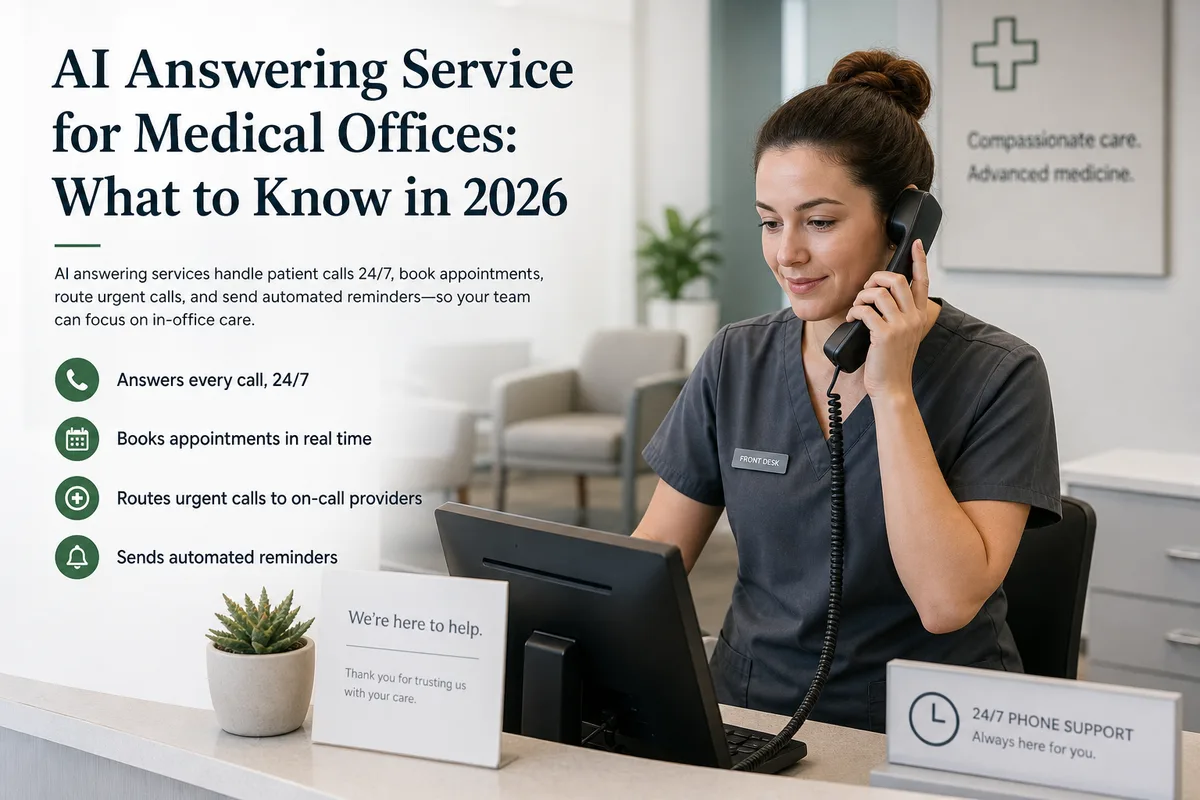
AI Answering Service for Medical Offices: What to Know in 2026
A large share of medical office calls go unanswered during peak hours. Here's what an AI answering service does for a practice, what HIPAA requires, and how.
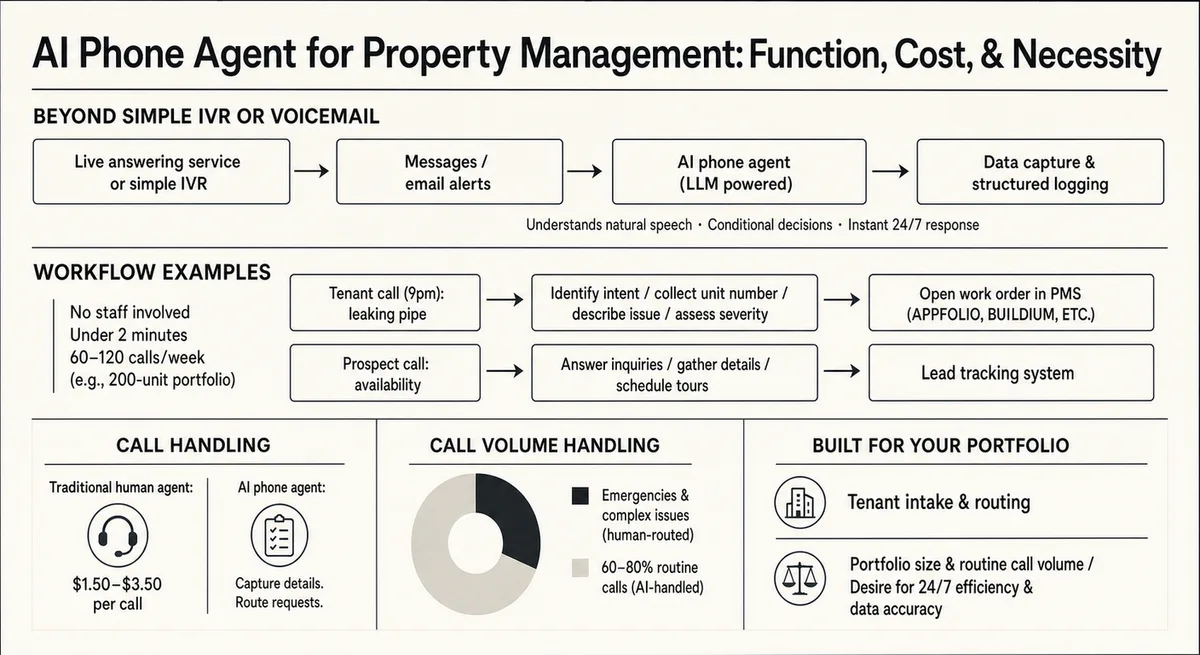
AI Phone Agent for Property Management: What It Does, What It Costs, and Whether You Need One
Property managers field heavy call volume, and a large share arrives after hours. AI phone agents answer, route, and log calls without adding live staff.
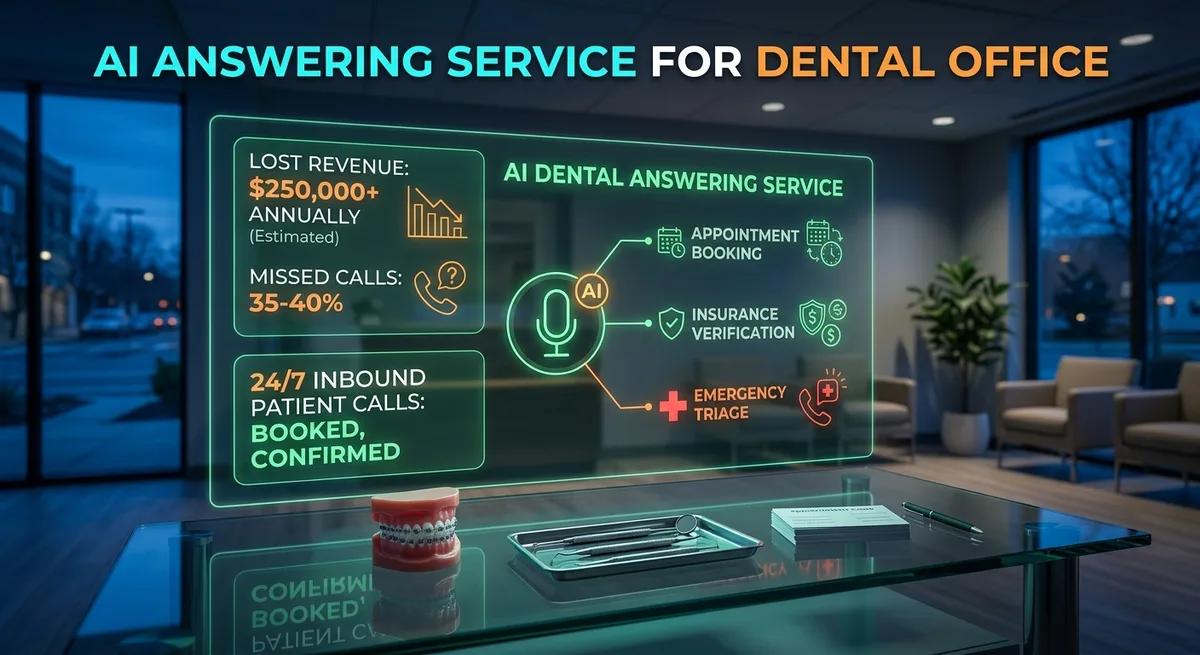
AI Answering Service for Dental Office: Cost, Setup, and ROI in 2026
Dental offices miss valuable inbound calls when the front desk is busy. An AI answering service can book appointments 24/7.