
How to Create an Appointment Booking System in 2026
To create an appointment booking system, choose a scheduling platform (Acuity Scheduling, Calendly, or Square Appointments), embed a booking widget on your website, sync it to your primary calendar, and configure automated SMS and email confirmation and reminder sequences. The reminder sequence is what turns a booking widget into an actual no-show reduction system.
Phone-only booking loses a large share of after-hours appointment requests. Here's how to build a system that captures bookings around the clock, meaningfully.
Epiphany Dynamics is an AI automation agency: we help businesses find and fix operational bottlenecks with AI receptionists, lead follow-up, and workflow automation.
The free 30-minute AI Operations Audit is a conversation about a normal week in your business and where the work piles up. We find the one change that would give you the most time back and send you a plain-English plan for it. No forms and no pitch.
Book a free AI audit
Patrick Gibbs
To create an appointment booking system, choose a scheduling platform (Acuity Scheduling, Calendly, or Square Appointments), embed a booking widget on your website, sync it to your primary calendar, and configure automated SMS and email confirmation and reminder sequences. The reminder sequence is what turns a booking widget into an actual no-show reduction system.
If many of your prospects expect to book appointments online and your business still requires a phone call during business hours, you are not just inconveniencing people. You are losing them. They close the tab, search for the next option, and book wherever a "Book Now" button appears. The business that wins is not always the one with the better service. It is the one that made it easier to say yes.
This is not a complex project. A booking system built correctly in an afternoon solves the scheduling problem for most service businesses. The challenge is knowing which components actually matter versus which ones are just feature-padding on a pricing page.
What Your Booking System Actually Needs
An effective appointment booking system requires four things: a public-facing calendar showing real-time availability, an automated confirmation sent immediately after booking, a reminder sequence deployed 24-48 hours before the appointment, and bidirectional calendar sync that prevents double-booking. Get these four working before adding anything else.
Most small businesses that set up booking software stop at step one. They get the calendar widget live, skip the reminder sequence, and wonder why their no-show rate does not budge. The reminder sequence is where the actual ROI lives. Automated SMS reminders can recover appointments without any additional marketing spend when they are configured clearly and tied to rescheduling.
The piece most people also skip is real-time availability sync. If your booking calendar is not pulling directly from your primary calendar (Google Calendar, Outlook, iCal), you will get double-booked within a week. One scheduling conflict erodes client trust faster than any marketing campaign can rebuild it. The sync needs to be bidirectional: bookings made online should block your calendar, and appointments you create manually should block the booking page automatically.
Step-by-Step: How to Set It Up
Setting up an appointment booking system takes five steps: map your service catalog with accurate durations and buffer times, choose and configure your platform, embed the booking widget on your website, connect it to your existing calendar, and build confirmation and reminder automations. Most service businesses complete all five steps in a single afternoon.
Start by writing out every service you offer with its exact duration, and be honest about buffer time. If a session needs reset time between clients, the booking slot should include that buffer instead of pretending the room is instantly ready. Platforms like Acuity and Calendly let you configure buffer time per service type, which handles this automatically. Skipping buffer configuration is one of the most common setup errors, and it surfaces as a scheduling problem soon after launch.
Once your service catalog is mapped, pick your platform, embed the widget on your website's contact page or a dedicated /book URL, and connect your calendar. Then build your confirmation message. This fires the moment someone books: confirm the date, time, service, and location, and include a cancellation link so clients can reschedule without calling you. After that, set up the reminder sequence. A day-before reminder and a same-day reminder is the standard structure that keeps the appointment visible. For the exact message templates and timing logic that perform best, the guide on automated appointment reminders that actually work in 2026 covers that layer in full detail.
Choosing the Right Platform
For most service businesses, an off-the-shelf scheduling platform covers the core use cases: booking, reminders, payment rules, and calendar sync. Calendly is optimized for B2B meeting scheduling, not service-based operations. Custom-built systems only justify the investment when platform limitations and workflow complexity become more expensive than a tailored build.
Here is a direct comparison of the platforms most commonly used by service businesses in 2026:
| Platform | Best For | Pricing Driver | Key Limitation |
|---|---|---|---|
| Acuity Scheduling | Service businesses, clinics, salons | Plan tier, reminders, intake forms, and payment options | UI feels dated; limited CRM features |
| Square Appointments | Solo operators, retail and service combos | Staff seats, payment stack, and Square ecosystem fit | Tied to Square tool stack; less flexible for complex workflows |
| Calendly | B2B meetings, consultants | Event type limits, routing, and integrations | Not built for multi-staff service scheduling or intake forms |
| Booksy | Beauty, wellness, barbershops | Marketplace visibility and vertical-specific features | Vertical-specific; limited outside beauty and wellness |
| Custom build | High-volume operations, unique workflows | Build scope, integrations, and ongoing developer support | Ongoing developer dependency and maintenance cost |
Calendly gets recommended constantly because it is the most recognizable name in scheduling, but it is genuinely designed for scheduling calls and demos. It does not handle buffer times, multiple service types, or client intake forms as well as Acuity does. For multi-staff operations, Acuity's team features handle staff routing (assigning appointments to specific team members based on individual availability) better than any free-tier option currently on the market. If you are already in the Square tool stack for payments, Square Appointments removes one billing integration and is a legitimate choice for solo operators.
The Reminder Sequence: Where the ROI Actually Lives
A two-message SMS reminder sequence, one sent before the appointment and one sent the same day, protects the booking by making confirmation and rescheduling easy. The business case depends on your missed appointments, average ticket value, and how many clients reschedule instead of ghosting.
Walk through the math with your own numbers. Multiply weekly appointments by your current no-show rate, then multiply missed appointments by average ticket value. Next, estimate how many of those missed appointments a clear reminder and reschedule link can realistically recover. The data on no-show rates and their real cost across service industries is useful context, but your own calendar is the source that matters before you buy software.
SMS outperforms email for reminders across every benchmark. Open rates for SMS run dramatically higher than email. That does not mean skip email. A confirmation email immediately after booking sets professional expectations and handles anything that requires a lot of text: directions, prep instructions, intake forms. SMS handles the reminder itself. Use both because they serve different functions in the sequence, and dropping either one leaves recovery on the table.
Read next: Appointment Reminder Automation for Small Business (2026 Guide).
When AI Belongs in the Picture
AI booking tools, including voice agents and chatbots that schedule through conversation, become worth adding when inbound call and chat volume exceeds what your staff can handle in real time. The AI layer is most useful when it books appointments after hours and on weekends without adding headcount.
An AI voice agent answers an after-hours call, determines what service the caller needs, checks live availability through the booking platform's API, and locks in the appointment. The caller gets a confirmation text. You start your day with a full calendar. That is a real, deployed workflow in 2026, not a concept. The guide on automated scheduling software covers how these integrations work in practice, including which platforms expose the APIs needed to make it happen cleanly.
Whether that layer makes sense depends entirely on volume. If you are answering the calls you receive, an AI layer may add cost without proportional return. If you are missing calls because your front desk is handling other clients, the calculation changes fast. The honest breakdown of AI versus a human receptionist walks through how to run that math for your specific call volume and average job value. The answer is not always "add AI," which makes it worth reading before committing either direction.
Testing Before You Go Live
Before launching, test the full booking flow as a customer: complete a test booking, verify the confirmation arrives in your inbox, click the cancellation link to confirm it works, check that the timezone displays correctly, and verify the appointment appears on your calendar. This is where most preventable launch problems surface.
The timezone issue trips up more people than it should. If your platform defaults to the wrong timezone, every booking shows up offset from what the customer expected. Real confusion, real missed appointments. Also check your intake form if you are using one. Keep it short enough that the customer finishes it; an abandoned booking is the same as a lost one.
Once the system is live, pull the no-show data after enough appointments have moved through the flow. If the rate is still higher than expected, the reminder sequence may not be running or may not be reaching clients. Check the delivery logs inside your platform. Most show whether messages were sent and opened. If SMS delivery is failing, the cause is usually carrier filtering or an invalid phone number format in the booking form. Fix the form field validation before assuming the automation is broken. Small configuration issues like that are almost always the culprit when a reminder sequence looks active but is not actually landing.
Getting a booking system live is the starting point. The businesses that get the most out of it are the ones that review what the data shows and actually make adjustments. If you want to connect this into a broader customer management workflow, the guide on managing customers with AI scheduling covers where the booking system fits inside a larger automation stack. At a certain point, the booking system becomes the entry point for every downstream workflow in the business, from follow-ups to reviews to rebooking, and that is where the compounding value shows up. Agencies building these full stacks, like Epiphany Dynamics, typically start with exactly the foundation covered here before layering anything else on top.
Ready to set up AI appointment booking for your business? Book a free consultation with Epiphany Dynamics and we will help you choose the right platform, configure your booking flow, and connect it to your calendar and CRM. Explore our tool guides and industry-specific setups for more details.
Frequently Asked Questions
Q: How much can automated appointment reminders reduce no-shows?
Automated SMS reminders can cut no-show rates substantially. On a busy calendar, recovering even a couple of appointments regularly adds up without additional marketing spend, making reminder sequences one of the highest-ROI booking system components.
Q: How long does it take to set up a complete appointment booking system?
Setup time depends on your service catalog, calendar rules, intake forms, payment settings, and reminder logic. Most of the work involves configuring reminder timing and calendar integrations rather than placing the widget itself.
Q: What's the business impact if I don't offer online appointment booking?
Many consumers expect to book appointments online, meaning businesses without a "Book Now" option lose potential customers to competitors who make booking easier. When a prospect can't book on your website, they often search for the next available option and complete their booking elsewhere.
Q: How do I prevent customers from booking the same time slot twice?
Bidirectional calendar sync between your booking software and primary calendar (Google Calendar, Outlook, etc.) prevents double-bookings by updating availability in real-time across all platforms. Without this integration, you risk accepting online bookings for slots you've already committed to via email or phone, creating scheduling conflicts that damage customer trust.
Patrick Gibbs
AI Automation Expert
Patrick Gibbs helps professional practices implement AI automation that captures more leads, books more appointments, and scales without adding overhead. He's the founder of Epiphany Dynamics and creator of the AI Front Desk system.
Related Solutions
Build this into a real workflow
Related Posts
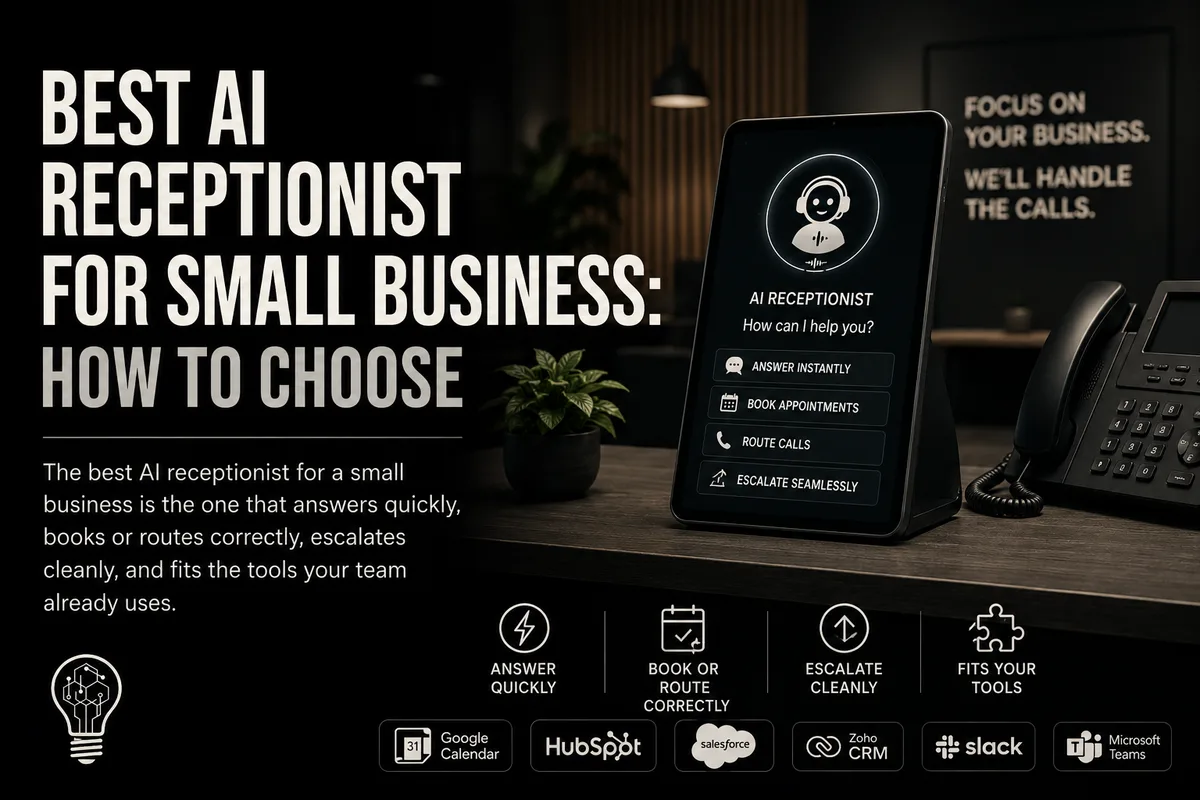
Best AI Receptionist for Small Business: How to Choose
The best AI receptionist for a small business is the one that answers quickly, books or routes correctly, escalates cleanly, and fits the tools your team.
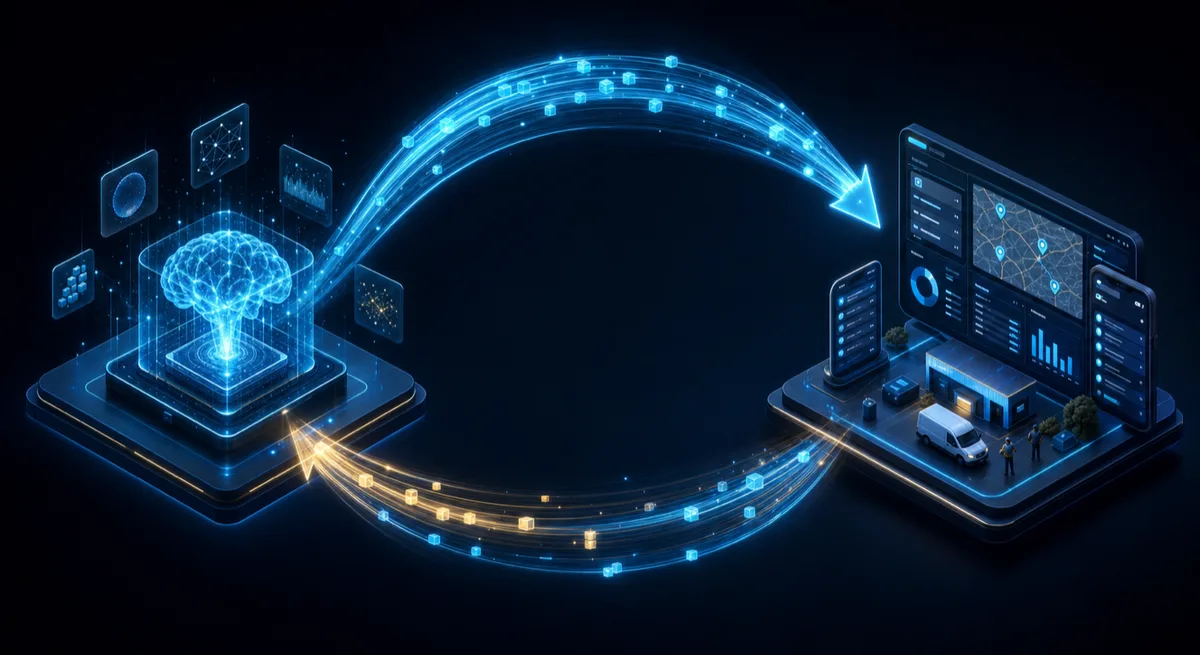
What Two-Way Sync Between AI and ServiceTitan Looks Like in Practice
Two-way sync between AI and ServiceTitan means data flows both directions: the AI reads live job and customer data from ServiceTitan, and writes new bookings.
Appointment Reminder Automation for Small Business (2026 Guide)
For a service business with a meaningful no-show rate, the revenue leak is worth measuring. This guide covers how reminder automation works, which tools to.