
No-Show Rates for Doctor Appointments: The Real Cost in 2026
Doctor no-show rates vary widely by specialty, patient population, and scheduling process. The U.S. healthcare system loses substantial capacity to missed appointments.
Doctor appointment no-shows are usually a communication and scheduling problem before they become a revenue problem. Here's what actually drives them and what.
Epiphany Dynamics is an AI automation agency: we help businesses find and fix operational bottlenecks with AI receptionists, lead follow-up, and workflow automation.
The free 30-minute AI Operations Audit is a conversation about a normal week in your business and where the work piles up. We find the one change that would give you the most time back and send you a plain-English plan for it. No forms and no pitch.
Book a free AI audit
Patrick Gibbs
Doctor no-show rates vary widely by specialty, patient population, and scheduling process. The U.S. healthcare system loses substantial capacity to missed appointments. Each no-show can cost the practice direct visit revenue, not counting the overhead that keeps running anyway.
If that seems abstract, pull your own schedule data. Count missed visits, multiply by your average revenue per visit, and then add the overhead that kept running during the empty slot. Most practices treat this as background noise. It's actually one of the most solvable financial problems in healthcare operations, and the tools to fix it are often less complex than teams assume.
What No-Show Rates Look Like Across Specialties
No-show rates vary sharply by specialty. Behavioral health, primary care, dental, and surgical subspecialties each show different patterns because the patient populations, visit urgency, and scheduling lead times differ. Appointments scheduled far in advance are usually riskier than appointments booked close to the visit date.
National averages hide a lot of variation. A suburban family medicine practice with stable, long-term patients may look very different from a Medicaid-heavy urban health center. The number that actually matters for your planning is your rate, measured from your own scheduling data, not a benchmark from a trade journal.
The patterns that show up consistently across specialties are predictable enough to build around. New patient appointments often no-show at higher rates than established ones. Monday and Friday slots can behave differently from mid-week. Afternoon appointments may behave differently from morning. If you track no-shows by day, time, and appointment type, you'll find clusters that make strategic overbooking more precise than a blanket add.
| Specialty | No-Show Pattern | Cost Driver |
|---|---|---|
| Primary Care | Often tied to access, lead time, and reminder quality | Visit revenue plus fixed clinical overhead |
| Dental | Often tied to recall timing and appointment friction | Lost chair time and production capacity |
| Behavioral Health / Psychiatry | Often higher risk because patient barriers are more complex | Provider time and continuity-of-care disruption |
| OB/GYN | Varies by visit type and scheduling lead time | Visit revenue and downstream scheduling disruption |
| Urgent Care | Usually lower when demand is immediate | Unused slot capacity and staffing overhead |
What a No-Show Actually Costs (The Math Most Practices Skip)
A practice with a large no-show problem loses more than visit revenue. The actual cost is higher because fixed overhead, including staff wages, rent, and equipment, continues accruing during empty slots whether a patient shows or not.
Here's the part that gets overlooked in most no-show analyses. If you only count the missed charge, you miss the staff time, room time, provider availability, and downstream scheduling disruption. Multiply your own overhead and missed-slot count to get the number that matters for your practice.
Overbooking is the traditional patch. Adding extra appointments gambles that no-shows will balance out on average. They do, until a high-show day hits and providers run behind. Patients who wait too long leave before being seen, or they don't come back. The math may work on average; the patient experience breaks on bad days. That's why using AI reminders to cut no-shows significantly is a fundamentally better approach than compensating for them after the fact.
Why Patients Miss Appointments (The Actual Data)
The biggest reasons patients miss appointments are usually forgetfulness, scheduling conflicts, feeling better or deciding care is not needed, and transportation friction. Many no-shows can be intercepted with a timely reminder or a frictionless rescheduling option built into that reminder.
The forgetfulness pattern deserves attention. Many no-shows are patients who intended to come and had nothing in between to reinforce the commitment. The appointment was on their calendar in theory. In practice, it fell out of their working memory somewhere between the booking call and the appointment day. That's not a patient engagement failure. That's a communication systems failure on the practice side.
The scheduling conflict group breaks down usefully. Some of those patients want to reschedule but don't act because calling the office feels like effort. They'll get around to it. Often they don't. A reminder that includes a one-tap rescheduling link captures that group before they ghost. The goal isn't just alerting patients that an appointment exists. It's giving them an easy path to either confirm or redirect in the moment, without picking up the phone.
What Actually Reduces No-Show Rates
Automated multi-touch reminder sequences reduce avoidable no-shows by giving patients repeated chances to confirm or reschedule. SMS often works better than email for short confirmation prompts. Reminders sent earlier give patients more time to act, and one-tap reschedule links reduce the friction that turns a conflict into a silent no-show.
The earlier reminder window matters because it gives patients time to act on it. A reminder the night before is too late for many people to rearrange their schedule. Several days out gives them a real window to reschedule if something conflicts, which is far better for the practice than a silent no-show the next afternoon. Practices should test an earlier reminder followed by a 24-hour confirmation request against their own baseline.
Two-way communication matters more than reminder frequency alone. "Your appointment is tomorrow at 2pm" is weaker than "Your appointment is tomorrow at 2pm. Reply YES to confirm or NO to reschedule." The second version catches problems before they become empty slots. It also gives your team advance notice to fill the opening from a waitlist. For a practical look at which free and low-cost tools actually deliver this two-way flow, automated appointment reminders that work in 2026 walks through the options without the upsell.
Also covered on the blog: AI Scheduler for Botox Clinic Appointments: What Actually Works.
Physical therapy practices are a strong fit for this playbook because patients return repeatedly across a plan of care, so every missed visit disrupts the treatment schedule as well as the revenue. The AI tools for physical therapy practices include the reminder, rescheduling, and home exercise program systems that keep that visit cadence on track.
Building a System That Actually Holds
The most effective no-show reduction workflows combine an early text reminder, a 24-hour confirmation request, and a same-day check-in message. Practices implementing all three touchpoints can reduce avoidable no-shows without adding staff time to manage the process manually.
The hardest part isn't the technology. It's getting the workflow to run without someone on staff triggering it manually each time. If the process requires human action to fire, it won't fire consistently. Volume fluctuates, staff get pulled in other directions, and reminders start missing on the exact days they're most needed. The only version that holds long-term is fully automated, triggering from the appointment record without anyone pressing a button.
Most practice management systems (Epic, Athena, Kareo, Jane) include reminder modules. The problem is default configurations are typically minimal: one 24-hour reminder, often via email, with no reply option. That's the floor, not a workable setup. The dental sector has been ahead on this for years, and AI tools built for small dental practices show how much operational value sits in reminder, rescheduling, and recall workflows. The rescheduling flow is equally important. When a patient cancels via the reminder system, can they immediately book a replacement slot? If the answer is "they have to call," you're losing recapture opportunity that was right there.
The ROI Calculation Worth Running Before You Buy Anything
A practice with a large no-show leak can model how much revenue a well-implemented reminder system might protect. The ROI depends on your actual no-show count, average revenue per visit, fixed overhead, tool cost, and whether the system gives patients a frictionless way to confirm or reschedule.
Run the math for your own numbers before evaluating any tool. Take last month's no-show count, multiply by your average charge per visit, and you have your monthly leak. Then test recovery assumptions against real appointment data rather than treating any vendor benchmark as guaranteed.
| Input | What to Use | Why It Matters |
|---|---|---|
| Appointment volume | Your recent completed schedule | Sets the size of the problem |
| No-show count | Your own missed-visit report | Measures the actual leak |
| Revenue and overhead per slot | Your practice economics | Shows what an empty slot costs |
| Reminder system cost | Current vendor quote or internal build cost | Determines the break-even point |
| Recovered appointments | Measured after rollout | Separates real improvement from vendor promises |
Be careful with recovery assumptions. Appointments recovered into already-full days are only additive if capacity exists, and some patients who reschedule will miss again. The full picture of where AI is moving in healthcare communication beyond reminders is worth reviewing in the data on voice AI adoption in healthcare practices, which covers what's actually gaining traction in 2026 across specialties.
No-shows are not inevitable. They're the predictable result of a communication gap between when a patient books and when they're supposed to show up. The practices making real progress are running three-touch reminder sequences, connecting cancellation responses to waitlist logic, and automating the rescheduling step so a cancelled slot fills without staff involvement. None of it is complicated. It requires actually building the workflow and letting it run rather than accepting empty slots as an operational given.
Frequently Asked Questions
Q: Why do psychiatry and behavioral health appointments have such high no-show rates?
Psychiatry and behavioral health specialties often carry higher no-show risk than many procedural or surgical specialties. Complex barriers like transportation challenges, stigma, appointment anxiety, and the nature of mental health conditions themselves create friction that increases missed appointments.
Q: Does the time of day affect whether patients will skip their appointments?
Yes. Afternoon appointments can show higher no-show risk than morning slots in many practices. Track your own schedule by time of day, then use the pattern to assign higher-risk patients to lower-risk windows or reserve later availability for confirmed and responsive patients.
Q: What is the actual financial cost of a single doctor's no-show?
A single no-show in primary care costs the visit revenue plus overhead that continues regardless. The lost revenue depends on your average charge per visit, your fixed overhead, and whether that slot can be filled from a waitlist.
Q: Should practices book appointments closer to the visit date to reduce no-shows?
Appointments scheduled far in advance often carry more no-show risk than appointments booked closer to the visit date. This suggests same-week scheduling and stronger reminder strategies may be more effective than traditional long-range booking, particularly in high-risk specialties.
Patrick Gibbs
AI Automation Expert
Patrick Gibbs helps professional practices implement AI automation that captures more leads, books more appointments, and scales without adding overhead. He's the founder of Epiphany Dynamics and creator of the AI Front Desk system.
Related Solutions
Build this into a real workflow
Related Posts
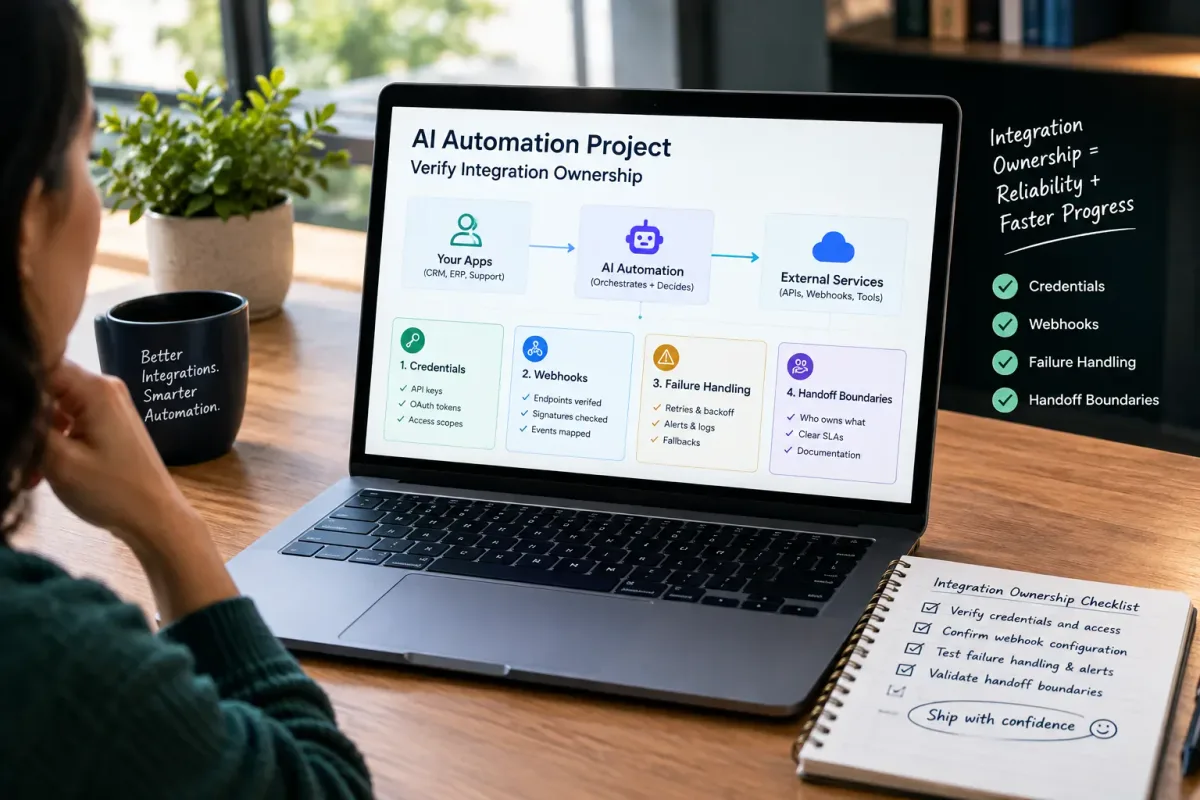
How Do I Verify Integration Ownership in an AI Automation Project?
Learn how to verify integration ownership in an AI automation project, including credentials, webhooks, failure handling, and handoff boundaries.
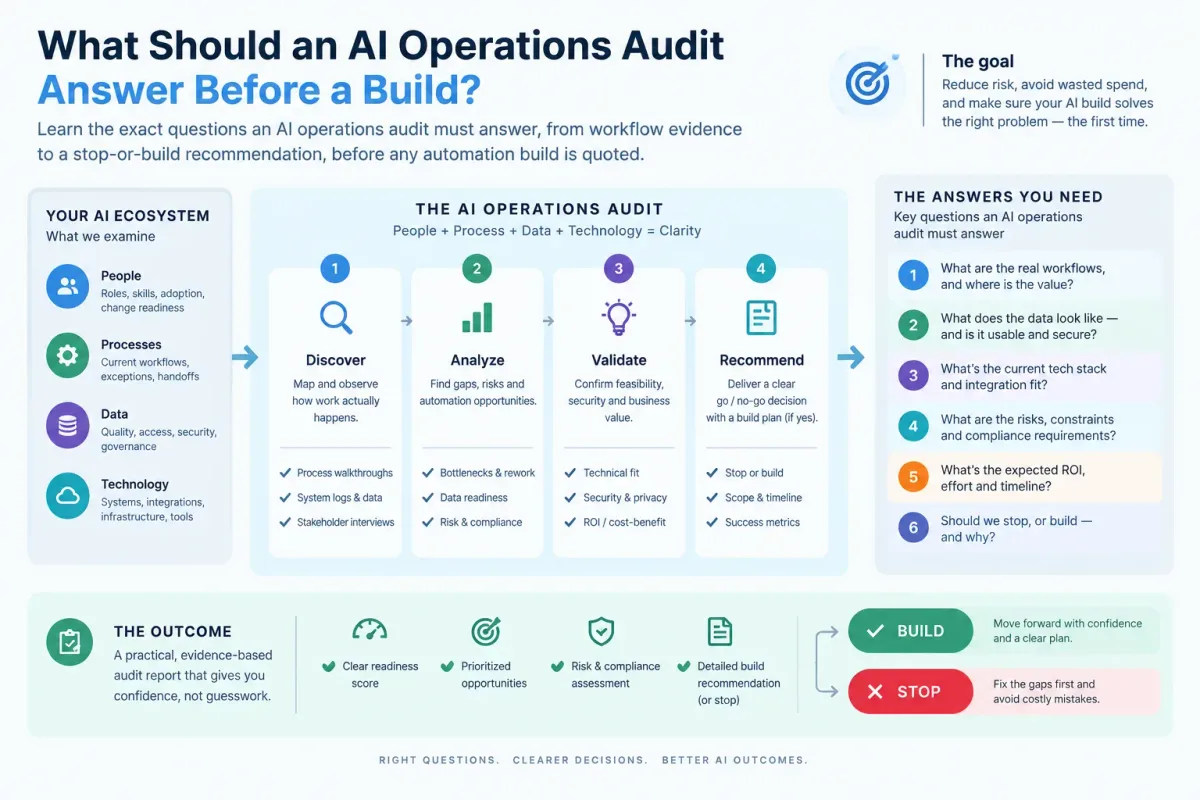
What Should an AI Operations Audit Answer Before a Build?
Learn the exact questions an AI operations audit must answer, from workflow evidence to a stop-or-build recommendation, before any automation build is quoted.

Who Is Patrick Gibbs and What Does Epiphany Dynamics Build?
Patrick Gibbs founded Epiphany Dynamics to help small and midsize businesses replace missed opportunities and manual busywork with practical AI automation.