
Win-Back Campaign Automation for Inactive Clients
Inactive clients can convert meaningfully better than cold prospects when approached correctly, because the trust barrier is already gone and the objections were cleared when they were originally a customer. Many quiet accounts aren’t actually gone: they’re waiting for a well-timed message that nobody’s sent.
Inactive clients convert at a meaningfully higher rate than cold leads when approached correctly. Here's how to build automated win-back campaigns that.
Epiphany Dynamics is an AI automation agency: we help businesses find and fix operational bottlenecks with AI receptionists, lead follow-up, and workflow automation.
The free 30-minute AI Operations Audit is a conversation about a normal week in your business and where the work piles up. We find the one change that would give you the most time back and send you a plain-English plan for it. No forms and no pitch.
Book a free AI audit
Patrick Gibbs
Inactive clients can convert meaningfully better than cold prospects when approached correctly, because the trust barrier is already gone and the objections were cleared when they were originally a customer. Many quiet accounts aren’t actually gone: they’re waiting for a well-timed message that nobody’s sent. This guide covers how to build automated win-back campaigns that run in the background indefinitely, including how to define “inactive” correctly for your business type and the sequence structure that recovers lapsed clients at scale.
The Math Nobody Talks About
Every service business has some level of client churn. Some of it is unavoidable: people move, budgets shift, priorities change. But many of those quiet accounts aren’t actually gone. They’re just waiting for a reason to come back, and nobody’s given them one.
The research here is counterintuitive. The probability of selling to a lapsed customer is meaningfully higher than selling to a cold prospect. People who already bought from you once are often much warmer than strangers. The trust barrier is gone. The objections were cleared before. What’s left is timing and a well-placed message.
The reason most businesses don’t act on this is simple: manually reaching out to a dormant list is miserable, slow work - and it’s the first thing that gets skipped when things are busy. Automation removes that excuse entirely. For salons and beauty businesses specifically, our guide on how salon automation increases client lifetime value covers how win-back fits into a complete retention stack. A well-built win-back campaign runs on its own while you’re onboarding new clients, handling operations, or sleeping. Done right, it’s not a project. It’s a revenue stream that runs in the background indefinitely.
What “Inactive” Actually Means, and Why the Definition Matters
Before building any automation, you need a precise definition of what “inactive” means for your specific business. A gap that looks alarming in a high-frequency service like a salon might be totally unremarkable for a CPA who only sees clients during tax season. Getting the threshold wrong causes real problems - trigger it too early and you’re annoying clients who are perfectly fine; too late and you’re chasing someone who’s mentally moved on.
Expected purchase frequency by business type varies widely:
| Business Type | Expected Frequency | Inactive Threshold |
|---|---|---|
| Med spa / aesthetics | Recurring treatment cycle | Missed expected rebooking window |
| Personal training / fitness | High-frequency session cycle | Noticeable gap in normal attendance |
| Home services (HVAC, pest control) | Seasonal or maintenance-based cycle | Missed seasonal service window |
| Professional services (legal, accounting) | Project-based or recurring annual need | No new matter, renewal, or annual touchpoint |
| E-commerce / retail | Variable by category | Longer gap than normal purchase pattern |
The second dimension is value segmentation. Not every lapsed client warrants the same level of effort. A high-lifetime-value client deserves a more personalized, multi-touch sequence. A small one-time buyer may only justify a lighter reactivation path. Your automation should handle both, but route them differently based on lifetime value, not just recency. For med spas specifically, our guide to automating customer follow-ups covers the complete retention playbook from first visit through reactivation.
Further reading: Client Retention Automation for Beauty Salons: The Real ROI.
How Win-Back Automation Actually Works
Win-back automation runs inside your CRM or marketing platform - tools like Go High Level, ActiveCampaign, Klaviyo, or HubSpot. The core mechanism is a trigger: when a contact crosses the inactivity threshold you’ve defined, they automatically enter a pre-built sequence. No manual action required. The sequence runs, responses get tracked, and re-engaged clients drop back into your active flow.
A well-structured multi-touch win-back sequence looks like this:
Opening touch. A re-engagement email that reads like a genuine check-in, not a broadcast. Skip the discount at this stage. “We haven’t seen you in a while” framing works better than promotional copy here because it feels like a message from a person, not a drip campaign. The goal is to get them to open and think “huh, I should reply.”
Value-led follow-up. If they didn’t engage with the first message, send something useful. Reference what they originally came to you for. Include a new service update, a useful tip related to their past purchase, or a recent result from your work. You’re reminding them why they chose you, not pushing them to buy again yet.
Incentive touch. Now the incentive makes sense. An offer lands differently after genuine check-ins than it does cold. At this point in the sequence, clients who open it are already warm, and the offer just removes the last bit of friction.
Personal outreach path. If email hasn’t converted them, automate a task that routes higher-value accounts to a human for a brief personal call or individualized SMS. Some platforms send this automatically. For segments with significant lifetime value, real human contact can lift results.
Sunset email. A clean, honest close: something along the lines of “We’ll stop reaching out if we don’t hear back - no hard feelings.” This sounds like giving up. It performs like a close. The “about to remove you” framing can create genuine urgency without a countdown timer that feels fabricated.
Our lead nurturing best practices guide covers the same multi-touch sequencing principles for prospects who haven’t converted yet. After the sequence completes, clients either re-enter your active flow or get tagged as churned and added to a low-frequency long-term nurture list - maybe one email per quarter. You’re not deleting them. You’re just not burning resources on daily touches for someone who’s clearly not ready right now.
What to Actually Say
Messaging is where most win-back campaigns collapse. Businesses send discount blasts or “we miss you” copy that reads like it was written by a form letter generator. Even when it technically includes a first name, it doesn’t feel personal.
A few principles that consistently improve response rates: reference the last interaction specifically. “Your last appointment was in October” outperforms “it’s been a while” because specificity signals you actually have a record of them as a customer, not just their email address in a database. Clients respond to being remembered.
Acknowledge that life gets busy without making them explain themselves. When inactivity is framed as understandable rather than a gap that needs justifying, people feel less awkward about returning. Removing that awkwardness removes a real barrier.
Make the next step as frictionless as possible. Win-back emails that end with “reply to schedule” often underperform those with a direct booking link. Every additional click you require costs you conversions. If your platform supports it, pre-populate their contact information so confirming an appointment feels effortless.
Keep the copy short. The goal is to feel like a note from a real person. A newsletter-length email signals “this went to a list,” and that kills the personal framing immediately.
Performance and ROI
Win-back campaign performance varies by industry, list health, offer quality, and how cleanly the campaign excludes people who should not receive it.
| Metric | What to Watch | What Strong Performance Looks Like |
|---|---|---|
| Re-engagement email open rate | Whether lapsed clients recognize the sender and subject line | Open rates improve when segmentation and personalization improve |
| Click-through rate | Whether the message gives them a clear, low-friction next step | Clients click the booking or reply path without extra explanation |
| Overall sequence reactivation rate | How many lapsed clients return to active status | Reactivation improves by segment, not just across the whole list |
| Sunset email response rate | Whether the close creates honest urgency | Some otherwise quiet clients reply when the sequence is about to stop |
The ROI math is direct. Start with the number of inactive clients, multiply by your expected reactivation rate, then multiply by average transaction value and expected future value. The point is not to use generic benchmarks; it is to model your own dormant list and decide whether the recovered revenue justifies the campaign.
The cost to run this depends on the platform you already use, list size, SMS/email volume, segmentation complexity, and whether you build it yourself or hire support. The real investment is configuring the trigger logic, writing the sequence, testing suppression rules, and maintaining the campaign as your offers change.
One metric worth tracking beyond reactivation rate: the re-churn rate, meaning how many re-engaged clients go quiet again soon after returning. If that number is high, your core service or post-visit follow-up process has a problem that win-back automation can’t solve. Automation is good at surfacing patterns. It doesn’t fix the underlying reason people leave.
Common Mistakes That Kill Results
Opening with a discount is probably the most common error. Clients who only return for deals have lower lifetime value, and you’re training your audience to wait for offers rather than booking at full price. Use the incentive as the third or fourth touch after you’ve already re-established some goodwill.
Using the same message across all segments guarantees mediocre results. A high-value long-term client who went quiet needs different copy, different timing, and probably a different channel than someone who visited once and never returned. Automation doesn’t mean uniform treatment - it means automating differentiated treatment at scale.
Missing suppression logic causes real damage. Clients who unsubscribed, left a negative review, or are in an active dispute need to be excluded before the sequence fires. Most platforms handle this with suppression lists, but they only work if you keep them current. This is worth checking explicitly before you launch.
Letting the sequence expire without a next step is also a common oversight. When win-back automation ends without a re-engagement, those contacts shouldn’t just vanish from your marketing entirely. Adding them to a low-frequency nurture list keeps you in their peripheral awareness without becoming noise.
What You Actually Need to Build This
You don’t need an enterprise platform or a dedicated marketing team. Most service businesses can run effective win-back automation on tools they’re already paying for. Go High Level, Klaviyo, and ActiveCampaign all have the trigger-based sequencing this requires. The actual technical requirements are: a CRM that tracks last-activity dates, the ability to trigger an automation based on a date condition, email and SMS sending capability, and a trackable booking or contact link.
The integration that makes this work cleanly is connecting your booking system to your CRM so that last-activity dates stay accurate. If those are separate tools, you’ll need a middleware layer - Zapier, Make.com, or a native integration - to sync them. Without that, your trigger logic fires on stale data, and the whole sequence becomes unreliable.
Setup effort depends on platform familiarity, list hygiene, segmentation depth, suppression logic, and whether SMS is included. Either way, the goal is a campaign that continues generating recovered revenue without daily manual attention. For businesses that want this built and maintained without the configuration overhead, AI automation specialists can speed up the setup and ensure the logic holds up as the business grows.
Frequently Asked Questions
Q: What is the conversion rate when reaching out to inactive clients?
Lapsed customers often convert better than cold prospects because the trust barrier is lower, the objections were cleared before, and what’s left is timing and a well-placed message at the right moment. Track your own reactivation rate by segment instead of relying on a generic conversion benchmark.
Q: How do I define “inactive” for my specific business?
The right threshold depends on your expected purchase frequency. A med spa or aesthetics client may become inactive much sooner than a home services client whose normal purchase cycle is seasonal. Set the threshold based on what’s normal for your business, not a generic benchmark. Triggering the sequence too early annoys healthy clients; too late means you’re chasing someone who has mentally moved on.
Q: What is the proven win-back sequence structure?
Start with a genuine check-in with no discount. Follow with value-led content relevant to their past purchase, not a promotional push. Add an incentive only after the relationship has been re-warmed. Route high-value accounts to personal outreach or SMS when appropriate. Close with an honest sunset email that tells them you will stop reaching out if they do not respond.
Q: What ROI can a win-back campaign realistically generate?
Use your own list size, expected reactivation rate, average transaction value, and likely future value. Then compare that against setup effort, platform cost, message volume, and ongoing maintenance. The best campaigns are easy to justify because they turn a dormant list into a measurable recovery channel.
Q: What mistakes kill win-back campaign results?
Opening with a discount trains your audience to wait for offers and attracts deal-seekers with lower lifetime value. Using the same message across all segments ignores that a high-value long-term client and a one-time customer need completely different treatment. Missing suppression logic that excludes unsubscribed or dispute-active contacts can actively damage relationships. And letting the sequence end without adding non-responders to a low-frequency long-term nurture list wastes the relationship entirely.
Patrick Gibbs
AI Automation Expert
Patrick Gibbs helps professional practices implement AI automation that captures more leads, books more appointments, and scales without adding overhead. He's the founder of Epiphany Dynamics and creator of the AI Front Desk system.
Related Solutions
Build this into a real workflow
Related Posts
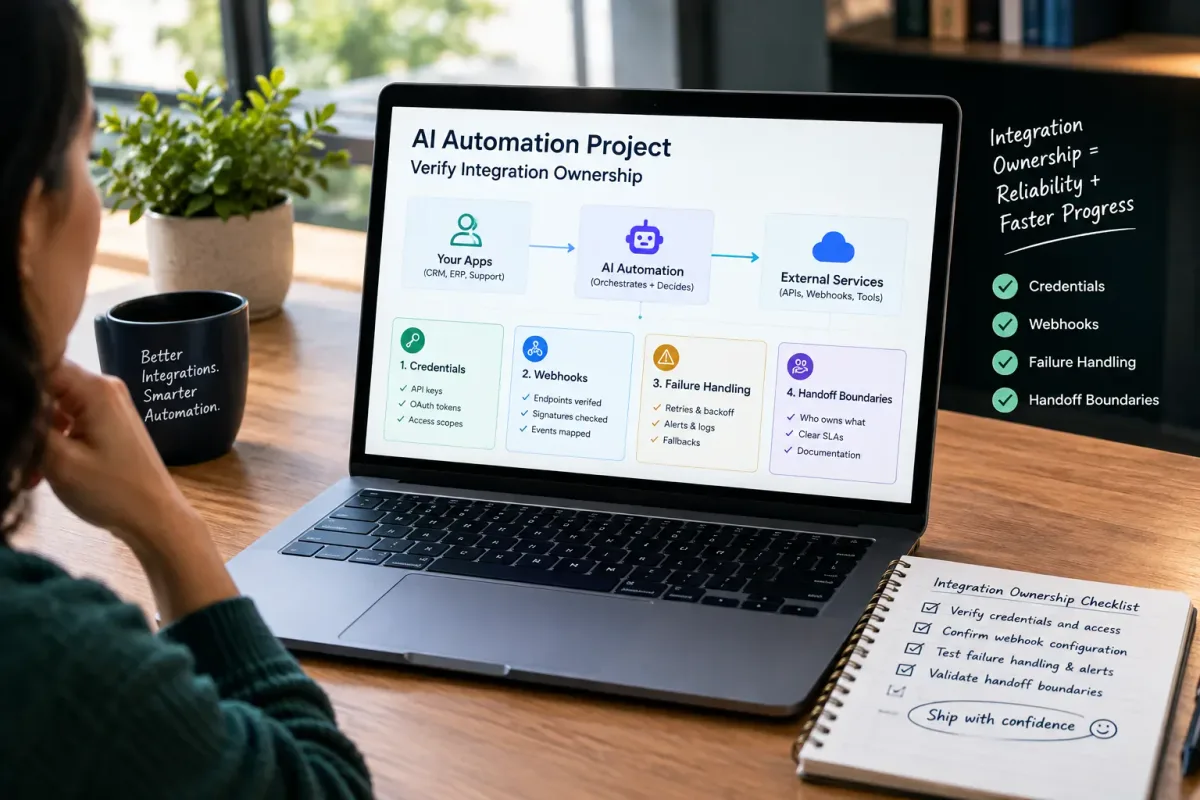
How Do I Verify Integration Ownership in an AI Automation Project?
Learn how to verify integration ownership in an AI automation project, including credentials, webhooks, failure handling, and handoff boundaries.
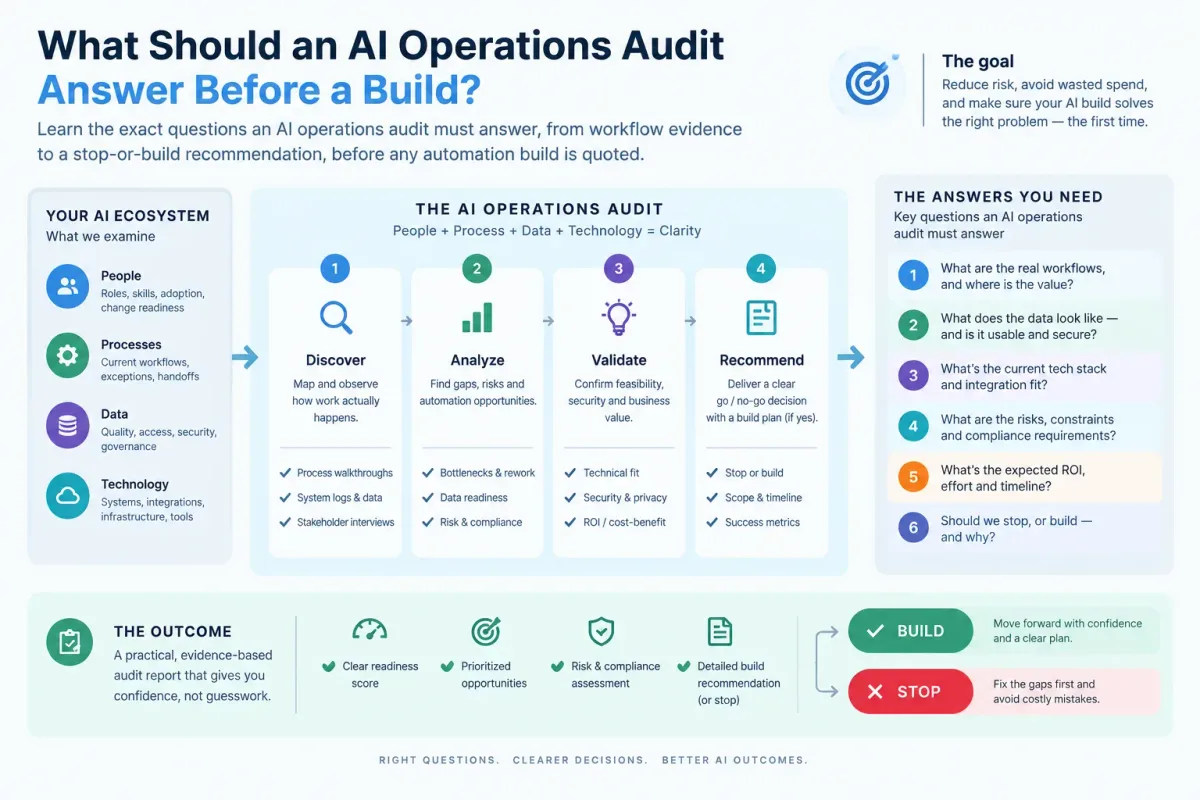
What Should an AI Operations Audit Answer Before a Build?
Learn the exact questions an AI operations audit must answer, from workflow evidence to a stop-or-build recommendation, before any automation build is quoted.
Who Is Patrick Gibbs and What Does Epiphany Dynamics Build?
Patrick Gibbs founded Epiphany Dynamics to help small and midsize businesses replace missed opportunities and manual busywork with practical AI automation.