
Alternatives to Zapier and Make in 2026: How to Choose
The best alternatives to Zapier and Make in 2026 are n8n, Pabbly Connect, Microsoft Power Automate, and Activepieces. The right choice depends on whether you value self-hosting, predictable billing, Microsoft-native workflows, or the simplest non-technical builder.
Zapier bills per task and Make bills per operation. Both can get expensive as automation grows. Here's how the real alternatives bill, where they fall short.
Epiphany Dynamics is an AI automation agency: we help businesses find and fix operational bottlenecks with AI receptionists, lead follow-up, and workflow automation.
The free 30-minute AI Operations Audit is a conversation about a normal week in your business and where the work piles up. We find the one change that would give you the most time back and send you a plain-English plan for it. No forms and no pitch.
Book a free AI audit
Patrick Gibbs
The best alternatives to Zapier and Make in 2026 are n8n, Pabbly Connect, Microsoft Power Automate, and Activepieces. The right choice depends on whether you value self-hosting, predictable billing, Microsoft-native workflows, or the simplest non-technical builder. Most businesses should compare the billing model, integration coverage, and maintenance burden before switching.
Why Zapier and Make Get Expensive at Scale
Zapier bills around tasks, while Make bills around operations. That distinction matters because a single business workflow can consume several operations every time it runs. Both platforms become more expensive as automation volume rises, so the pricing model needs to be part of the architecture decision instead of an afterthought.
That pricing model made sense when "automation" meant a few Zaps syncing Gmail to a Google Sheet. Businesses today run appointment reminders, CRM syncs, invoice triggers, lead follow-up sequences, and review request campaigns at the same time. A service company processing those workflows simultaneously can outgrow entry-level automation plans quickly, and the automation layer starts looking less like a helper and more like a recurring operating cost.
Make is often cheaper at equivalent workflow volume, but its "operations" billing model is genuinely confusing. A multi-step workflow can burn through operations faster than the team expects, even when the number of customer records looks modest. The comparison people think they're making (Make vs. Zapier task counts) is often not the comparison that shows up on their invoice. If you want to understand exactly how the billing works before committing, Zapier's pricing structure has more layers than the marketing pages suggest, and Make's is similar in that respect.
The other issue is platform lock-in. Both Zapier and Make use proprietary workflow builders, so migrating means rebuilding from scratch. Most businesses tolerate the cost creep until it becomes genuinely painful, at which point they're staring down a large workflow library they have to rebuild. That's not a reason to stay, but it is a reason to choose a platform carefully the first time.
The Strongest Alternatives Right Now
n8n is the best replacement for developer-led teams. Pabbly Connect is the best value fit for non-technical businesses that want predictable billing. Activepieces is the open-source option with the fastest onboarding. Power Automate is the default pick for Microsoft 365 shops. Workato handles enterprise-grade complexity that none of the others were built for.
Each of these solves the cost problem a different way. That's worth understanding before you pick one.
n8n
n8n is open-source with a visual workflow builder that directly competes with Zapier's interface. Self-hosting removes per-task fees and gives technical teams more control over how automations are deployed. Agencies especially benefit from the self-hosted model because client workflows do not have to multiply platform costs per account. The barrier is real though: you need someone comfortable with server setup, updates, and troubleshooting when a workflow fails.
Pabbly Connect
Pabbly Connect runs on a lifetime-license model rather than a standard monthly subscription model. That can be attractive when your workflows are simple, high-volume, and built around common tools. The trade-off is integration depth: you need to verify your specific stack is covered before buying. For businesses running common tools like HubSpot, ActiveCampaign, Stripe, Calendly, and Google Workspace, the coverage may be enough. Niche or enterprise software is where gaps appear.
Activepieces
Activepieces is newer and worth taking seriously. It's open-source like n8n, but the interface is considerably cleaner and the onboarding is faster. The self-hosted version avoids task-based licensing, while the connector library is still smaller than the oldest automation platforms. If you want the self-hosting benefits without spending a weekend figuring out n8n's data model, Activepieces is where I'd send someone first.
Microsoft Power Automate
If your business runs on Microsoft 365, Power Automate deserves a real evaluation before you look at anything else. It integrates natively with Teams, Outlook, SharePoint, Dynamics 365, and OneDrive in ways no third-party tool can replicate. Licensing depends on users, connectors, and the Microsoft plan you already have. The interface is not the friendliest, and premium connectors can get expensive for non-Microsoft integrations. But for automations that live inside the Office tool stack, nothing competes. If you're unsure whether the licensing cost makes sense, running your own numbers through an automation ROI calculator before committing usually makes the answer obvious.
Workato
Workato is the enterprise option and it's priced accordingly. It handles complexity that Zapier, Make, and most alternatives weren't designed for: multi-step approval workflows, real error handling with retry logic, audit trails, role-based access controls, and deep connectors for enterprise software like SAP, Salesforce, and Workday. If your workflows touch financial systems or compliance-sensitive data, get a Workato demo. The cost looks high until you compare it to what a broken data sync costs when it affects invoicing without anyone noticing.
Side-by-Side Fit Breakdown
The meaningful comparison is not just the monthly sticker price. Compare how each platform bills, what kind of technical ownership it requires, and whether the connectors you need are native, community-built, or routed through another automation tool.
| Platform | Billing Model | Best Fit | Self-hosted option | Lifetime plan |
|---|---|---|---|---|
| Zapier | Task-based subscription | Teams that need the broadest app coverage and the easiest editor | No | No |
| Make | Operation-based subscription | Teams that want visual workflows and lower cost at moderate complexity | No | No |
| n8n (cloud) | Cloud or self-hosted | Developer-led teams and agencies that want control | Yes | No |
| Pabbly Connect | Lifetime-license model | Non-technical teams with common connectors and predictable workflows | No | Yes |
| Activepieces | Open-source and cloud options | Teams that want self-hosting with a cleaner onboarding path | Yes (free) | No |
| Power Automate | Microsoft licensing and connector tiers | Microsoft 365 environments | No | No |
Zapier's real advantage is its broad app coverage and an interface non-technical users can navigate without training. That's genuinely valuable. But paying a premium for that simplicity is hard to justify if Zapier's specific integrations are not non-negotiable for your stack. Make is Zapier's most underrated competitor and has been for years. It covers many of the same use cases with a different billing model and deserves more attention than it gets. The full breakdown of Zapier's top competitors covers some of the less obvious players if your stack has unusual requirements the main platforms don't address.
Which Platform Fits Your Situation
Non-technical businesses usually get the cleanest start from Pabbly Connect or Make. Developer-led teams or agencies get more control from n8n self-hosted. Microsoft 365 environments should start with Power Automate. Companies with complex approval workflows or enterprise software integrations should evaluate Workato. There's no single answer that works for everyone.
The decision usually comes down to three variables: technical resources, integration coverage, and monthly task volume. Here's a practical framework:
- No developer on staff and common connectors: Pabbly Connect. The lifetime-license model can make sense when the workflow library is predictable.
- No developer and growing automation volume: Make. It's not as polished as Zapier but it's not far off, and the billing model is worth comparing carefully.
- Developer available: n8n self-hosted. The trade-off is technical ownership in exchange for more control and fewer task-based billing surprises.
- Microsoft 365 environment: Power Automate first, especially for workflows inside the Office tool stack. Layer a second platform on top if you need connections to non-Microsoft tools.
- Complex data workflows: Get a Workato demo. The price is real, but so is the capability gap at that complexity level.
These platforms don't have to be exclusive. Plenty of businesses run n8n for developer-built workflows and Pabbly for simpler, operator-managed automations. The goal is reducing cost and friction, not finding one platform to cover everything. Understanding where automation investment makes the most business sense is part of a larger picture that AI workflow automation's impact on overhead costs covers in more detail.
For further reading, see How to Create an AI Chatbot for Your Business in 2026.
Making the Switch Without Breaking Your Workflows
Migrating from Zapier or Make starts with a workflow audit. Many accounts have stale workflows that no longer need to be rebuilt. Rebuild your highest-volume workflows first on the new platform, run both systems in parallel until outputs match, then cut over. Most migrations to Make, Pabbly, or n8n require no custom code.
The audit step gets skipped more than it should. Pull your workflow list in Zapier or Make sorted by last run date. Almost every account has a graveyard of automations that fired a few times, got forgotten, and are still consuming task quota every month. You don't need to rebuild those. Cutting the scope to workflows that actually run meaningfully reduces the migration workload before you've touched anything.
Running both platforms in parallel before cutting over is not optional if data accuracy matters. I've seen migrations where the rebuilt workflow looked identical but a date format difference in a CRM sync quietly corrupted records before anyone caught it. A short output-comparison period catches those edge cases before they become support tickets. When you're confident the outputs match, shut off the originals and cancel the subscription.
If you're moving to n8n for the first time, budget extra time for the learning curve. The data model is more explicit than Zapier's, which is actually a feature even when it's frustrating. n8n forces you to understand what your automations are doing rather than hoping the logic works as expected. For a concrete example of how an alternative platform handles a real workflow, automating emails from Excel using Power Automate walks through the kind of multi-step logic that catches people off guard during a migration.
Zapier is not a bad product. It earned its market position by being genuinely easy for non-technical users, and that still matters. The problem is that "easiest" carries a cost that doesn't stay reasonable as your automation volume grows. Make solved the price problem years ago and is still underutilized. n8n and Activepieces solved both cost and lock-in. Pabbly solved the monthly billing model entirely. If your automation bill keeps climbing and you haven't seriously evaluated the alternatives, the math probably justifies a careful comparison. For service businesses that need someone to audit their full automation stack and build it out properly, that's the kind of engagement Epiphany Dynamics handles.
Before migrating a workflow, compare it with the duplicate-event and failed-write checks in the Make implementation guide. Changing platforms won't resolve an undefined retry rule.
Frequently Asked Questions
Q: How should I estimate savings from switching away from Zapier?
Pull your current task usage, list the workflows that actually run, and compare each alternative using your own workflow volume and connector needs. Self-hosted tools can reduce task-based billing, but they also add setup, monitoring, and maintenance work that should be part of the comparison.
Q: Why can Make's billing feel confusing?
Make bills around operations inside a scenario, not just business outcomes. A workflow with several modules can consume multiple operations every time it runs, so the invoice may not map cleanly to the number of leads, orders, or rows your team thinks it processed.
Q: When does Pabbly Connect make sense?
Pabbly makes sense when your workflows are straightforward, your required connectors are supported, and predictable long-term billing matters more than having the largest integration marketplace. Verify your exact tools and edge cases before buying into the model.
Q: Can a high-volume business save money switching from Zapier?
Often yes, but only after a real workflow audit. The savings case is strongest when many workflows are simple, high-volume, and do not depend on Zapier-only connectors. Complex workflows still need testing because a cheaper tool that breaks data is not actually cheaper.
Patrick Gibbs
AI Automation Expert
Patrick Gibbs helps professional practices implement AI automation that captures more leads, books more appointments, and scales without adding overhead. He's the founder of Epiphany Dynamics and creator of the AI Front Desk system.
Related Solutions
Build this into a real workflow
Related Posts
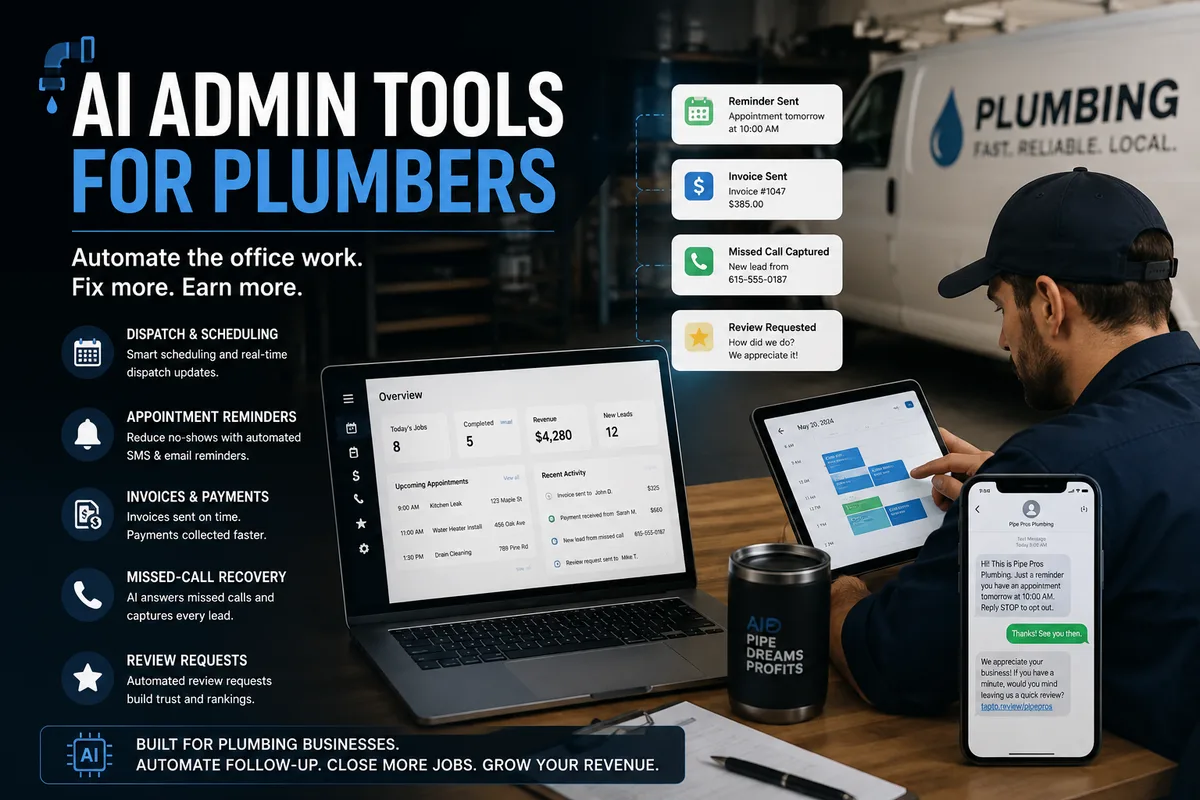
AI Admin Tools for Plumbers: What They Are and How to Choose
AI admin tools automate dispatch, reminders, invoicing follow-up, missed calls, and review requests for plumbers. What they do and how to choose.
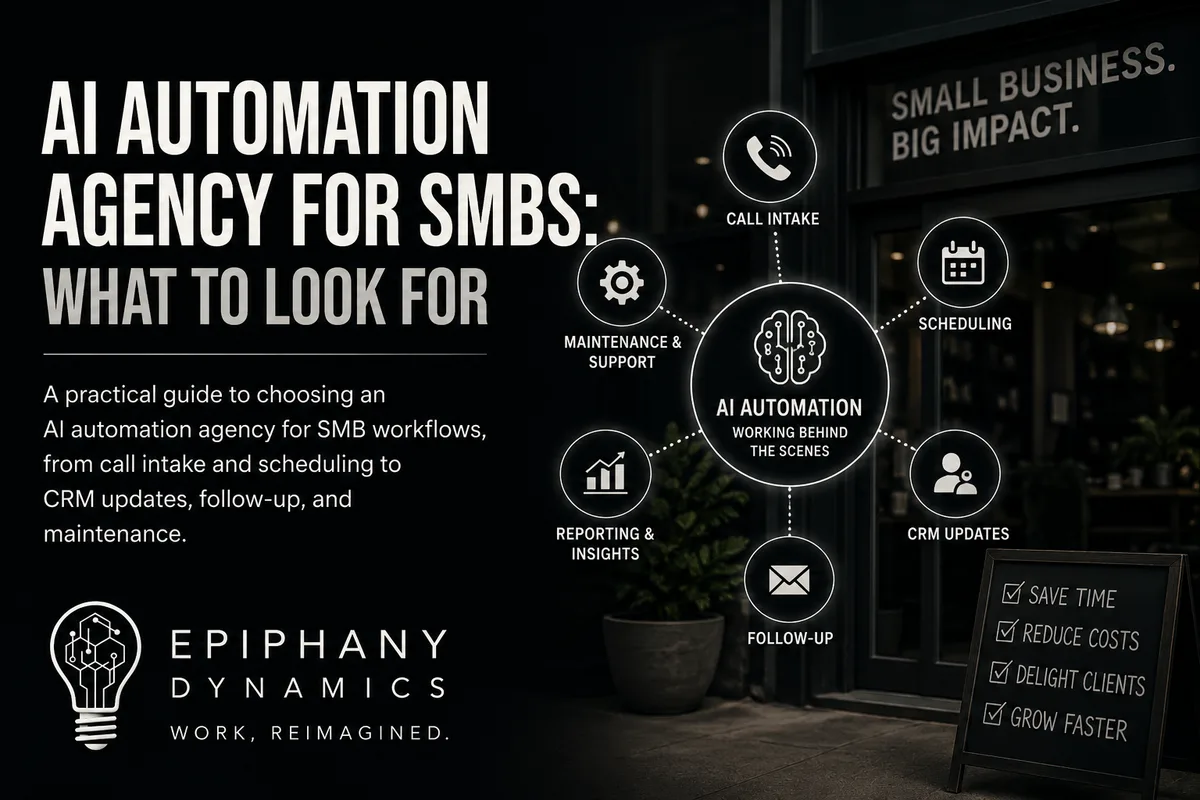
AI Automation Agency for SMBs: What to Look For
A practical guide to choosing an AI automation agency for SMB workflows, from call intake and scheduling to CRM updates, follow-up, and maintenance.
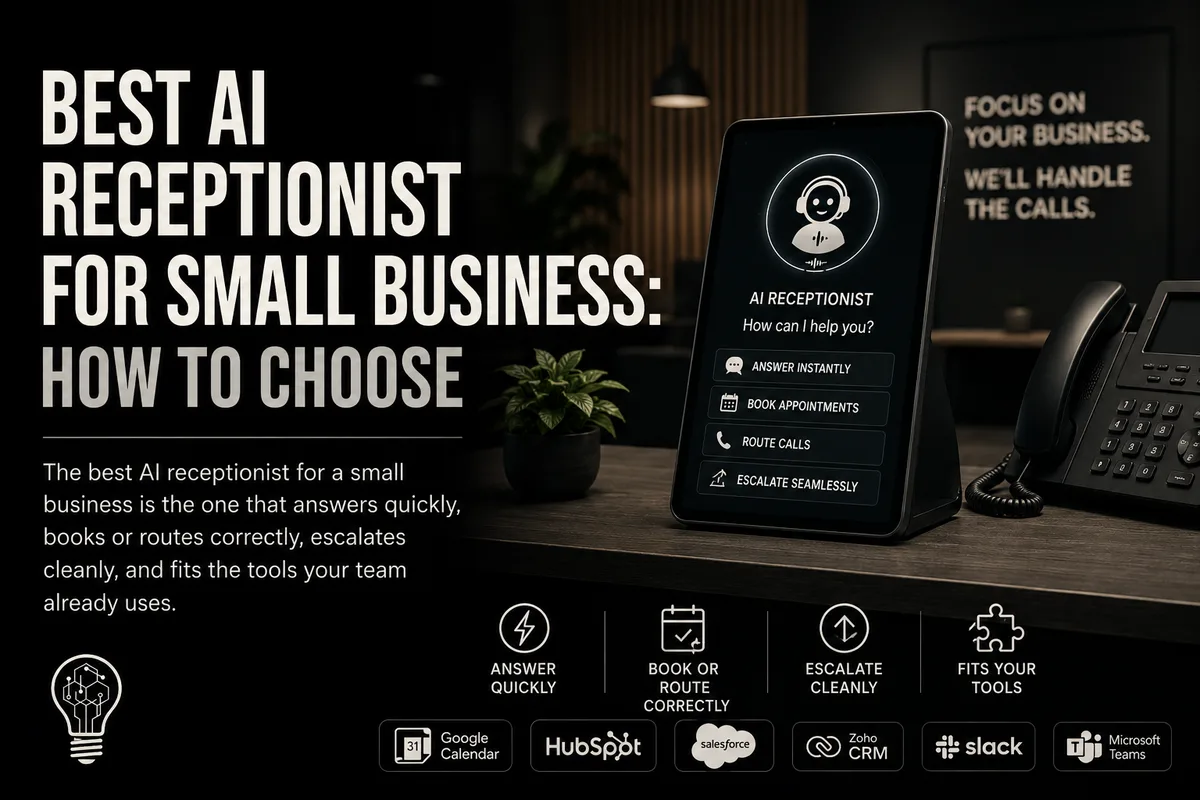
Best AI Receptionist for Small Business: How to Choose
The best AI receptionist for a small business is the one that answers quickly, books or routes correctly, escalates cleanly, and fits the tools your team.