
Zapier Pricing 2026: Plans, Task Limits, and Real Costs
Zapier pricing depends on plan and task volume. As of August 29, 2026, Zapier's public pricing page lists Free at $0/month with 100 tasks per month, Professional starting at $19.99/month, Team starting at $69/month, and Enterprise as contact-for-pricing.
Zapier pricing depends on plan and task volume. Free includes 100 tasks per month; compare current Professional and Team starting prices against the volume your workflows need.
Epiphany Dynamics is an AI automation agency: we help businesses find and fix operational bottlenecks with AI receptionists, lead follow-up, and workflow automation.
The free 30-minute AI Operations Audit is a conversation about a normal week in your business and where the work piles up. We find the one change that would give you the most time back and send you a plain-English plan for it. No forms and no pitch.
Book a free AI audit
Patrick Gibbs
Zapier pricing depends on plan and task volume. As of August 29, 2026, Zapier's public pricing page lists Free at $0/month with 100 tasks per month, Professional starting at $19.99/month, Team starting at $69/month, and Enterprise as contact-for-pricing. Check the live page before buying because plan names, prices, and task tiers can change.
Zapier has become the default answer whenever someone asks "how do I connect these two apps?" It powers workflows across millions of small businesses, agencies, and enterprise teams. But "default answer" doesn't mean cheapest or best fit for your volume. The pricing model is task-based, not Zap-based, and that distinction changes the math significantly once you build real workflows.
How Zapier's Pricing Tiers Are Structured
Zapier's pricing is task-based. Free, Professional, Team, and Enterprise plans differ by task tier, workspace features, support, and collaboration controls. The live Zapier pricing page is the source of truth for current plan names, prices, and task limits.
The free plan is a genuine starting point. It is useful for testing whether Zapier will work for your use case, especially for basic notifications or simple data passing. For running a real business workflow with conditional logic, premium apps, or multiple actions, you should expect to compare paid plans.
Professional is the first public paid tier listed on Zapier's current pricing page, and it unlocks multi-step Zap workflows. Team adds collaboration controls for organizations that need shared workflows and shared app connections. Enterprise is the governance tier for larger organizations that need advanced admin, support, and deployment controls.
| Plan | Current Public Pricing Signal | Best Fit | Source Note |
|---|---|---|---|
| Free | $0/month with 100 tasks per month | Testing simple automations | Public pricing checked August 29, 2026 |
| Professional | Starts at $19.99/month | Multi-step Zap workflows and premium app needs | Public pricing checked August 29, 2026 |
| Team | Starts at $69/month | Shared workflows, folders, app connections, and admin needs | Public pricing checked August 29, 2026 |
| Enterprise | Contact for pricing | Governance, controls, support, and deployment at scale | Public pricing checked August 29, 2026 |
The Team plan is often overlooked. If multiple people need to build or manage Zaps, compare collaboration needs against separate individual workspaces. Also check task-tier settings carefully, because tasks are shared across the account and usage can grow faster when several people automate from the same workspace.
What Zapier Actually Counts as a "Task"
Each successful action step in a Zap consumes tasks. Triggers do not count the same way as completed actions. Multi-step workflows burn through the task pool faster than simple one-action Zaps, so the real cost depends on how often workflows run and how many actions each run completes.
This is the single most misunderstood part of Zapier's pricing. Most new users think they're paying for Zaps. They're not. Tasks drain the quota, and in a multi-step workflow, every action after the trigger costs one task per execution. Triggers never consume tasks. Everything else does.
A concrete way to think about it: a lead submits a contact form, then the Zap adds them to your CRM, sends a confirmation email, creates a follow-up task, and posts a team notification. Every action after the trigger can add to usage. The same workflow can feel cheap at low volume and expensive once lead volume rises.
Regularly buying overages or changing task tiers signals a mismatch between your plan and your actual usage. Audit your real task consumption before picking a plan rather than defaulting to the cheapest option and patching with upgrades later.
Real-World Cost Scenarios by Business Type
Real-world cost depends on workflow frequency, action count, premium app requirements, collaboration needs, and whether Zapier remains the right platform as volume grows. The scenario numbers should come from your own task history, not a generic benchmark.
For a solo consultant managing client intake, a typical setup covers form submissions to CRM, invoice creation, calendar booking alerts, and a couple of data sync Zaps. If those workflows fire infrequently and stay simple, Zapier can remain inexpensive and easy to manage.
A small service business changes the picture. Workflows covering new lead alerts, appointment confirmations, post-service review requests, and team dispatch notifications can stack up quickly because every added action increases usage. At that level, it's worth comparing the tool cost against the actual labor hours saved, which is where AI workflow automation's administrative overhead framework becomes a useful benchmark for measuring return.
At the high end, an e-commerce store or marketing agency processing many orders, contacts, and pipeline events daily can outgrow Zapier's simple economics. Make.com, n8n, or direct API integrations may become more attractive for users comfortable with a more technical interface. The task model that makes Zapier accessible at small scale is the same thing that can make it expensive at large scale.
For additional background, see Alternatives to Zapier and Make in 2026: How to Choose.
Hidden Costs Most Businesses Overlook
Beyond the base subscription, Zapier's real cost includes task-tier changes, premium app requirements, polling or trigger latency, and time spent maintaining and debugging broken Zaps when app APIs update.
Premium app access is a firm wall in Zapier's pricing model. If your business runs on Salesforce, HubSpot, or another gated app, you may need a higher plan even if your task volume is modest. This catches businesses off guard when they try to build their first CRM automation and hit a permission block. It's not a bug in the pricing, just a feature gate that Zapier uses to separate plan tiers.
The polling delay has real business impact that doesn't show up on any invoice. For lead routing or time-sensitive customer workflows, lag between the trigger and the action can cost you opportunities. That speed gap may be baked into your plan tier, so test it before relying on Zapier for urgent handoffs.
Zaps also break. App providers update their APIs, field names change, authentication tokens expire. Zapier will surface errors in your dashboard, but silent failures do occur if error notifications aren't configured. A broken lead-capture Zap that goes unnoticed for three days means missed prospects, not just wasted subscription fees. Factor in the ongoing maintenance time when calculating total cost of ownership, especially for workflows tied to revenue-generating processes. For a practical framework on structuring this, implementation guides for small business workflow automation walk through what ongoing maintenance actually looks like in practice.
When Zapier Is Worth the Cost (and When It Isn't)
Zapier pays off when time saved exceeds the subscription, setup, and maintenance cost. Businesses running many active Zaps should compare the subscription against actual manual hours removed before assuming payback. The value weakens when volume, complexity, or brittle handoffs push toward lower-cost developer-friendly alternatives.
The strongest case for Zapier is ease of use combined with integration breadth. It connects a huge app ecosystem, and the no-code interface means a business owner or operations manager can build working automations without filing a developer ticket. That independence has real value for small teams. Many businesses find that systematically targeting repetitive manual tasks for automation produces ROI that eclipses the tool cost when the workflows are chosen well.
The value case weakens as volume and complexity grow. Run a real comparison against Make.com, n8n, or direct API integrations before renewing a plan that has become expensive or hard to maintain. Direct API integrations, if you have developer resources, can eliminate per-task billing entirely for high-frequency workflows. The tradeoff is a steeper setup curve and more maintenance responsibility. For businesses scaling automation strategy across multiple departments or revenue streams, reviewing high-volume lead capture automation options surfaces alternatives that often outperform general-purpose connectors once the workflow becomes complex.
A useful pre-purchase exercise: log every manual task your team repeats weekly, estimate the hourly cost, and calculate what Zapier could realistically automate. If the subscription cost is comfortably below the manual labor cost for equivalent work, the tool is worth testing. Before committing to a higher tier, though, testing automation at small scale before expanding avoids the cost of discovering your workflow design is flawed after you've already upgraded. Go in knowing your actual monthly task consumption and the premium app requirements for your specific stack, and the pricing is easier to plan around.
Zapier vs AI Agency: Which Is Cheaper for Complex Automation?
For simple app connections, Zapier is usually cheaper and faster to start. But as workflows grow in complexity, cost comparisons shift. A business running high-volume automations should compare Zapier against Make.com, n8n, or a custom workflow built by an AI automation agency like Epiphany Dynamics.
The real comparison is not just monthly cost but capability. AI agencies build workflows that include conditional logic, AI-assisted decision points, CRM enrichment, and custom API integrations. These are either unavailable or gated behind Zapier's highest tiers. For businesses that need more than simple data passing, the agency model often delivers both lower lifetime cost and better results.
When to choose each: Use Zapier for quick, single-purpose automations that fit the task model. Engage an AI automation agency when you need multi-step workflows, AI decision logic, custom integrations, or high-volume processing. Book a consultation with Epiphany Dynamics to compare the costs for your specific use case. Browse our automation platform comparisons and implementation guides for more detail.
When Zapier Gets Expensive Enough to Replace With Custom Automation
The subscription price is the easy number to look at, but it is rarely the real cost. Zapier is at its best for simple, low-risk connections between a couple of apps. The real cost shows up when workflows get complicated enough that the per-task model and the no-code guardrails start working against you. The signal to consider custom automation is less about the monthly bill and more about how much hidden work the setup is creating.
Custom automation usually makes sense once your workflows need any of the following:
- AI decisioning, where the workflow has to interpret a message or make a judgment call rather than just pass data along.
- Custom API integrations to tools that Zapier connects poorly or not at all.
- High task volume, where per-task billing turns into a real monthly number.
- Human approval steps in the middle of an otherwise automated flow.
- CRM logic such as enrichment, deduplication, and conditional routing.
- Several systems that all have to stay in sync, not just two.
And the honest cost comparison is not the subscription line item. It is the cost of the things that go wrong:
- Brittle Zaps that break when an app updates. Long chains across several apps break when any one of them changes a field or an API, and you often find out only when something downstream goes quiet.
- Failed handoffs between steps. When a step silently fails, the rest of the chain runs on missing data. The cost is not the task that failed, it is the lead or customer that fell through.
- Manual cleanup that never goes away. If someone checks the dashboard every morning, re-runs failed Zaps, and patches data by hand, that recurring labor is the real price, and it never shows up on the invoice.
- Missed opportunities. A broken lead-capture workflow that goes unnoticed for a few days is missed work, which usually costs far more than any plan tier.
That is where custom automation changes the math. A workflow built on a platform like n8n or Make.com, or through direct API integration, can shift the cost model away from Zapier's per-task billing, depending on the platform and how it is hosted, and is built to handle the branching and error handling that brittle Zaps struggle with. The comparison that matters is the all-in cost of the subscription plus the manual cleanup and the missed work, versus a system designed not to drop the handoff. Our breakdown of how much AI integration actually costs walks through that math, and our guide to AI integration with existing CRM systems covers what connecting to the tools you already run looks like in practice.
Compare Zapier vs Custom Automation Cost. See the full breakdown in our guide to how much AI integration costs, review what we build, or book a working session to compare the all-in cost for your specific workflows.
Frequently Asked Questions
Q: How many tasks does a typical Zap actually use per month?
Task count depends on trigger frequency and action count. A simple Zap uses fewer tasks than a multi-step workflow with conditional logic, enrichment, and notifications. Build the workflow on paper first, count the successful actions, then compare that to the current task tier on Zapier's pricing page.
Q: Can you actually run Zapier on the free plan indefinitely, or is it just a trial?
The free plan is genuine. As of August 29, 2026, Zapier's pricing page lists Free at $0/month with 100 tasks per month. For basic one-directional data passing or notifications, free can work long-term; for anything requiring conditional logic, lookups, premium apps, or chained actions, compare the paid tiers.
Q: Does adding team members to Zapier significantly increase costs?
As of August 29, 2026, Zapier's pricing page lists Team starting at $69/month. The cost impact depends on the shared task usage those users create. If each team member runs independent high-frequency workflows, usage can grow quickly; if they're collaborating on shared automation, Team may be cleaner than separate individual workspaces.
Q: Is it worth paying for annual billing?
Zapier's public cards currently show starting-from monthly prices, not a separate annual-vs-monthly table. Check the live Zapier pricing page for yearly billing if it is offered for your plan. Annual billing can make sense if Zapier is core to your workflow and you are confident the plan will fit. For businesses still testing automation or expecting significant scaling, monthly billing provides more flexibility.
Patrick Gibbs
AI Automation Expert
Patrick Gibbs helps professional practices implement AI automation that captures more leads, books more appointments, and scales without adding overhead. He's the founder of Epiphany Dynamics and creator of the AI Front Desk system.
Related Solutions
Build this into a real workflow
Related Posts
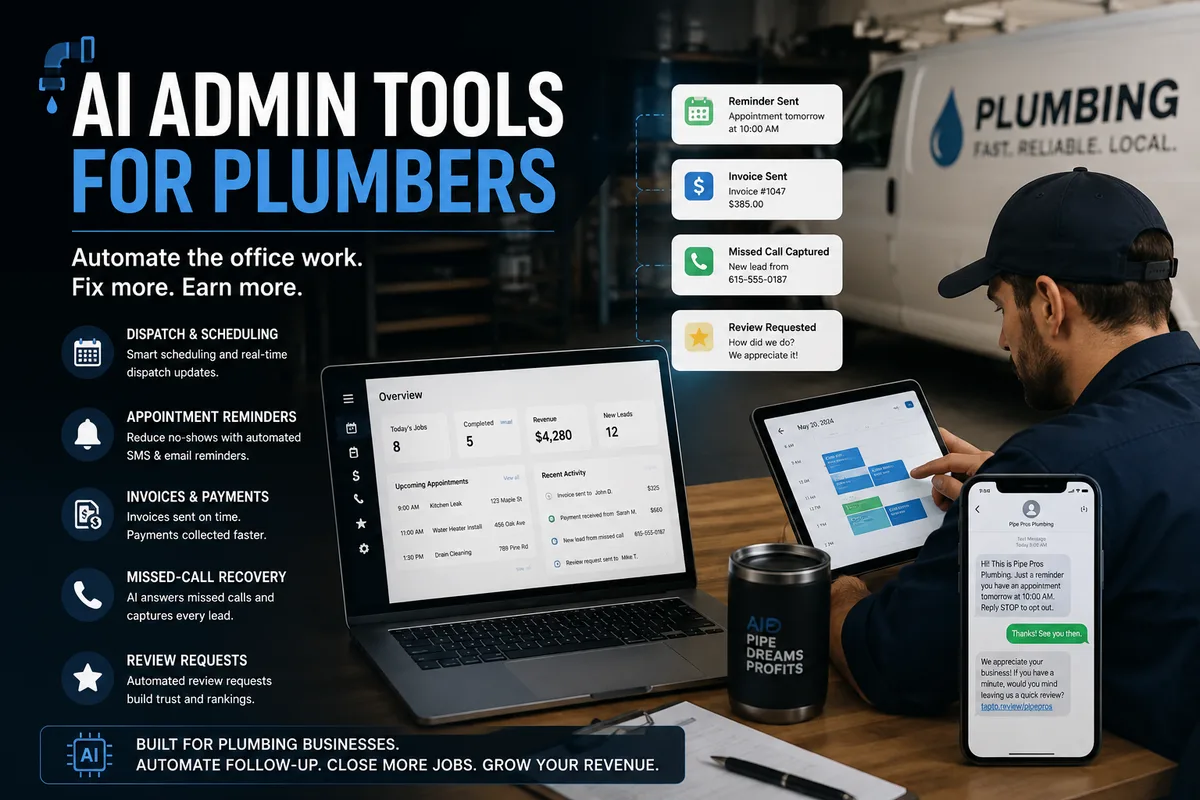
AI Admin Tools for Plumbers: What They Are and How to Choose
AI admin tools automate dispatch, reminders, invoicing follow-up, missed calls, and review requests for plumbers. What they do and how to choose.
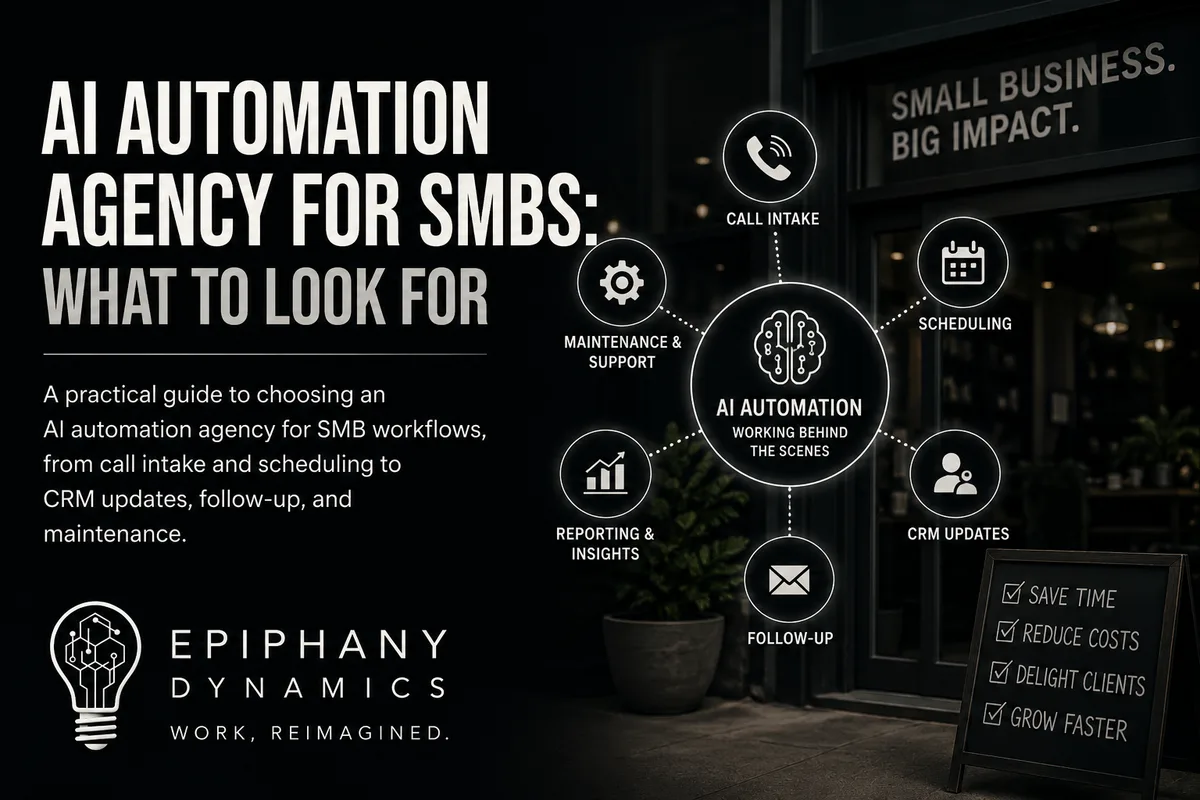
AI Automation Agency for SMBs: What to Look For
A practical guide to choosing an AI automation agency for SMB workflows, from call intake and scheduling to CRM updates, follow-up, and maintenance.
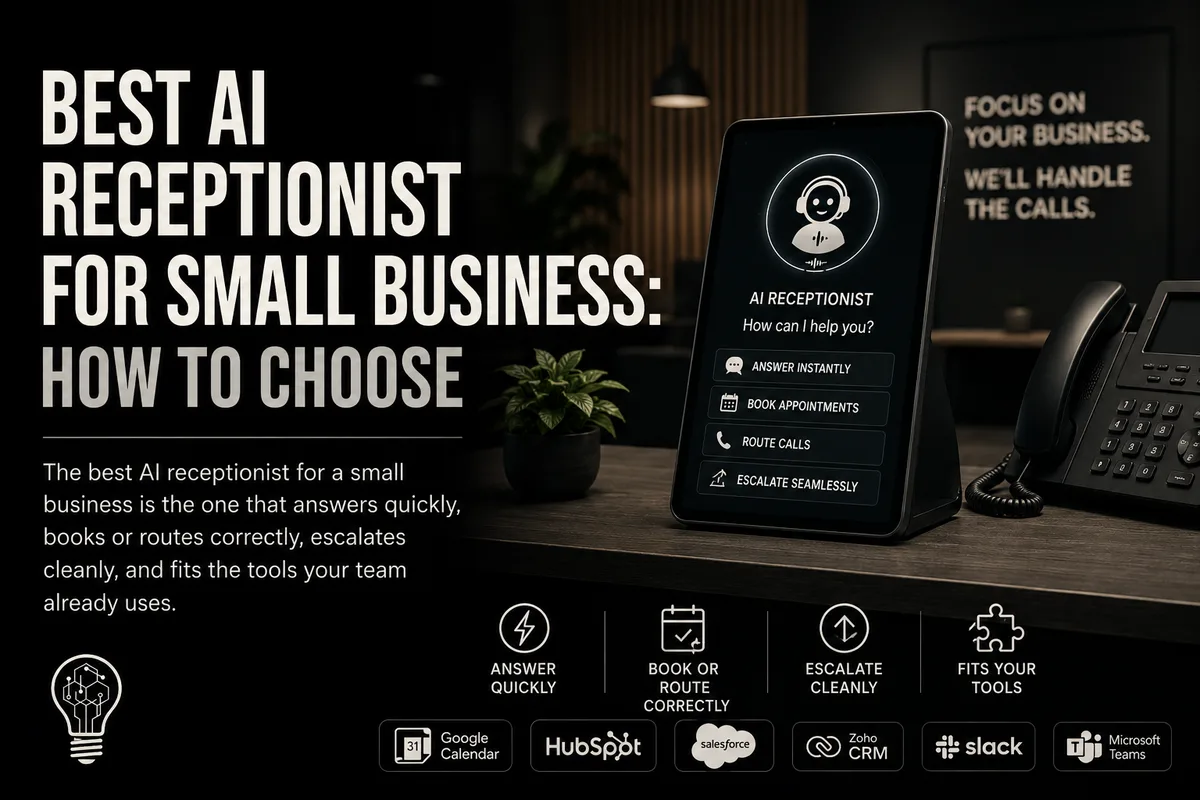
Best AI Receptionist for Small Business: How to Choose
The best AI receptionist for a small business is the one that answers quickly, books or routes correctly, escalates cleanly, and fits the tools your team.