
Best Zapier Alternatives in 2026: Real Costs, Real Comparisons
The best Zapier alternatives in 2026 are Make.com, n8n, Pabbly Connect, and Pipedream. The right choice depends on how each platform counts usage, whether your team wants self-hosting control, which apps you need to connect, and how much workflow complexity you expect to manage.
Zapier alternatives differ by pricing model, workflow complexity, hosting control, and integration coverage. Here's how to compare Make.com, n8n, Pabbly.
Epiphany Dynamics is an AI automation agency: we help businesses find and fix operational bottlenecks with AI receptionists, lead follow-up, and workflow automation.
The free 30-minute AI Operations Audit is a conversation about a normal week in your business and where the work piles up. We find the one change that would give you the most time back and send you a plain-English plan for it. No forms and no pitch.
Book a free AI audit
Patrick Gibbs
The best Zapier alternatives in 2026 are Make.com, n8n, Pabbly Connect, and Pipedream. The right choice depends on how each platform counts usage, whether your team wants self-hosting control, which apps you need to connect, and how much workflow complexity you expect to manage.
Zapier built something genuinely impressive: a no-code automation platform with a broad app library and a dead-simple interface. That's real value. The problem is the pricing model. Zapier charges per "task," meaning individual actions in a workflow count against your monthly limit. Scale that across a growing business and the bills can climb past the point where the convenience justifies the cost.
This isn't a hit piece on Zapier. For many use cases it's still the right tool. But knowing the real alternatives, with honest cost comparisons, lets you make a smarter decision about where your automation budget goes.
Why Zapier Gets Expensive Fast
Zapier's task-based pricing means actions inside a workflow consume billable units. A frequent multi-step Zap can exhaust a plan quickly, forcing an upgrade or overage decision even when the workflow itself is simple. That model is convenient to start and important to audit once automation becomes operational infrastructure.
Here's the pattern in a typical small business setup. You might run a lead capture workflow, an appointment reminder sequence, and a CRM update trigger. If each workflow fires often and has multiple actions, the task count can climb quickly. Depending on usage patterns, you may need a higher plan just to keep basic operations running.
Other platforms count usage differently. Make.com counts operations, n8n can be self-hosted, and Pabbly Connect emphasizes flat-rate workflow usage. None of those models is automatically right for every business. The point is to compare the billing unit against the way your automations actually run.
To be fair, Zapier remains useful for testing and for teams that need broad integration coverage. But once you're past experimentation and into real operational use, the per-task structure creates a ceiling that should be modeled before you build more workflows on top of it.
The Top Zapier Alternatives in 2026
Make.com is a direct Zapier-style replacement with visual workflow logic. n8n fits technical teams comfortable with self-hosting or code-native automation. Pabbly Connect suits businesses wanting a flat-rate style model. Pipedream targets developers who need to mix custom code with no-code automation steps.
Here's a direct comparison of the major options:
| Platform | Pricing Model | Workflow Model | What to Check |
|---|---|---|---|
| Zapier | Task-based SaaS | Linear Zaps | Task usage and app coverage |
| Make.com | Operation-based SaaS | Visual scenarios | Operations, routers, and module coverage |
| n8n | Self-hosted or hosted | Node-based workflows | Hosting ownership and maintenance |
| Pabbly Connect | Flat-rate style SaaS | No-code workflows | Reliability, support, and app fit |
| Pipedream | Event-based developer platform | Code plus workflow steps | Developer comfort and event limits |
| Microsoft Power Automate | Microsoft ecosystem licensing | Business process flows | Tenant licensing and connector rules |
These aren't perfectly apples-to-apples because each platform counts usage differently. Make.com counts "operations" (individual module executions), while Zapier counts "tasks" (non-trigger steps). For businesses figuring out where to start, testing AI automation before you scale can save you from migrating platforms after the workflows are already embedded in daily operations.
Make.com: The Most Direct Zapier Competitor
Make.com (rebranded from Integromat) is a close functional equivalent to Zapier with a different usage model and a visual scenario builder. Its canvas-style interface supports conditional logic, loops, and error handling in a way that feels different from Zapier's linear step format.
The visual interface is where Make.com feels most different. Zapier presents workflows as a linear chain: trigger, action, action, action. That works fine for simple automations, but becomes harder to reason about when you need branching logic, parallel paths, or loops through arrays of data. Make.com handles those patterns with a canvas-style builder where you can see your entire workflow as a diagram.
The tradeoff is a steeper learning curve. If your team is non-technical, factor in extra setup time and a more deliberate testing process. Make.com also supports webhooks, custom HTTP requests, and JSON/XML parsing, features that matter when connecting AI tools without native integrations. For AI workflow automation in small business contexts, that flexibility can matter more than the headline platform comparison.
One thing to watch: if you use niche vertical software, check compatibility before committing. Integration coverage matters more than a platform's category label.
n8n: Full Control at the Cost of Complexity
n8n is an open-source workflow automation platform you can self-host or run through a hosted plan. The value proposition is control: you own more of the infrastructure, can build more custom logic, and avoid the same per-task buying model that drives many teams to compare alternatives.
The economics of self-hosted n8n are most compelling for businesses with high-volume, predictable automation needs and someone who can maintain the environment. You avoid per-task SaaS billing, but you take on hosting, updates, monitoring, and debugging responsibility. That trade is attractive for some teams and a distraction for others.
n8n supports native integrations and, unlike purely no-code tools, lets you write custom JavaScript or Python code directly inside nodes. This makes it a fit for developers who need automation that goes beyond drag-and-drop. You can call APIs that aren't natively supported, transform data in complex ways, and chain AI model calls without leaving the platform. For technical teams already handling manual data entry elimination projects, n8n's code-native approach often fits naturally into existing workflows.
The honest drawback: n8n requires someone who can manage a server, handle updates, and debug infrastructure issues if you self-host. If you have no technical staff, use the hosted option or choose a simpler no-code platform and compare the total operational burden, not just the subscription line.
Pabbly Connect: Unlimited Workflows, Fixed Price
Pabbly Connect emphasizes a flat-rate style model rather than charging in the same per-task structure as Zapier. For businesses with unpredictable or rapidly growing automation volume, that structure can be worth evaluating carefully against support, reliability, and integration fit.
The value proposition is straightforward: a simpler billing model for teams that do not want to forecast task usage every month. Before choosing it, verify the exact workflow features, webhooks, triggers, and app integrations you need. A flat-rate model only helps if the platform actually supports your business-critical workflows.
Where Pabbly falls short is polish. The interface is functional but clunkier than Zapier or Make.com, and the documentation is thinner. Error notifications and debugging tools are basic compared to competitors. Test Pabbly thoroughly before using it for customer-facing automations. For internal operations workflows with a tolerance for occasional hiccups, it's a solid choice. Pabbly also runs periodic lifetime deals through platforms like AppSumo, which changes the math significantly if you catch one.
Also covered on the blog: How AI Is Used in Accounting: Real Applications for 2026.
How to Pick the Right Platform
Choose based on three factors: your current monthly task volume, your team's technical comfort level, and which specific apps you need to connect. Make.com fits most small businesses replacing Zapier. n8n fits technical teams wanting zero per-task costs. Pabbly fits high-volume use cases where flat pricing beats optimized per-task rates. Zapier stays relevant when you need obscure app integrations nothing else supports.
Start by auditing your current Zapier usage. Pull your task usage report under Settings, calculate your average monthly task count, and map each Zap to its business function. Most businesses discover a large share of their Zaps are dormant or redundant. The audit has value regardless of whether you switch.
Next, verify the integration list for your critical apps. For common business apps like Salesforce, HubSpot, Google Workspace, Slack, QuickBooks, and Shopify, several major alternatives have coverage. For niche vertical software, check before assuming. Using an automation ROI calculator framework to put concrete numbers on time saved can also clarify whether a platform switch pays off before you invest in migration effort.
One consideration that often gets overlooked: if your automation needs are growing quickly, platforms with flatter or higher-ceiling plans may be easier to budget. Build expected workflow growth into your platform decision upfront.
Making the Switch Without Breaking Things
Most businesses should migrate from Zapier to a competing platform in phases by rebuilding automations in priority order and running both platforms in parallel before cutting over. Rebuild highest-volume, highest-value workflows first. Document each workflow before rebuilding, not after. Avoid a single-day migration of a large workflow set.
The parallel-run approach deserves emphasis. Keep your Zapier subscription active while you rebuild on the new platform. Turn off Zapier workflows one by one as their equivalents are confirmed working. This costs an overlap period but reduces the risk of a broken automation going unnoticed because no one was watching the handoff.
Where migrations go wrong is in the "simple" workflows. Straightforward Zaps often have hidden complexity: a filter condition added long ago, a field mapping that handles a data edge case, a delay step someone added to work around an API rate limit. Rebuild from documented logic, not from memory. If the documentation doesn't exist, create it while you still have access to the original Zap.
For businesses running automation strategies tied directly to revenue generation, a broken workflow during migration means missed leads, dropped follow-ups, or billing errors that take time to trace. Take the parallel approach seriously, monitor error logs after cutover, and don't cancel the Zapier subscription until the new platform has produced clean runs across the workflows that matter.
Automation platforms are infrastructure now, not experiments. The platforms covered here all work well for their respective use cases. The real question isn't which one is "best" in the abstract; it's which pricing model, integration coverage, and complexity ceiling fits where your business is headed in the next two years. That framing tends to make the decision obvious once you run the actual numbers.
Still comparing Zapier alternatives for your business? Epiphany Dynamics can help you choose and implement the right automation platform for your specific workflow needs. We match businesses to the right tools based on volume, technical capability, and growth plans. Check our detailed tool comparisons and automation guides for more depth on each platform.
Frequently Asked Questions
Q: How should I compare Zapier pricing to alternatives like Make.com?
Make.com uses an operation-based billing model rather than Zapier's task-based model. Whether it costs less for your business depends on workflow structure, run volume, and which modules each workflow uses. Compare current vendor pricing against your actual usage report before switching.
Q: What happens when you exceed your monthly task limit on Zapier?
When you exceed your plan's task allowance, you generally face an overage or upgrade decision. The practical risk is unpredictable billing when a workflow runs more often than expected. Audit task usage before adding high-frequency automations.
Q: Can I find a Zapier alternative that doesn't charge per task?
Yes. n8n can be self-hosted, which changes the cost structure from SaaS task billing to infrastructure and maintenance. Other platforms use operations, events, or flat-rate style models. The right choice depends on whether your team wants simplicity, control, or predictable billing.
Q: How do I know if Zapier no longer fits my usage?
Calculate your monthly task usage by mapping each workflow's actions against its run count. If usage regularly pushes you into overages or a higher tier, compare the same workflow on platforms with different billing units. Small businesses usually discover the issue once several operational automations are running at the same time.
Patrick Gibbs
AI Automation Expert
Patrick Gibbs helps professional practices implement AI automation that captures more leads, books more appointments, and scales without adding overhead. He's the founder of Epiphany Dynamics and creator of the AI Front Desk system.
Related Solutions
Build this into a real workflow
Related Posts
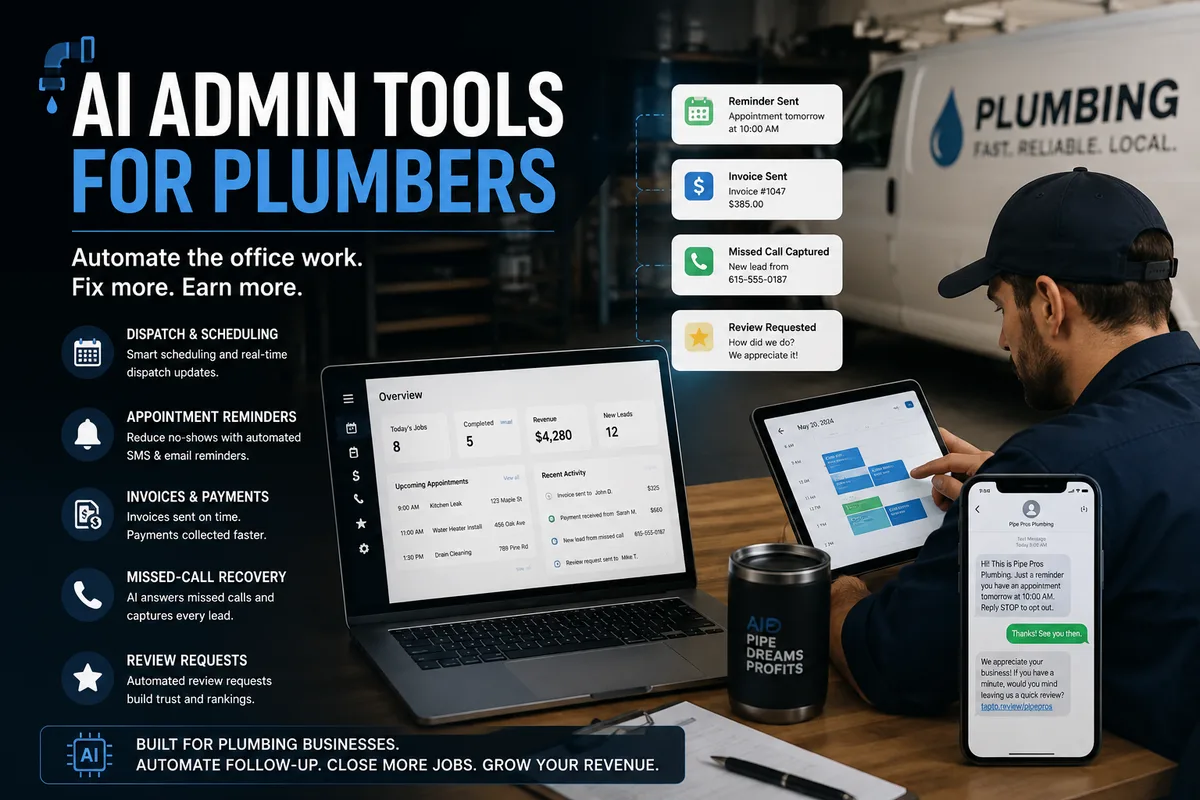
AI Admin Tools for Plumbers: What They Are and How to Choose
AI admin tools automate dispatch, reminders, invoicing follow-up, missed calls, and review requests for plumbers. What they do and how to choose.
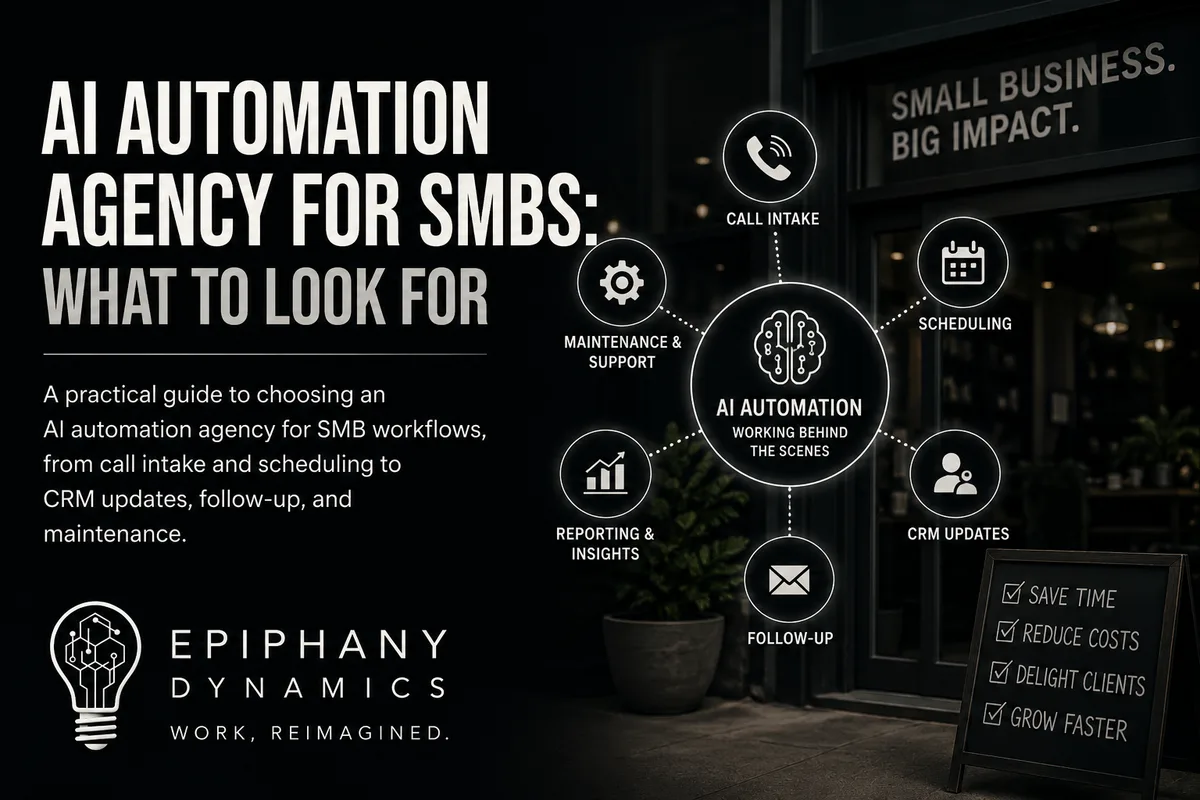
AI Automation Agency for SMBs: What to Look For
A practical guide to choosing an AI automation agency for SMB workflows, from call intake and scheduling to CRM updates, follow-up, and maintenance.
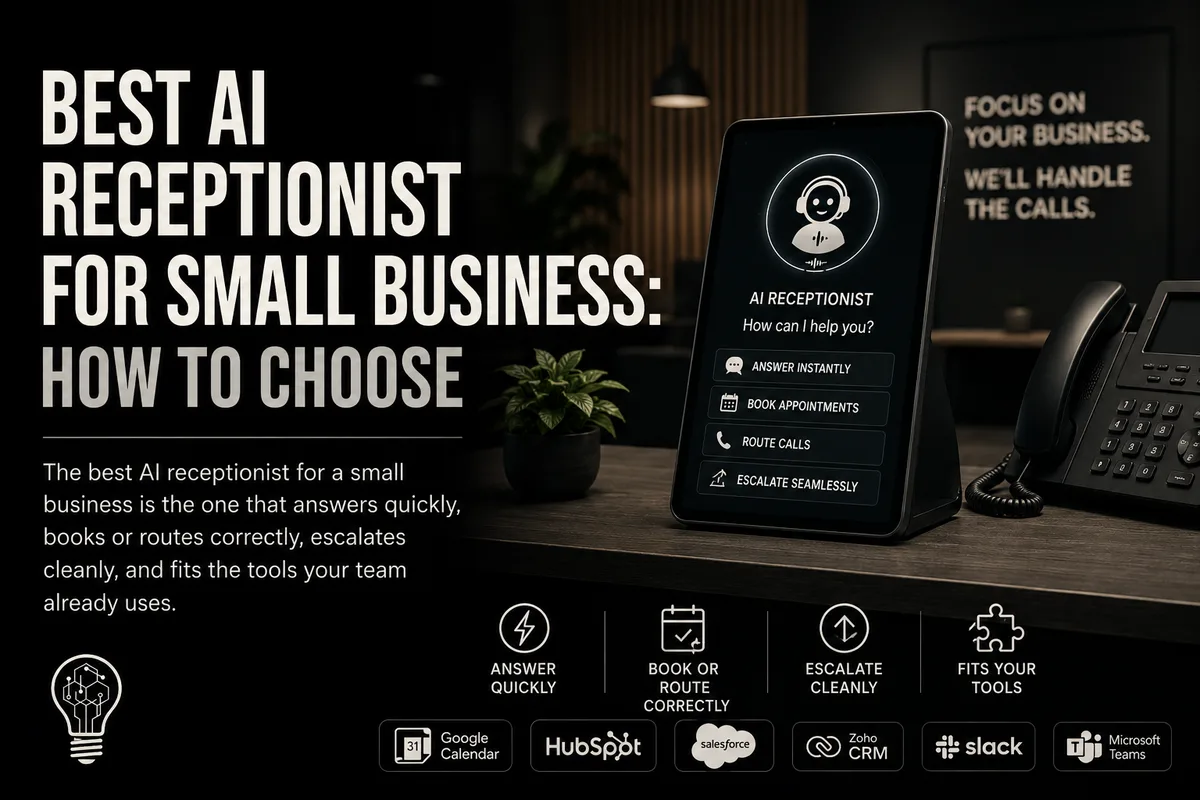
Best AI Receptionist for Small Business: How to Choose
The best AI receptionist for a small business is the one that answers quickly, books or routes correctly, escalates cleanly, and fits the tools your team.