
Automated Tenant Screening: A Property Manager's Complete Guide
One bad tenant placement can create a painful mix of lost rent, legal work, property damage, and turnover. Most placements that go wrong aren’t random bad luck; they’re the result of inconsistent manual screening.
One bad tenant can cost a landlord thousands in eviction fees, lost rent, and repairs. Here's how automated screening reduces that risk without slowing your.
Epiphany Dynamics is an AI automation agency: we help businesses find and fix operational bottlenecks with AI receptionists, lead follow-up, and workflow automation.
The free 30-minute AI Operations Audit is a conversation about a normal week in your business and where the work piles up. We find the one change that would give you the most time back and send you a plain-English plan for it. No forms and no pitch.
Book a free AI audit
Patrick Gibbs
One bad tenant placement can create a painful mix of lost rent, legal work, property damage, and turnover. Most placements that go wrong aren’t random bad luck; they’re the result of inconsistent manual screening. Automated tenant screening makes the process faster, more consistent, and easier to document while applying the same criteria to every applicant for Fair Housing compliance. This guide covers the business case, tool comparison, and implementation framework for property managers.
The Expensive Problem Every Property Manager Knows
Ask any experienced property manager what a bad placement costs and they won’t hesitate. When you add up lost rent during the eviction timeline, attorney fees, court filing costs, property damage beyond the deposit, and the turnover cycle to re-lease the unit, the impact is material even when the exact number varies by market and property type. For a manager with enough units under management, a modest bad-placement pattern becomes a drag on net operating income that rarely shows up on pro forma projections.
The uncomfortable reality is that most of those placements weren’t random bad luck. They were the result of a screening process that was either inconsistently applied, too slow to be thorough, or dependent on whoever happened to be covering the leasing desk that afternoon. Manual screening isn’t just slow: it’s variable. And variability is where risk lives. Automated tenant screening for property managers addresses exactly that gap. The same principles driving real estate automation in 2026 apply here: it makes the process fast, consistent, and defensible.
Manual vs. Automated Screening: What Actually Changes
Manual screening typically looks like this: an applicant submits a paper or PDF application, a leasing agent manually verifies identity, calls employers and previous landlords, orders a third-party background check, and then renders a judgment based on whatever criteria are written down, if they’re written down at all. From application submission to decision, the process can stretch long enough for qualified applicants to move on. At scale, especially in competitive markets, that manual coordination becomes untenable.
Automated screening compresses the same process by moving intake, document collection, report ordering, and criteria checks into one digital flow. When an applicant submits through a portal, the system can pull credit data, run criminal and eviction history through configured databases, verify income against approved sources, and score the application against your preset qualification criteria. The leasing agent doesn’t touch the file until there’s a decision to communicate. More importantly, every applicant goes through the exact same process in the exact same order, which matters enormously for Fair Housing compliance.
The shift isn’t just operational. It changes who the leasing team spends time on. Instead of chasing employers for callback confirmations and manually cross-referencing credit tradelines, they’re doing what actually requires human judgment: handling objections, building rapport with qualified applicants, and moving toward lease execution faster.
The Business Case Property Managers Should Run
The business case for automated screening is straightforward once you quantify the right inputs. Most operators focus only on the cost of the screening tool itself and miss the full picture. Here’s a more complete framework:
| Cost Category | Manual Process Pattern | Automated Process Pattern |
|---|---|---|
| Staff time per applicant | Leasing staff manually verify identity, employment, landlord references, reports, and notes | The portal collects inputs, orders checks, routes exceptions, and leaves staff to review decisions |
| Background/credit check cost | Often handled through separate vendors or manual ordering | Usually bundled into the application workflow with clearer status tracking |
| Avg. days-to-decision | Slower when staff wait on references, documents, or report delivery | Faster when the application package is complete and exceptions are easy to spot |
| Vacancy days saved per cycle | Baseline | Depends on how much faster qualified applicants receive decisions |
| Bad placement rate (assumed) | Higher risk when criteria vary by staff member or by day | Lower risk when criteria are documented, consistent, and reviewed for exceptions |
Run the numbers with your own portfolio. Start with average rent, turnover volume, vacancy time, staff effort per applicant, bad-placement frequency, and the cost of the screening workflow. Then compare your current process against the automated flow you are evaluating. The strongest business case usually comes from a mix of faster decisions, fewer avoidable bad placements, and less staff time spent chasing documents.
The honest caveat: these numbers assume you actually set your qualification criteria correctly and apply them consistently. Our guide to automating repetitive tasks covers the broader framework for identifying which manual processes to automate first. The tool amplifies your screening logic: good criteria produce better outcomes; vague or poorly calibrated criteria just fail faster.
Elsewhere on the blog: AI Phone Agent for Property Management: What It Does, What It Costs, and Whether You Need One.
Core Components of a Reliable Automated Screening System
Not all screening platforms are built the same. When evaluating options, property managers should look for five core functional layers working together:
1. Credit Reporting (Tri-Merge, Not Single Bureau)
Single-bureau pulls miss data. A tri-merge report (Equifax, Experian, TransUnion) surfaces the complete picture, including tradelines, derogatory accounts, and collections that may only appear in one bureau’s records. The scoring threshold you set should be based on your historical portfolio data, not industry defaults. If you’ve never analyzed the correlation between credit score and actual lease performance in your portfolio, that’s the analysis to run before configuring any automated system.
2. Eviction History Database
Eviction records are filed at the county courthouse level, which means national databases are aggregations with varying coverage and freshness. The best platforms source from direct court integrations rather than resale data. Ask vendors specifically which jurisdictions they cover, how current the records are, and where the gaps are. A platform claiming “national coverage” without explaining coverage limits is a meaningful gap in your risk filter.
3. Income Verification
Income rules are only useful if the verification is reliable. Pay stub uploads can be forged. Bank statement integration (via Plaid or similar) or direct employer payroll verification gives you a far more reliable signal. Some platforms now cross-reference against tax or payroll records when applicants consent, which can be a higher-confidence verification path for self-employed applicants or those with non-traditional income.
4. Criminal Background Screening
This is the most legally sensitive layer. HUD guidelines and state-level fair housing regulations prohibit blanket criminal history bans: you must conduct an individualized assessment that considers the nature of the offense, time elapsed, and evidence of rehabilitation. Your automated system should flag records rather than auto-deny, and your written policy should document the specific offense categories that constitute a disqualifying factor versus those requiring case-by-case review. Blanket auto-deny on any felony is a Fair Housing liability in most jurisdictions.
5. Consistent Decision Output and Audit Trail
Every adverse action decision must be documented with the specific reason (required under FCRA). A good automated system generates the adverse action notice automatically, including the credit bureau contact information the applicant is entitled to. This isn’t a nice-to-have: it’s federal law, and the paper trail protects you if a decision is ever challenged.
Fair Housing Compliance: The Constraint That Shapes Everything
The biggest risk with automated screening isn’t the technology: it’s deploying it without a legally defensible written criteria policy. The Fair Housing Act prohibits discrimination based on race, color, national origin, religion, sex, familial status, and disability. Automated screening is facially neutral, but disparate impact (criteria that disproportionately screen out protected classes even without discriminatory intent) can still trigger liability.
The practical safeguard is a written screening criteria document that predates your screening decisions. This document should specify: minimum credit score, income-to-rent ratio, rental history requirements, the specific categories of criminal history that disqualify an applicant (and why), and how exceptions are handled. Every applicant should be evaluated against the same published criteria. If you make exceptions, document them with a legitimate, non-discriminatory reason. HUD guidance on criminal history screening is worth reviewing with counsel before configuring any automated denial logic.
One operational note: some states have additional restrictions layered on top of federal requirements: caps on application fees, limits on what criminal history can be considered, and specific adverse action timelines. Your screening process needs to account for the most restrictive jurisdiction in which you operate, not just federal minimums.
Implementation: Starting Right Without Over-Engineering It
Operators who get the most out of automated screening do a few things before they configure anything. First, they review historical placement data and identify what the bad placements had in common: credit profile, rental history gaps, income verification issues. That analysis should drive your criteria settings, not vendor defaults. Second, they document their screening criteria in writing and have it reviewed by a fair housing attorney before going live. Third, they run parallel manual and automated reviews during rollout to calibrate the system against what experienced leasing staff would have decided.
For smaller portfolios, standalone platforms like Rentec Direct, TurboTenant, or Avail can provide adequate screening tools built into broader property management software. Mid-size and larger operators often benefit from dedicated screening integrations with stronger database coverage: platforms like TransUnion SmartMove, RentSpree, or Yardi’s screening module, which integrate directly with their existing PMS workflow.
The key metric to track post-implementation isn’t just placement quality: it’s time-to-lease. A well-configured automated system should shorten the path from application to decision. If it’s not, either your criteria are triggering too many manual-review flags or your applicant portal is creating friction that slows submissions. Both are diagnosable with basic funnel analytics.
The Bottom Line
Automated tenant screening isn’t a replacement for judgment: it’s a system for applying consistent judgment at scale without burning staff time on administrative verification work. The operators who benefit most treat it as a process investment, not a software purchase: they define their criteria carefully, keep their compliance posture current, and use the time savings to focus their team on what manual effort can’t replace: relationships, negotiations, and keeping good tenants from ever wanting to leave. For any property management operation processing more than a handful of applications per month, the ROI case is difficult to argue against. The question is less whether to automate and more how to do it correctly. Our complete AI workflow automation guide covers the implementation roadmap for layering screening alongside other operational automations.
Frequently Asked Questions
Q: How much does a bad tenant placement actually cost a landlord on average?
When you add up lost rent during the eviction timeline, attorney fees, court filing costs, property damage beyond the deposit, and the turnover cycle to re-lease, the impact can be material. Use your own rent, vacancy, legal, repair, and turnover data to model the risk.
Q: How much faster is automated tenant screening compared to manual screening?
Automated screening is usually faster because intake, report ordering, verification, scoring, and exception routing happen inside one workflow instead of across manual handoffs. This matters in competitive rental markets where qualified applicants are evaluating multiple units simultaneously: a faster decision prevents losing good tenants while you’re still conducting background checks.
Q: Can automated tenant screening lead to Fair Housing Act violations?
Automated screening is facially neutral, but disparate impact (criteria that disproportionately screen out protected classes even without discriminatory intent) can still create liability. The safeguard is a written screening criteria document that predates your decisions, is applied consistently to every applicant, and documents the legitimate non-discriminatory reason for any exception.
Q: What is the ROI on automated tenant screening?
The ROI depends on average rent, vacancy time, turnover volume, staff effort per application, bad-placement frequency, and the cost of the software or screening workflow. The best analysis compares your current manual process against the automated process using your own portfolio data.
Q: What is the most important factor to verify when evaluating a tenant screening platform?
Court coverage quality for eviction history databases. National databases are aggregations with varying completeness: the best platforms source from direct court integrations rather than resale data. Ask vendors specifically which jurisdictions they cover, how current their records are, and where the gaps are. A platform claiming “national coverage” without explaining those limits represents a significant gap in your risk filter.
Patrick Gibbs
AI Automation Expert
Patrick Gibbs helps professional practices implement AI automation that captures more leads, books more appointments, and scales without adding overhead. He's the founder of Epiphany Dynamics and creator of the AI Front Desk system.
Related Solutions
Build this into a real workflow
Related Posts
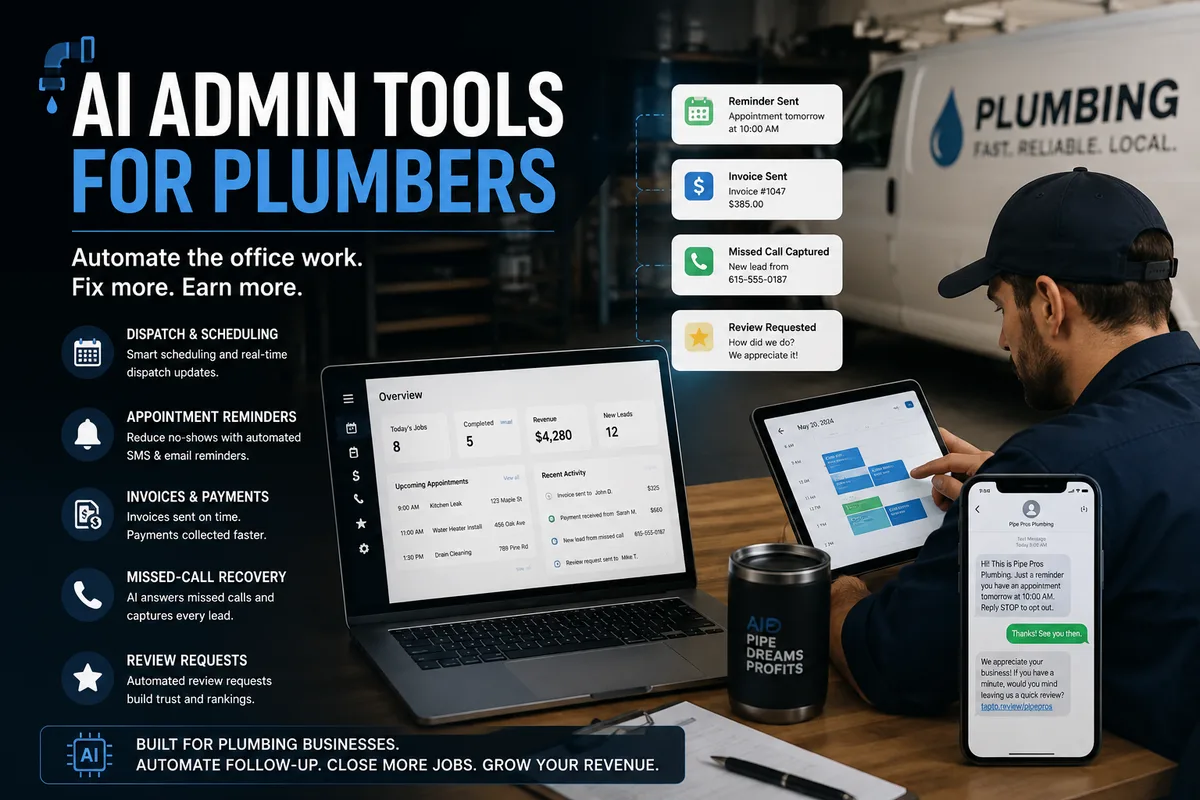
AI Admin Tools for Plumbers: What They Are and How to Choose
AI admin tools automate dispatch, reminders, invoicing follow-up, missed calls, and review requests for plumbers. What they do and how to choose.

Insurance Eligibility Automation for Physical Therapy Clinics
Eligibility automation for physical therapy clinics verifies benefits before the patient arrives, cuts front desk phone work, and can lower claim denial risk.
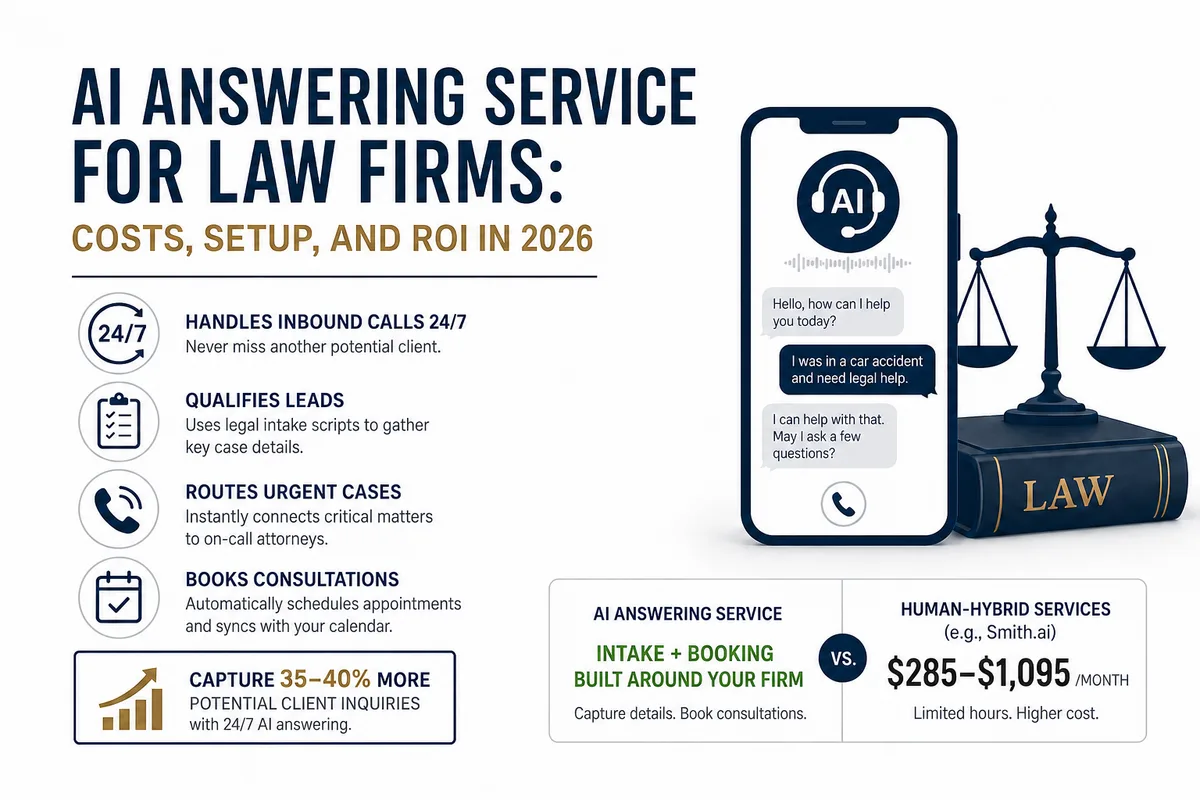
AI Answering Service for Law Firms: Costs, Setup, and ROI in 2026
Law firms miss a large share of inbound calls, most of them after hours. Here's what an AI answering service actually does, what it costs versus human.