
AI Secretary Costs in 2026: What Drives Pricing
AI secretary pricing depends on call volume, live call handling, appointment booking, integrations, setup, support, and whether the system is a lightweight bot or a full front-desk workflow. The right question is not the headline monthly price; it is whether the system can handle the calls that currently cost you time or revenue.
AI secretary pricing depends on call volume, live call handling, scheduling, integrations, setup, and support. Here's how to calculate whether the math works.
Epiphany Dynamics is an AI automation agency: we help businesses find and fix operational bottlenecks with AI receptionists, lead follow-up, and workflow automation.
The free 30-minute AI Operations Audit is a conversation about a normal week in your business and where the work piles up. We find the one change that would give you the most time back and send you a plain-English plan for it. No forms and no pitch.
Book a free AI audit
Patrick Gibbs
AI secretary pricing depends on call volume, live call handling, appointment booking, integrations, setup, support, and whether the system is a lightweight bot or a full front-desk workflow. The right question is not the headline monthly price; it is whether the system can handle the calls that currently cost you time or revenue.
The question comes up constantly among small business owners: is a human receptionist still the only real option, or has the software actually caught up? For businesses with steady repeatable call volume, the answer has genuinely shifted. AI secretaries are no longer novelty tech, and the math is worth running seriously.
The tricky part is that "AI secretary" covers a huge range of products. You've got basic voicemail bots at one end and fully conversational AI platforms at the other. The price range is wide because the products are genuinely different. This breakdown explains what each tier actually includes and how to figure out which one your business needs.
Use these ranges as market benchmarks, not an Epiphany Dynamics quote. Epiphany Dynamics scopes AI secretary and front desk builds after the free audit based on call volume, integrations, and the workflow you actually need.
What an AI Secretary Actually Does
An AI secretary handles inbound calls, captures caller information, books appointments, routes inquiries, and sends follow-up messages via SMS or email. Modern platforms can manage simultaneous routine calls and escalate complex situations to a human. They operate after hours with no hold times and no sick days.
At the core, these systems receive inbound calls, respond with a trained AI voice, gather caller intent, and take action: booking an appointment, routing to a staff member, sending a follow-up text, or logging the call in your CRM. Better platforms qualify leads before routing them, cutting wasted callbacks. They handle after-hours calls that would otherwise go to voicemail and track call outcomes over time to show you what's actually working.
The gap between a basic bot and a fully capable AI secretary is real. A lightweight plan might transcribe voicemails and send an email summary. A full-featured plan conducts a back-and-forth conversation, handles common objections, and books inquiries end to end without a human touching every call. Knowing which of those your operation actually needs is where most buyers get the decision wrong.
Some platforms integrate directly with scheduling tools like Google Calendar, Jane App, or major EHR systems, meaning a caller gets a confirmed booking without anyone on staff picking up the phone. For businesses where a large share of inbound calls are repetitive (appointment requests, directions, hours of operation), that's a meaningful shift in how the front desk works day to day.
The Cost Breakdown by Tier
AI secretary pricing usually breaks into tiers based on capability. Basic plans handle voicemail and routing. Mid-tier plans add live call handling and scheduling. Full-featured plans add deeper integrations, lead qualification, analytics, and support. Enterprise solutions scale with call volume and custom integration requirements.
| Tier | Primary Cost Driver | What's Included |
|---|---|---|
| Basic | Voicemail transcription, auto-SMS, and call logging | Voicemail transcription, auto-SMS, call logging |
| Mid-Tier | Live AI call handling, appointment booking, and CRM sync | Live AI call handling, appointment booking, CRM sync |
| Full-Featured | Always-on coverage, multi-channel workflows, lead qualification, and analytics | 24/7 coverage, multi-channel, lead qualification, analytics |
| Enterprise | Custom voice, API access, high call volume, and dedicated support | Custom voice, API access, high call volume, dedicated support |
A few things worth understanding about these ranges. Many platforms charge by usage on top of the base fee. If you're a higher-volume operation, run the per-minute or per-call math before committing to a plan that looks cheap on the headline rate.
Setup fees are common when voice training, integrations, and custom call flows are involved. If a vendor charges nothing upfront, check whether they're cutting corners on customization. A generic script that can't answer your industry's specific questions will frustrate callers and kill conversions faster than any voicemail ever did.
AI Secretary vs. Human vs. Virtual Assistant
A human receptionist, an offshore virtual assistant, and an AI secretary all solve different parts of the coverage problem. For high-volume, repetitive inbound call environments, AI can deliver better consistency and after-hours availability, while humans remain better for judgment-heavy or relationship-sensitive calls.
| Option | Cost Model | Availability | Scalability |
|---|---|---|---|
| Human receptionist (US) | Payroll, benefits, management, training, and turnover | Staffed schedule | One person handles one caller at a time |
| Virtual assistant (offshore) | Hourly or monthly staffed support | Time zone dependent | Scales with headcount |
| AI secretary (mid-tier) | Platform, usage, setup, integration, and monitoring | Always-on when configured | Unlimited simultaneous calls |
The math is unflattering for human receptionists in high-volume, repetitive call environments. If most inbound calls are appointment bookings, directions to your office, or basic questions about services, a salaried employee is expensive for that repeatable work. The calls requiring real judgment, nuance, or relationship management are where human staff earns their keep. The issue is that most businesses are paying a full salary for a mix of tasks, and the AI can absorb much of the routine volume.
The hybrid model is where most businesses land after running this experiment. AI handles the volume; one or two human staff handle escalations and complex cases. Businesses that have made this switch consistently report a large reduction in human call handling time without customer satisfaction suffering. That's the model worth building your ROI calculation around, not a full replacement scenario. For a detailed cost comparison across different business sizes, the AI receptionist vs. human receptionist ROI breakdown walks through the numbers line by line.
Further reading: Ruby Receptionists Alternatives in 2026: What's Worth Switching To.
What Drives the Price Up
AI secretary pricing is driven by call volume, integration complexity, voice customization, and the sophistication of the conversation model. High monthly call volume, custom CRM integrations, and industry-specific voice training push costs upward. Simpler setups with standard calendar integrations are easier to price and deploy.
Call volume is the biggest lever. Some plans cap usage and bill overages when call volume grows. Always calculate your expected monthly minutes before comparing plan prices, because two plans at the same base rate can look identical until you see the overage structure.
Integration depth is the second major driver. Plugging into Google Calendar costs nothing extra on most platforms. Syncing bidirectionally with a niche EHR, property management system, or home services dispatch tool often requires a custom integration, and that's where setup costs and higher-tier pricing kick in. For HVAC companies, dental practices, or property managers, the depth of integration frequently determines whether the product is actually useful day-to-day or just technically functional.
Voice customization has a bigger impact than most buyers expect. A generic AI voice that sounds robotic or stumbles over industry vocabulary (procedure names, insurance terms, dispatch questions) creates a bad caller experience. Custom voice training typically lives at the full-featured tier and above. It's worth the cost if your callers ask anything requiring real domain knowledge, because a confused AI costs you the call anyway.
Running the ROI Calculation
The core AI secretary ROI calculation is simple: multiply your average transaction value by your estimated missed call count and booking rate, then subtract the AI platform cost. For service businesses with a measurable missed-call problem, revenue recovery from captured calls can cover the platform cost when the inputs are strong enough.
Use a concrete model built from your own data. Start with average job value, total inbound calls, missed calls, and booking rate for answered calls. That tells you how much revenue is slipping away quietly.
Recovered call value = missed bookable calls x booked-call rate x average job value
Then subtract platform, setup, usage, and monitoring cost. The missed call cost calculator lets you plug in your own numbers. Most business owners are genuinely surprised by how much they're losing to calls that just don't get answered. The full playbook on recovering revenue from missed calls also covers what happens after the AI books the call, because follow-up sequences still matter even when the first touchpoint is automated.
Choosing the Right Tier for Your Business
The right tier depends on what you need the AI to do. Basic tiers suit voicemail and routing. Mid-tier setups work for live call handling and scheduling. Full-featured systems fit operations where appointment conversion, lead qualification, and CRM sync are core requirements. Enterprise only makes sense when volume, compliance, or integration depth demands it.
A solo dentist with one front-desk staff member may only need overflow, evening coverage, and calls that come in while the front desk is with a patient. A regional HVAC company across seasonal spikes may need after-hours emergency routing and integration with dispatch software. Those are very different builds, and they should not be priced from the same generic tier chart.
A med spa with a complex treatment menu and membership program also lands in the full-featured tier, but with serious attention to voice quality and customization. Clients calling about injectables or skin treatments don't respond well to robotic scripts that can't discuss procedures. If that matches your operation, the piece on AI receptionist benefits for med spas covers the specific call flow and conversion nuances that matter in that environment. For any business still weighing whether the investment makes sense at all, this honest look at whether an AI receptionist is worth it lays out the real case with actual business examples rather than marketing claims.
The honest bottom line: for most service businesses, the monthly cost of a mid-to-full-featured AI secretary is smaller than the revenue from a single converted call that would have gone to voicemail on a weekend. The price is not the real question. The real question is whether the platform handles your specific call types well enough to actually convert. That's what determines whether the math delivers what it promises. If you want to see what a well-configured implementation looks like for your industry, Epiphany Dynamics works with service businesses on exactly this kind of setup.
Frequently Asked Questions
Q: How does the cost of an AI secretary compare to hiring a human receptionist?
Compare total receptionist cost, including payroll, benefits, management, training, and turnover, against platform, setup, integration, usage, and monitoring cost. AI is strongest when it absorbs routine calls and lets human staff handle exceptions.
Q: What can I actually do with an entry-level AI secretary plan?
Entry-level plans typically handle voicemail transcription, basic auto-responses, and caller information capture, but they may not include live call handling or appointment booking. If you just need voicemail off your plate and basic message routing, it can work; for appointment booking or live call screening, compare plans with deeper call handling.
Q: Are there setup fees or hidden costs beyond the monthly subscription?
Often, yes. Setup, voice training, CRM integration, SMS follow-ups, usage overages, and ongoing tuning can all affect the real cost. Check the fine print before comparing headline rates.
Q: How many calls can an AI secretary handle, and does pricing change with call volume?
Modern AI secretaries can handle simultaneous routine calls, but pricing can still change with usage, minutes, features, or tier limits. Ask vendors how call volume affects the bill before assuming the headline price covers your actual workload.
Patrick Gibbs
AI Automation Expert
Patrick Gibbs helps professional practices implement AI automation that captures more leads, books more appointments, and scales without adding overhead. He's the founder of Epiphany Dynamics and creator of the AI Front Desk system.
Related Solutions
Build this into a real workflow
Related Posts
Best AI Receptionist for Small Business: How to Choose
The best AI receptionist for a small business is the one that answers quickly, books or routes correctly, escalates cleanly, and fits the tools your team.
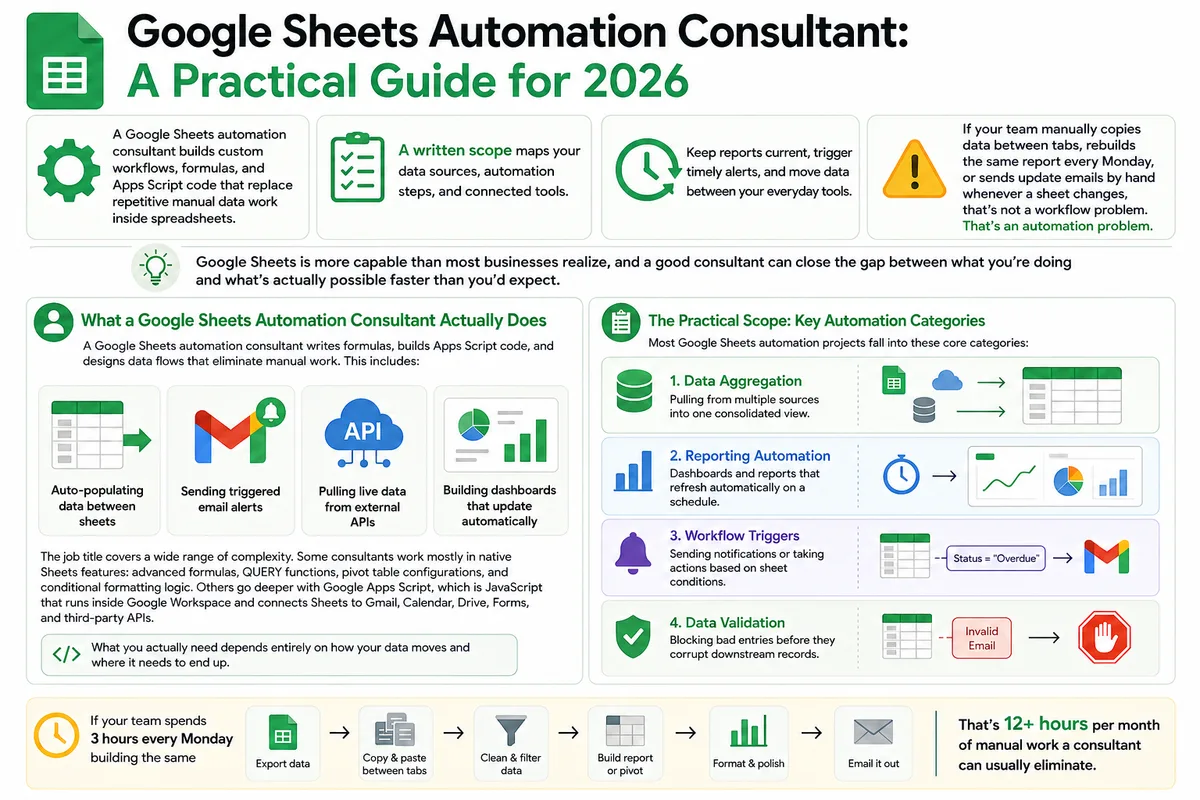
Google Sheets Automation Consultant: A Practical Guide for 2026
Most businesses don't track what spreadsheet work actually costs them. Here's what a Google Sheets automation consultant does in 2026, how to judge the value.
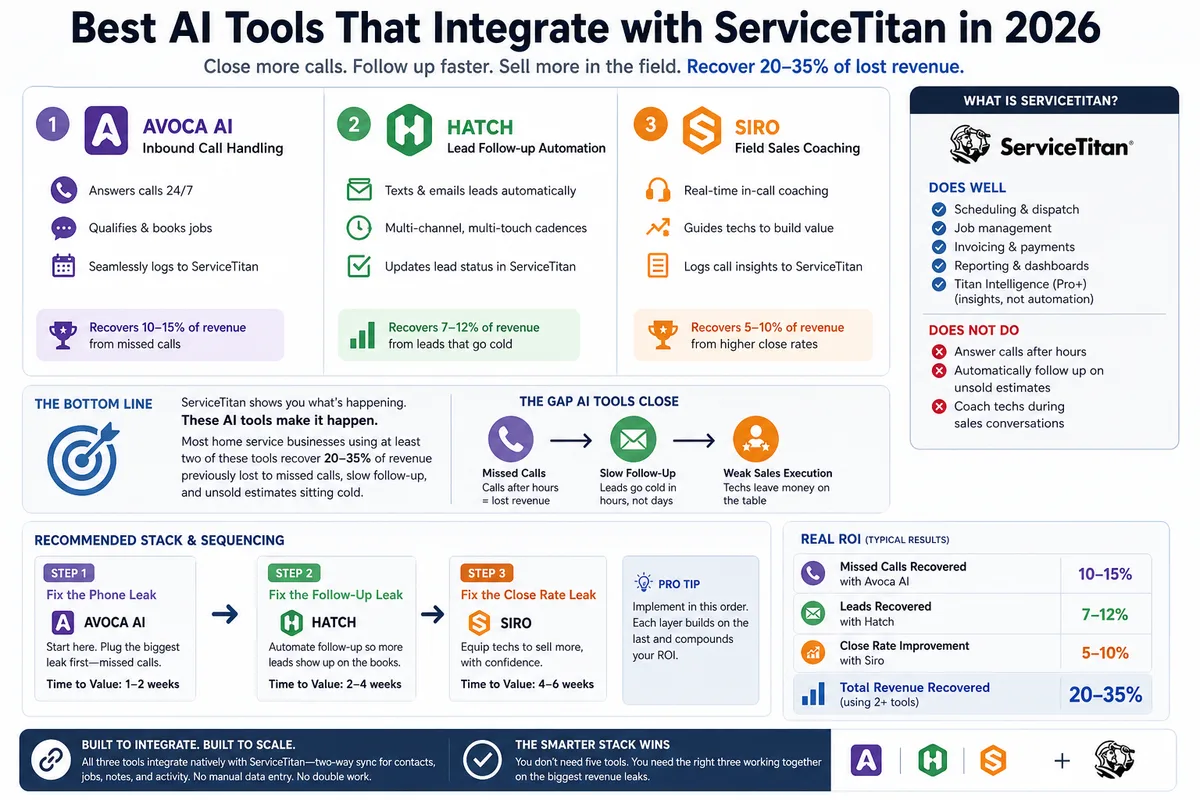
Best AI Tools That Integrate with ServiceTitan in 2026
Most ServiceTitan shops miss a meaningful share of inbound calls and leave most estimates unsold. These AI tools close those gaps inside ServiceTitan.