
Business Growth
Is AI Automation Worth It for Your Business in 2026?
AI automation is worth it only when the task-level math works. Here's how to compare current labor cost, tool cost, setup effort, and operational risk before.
The free 30-minute AI Operations Audit is a conversation about a normal week in your business and where the work piles up. We find the one change that would give you the most time back and send you a plain-English plan for it. No forms and no pitch.
Book a free AI audit
Patrick Gibbs
AI automation is worth it when the time or revenue recovered from a specific workflow exceeds the full cost of the tool, setup, training, and maintenance. The key word is "specific." Routine, high-volume tasks are usually better candidates than complex judgment calls. The honest answer lives in the task-level math, not in the category.
Every business owner has asked this question, usually right after a proposal for a chatbot that does a few things. The skepticism is earned. Not every automation project delivers, and plenty of companies have paid real money for tools their teams quietly work around later.
But "is AI automation worth it" is the wrong frame to start with. The better question is: which task, at what cost, and what does that task cost me right now? Get that specific and the answer becomes clear fast. The businesses that get burned are the ones who bought a solution before they understood the problem.
What "Worth It" Actually Means in Practice
Worth it means the time or money recovered exceeds total cost, including setup, monthly fees, and implementation hours. For service businesses, this usually means targeting tasks that happen often, follow clear rules, and can be measured against a baseline before and after automation.
A lot of automation discussions skip the baseline. Before evaluating any tool, you need to know what the task costs today. Measure the task volume, the average handling time, the labor cost, and the downstream value of completing the task correctly. That number is what matters, not projections about AI growth or what your competitors are adopting.
What does the specific repetitive task cost per month, and can automation do it cheaper without breaking the customer experience? If yes, you have your answer. If the math does not work at the task level, no amount of technology enthusiasm changes that.
Where AI Automation Delivers the Fastest Payback
The fastest ROI in service businesses usually comes from phone answering, appointment scheduling, follow-up messaging, and invoice reminders. These are high-volume, low-variation tasks that are expensive when done manually and easy to measure after automation.
The tasks that pay off are almost always the ones nobody wants to do. Missed call follow-ups. Appointment reminders. Invoice nudges. None of it is glamorous. But that is where operational leakage hides. Before buying anything, use the cost of missed calls calculator to put an actual number on what unanswered calls cost your business per month.
| Task | Current Cost Driver | Automation Cost Driver | What to Measure |
|---|---|---|---|
| Phone answering | Call volume, coverage hours, and staff handling time | Subscription, usage, setup, and monitoring | Answered calls, booked leads, and escalations |
| Appointment booking & reminders | Scheduling labor, no-shows, and rescheduling work | Scheduling platform, messaging, and calendar setup | No-shows, filled slots, and staff time |
| Invoice & payment reminders | Follow-up labor and delayed payments | Invoicing tool, payment links, and accounting integration | Days outstanding and manual follow-up time |
| Lead follow-up sequences | Response delay and manual nurturing | CRM tier, contact volume, and workflow complexity | Response time, booked calls, and qualified leads |
| Customer onboarding messages | Manual email, checklist, and handoff time | Email, form, and CRM workflow setup | Completion rate and staff time |
For a broader view of where returns are showing up across service verticals, the 2026 service business automation trends report covers adoption patterns and the specific functions paying off most consistently.
What AI Automation Actually Costs in 2026
AI automation cost depends on the tool category, usage volume, integration depth, support model, and implementation effort. Most small service businesses should compare quotes by total first-year cost, not monthly subscription price alone.
The monthly tool cost is usually not the hard part. The hidden cost is implementation: time spent configuring the system and troubleshooting what breaks during rollout. A full breakdown of what to expect, including which categories carry the most risk, is in this AI automation pricing guide for small businesses.
Ongoing maintenance is the other thing most cost estimates ignore. Automations break when your CRM updates, your scheduling platform changes an API, or your business process shifts. Build recurring maintenance into your calculation, either your own time or a retainer with whoever built it. An automation nobody uses costs the same every month and returns nothing.
Next on this subject: Quote Follow Up Automation: Stop Losing Jobs You Already Quoted.
Running a Quick ROI Calculation Before You Spend
Take the monthly labor cost of the task you want to automate and compare it with the total monthlyized cost of the tool, setup, monitoring, and maintenance. A strong case means the recovered value is clearly higher than the automation cost and the customer experience still improves.
The formula: ROI ratio = monthly labor or revenue recovered / monthlyized automation cost.
Run the model with your actual data. Start with how many hours the task consumes, what that labor costs, what share of the work automation can safely handle, and what the tool plus setup will cost. An AI workflow automation tool should only move forward when the measured savings or recovered revenue clearly exceeds the fully loaded cost.
Run this calculation for a few candidate tasks before committing to anything. Focus first on tasks where the value recovered clearly exceeds the full cost. This is also why comparing an AI receptionist to a human one often favors the AI for high-volume inbound call handling. Once you factor in coverage, overflow, and after-hours gaps, the task-level math becomes clear.
When AI Automation Is Not Worth It
AI automation is a poor fit for low-volume tasks, processes requiring real judgment or client-specific context, and situations where your underlying data is inconsistent. If a task rarely happens or requires nuanced human decisions, the setup cost rarely justifies the return.
Custom client proposals are a clean example. You could build a system to draft them, but if each one needs real customization, the draft often gets done better by hand anyway. That is not a job for automation. That is a job for a good template and a disciplined process.
Team readiness is the other factor most analyses skip. An automation that works perfectly but lives in a system your team does not understand gets bypassed. Before buying any tool, ask how your staff will actually interact with it every day. If the answer requires significant retraining or workflow changes, add that time to your ROI calculation. Tools people avoid are not automations. They are abandoned projects with a monthly fee.
There is also the question of sequencing. A lot of businesses try to automate everything at once and create a mess. The smarter move: pick the task with the highest volume and the least variation, automate that, measure it, then move to the next one. That is how you avoid burning money on a system that collapses because you tried to build everything before you understood the pieces.
Making the Decision for Your Business
Businesses that get real ROI from AI automation start with a specific, quantified problem, not "we want to be more efficient." The precision is what separates a working system from an expensive distraction, and it is the only place worth starting.
The decision is not "is AI automation worth it in general." It never was. It is whether the specific task you are considering has enough volume, enough consistency, and a high enough current cost to justify the spend. When all three are yes, it almost always pays off. When one is missing, you are usually better off waiting until it is not.
If you are working through this for the first time and want a second set of eyes on where automation fits your operation, that is the kind of problem Epiphany Dynamics works through with service businesses. Sometimes the right answer is a simple tool. Sometimes it is something more involved. Either way, the starting point is the same: the math.
Want to find out whether AI automation is worth it for your specific business? Book a free consultation with Epiphany Dynamics to get a personalized ROI analysis based on your actual numbers. We work with businesses across industries including med spas, dental practices, HVAC, and legal firms. Browse our tool recommendations and implementation guides to get started on your own.
Frequently Asked Questions
Q: What's the typical break-even timeline for AI automation in small service businesses?
Break-even depends on task volume, labor cost, setup effort, and how much of the workflow automation can safely handle. Faster payback usually comes from front-facing, repetitive processes like appointment scheduling, customer intake, and routine follow-up.
Q: Which business tasks see the highest ROI from AI automation?
Repetitive, rule-based tasks with high volume, like appointment booking, customer intake forms, email categorization, and simple FAQ responses, show the strongest ROI. Tasks involving judgment calls or nuanced customer relationships tend to struggle with automation. The key metric is whether the task happens often enough, and consistently enough, for the recovered value to exceed the full automation cost.
Q: How much does a typical AI automation implementation cost for a small business?
Implementation cost depends on tool category, integration depth, data quality, setup support, and ongoing maintenance. The real comparison is against your current monthly cost for that specific task. Custom implementations cost more upfront but may accelerate payback when they replace a high-value, high-volume workflow.
Q: Why do some companies abandon AI automation tools after a few months?
Most failures stem from poor task selection: automating processes without sufficient volume, documented cost, or clear baseline measurement. Teams work around tools when implementation skips the groundwork of understanding how much the current task actually costs the business, or when the tool disrupts customer experience. Starting with your labor cost baseline rather than technology enthusiasm prevents abandonment.
Patrick Gibbs
AI Automation Expert
Patrick Gibbs helps professional practices implement AI automation that captures more leads, books more appointments, and scales without adding overhead. He's the founder of Epiphany Dynamics and creator of the AI Front Desk system.
Related Solutions
Build this into a real workflow
Related Posts
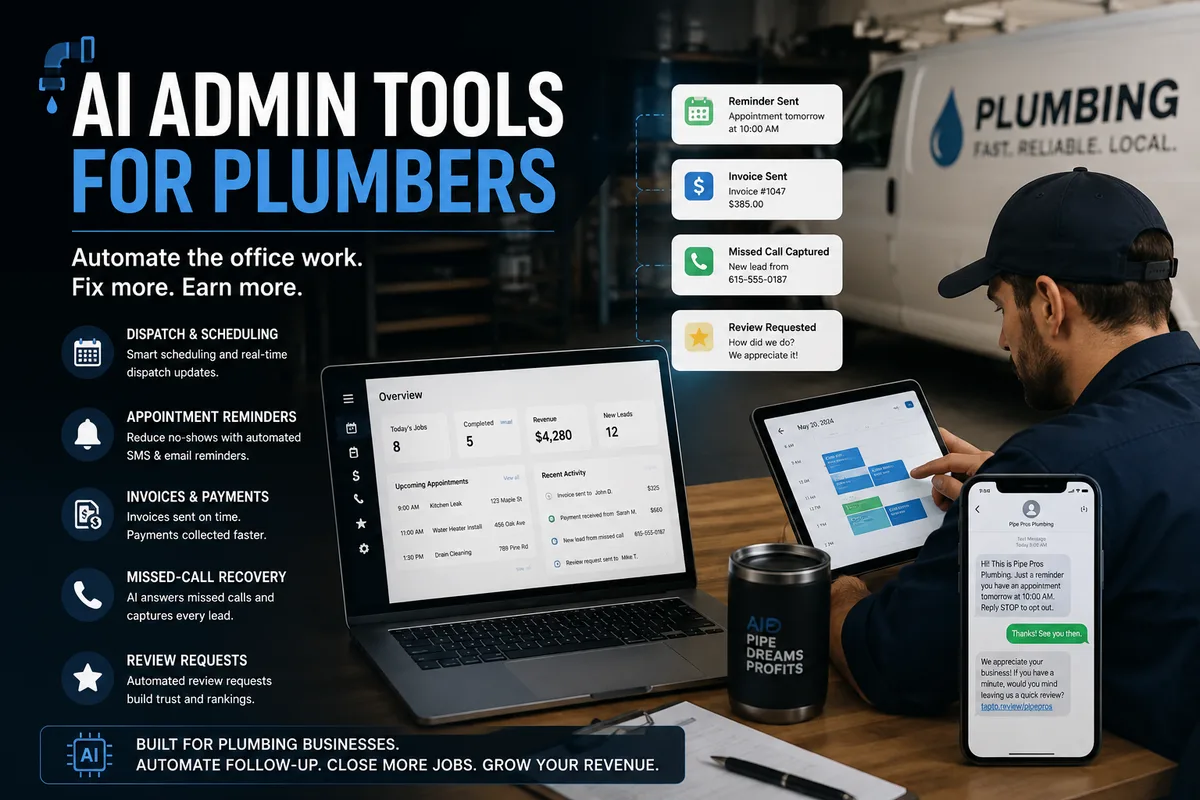
AI Admin Tools for Plumbers: What They Are and How to Choose
AI admin tools automate dispatch, reminders, invoicing follow-up, missed calls, and review requests for plumbers. What they do and how to choose.
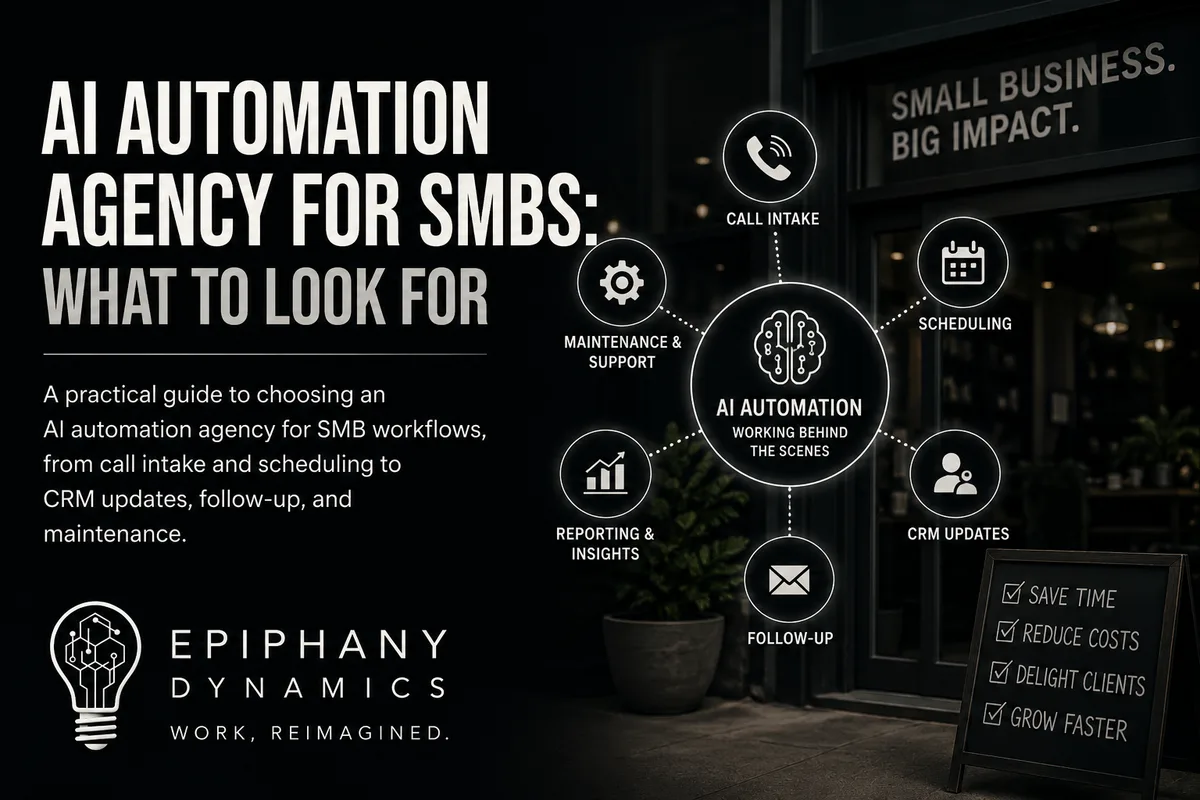
AI Automation Agency for SMBs: What to Look For
A practical guide to choosing an AI automation agency for SMB workflows, from call intake and scheduling to CRM updates, follow-up, and maintenance.
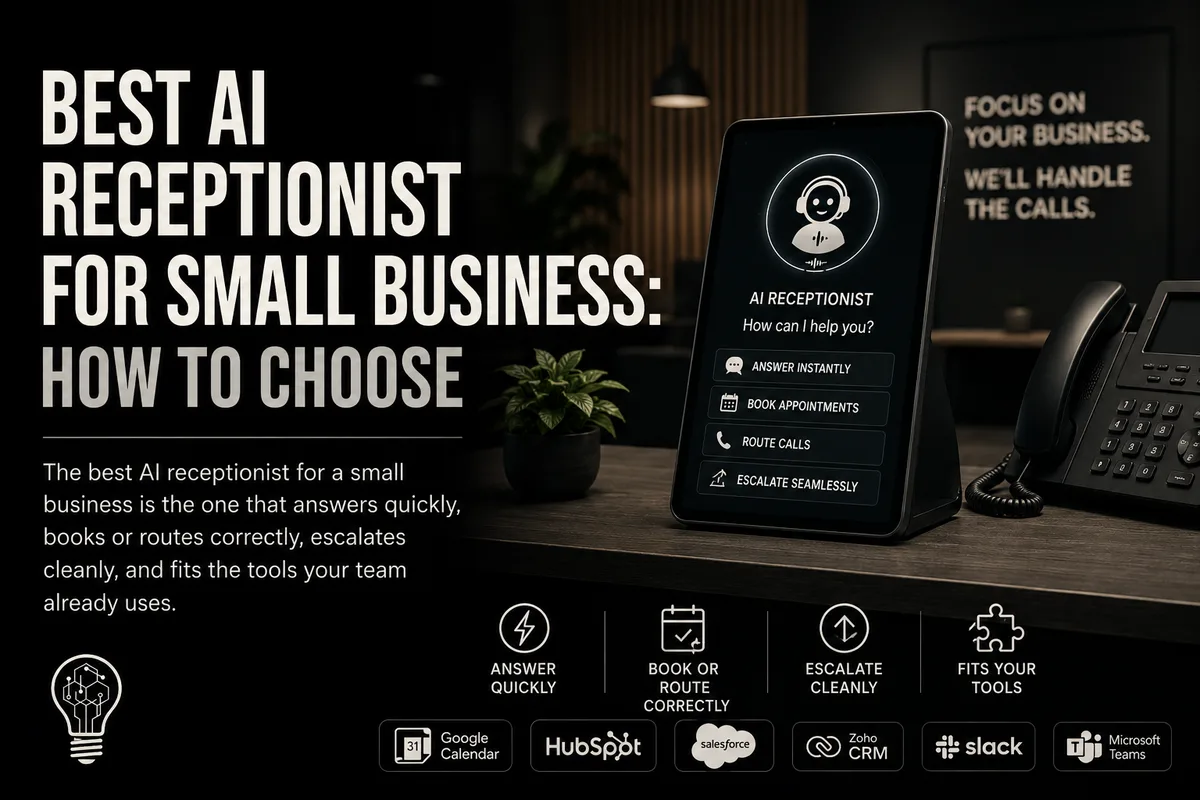
Best AI Receptionist for Small Business: How to Choose
The best AI receptionist for a small business is the one that answers quickly, books or routes correctly, escalates cleanly, and fits the tools your team.